


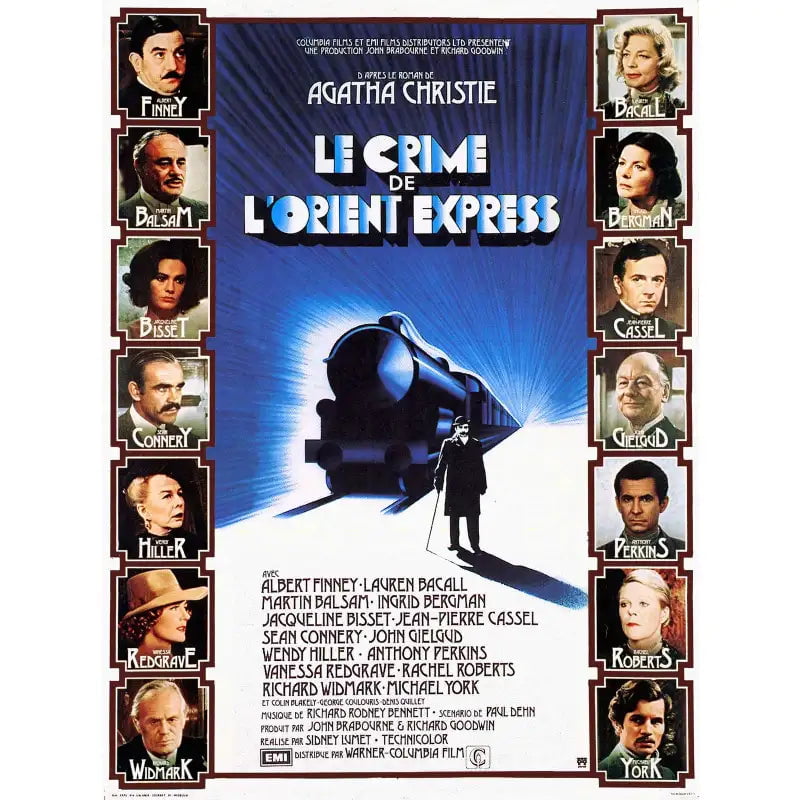
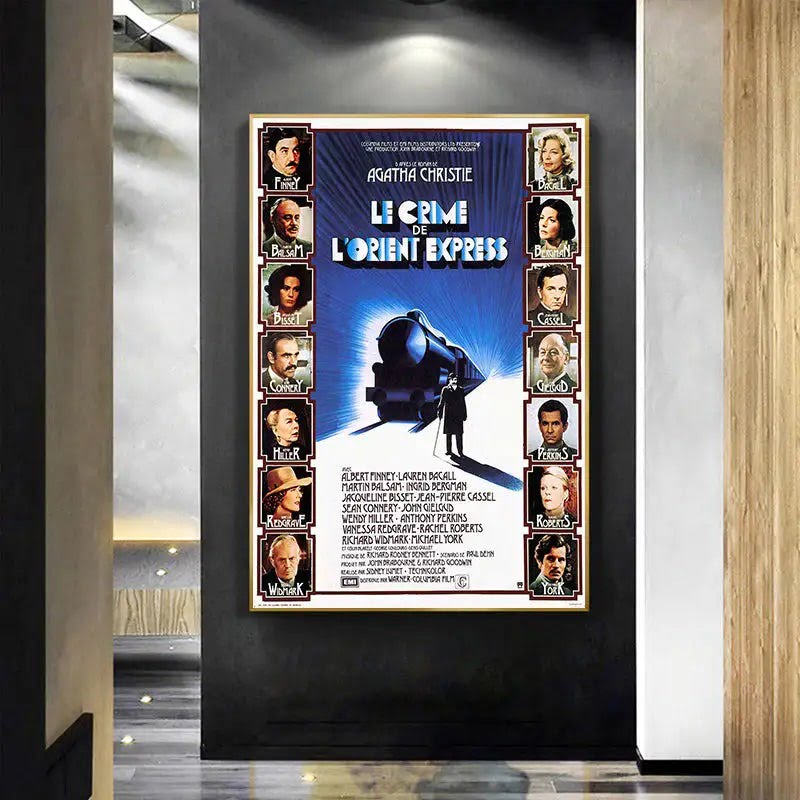
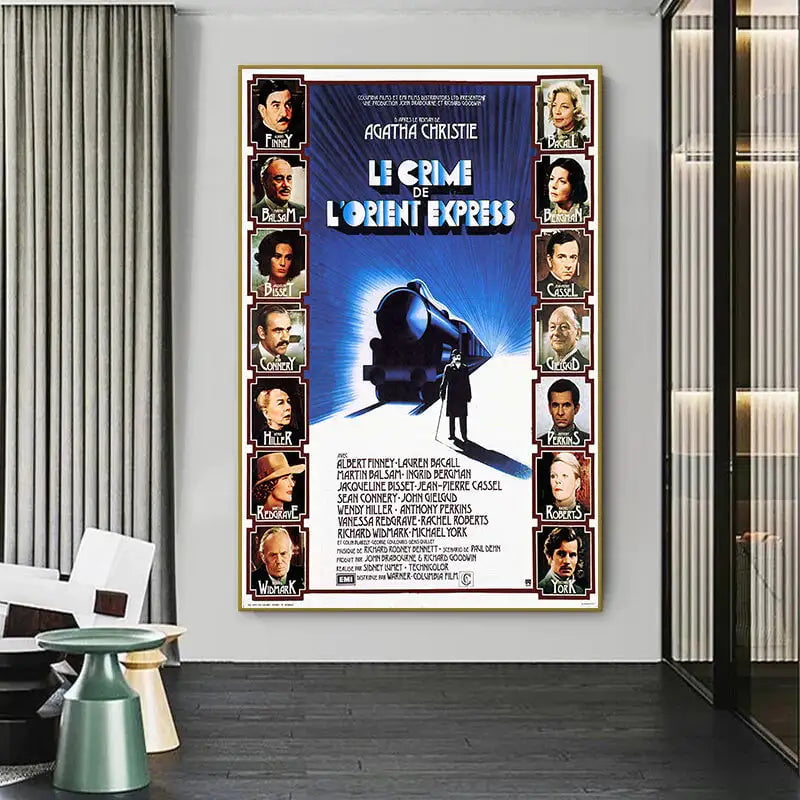
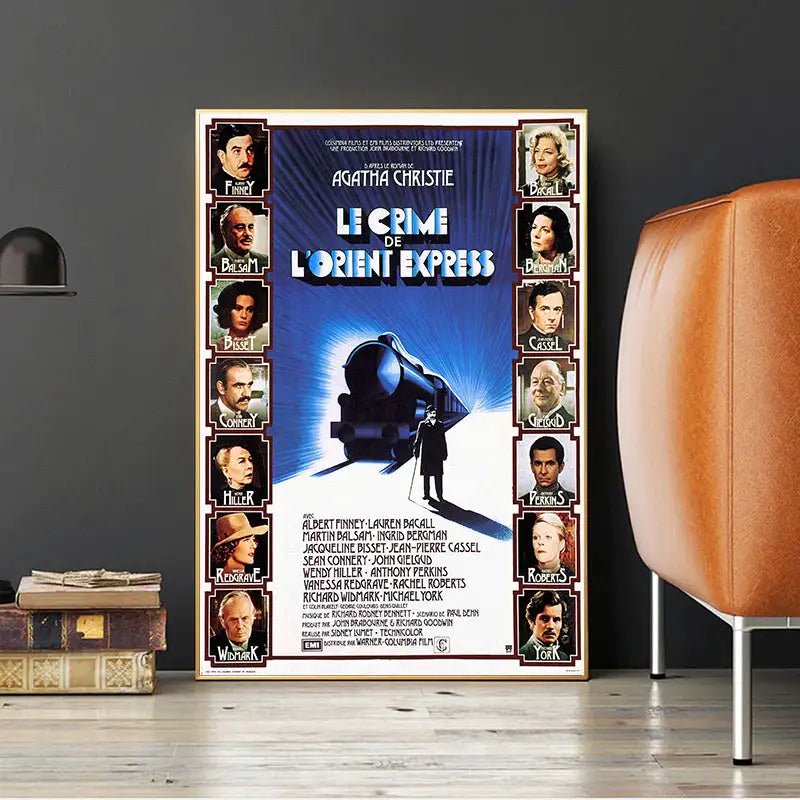
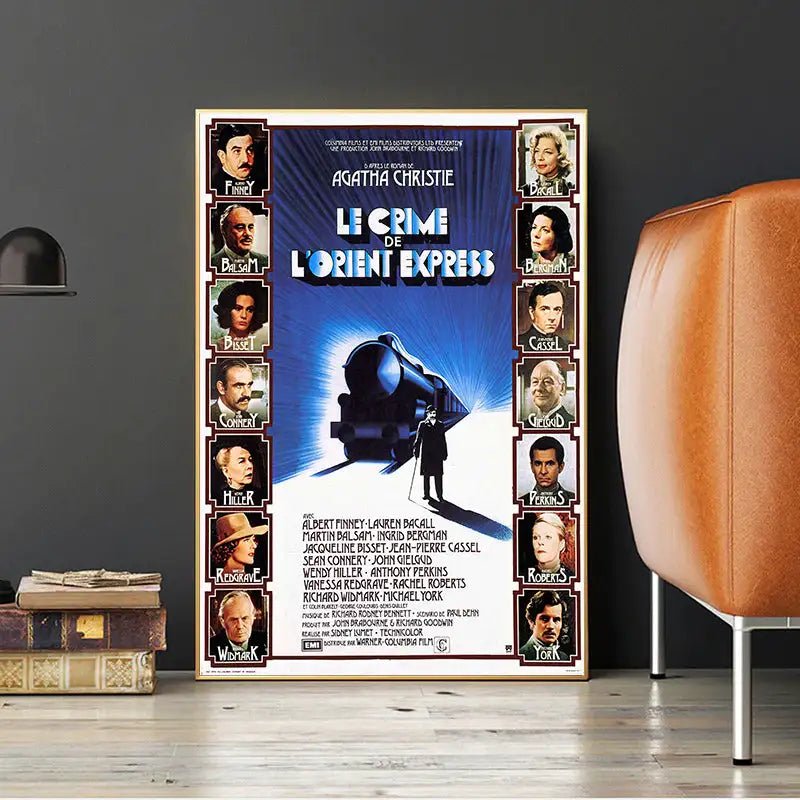
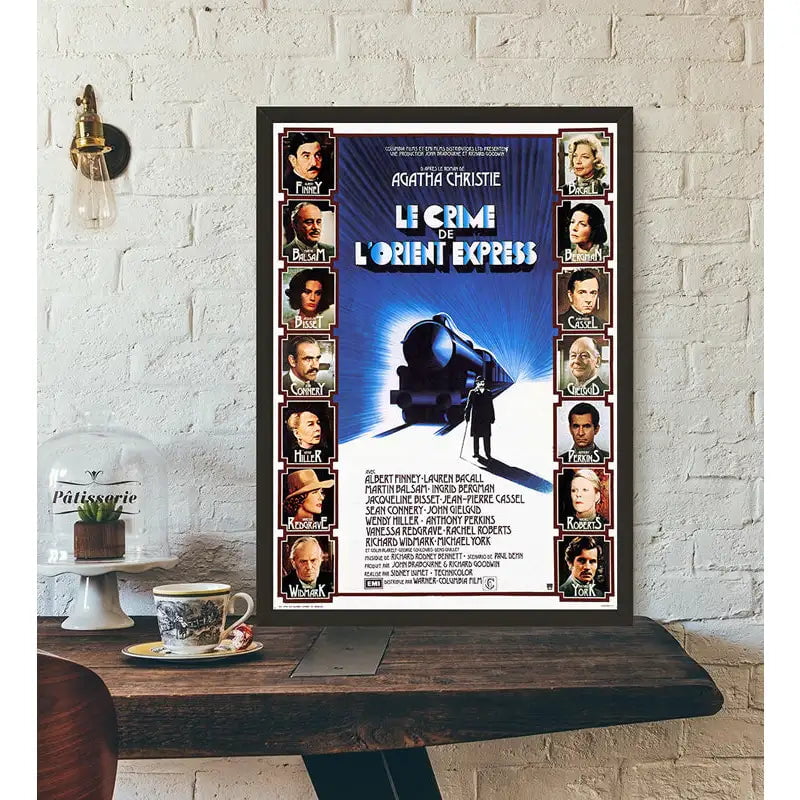
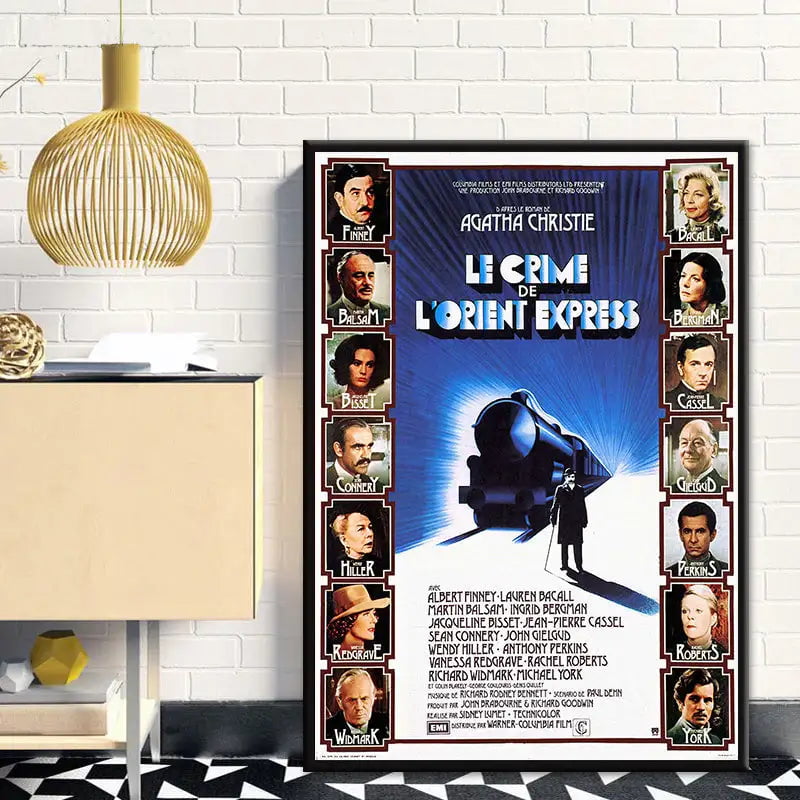

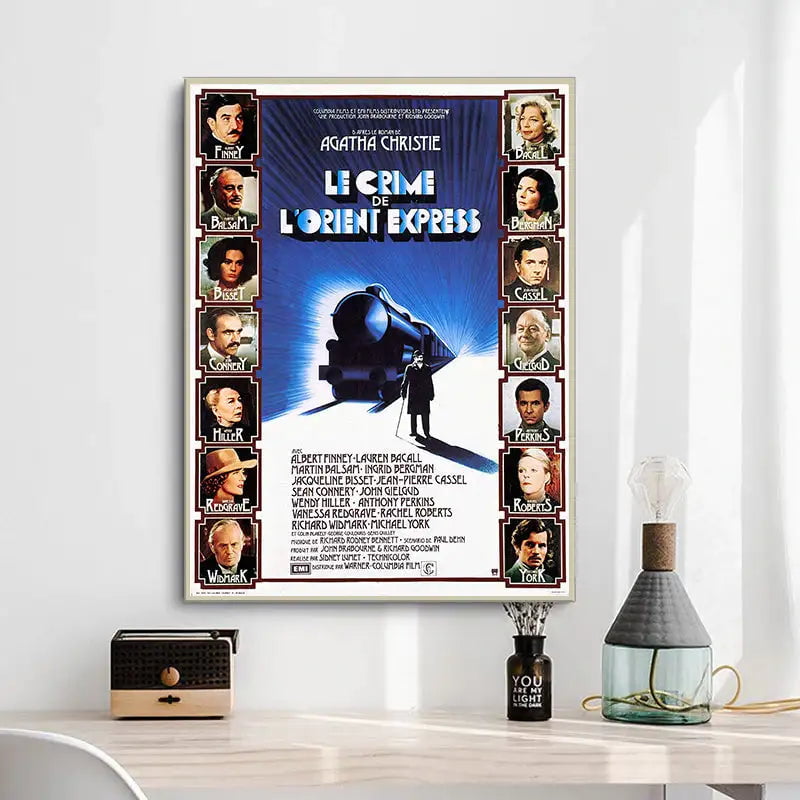
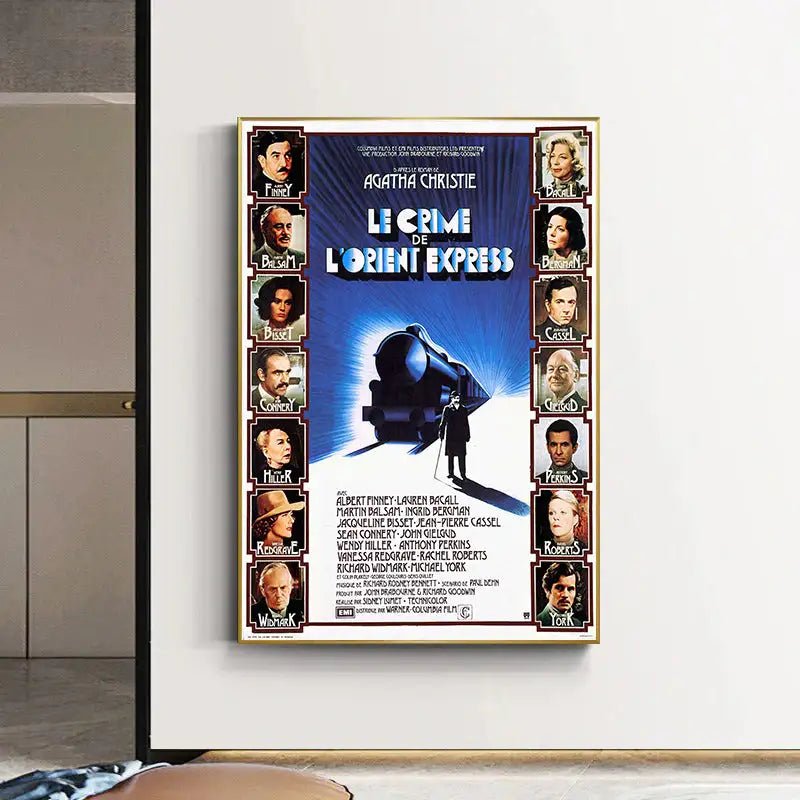
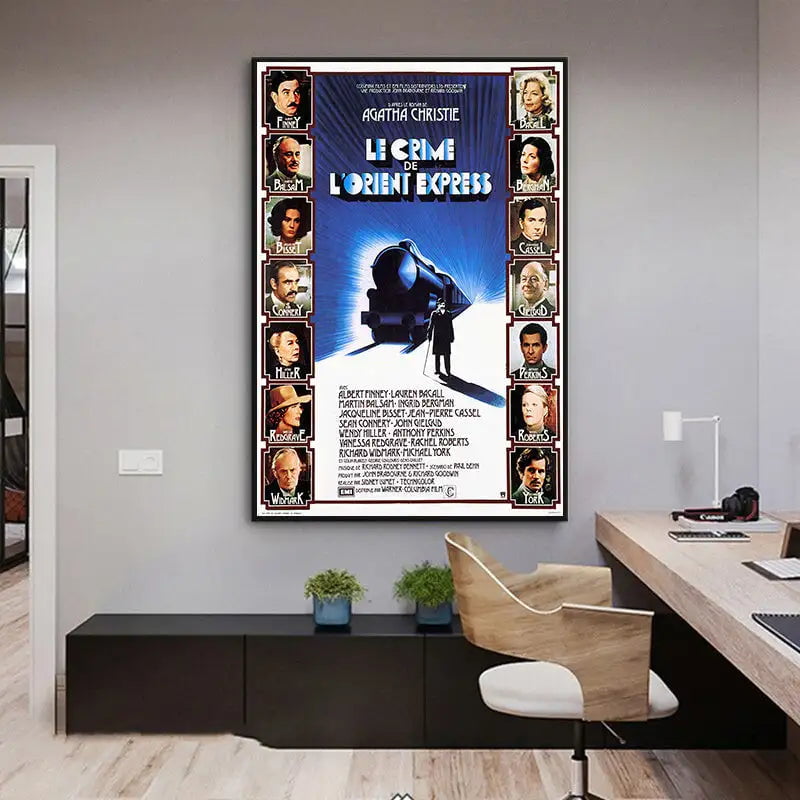
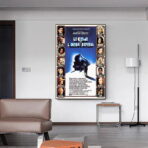
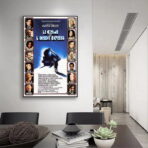
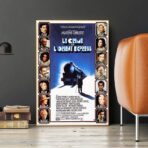
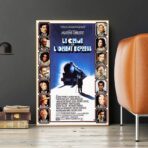
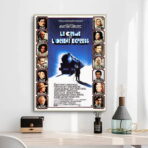
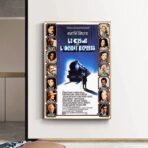
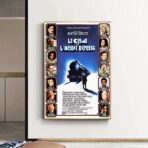
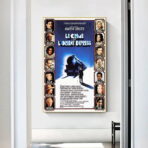
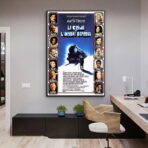






Discover the adaptation of Agatha Christie’s famous detective novel with this superb Murder on the Orient Express Poster!
- Paper Feature:
- 🎨 Canvas: global standard in terms of printing and imitating a “painting canvas” look.
- By default, the poster contains a 4cm white border for framing (frame not included). If you don’t want it, please choose “without white border”.
- ✅ Size: Multiple choices available. ✅
- High UV resistance.
- Color vibrancy maximum, glare-free.
- Paper recycled, guaranteeing environmental friendliness.
- Poster packaged carefully and delivered in a protective tube for Total protection.
- Free standard delivery.
⚠️ Frame not included. ⚠️
Description of this Murder on the Orient Express Poster
The opening of the film shows newspaper clippings about the 1930 kidnapping of Daisy Armstrong, who was later found murdered.
In December 1935, Hercule Poirot, after solving a case for a British army garrison in Jordan, is due to travel to London on the Orient Express from Istanbul and meets his old friend Signor Bianchi, a director of the company that owns the line, who offers him a compartment. The other passengers are American widow Harriet Belinda Hubbard, English governess Mary Debenham, Swedish missionary Greta Ohlsson, American businessman Samuel Ratchett, with his secretary/translator Hector McQueen, and English valet Edward Beddoes; Italian-American car salesman Antonio (“Gino”) Foscarelli; the elderly Russian princess Natalia Dragomiroff and her German maid Hildegarde Schmidt; the Hungarian Count Rudolf Andrenyi and his wife Elena; Colonel John Arbuthnott of the British Indian Army; and the American theatrical agent Cyrus Hardman.
The morning after the train’s departure, Ratchett attempts to secure Poirot’s services as a bodyguard for $15,000 because he has received death threats. Poirot declines Ratchett’s offer, telling him, “…my interest in your case is…waning.” That night, Bianchi gives Poirot his compartment and shares a carriage with Stavros Constantine, a Greek doctor. The train is stopped by a snowdrift between Vinkovci and Brod in Yugoslavia, and Poirot is awakened several times, once by a scream from Ratchett’s cabin. The next morning, Ratchett is found stabbed to death, and Bianchi asks Poirot to solve the case. Poirot enlists the help of Dr. Constantine, who establishes that Ratchett was stabbed 12 times in a distorted pattern and with apparently varying precision and lethality.
A fragment of a letter, found at the crime scene, reveals that Ratchett was in fact Lanfranco Cassetti, a gangster who, five years earlier, had planned the kidnapping and murder of Daisy Armstrong, the infant daughter of wealthy British Army Colonel Hamish Armstrong and his American wife Sonia. Cassetti enlisted the help of a fellow mafia member to kidnap and kill Daisy, but later betrayed him and fled the country with the ransom money; he was only unmasked the day before his partner’s execution. Overwhelmed by grief, the pregnant Mrs. Armstrong gave premature birth to a stillborn baby and died as a result. Colonel Armstrong, consumed by grief over the loss of his family, committed suicide. A French servant named Paulette, wrongly suspected of complicity in the kidnapping, had also committed suicide to avoid arrest but was later found innocent. Other clues are discovered, including a pipe cleaner, a handkerchief bearing the initial “H,” Cassetti’s broken watch, and a conductor’s costume. Poirot’s chronology of the passengers’ activities the previous night indicates that Cassetti was murdered around 1:15 a.m., the time the watch was broken and the scream was heard. Since the carriage was sealed off all night, the murderer must have been one of its passengers or the train’s French conductor, Pierre Michel. Mrs. Hubbard reports that she detected a man in his room and then found the bloody knife discarded in his compartment. Foscarelli dramatically implies that the murder is most likely part of a Mafia feud.
Poirot questions the passengers and Pierre. He learns that McQueen is the son of the prosecutor in the Armstrong case and that he was very fond of Mrs. Armstrong; that Beddoes was a drummer in the British Army; that Greta Ohlsson appears to have a limited knowledge of English but has been to America; that Countess Andrenyi is of German descent and that her maiden name is Grünwald (Greenwood in German, Mrs. Armstrong’s maiden name). Pierre’s daughter Michel died five years earlier of scarlet fever. Colonel Arbuthnott, who knows Armstrong’s military decorations, reveals his intention to marry Miss Debenham once he has divorced his cheating wife, which he believes is the subject of the enigmatic discussion Poirot overheard in Istanbul. When Poirot questions Princess Dragomiroff, he discovers that she was a friend of Linda Arden, a retired American actress and mother of Mrs. Armstrong; the princess was Sonia’s godmother. He learns that the Armstrongs had a butler, a secretary, a cook, a chauffeur, and a nurse. Poirot flatters the princess’s maid, Schmidt, by noting what a good cook she is, which unsettles her. Foscarelli denies having been a chauffeur. Hardman reveals that he is, in fact, a Pinkerton detective hired as a bodyguard by Cassetti. When Poirot shows him Paulette’s photograph, he is visibly moved.
Poirot gathers the suspects and describes two possibilities for the murder. He advises them not to automatically rule out either one. The first suggests that Cassetti’s murder was the result of a Mafia feud: an unknown man disguised himself as a train conductor, stabbed Ratchett/Cassetti, and, ignoring the uniform coat, the undetected assailant escaped from the train through the snow. This hypothesis is dismissed by Bianchi and Dr. Constantine as absurd, but Poirot tells them they can reconsider.
The second, more complex and far-reaching solution links all the suspects on the stagecoach to the Armstrong case. In addition to the self-incriminating revelations Poirot has managed to extract from Hardman, McQueen, Schmidt, and the Princess, the detective has deduced that Countess Elena is in fact Mrs. Armstrong’s younger sister, Helena. The Princess has claimed that the Armstrongs’ secretary is a “Miss Freebody”; she is in fact Mary Debenham, loosely associated with the famous British department store (known at the time as “Debenhams and Freebody”). Beddoes was Armstrong’s army butler; Greta Ohlsson was Daisy’s nanny; Colonel Arbuthnott was Armstrong’s close army friend; Foscarelli was the family chauffeur; Pierre was Paulette’s father; Hardman was a police officer in love with Paulette; and Mrs. Hubbard is in fact Linda Arden, Mrs. Armstrong’s mother—and arguably the mastermind of the whole plan. McQueen had drugged Cassetti, rendering him unconscious and allowing the conspirators to murder him jointly (the Andrenyis stabbing together), totaling 12—a typical jury’s complement—wounds of varying damage. The scream and broken watch were provided by McQueen to persuade Poirot that the murder had taken place earlier, when the other suspects were out of danger. In fact, the suspects teamed up to commit the murder after Poirot fell asleep again, two hours later. The only passengers not involved in the murder were Signor Bianchi and Doctor Constantine.
Poirot asks Bianchi to choose a solution before the train is freed from the snowdrift, but admits that the Yugoslav police will much prefer the simple solution. Bianchi, in sympathy with the suspects after learning how evil Cassetti was, suggests the former, and Doctor Constantine and Poirot agree, even though he will have to struggle with his conscience. The train is then, somewhat symbolically, freed from the snowdrift and continues on its way.