



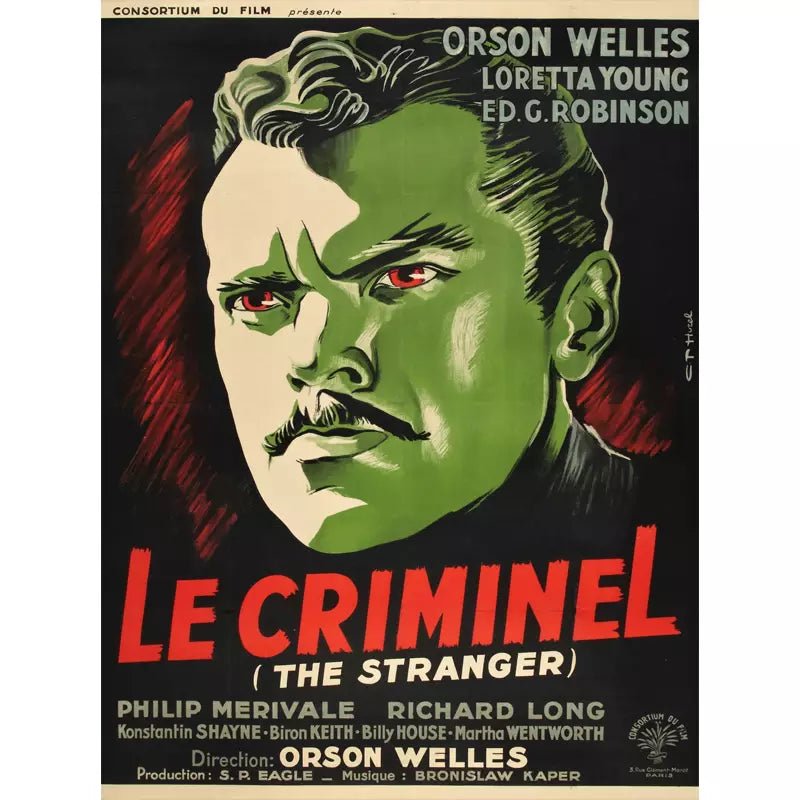
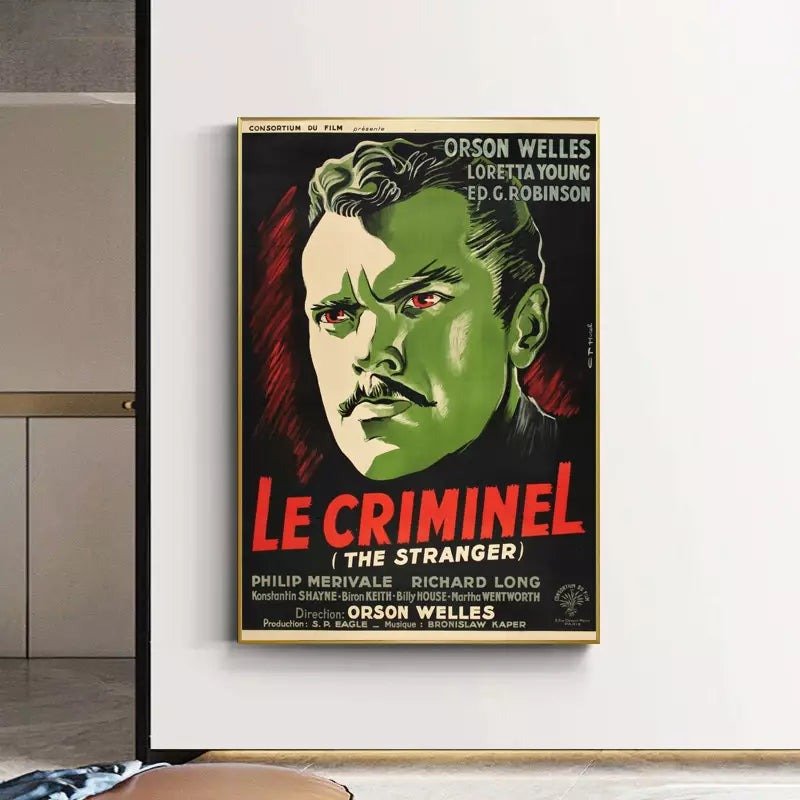
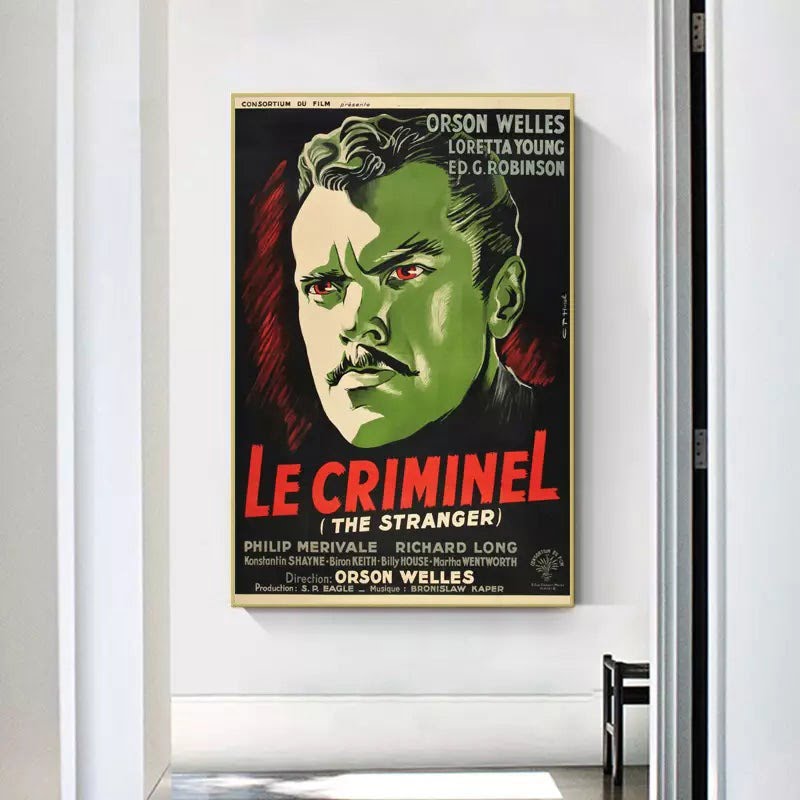
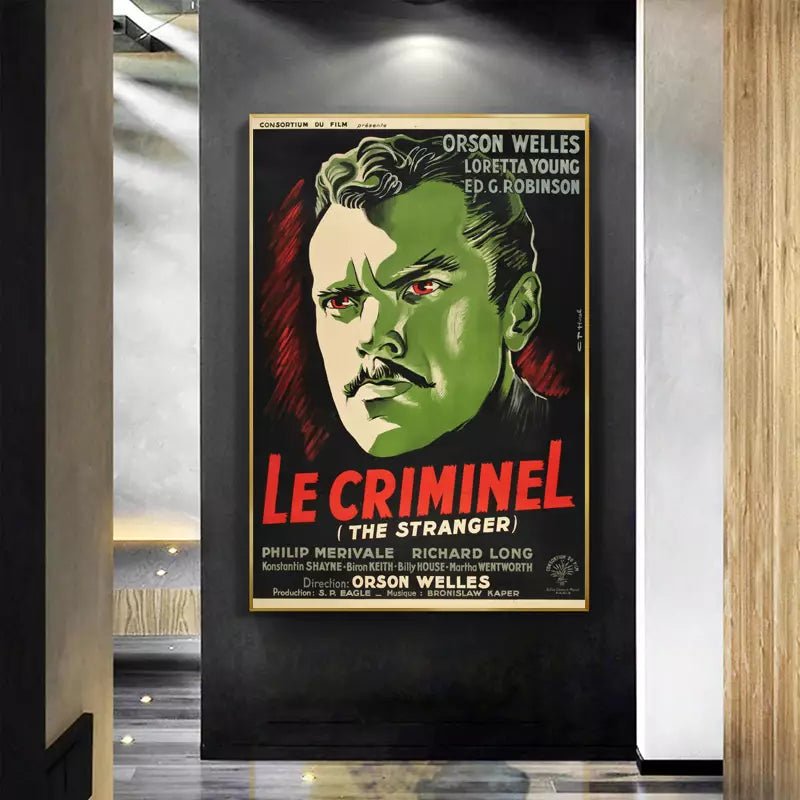
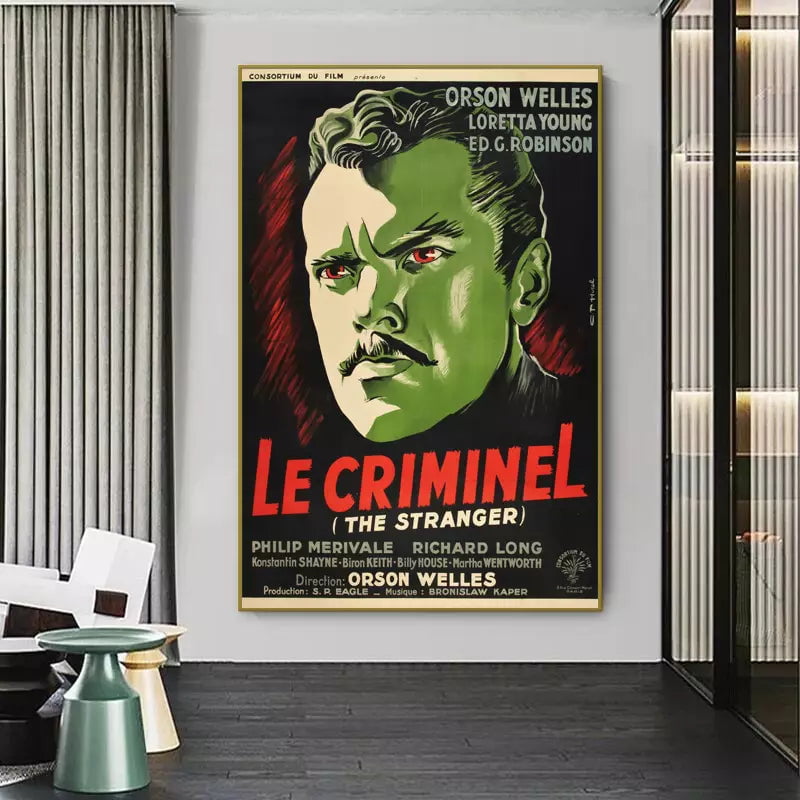
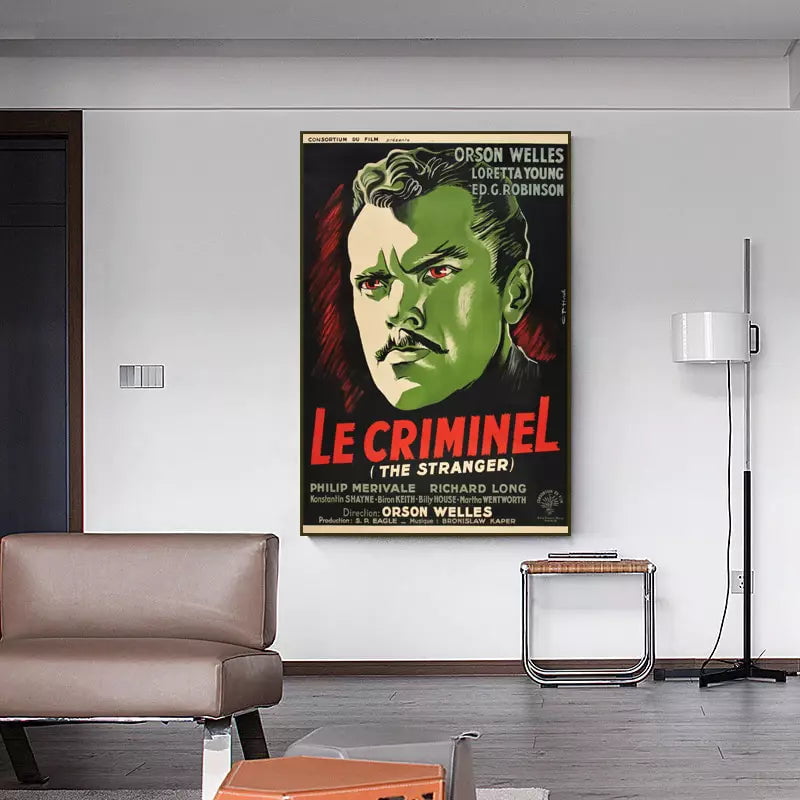
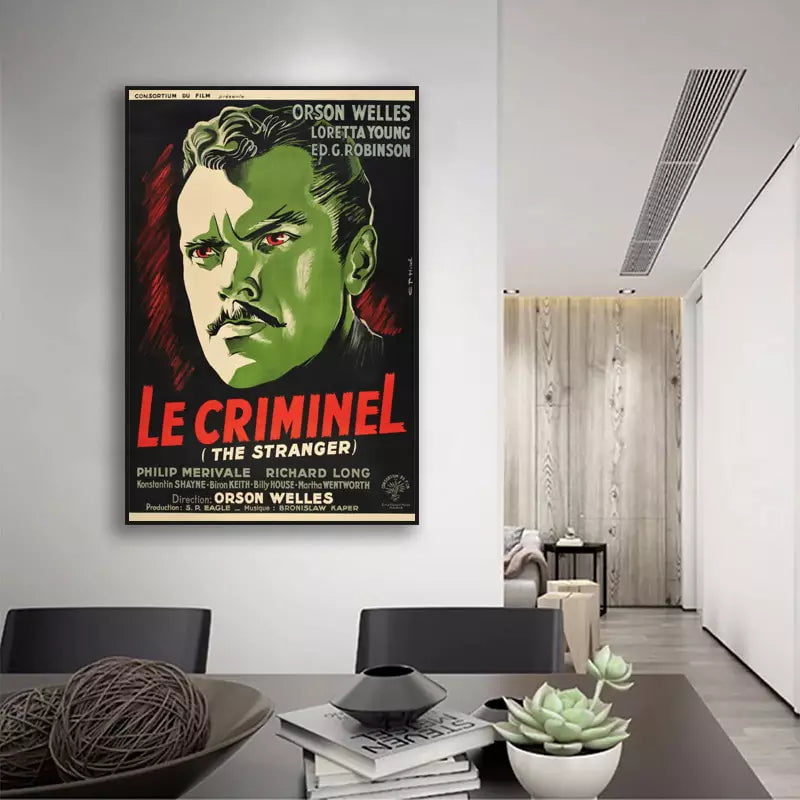
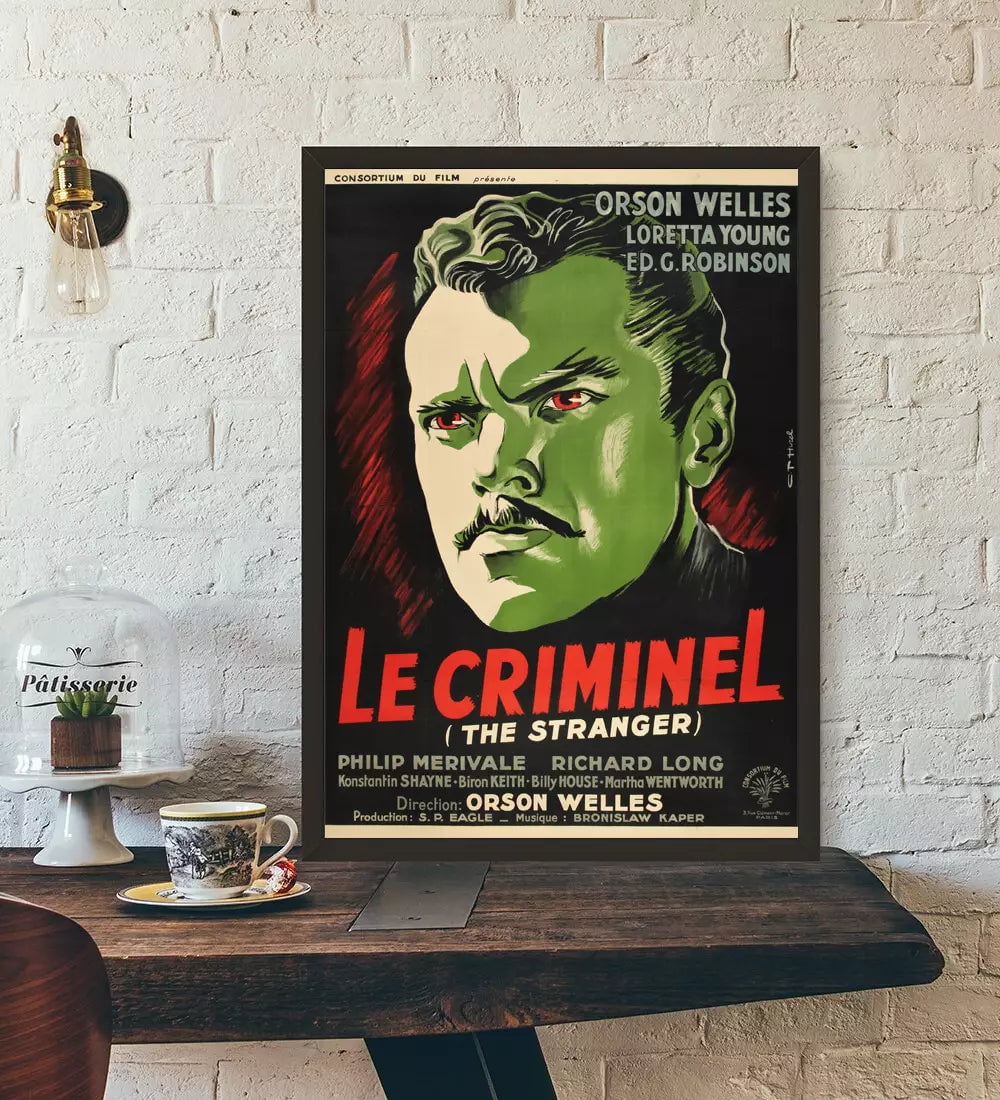
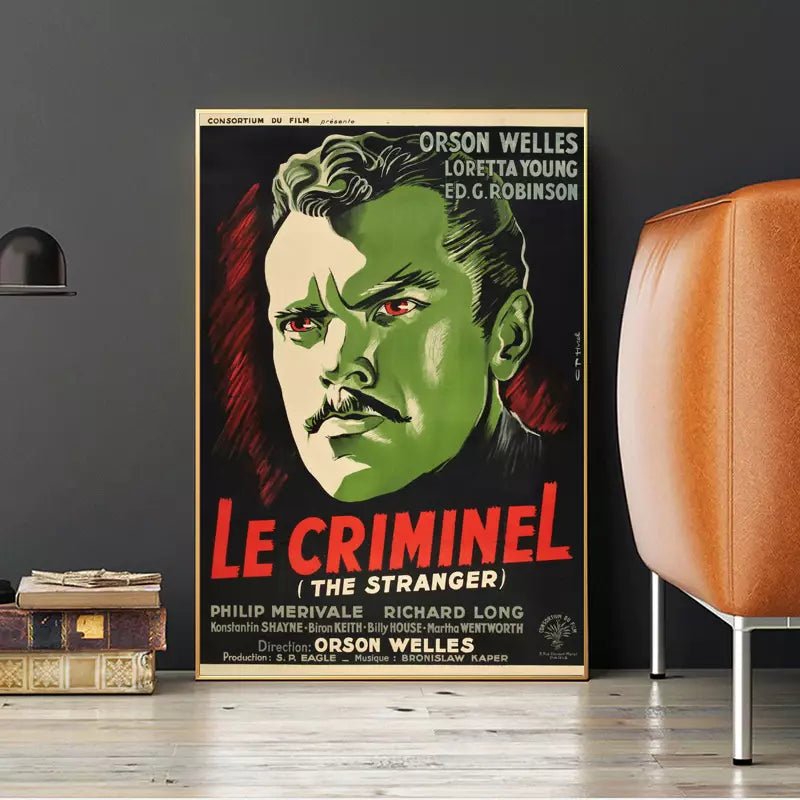
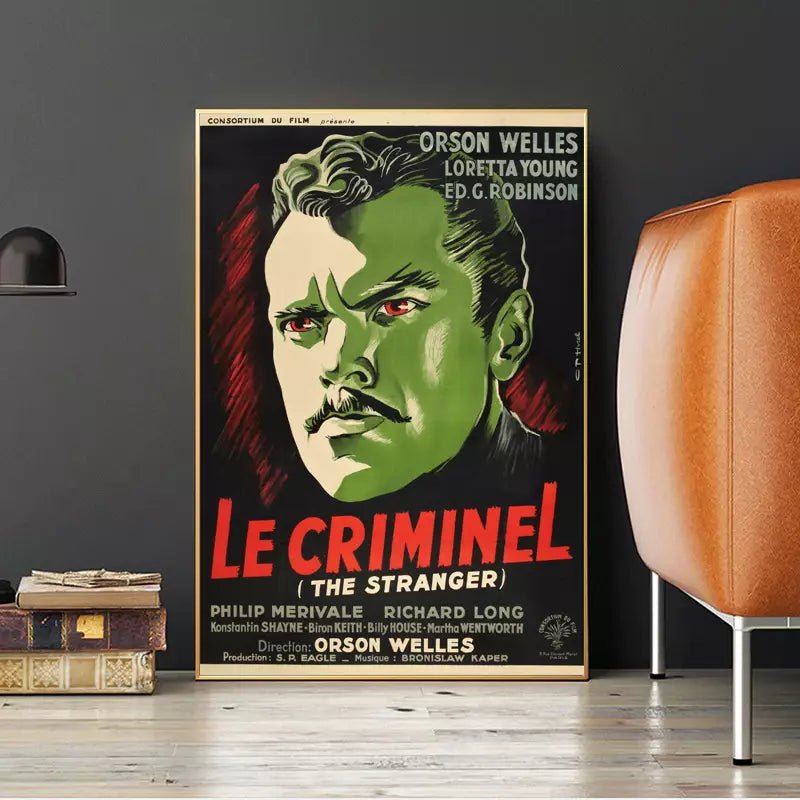
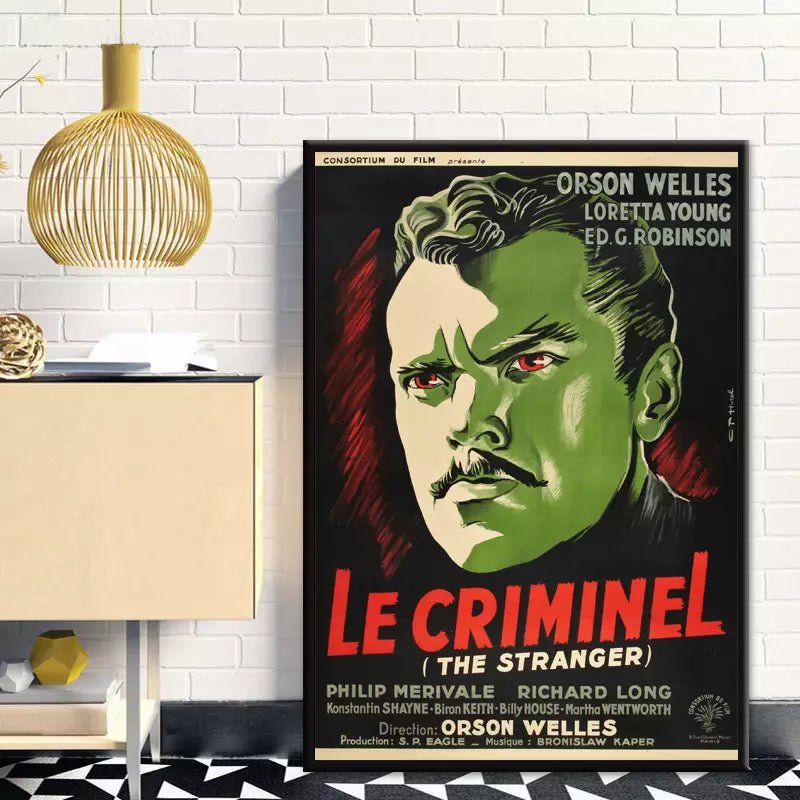
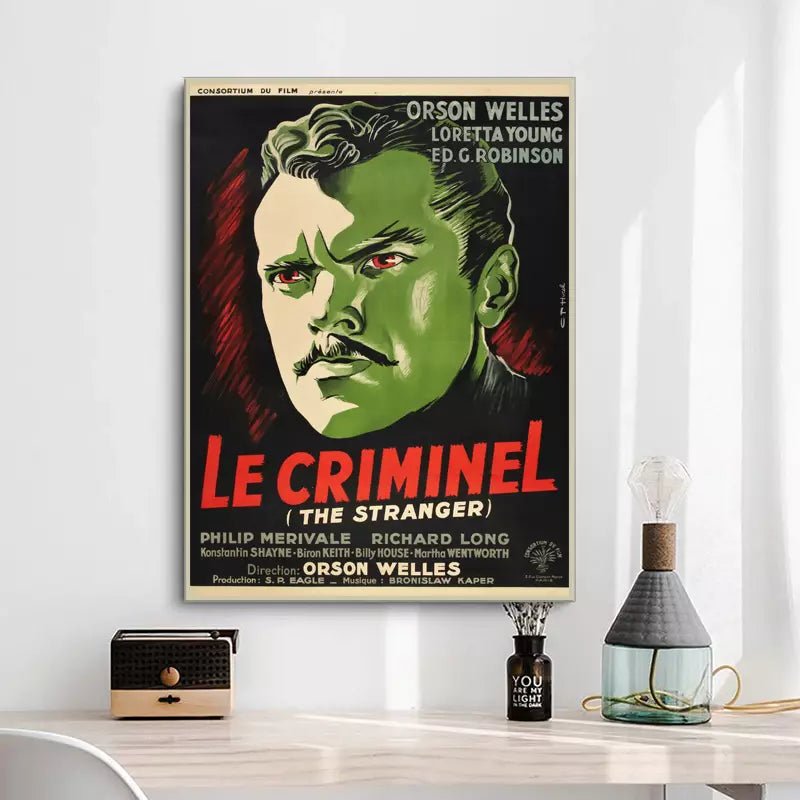
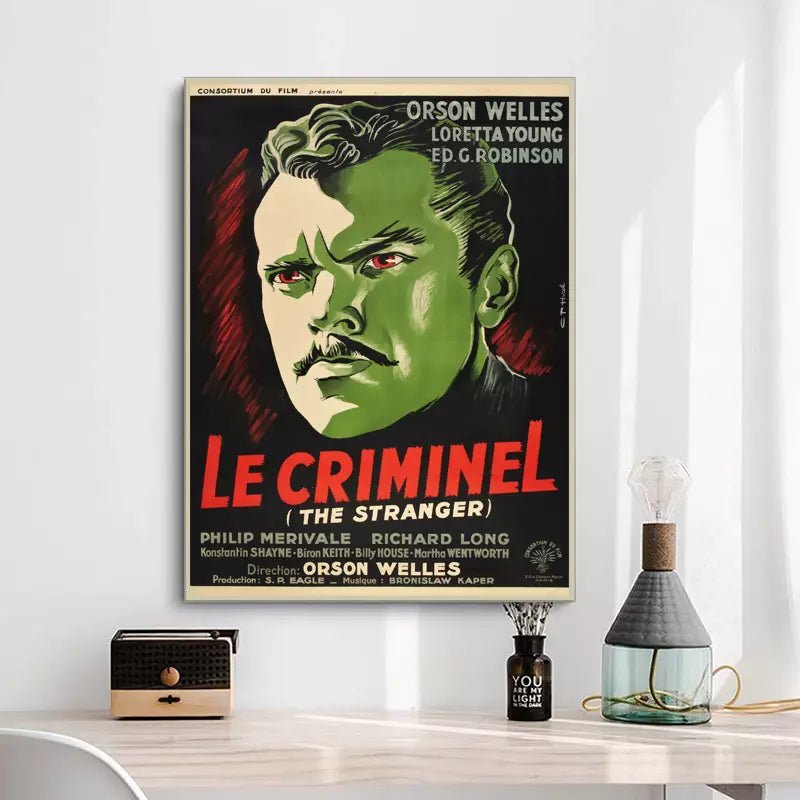

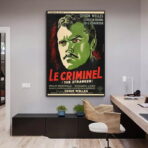
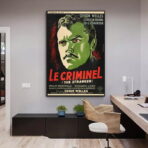
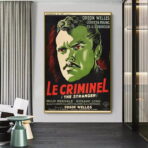
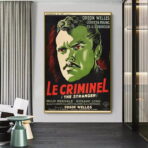
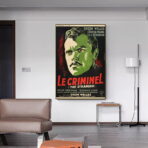
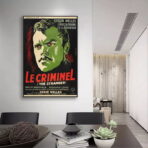
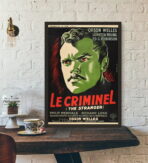
















With this The Criminal Poster, immerse yourself in the captivating world of Orson Welles’s iconic 1946 film. Experience the thrilling emotion emanating from this timeless cinematic work as you follow the mysteries and breathtaking twists and turns of a complex criminal case. Be captivated by the legendary director’s mastery as he explores the dark corners of human nature, keeping you on the edge of your seat until the final revelation. Acclaimed by critics and adored by film fans worldwide, “The Criminal Poster” is a true masterpiece that is sure to transport you into a memorable cinematic experience.
- Paper Feature:
- 🎨 Canvas: The global standard in printing and imitating a “canvas” look.
- By default, the poster contains a 4cm white border for framing (frame not included). If you don’t want it, please choose “without white border”.
- ✅ Size: several choices available. ✅
- High UV resistance.
- Maximum color brilliance , without reflections.
- Recycled paper guaranteed a environmentally friendly.
- Poster packaged carefully and delivered in a protective tube for total protection.
- FREE STANDARD DELIVERY.
⚠️ Frame not included. ⚠️
Description of this The Criminal Poster
The Criminal is a 1946 American film noir directed and co-written by Orson Welles, starring Edward G. Robinson, Loretta Young, and Orson Welles. Welles’s third completed feature film as director and his first film noir, it centers on a war crimes investigator who tracks down a high-ranking Nazi fugitive in a Connecticut town. It was the first Hollywood film to feature documentary footage of the Holocaust.
The film was nominated for the Golden Lion (then called the “International Grand Prize”) at the 8th Venice International Film Festival. Screenwriter Victor Trivas was nominated for an Academy Award for Best Story. The film fell into the public domain when its copyright was not renewed.
Mr. Wilson is an agent of the United Nations War Crimes Commission searching for Nazi fugitive Franz Kindler, a war criminal who has erased all evidence that could identify him. He left no clues to his identity except “a hobby that borders on mania—clocks.”
Wilson frees Kindler’s former associate, Meinike, hoping the man will lead him to Kindler. Wilson follows Meinike to a small Connecticut town but loses him before meeting Kindler. Kindler has taken on a new identity, “Charles Rankin,” and become a teacher at a local prep school. He is about to marry Mary Longstreet, the daughter of Supreme Court Justice Adam Longstreet, and is helping to repair the town’s 400-year-old Habrecht-style clock mechanism, complete with religious automatons, that crowns the steeple of a church in the town square.
Meinike attacks Wilson, leaving him for dead, and meets Kindler. Meinike has repented and become a Christian. He begs Kindler to confess his own crimes. Instead, Kindler strangles Meinike, who might turn him in.
Wilson begins investigating the new arrivals in the small town. Because of Rankin and Mary’s marriage, he doesn’t suspect Rankin until the latter casually mentions that since Karl Marx was Jewish, he wasn’t German. Despite this, having not witnessed the meeting with Meinike, he still has no proof. Only Mary knows that Meinike came to meet her husband. To get her to admit it, Wilson must convince her that her husband is a criminal, before Kindler decides to eliminate the threat to him by killing her. Kindler’s facade begins to crumble when Red, the family dog, discovers Meinike’s body. To better protect his secret, Kindler poisons Red.
Meanwhile, Mary begins to suspect her husband is not being honest with her. He admits to killing Meinike and Red, but claims that Meinike was in town to blackmail her and her father. Mary still loves him and wants to protect him by any means necessary; She helps him by lying about Meinike. Then Wilson shows her pictures of Nazi concentration camps and explains how Kindler developed the idea of genocide. She is torn between her love and her desire to learn the truth. Meanwhile, Kindler tries to arrange a fatal “accident” for Mary, but Mary discovers the plot. Finally accepting the truth, she challenges her husband to kill her face to face. Kindler tries, but is prevented by the arrival of Wilson and Mary’s brother, and escapes from the house.
Kindler flees into the church tower, followed by Mary and then Wilson. Meanwhile, most of the townspeople, having heard the repaired clock’s bell, have arrived outside the building. At the top of the tower, Kindler pulls out a gun, and a struggle ensues. Mary eventually grabs the gun and fires. The clock is damaged and begins to run away; Kindler is shot. He staggers outside to the belfry face and is impaled by the sword of one of the figures on the moving clock. Weakened by his injuries, he falls to his death.