


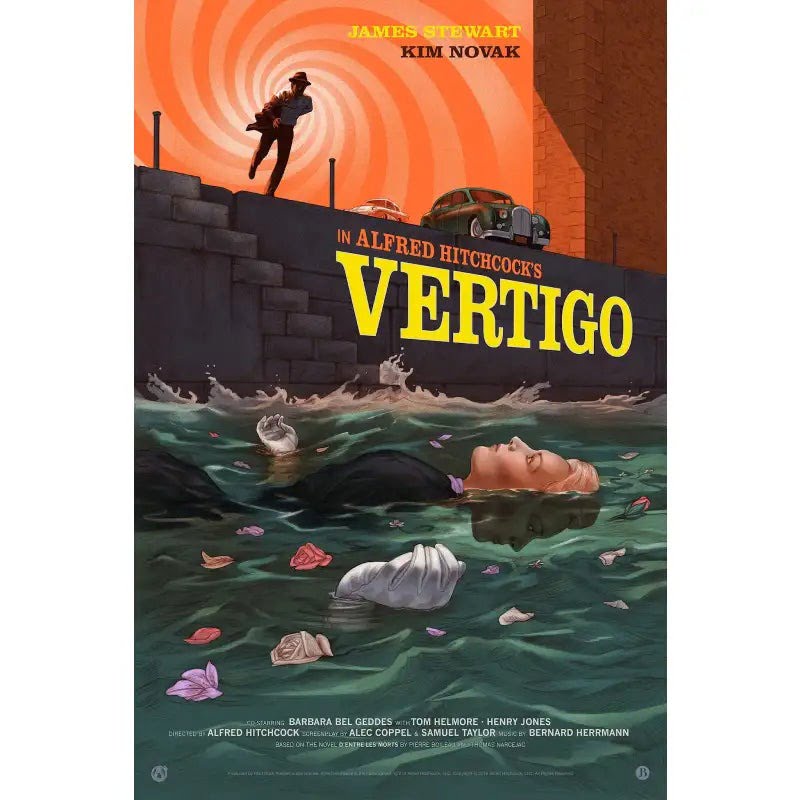
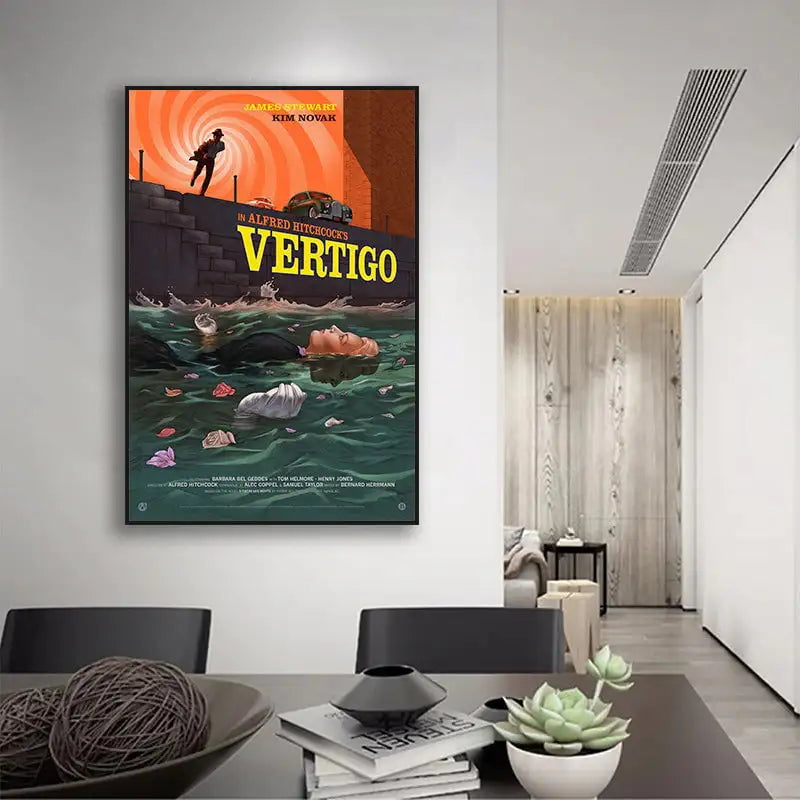
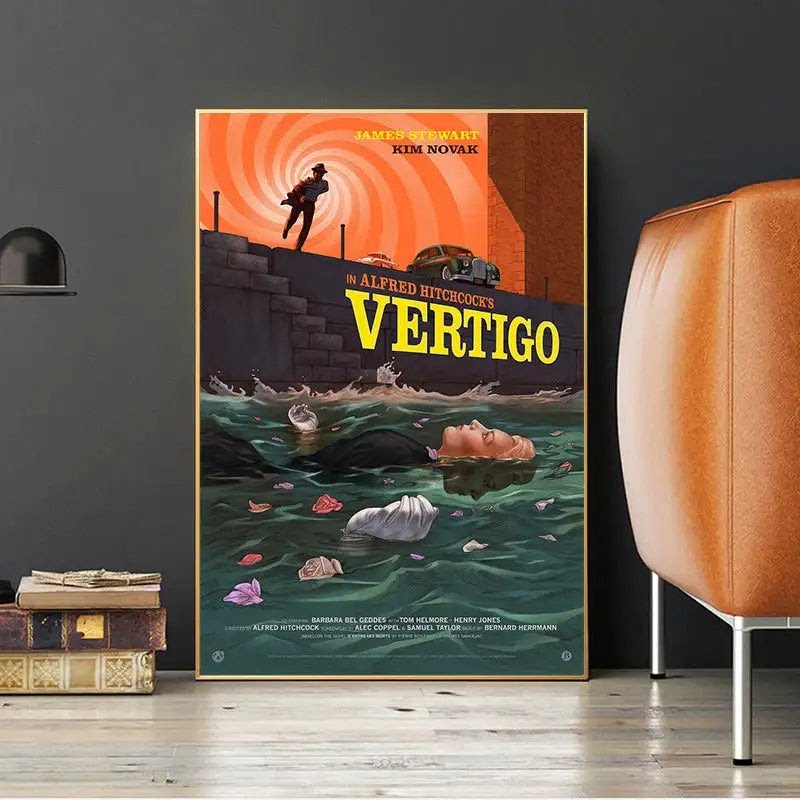
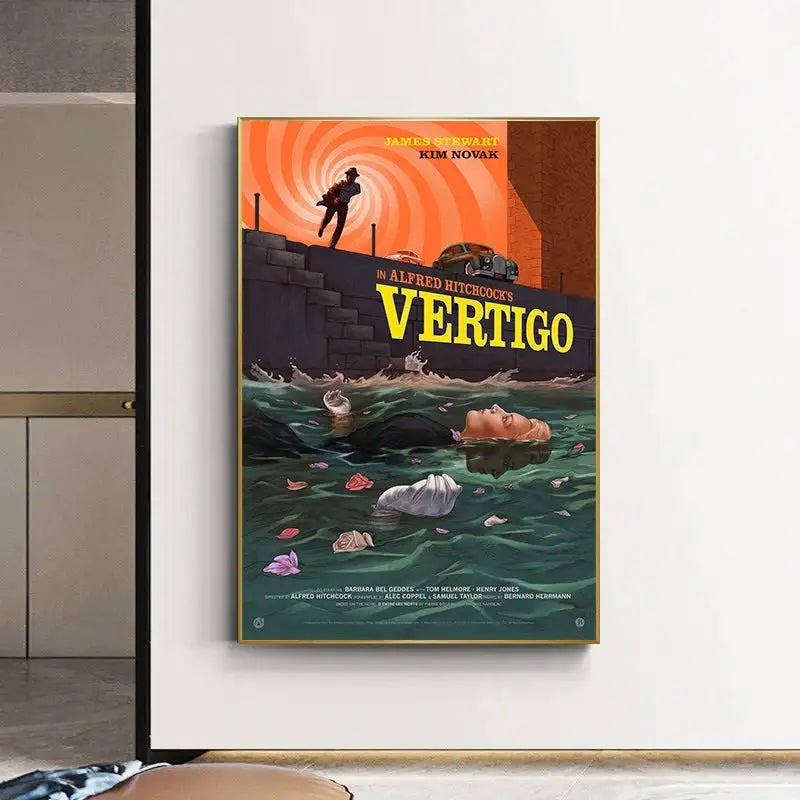
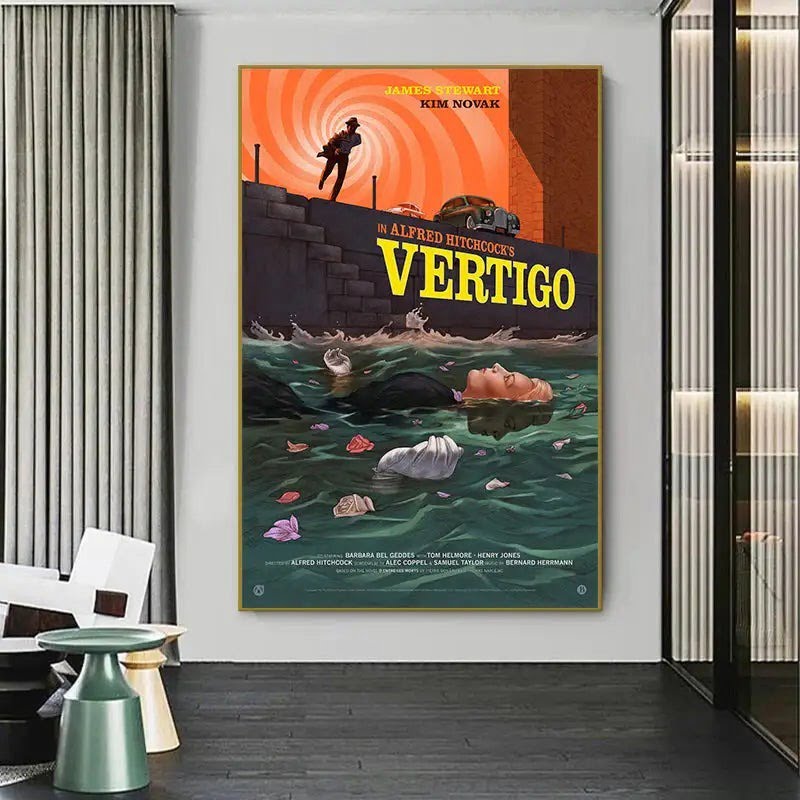
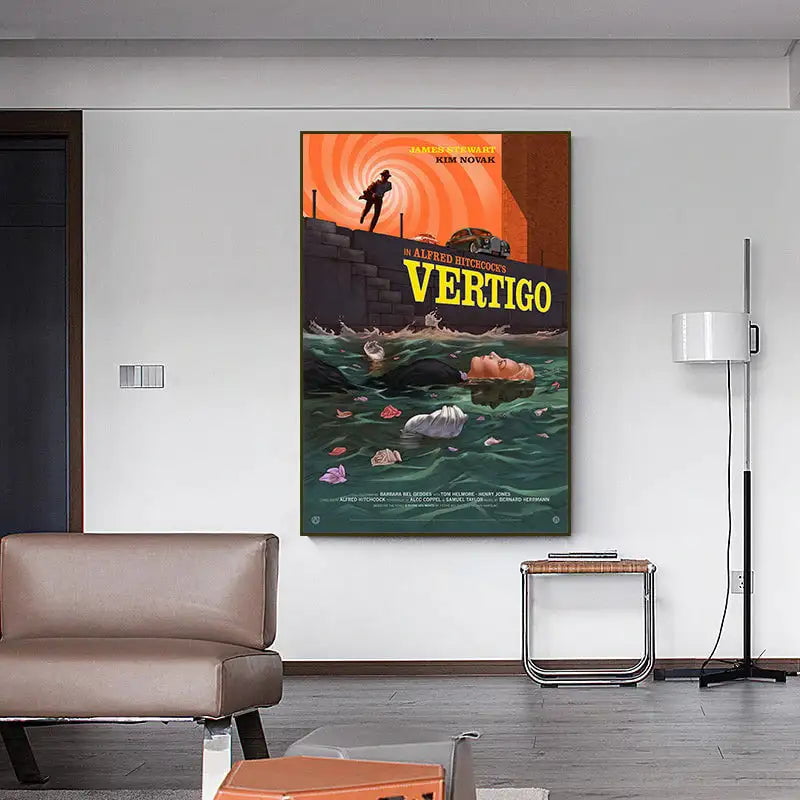
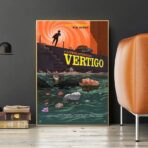
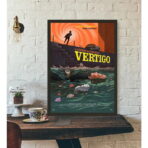
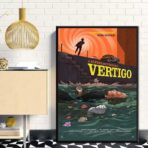
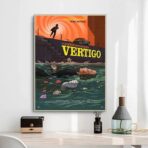
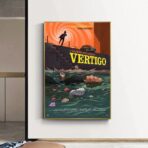
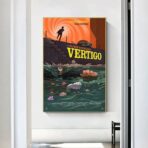
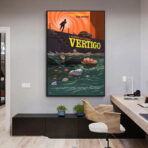
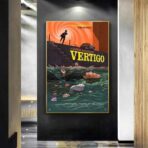
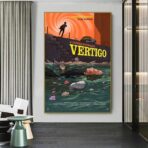
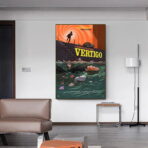








With this Poster featuring one of Alfred Hitchcock’s films, Vertigo, your decoration will be enhanced with an elegant vintage style.
- Paper characteristics:
- 🎨 Canvas: global standard in terms of printing and imitating a “painting canvas” look.
- By default, the poster contains a 4cm white border for framing (frame not included). If you don’t want it, please choose “without white border”.
- ✅ Size: Multiple choices available. ✅
- High UV resistance.
- Color vibrancy maximum, glare-free.
- Paper recycled, guaranteeing environmental friendliness.
- Poster packaged carefully and delivered in a protective tube for Total protection.
- FREE STANDARD DELIVERY.
⚠️ Frame not included. ⚠️
Description of this Alfred Hitchcock Poster
Vertigo (original title: Vertigo) is a 1958 American color (Technicolor) thriller film directed by Alfred Hitchcock. At the time of its release, Vertigo was not a unanimous success with audiences and critics. Despite the brilliant technical innovations, audiences did not respond enthusiastically to this psychodrama. However, in the decades since its creation, it has become one of Hitchcock’s most important and popular works.
Technical gimmicks such as simultaneous use of the rubber lens close-ups, and the backward tilt as an expression of Stewart’s vertigo have become familiar tricks. Hitchcock uses the simultaneous use of the drive and zoom to present a sense of claustrophobia on the movie screen by using a model staircase.
John “Scottie” Ferguson is a San Francisco police officer who, according to the prologue, left the force because his fear of heights prevented him from saving his partner’s life. He occasionally works as a private investigator. His old friend, Gavin Elster, hires him to watch over his wife, Madeleine, a mysterious and cold blonde who, according to Elster, has become obsessed with the 19th-century drowning death of her ancestor, Carlotta Valdez. She spends every day in a museum, gazing at Carlotta’s portrait. Scottie follows her in his car and observes her. The first half of the film is a ghost story: Scottie becomes increasingly attracted to the neurotic woman and to the theory that Madeleine is the reincarnation of the woman painted in her portrait and that she too will die. When Madeleine throws herself into San Francisco Bay in front of Scottie, he goes outside and they meet in person. Scottie quickly falls in love with Madeleine. Although she seems to have reciprocal feelings, Carlotta’s “attraction” is stronger, and Madeleine eventually throws herself from a church steeple. He collapses again, as his fear of heights prevented him from saving her. Scottie is placed in a psychiatric hospital for a time. The film suddenly becomes more tense when the man accidentally runs into Judy Barton, a dark-haired saleswoman whose features remind him of the deceased Madeleine. They become involved. Scottie slowly, gradually transforms Judy into Madeleine. He attempts to force the rebirth of his lost love by manipulating her: he dyes her hair, changes her clothes, until Judy is completely transformed into Madeleine. She quietly endures Scottie’s strange demands and obeys him. Even from the obvious signs, the man cannot see the deception. But when Judy places the locket Carlotta wore in the painting, Scottie realizes the bitter truth.