


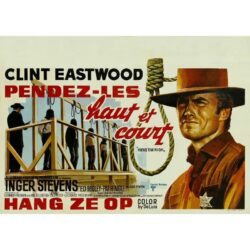

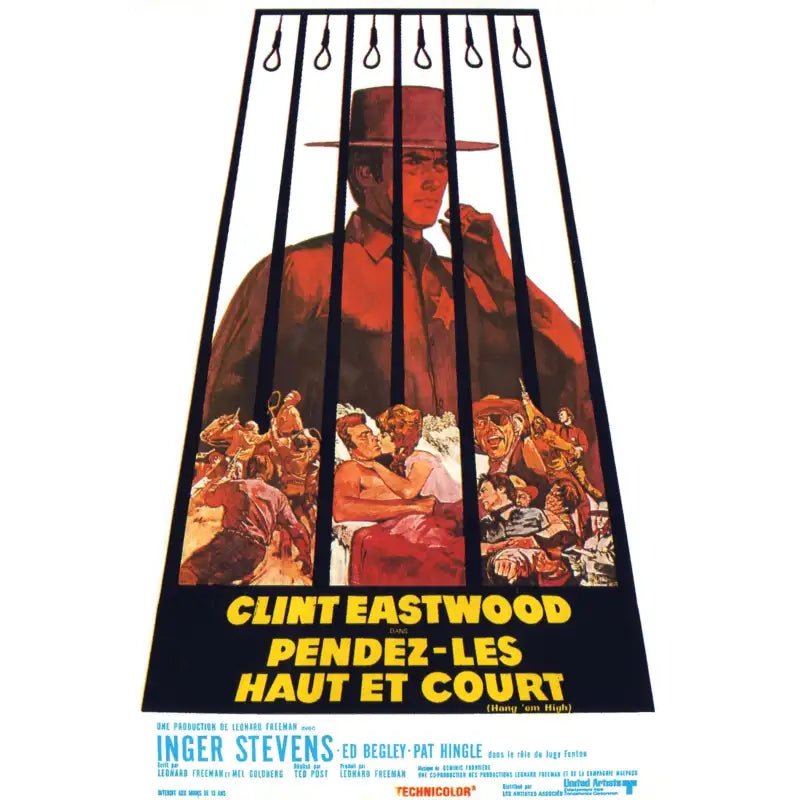
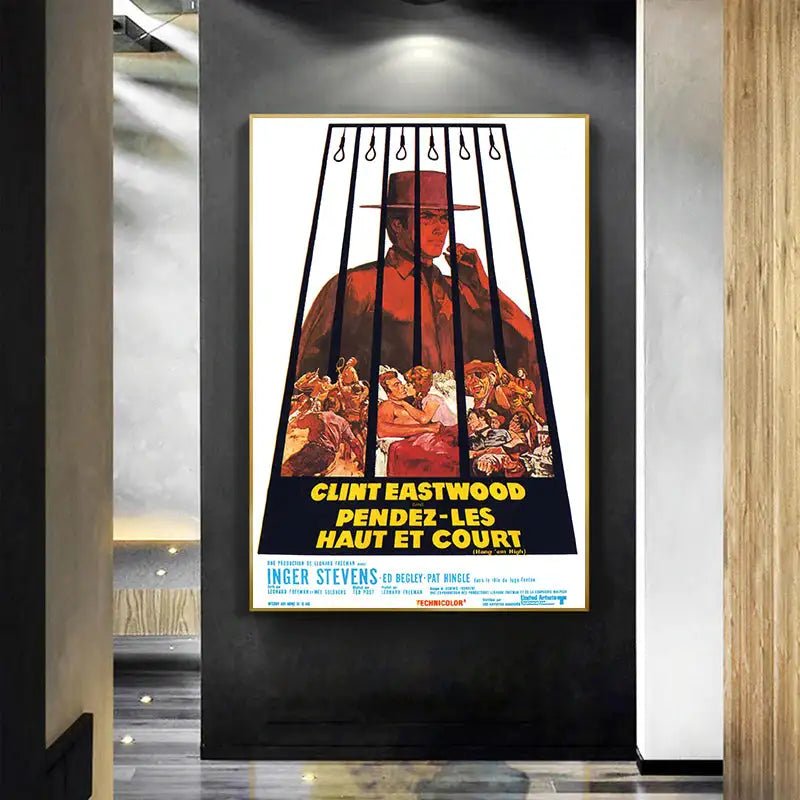
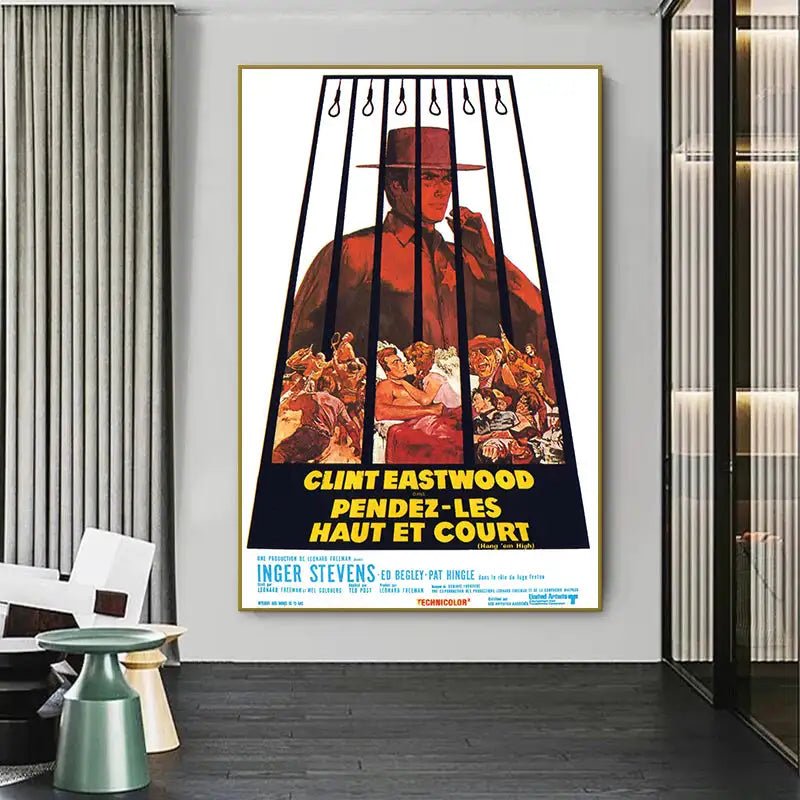
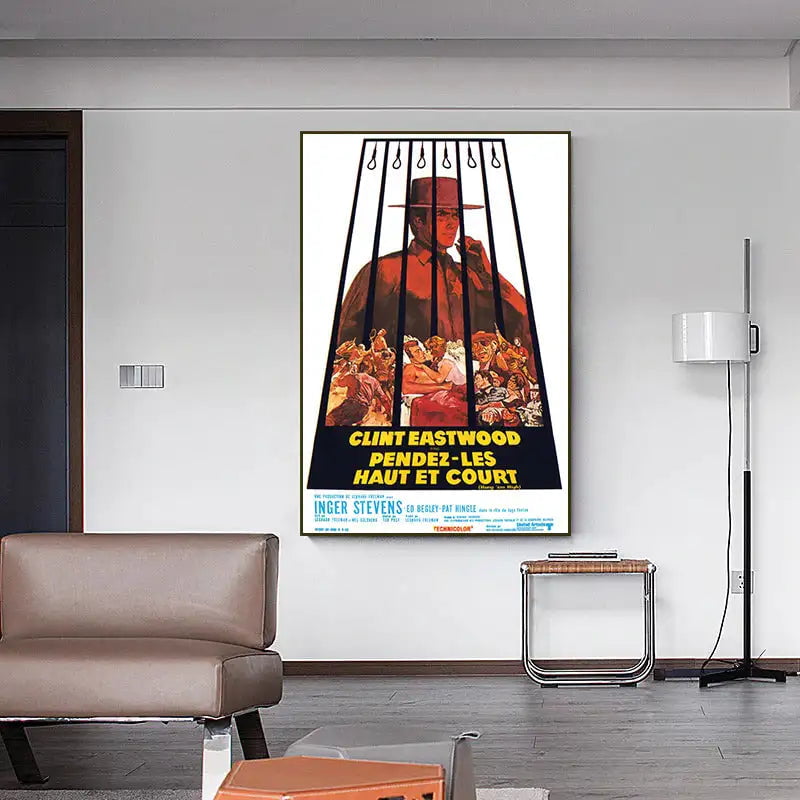
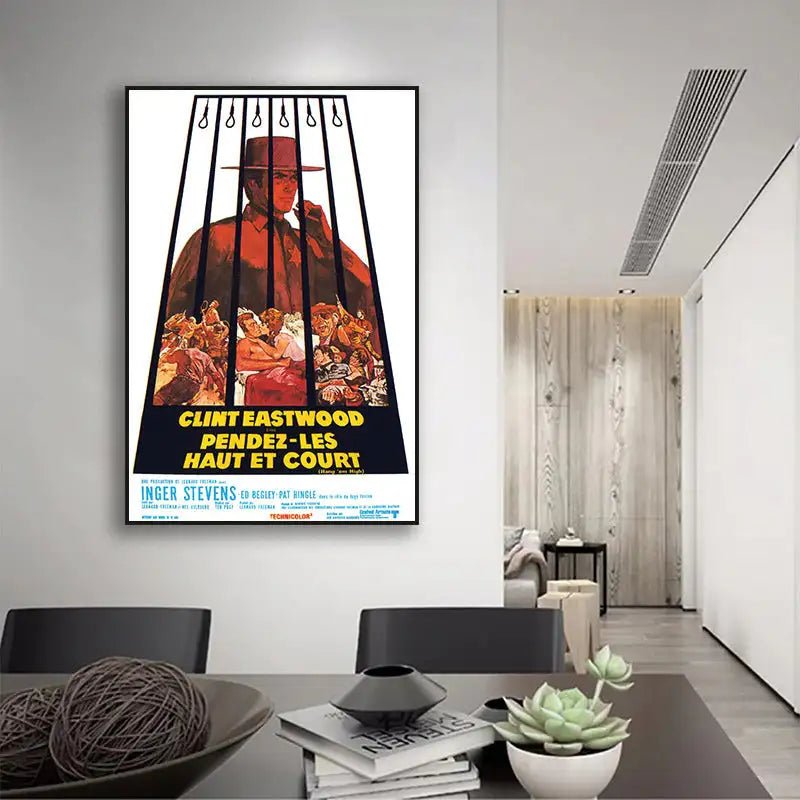
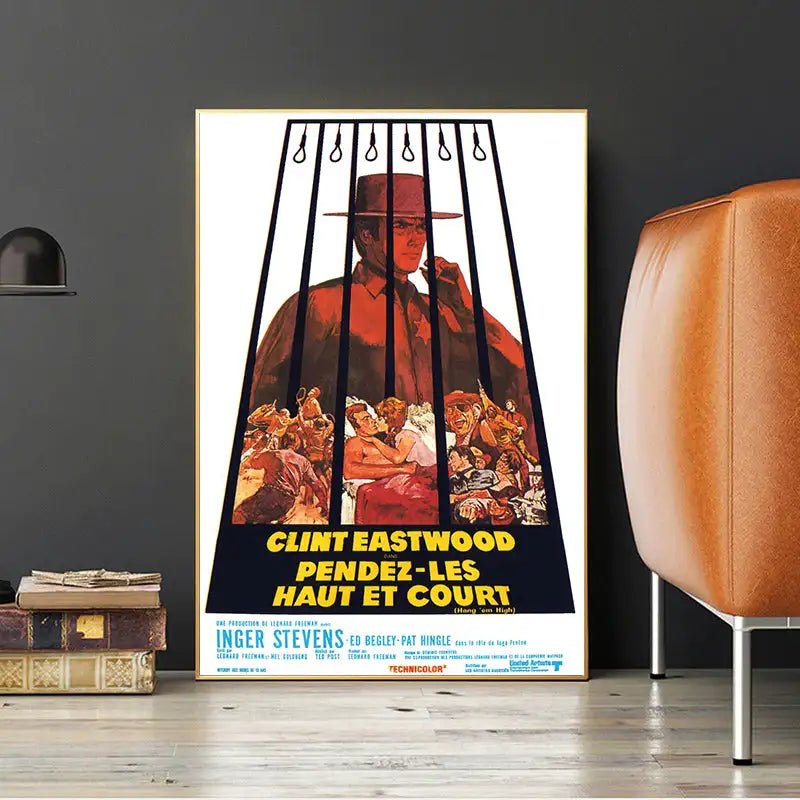
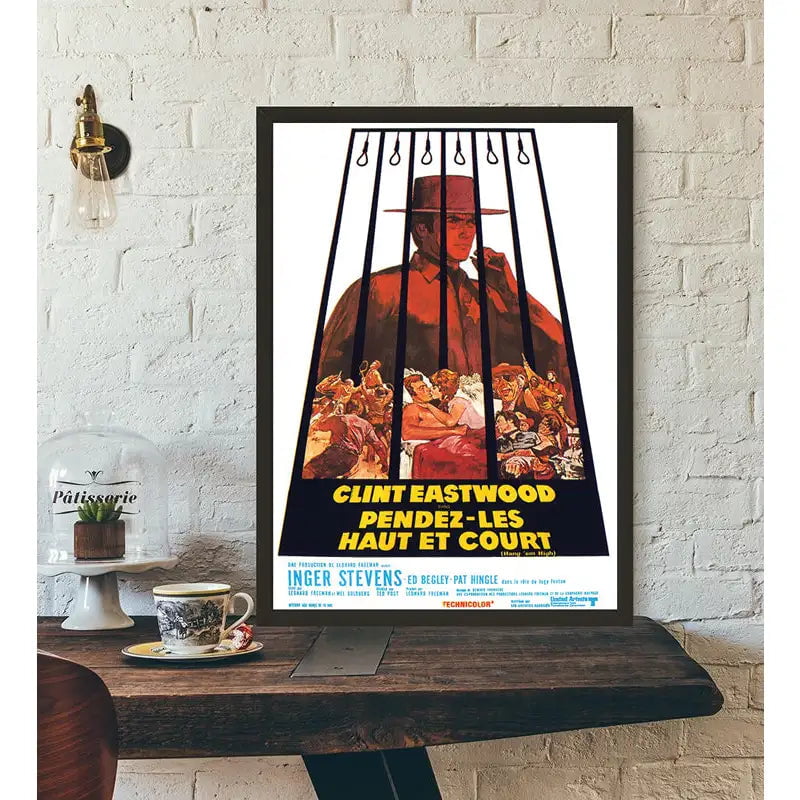
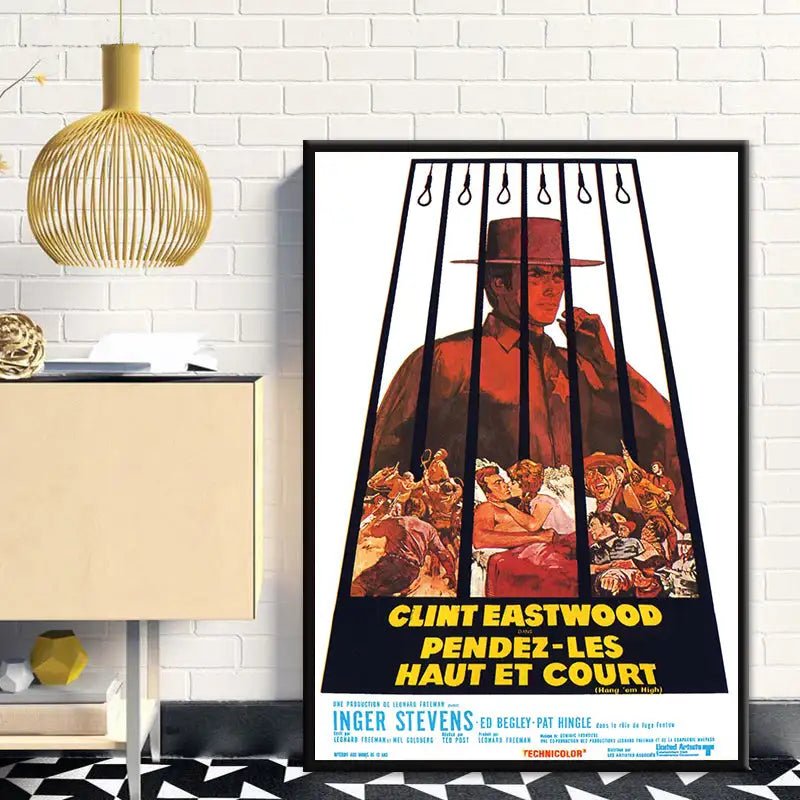
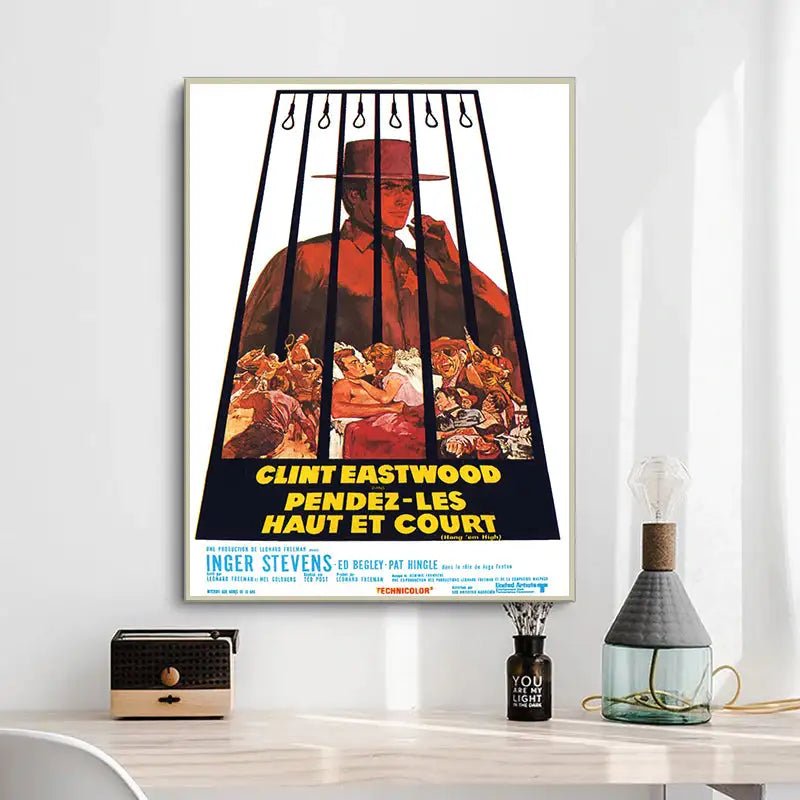
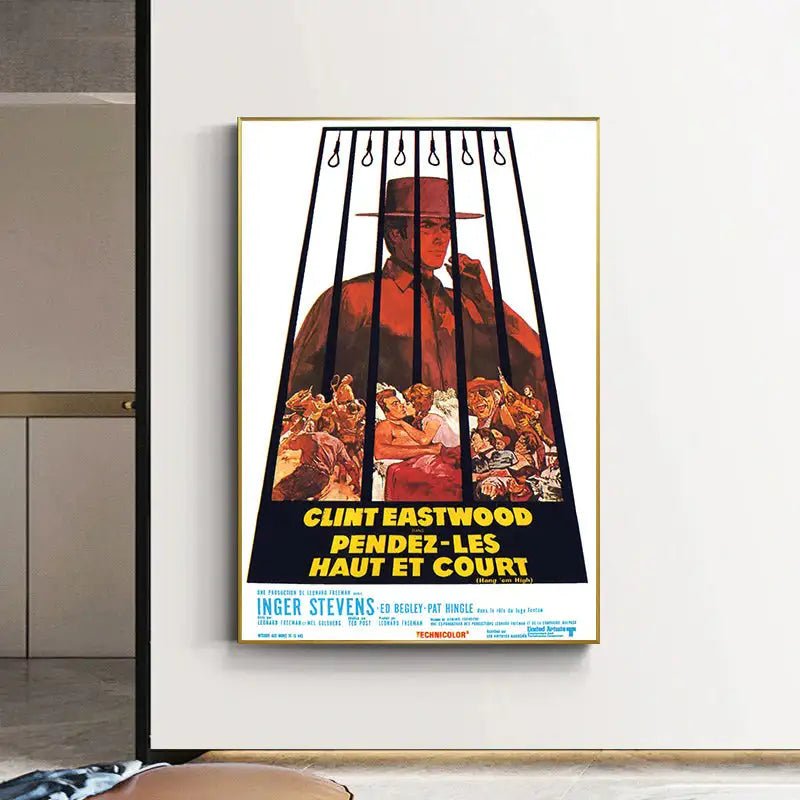















This Superb Poster During Les Haut Et Court will decorate your interior with style thanks to its shimmering colors and the charisma of Clint Eastwood!
- Paper Feature:
- 🎨 Canvas: global standard in terms of printing and imitating a “painting canvas” look.
- By default, the poster contains a 4cm white border for framing (frame not included). If you don’t want it, please choose “without white border”.
- ✅ Size: Multiple choices available. ✅
- High UV resistance.
- Color vibrancy maximum, glare-free.
- Paper recycled, guaranteeing environmental friendliness.
- Poster packaged carefully and delivered in a protective tube for total protection.
- FREE STANDARD DELIVERY.
⚠️ Frame not included. ⚠️
Description of this Hang ‘Em High and Short Poster
Hang ‘Em High and Short is a 1968 western by Ted Post, starring Clint Eastwood. The film was released in German cinemas on December 18, 1968.
Oklahoma, 1889. Former sheriff Jedediah (Jed) Cooper has purchased cattle from a small rancher and is riding across the prairie. Suddenly, nine men accompanied by a leader named “Captain Wilson” appear and demand that Cooper show them the cattle purchase contract. The contract is signed only with a cross, but the men know that the rancher knows how to write and has always signed his name. Cooper’s description of the rancher also doesn’t match. Since one of the men happened to be at the ranch and found the rancher and his wife shot dead, the men believe that Cooper murdered the couple and stole the cattle. But instead of letting the law take care of the matter, they hang him from the nearest tree and disappear.
Shortly after, Marshal Dave Bliss appears while en route with a prisoner transport. He rescues Cooper from his predicament, but arrests him and presents him to Judge Adam Fenton, who is said to prefer to see all offenders hanged on the gallows. Fortunately, the murderer of the ranching couple has already been arrested, and the judge and Cooper watch his execution from the window. The murderer tricked Cooper into believing he was the rancher and sold him the cattle. Cooper, now free again, is adamant that the nine men who hanged him be punished fairly. The judge is informed that Cooper was a sheriff in St. Louis and offers him the position of marshal. Cooper accepts and henceforth wears a marshal’s star. He can thus hunt the nine men as a well-paid representative of the law.
While Cooper is supposed to pick up a prisoner from a sheriff’s house, he stumbles upon one of the nine men. When the latter defends himself with his weapon against arrest, Cooper shoots him dead in self-defense. Meanwhile, at the judge’s house, one of the nine men has surrendered himself and given the names of the others. He had also opposed Cooper’s hanging. Cooper then goes to the place where the other seven men are supposed to be, armed with the arrest warrants. He arrests one of them, the blacksmith Stone, and has him locked up at the local sheriff’s house.
Reluctantly, the sheriff accompanies Cooper in search of the other men when, along the way, a farmer asks them for help. The farmer has had his cattle stolen, and his father and brother have been murdered. Due to back pain, the sheriff refused to continue, and Cooper set off with the farmer and his men to search for the three murderers, who were eventually found. One of the three, Miller, was another of the nine men. The other two, two very young brothers whom Miller had apparently convinced to commit the crime, claimed that they had participated in the cattle theft, but not in the murder. The farmer and his men wanted to hang all three immediately. Cooper prevented the lynching and insisted that they be tried. Since no one wanted to accompany him, he took the risk of taking the three men to the jail alone. Miller managed to free himself from his bonds during a rest stop and attempted to restrain Cooper. The two untied brothers watched the duel without intervening or taking advantage of the situation to escape. Cooper overpowered Miller and tied him to the horse. After a long ride, Cooper collapses, exhausted, shortly before the court date, falls from his horse, and falls directly into the arms of the judge, who has already been informed by telegram and has come to meet Cooper on the road. The judge takes Cooper to the local brothel, where the ladies see to it that he gets back on his feet. The conviction of the three culprits spreads like a feat. The sheriff, unwilling to do his job, shows up at Cooper’s house and tells him that he had to shoot Stone, the imprisoned blacksmith. He had let him out of his cell during the day so he could attend to his chores at the forge, then had to go find him when he didn’t return to his cell voluntarily one evening. He should have shot him to prevent an escape attempt and would have fatally wounded him. In addition, the sheriff gives Cooper $800 he received from Captain Wilson, the amount Cooper paid for the cattle. The captain thus wanted Cooper to stop hunting him and his men. Cooper accepted the money, but declared that he was only settled with his men financially. The sheriff retraced his steps and informed Captain Wilson, who then set out with two of his men to kill Cooper. The rest of his men fled for fear of Cooper.
The three men Cooper saved from lynching were put on trial. Cooper took the two brothers’ defense as a witness, convinced that they had only participated in the cattle rustling. But the judge ignored his comments, charged him with contempt of court, fined him $30, and threatened to imprison him for 30 days if he did not restrain his words. Ultimately, all three were sentenced to death and hanged along with three other condemned men in front of a large crowd of onlookers. Cooper, who does not want to witness the spectacle, retires to the brothel with one of the ladies. He begins to wonder if the judge’s proceedings can still be considered fair.
In the brothel, Cooper is attacked by Captain Wilson and his assistants, who shoot him. Rachel Warren, a widow, devotedly cares for Cooper. During a country excursion, she reveals to Cooper why she watches each new prisoner. She and her husband were attacked by two men who killed her husband and raped her. If these men were ever arrested, she would like to witness their execution.
Cooper finds Captain Wilson and the other members of his team. He kills them during the battle, after which Wilson hangs himself in fear. Cooper wants to resign as marshal to the judge, but after being rightly accused of using the marshal’s star for personal revenge, and after pardoning one of the men, now old and sick, who voluntarily surrendered, Cooper agrees to take the star back. During the discussion, the judge admits to sometimes being overwhelmed by events and making mistakes; but this is said to be due to the lack of state institutions and appellate courts in the newly forming state. Cooper clasps the marshal’s star to his chest again and heads off to his next duties.