


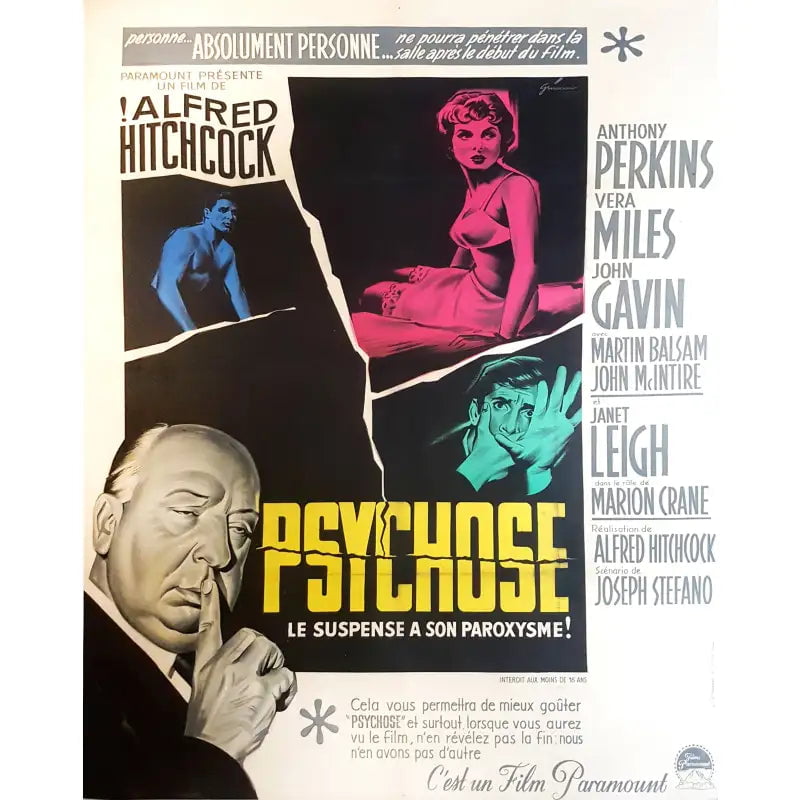
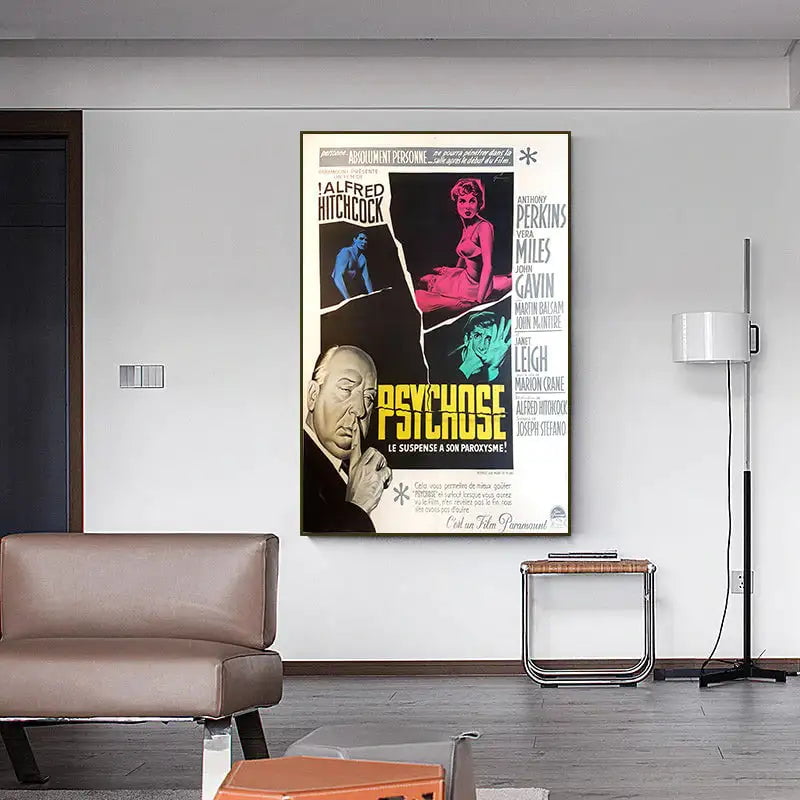
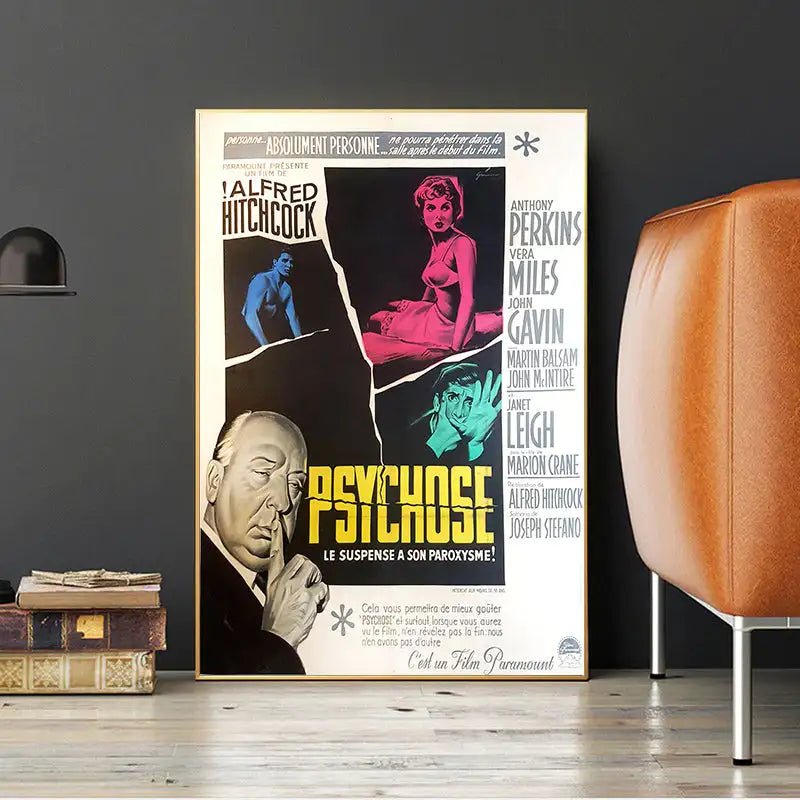
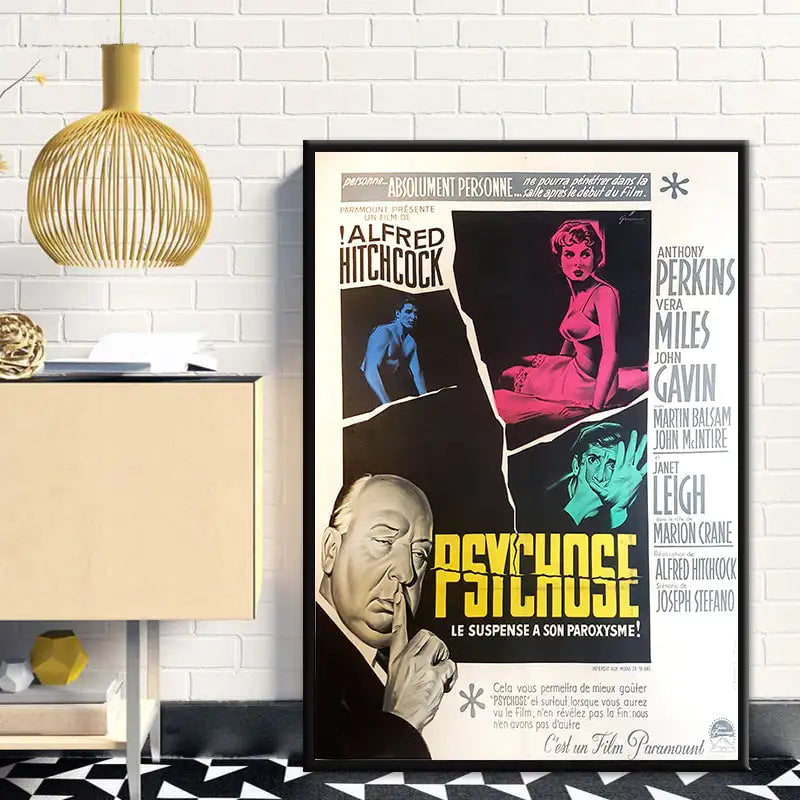
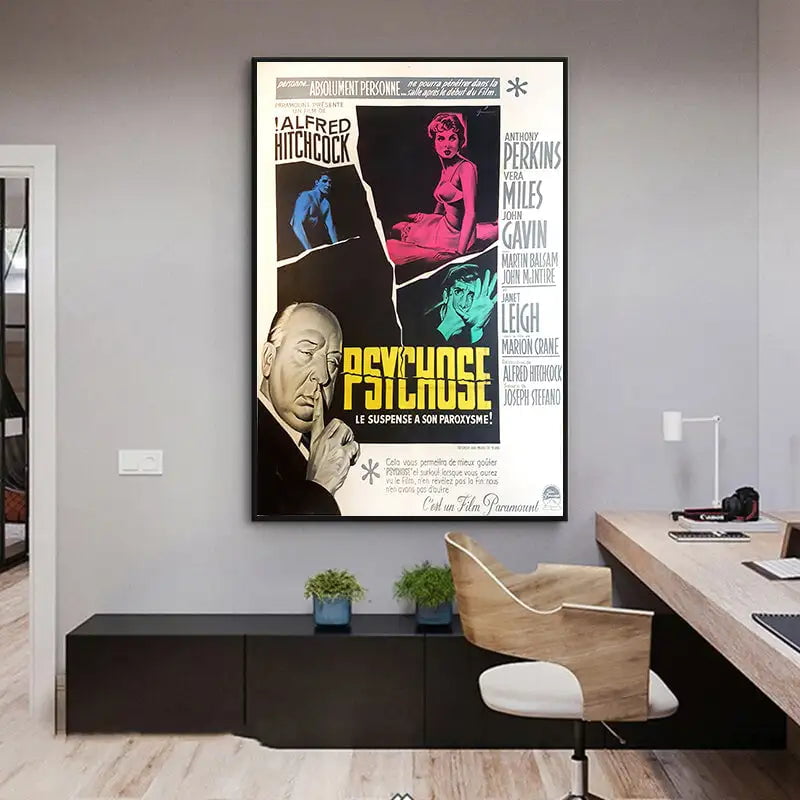


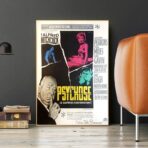
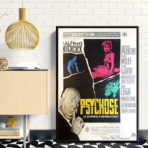

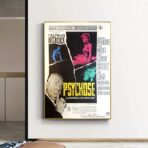
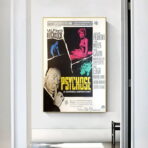
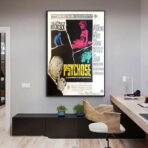
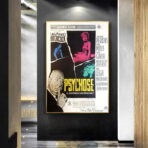







This Alfred Hitchcock Psycho Poster will transport you to the unique world of the famous director’s notable film. A must-have for fans!
- Paper Feature:
- 🎨 Canvas: global standard in terms of printing and imitating a “painting canvas” look.
- By default, the poster contains a 4cm white border for framing (frame not included). If you don’t want it, please choose “without white border”.
- ✅ Size: Multiple choices available. ✅
- High UV resistance.
- Color vibrancy maximum, glare-free.
- Paper recycled, guaranteeing environmental friendliness.
- Poster packaged carefully and delivered in a protective tube for Total protection.
- FREE STANDARD DELIVERY.
⚠️ Frame not included. ⚠️
Description of this Poster Psycho Alfred Hitchcock
Psych is a 1960 American psychological horror film produced and directed by Alfred Hitchcock. The screenplay, written by Joseph Stefano, is based on the 1959 novel of the same name by Robert Bloch. The film stars Anthony Perkins, Janet Leigh, Vera Miles, John Gavin, and Martin Balsam. The plot centers on the encounter between fugitive con artist Marion Crane (Leigh) and timid motel owner Norman Bates (Perkins) and its aftermath. A private detective (Balsam), Marion’s lover Sam Loomis (Gavin), and her sister Lila (Miles) investigate her disappearance.
Psycho was considered a departure from Hitchcock’s previous film, North by Northwest, as it was filmed on a lower budget in black and white by the crew of his television series Alfred Hitchcock Presents. The film was initially considered controversial and received mixed reviews, but public interest and strong box office results led to a major critical reevaluation. Psycho was nominated for four Academy Awards, including Best Director for Hitchcock and Best Supporting Actress for Leigh.
Psycho is now considered one of Hitchcock’s best films[9] and arguably his most famous work.[10] It has been hailed as a major work of cinematic art by international film critics and scholars due to its skillful direction, tense atmosphere, impressive camerawork, memorable score, and iconic performances. Often ranked among the greatest films of all time, it established a new level of acceptability for violence, deviant behavior, and sexuality in American films,[11] and is widely considered one of the earliest examples of the horror film genre.
After Hitchcock’s death in 1980, Universal Pictures produced sequels: three sequels, a remake, a television spin-off, and a television series set in the 2010s. In 1992, the Library of Congress deemed the film “culturally, historically, or aesthetically significant” and selected it for preservation in the United States National Film Registry.
During a Friday afternoon tryst at a Phoenix hotel, real estate secretary Marion Crane and her boyfriend Sam Loomis discuss their inability to marry because of Sam’s debts. Marion returns to work, steals a $40,000 cash deposit entrusted to her for deposit, and drives to Sam’s home in Fairvale, California. Marion hastily trades in her car en route, arousing the suspicions of the dealer and a California Highway Patrol officer. Marion stops for the night at the Bates Motel, located off the main highway, and hides the stolen money in a newspaper. Owner Norman Bates comes down from a large house overlooking the motel, registers Marion under a false name, and invites her to dine with him. After Norman returns home, Marion overhears Norman arguing with his mother about Marion’s presence. Norman returns with a light meal and apologizes for his mother’s outbursts. Norman discusses his taxidermist hobby, his mother’s “illness,” and the fact that people have a “private trap” they want to escape from. Marion decides to return to Phoenix in the morning to return the stolen money. While Marion is taking a shower, a robed shadowy figure appears and stabs her to death. Shortly after, Norman cleans up the murder scene, puts Marion’s body, her belongings, and the hidden money in her car, and sinks her in a swamp. Marion’s sister, Lila, arrives in Fairvale a week later, tells Sam about the robbery, and demands to know where she is. He denies knowing anything about her disappearance. A private investigator named Arbogast approaches them, saying he has been hired to recover the money. Arbogast stops at the Bates Motel and questions Norman, whose nervous behavior and incoherent answers arouse his suspicions. He examines the guest register and discovers from her handwriting that Marion spent a night at the motel. When Arbogast learns that Marion spoke to Norman’s mother, he asks to speak to her, but Norman refuses. Arbogast informs Sam and Lila of his search and promises to meet them at Sam’s house within the hour. After entering the Bates house to look for Norman’s mother, the shadowy figure emerges from the bedroom and stabs him to death. Sam goes to the motel with Lila when they don’t hear from Arbogast, worried that something has gone wrong. He sees a figure in the house, which he assumes is Norman’s mother. Lila and Sam alert the local sheriff, who tells them that Norman’s mother died in a murder-suicide, by strychnine poisoning, ten years earlier. The sheriff suggests that Arbogast lied to Sam and Lila so he could pursue Marion and the money. Convinced that something happened to Arbogast, Lila and Sam go to the motel. Sam distracts Norman in the office while Lila sneaks into the house. Suspicious, Norman becomes agitated and knocks Sam unconscious. As he goes into the house, Lila hides in the fruit cellar, where she discovers the mummified body of his mother. She screams, and Norman, wearing women’s clothes and a wig, enters the cellar and attempts to stab her. Sam appears and overpowers him. At the police station, a psychiatrist explains that Norman killed his mother and her lover 10 years earlier out of jealousy. Unable to bear the guilt, Norman mummified his mother’s corpse and began treating her as if she were still alive. He recreated his mother as an alternate personality, as jealous and possessive of Norman as he was of his mother. When Norman is attracted to a woman, “Mother” takes over. He had killed two other missing young women before Marion and Arbogast. The psychiatrist concludes that “Mother” has now overwhelmed Norman’s personality. Norman sits in a jail cell and hears his mother say that the murders were her doing. Marion’s car is found in the swamp.