


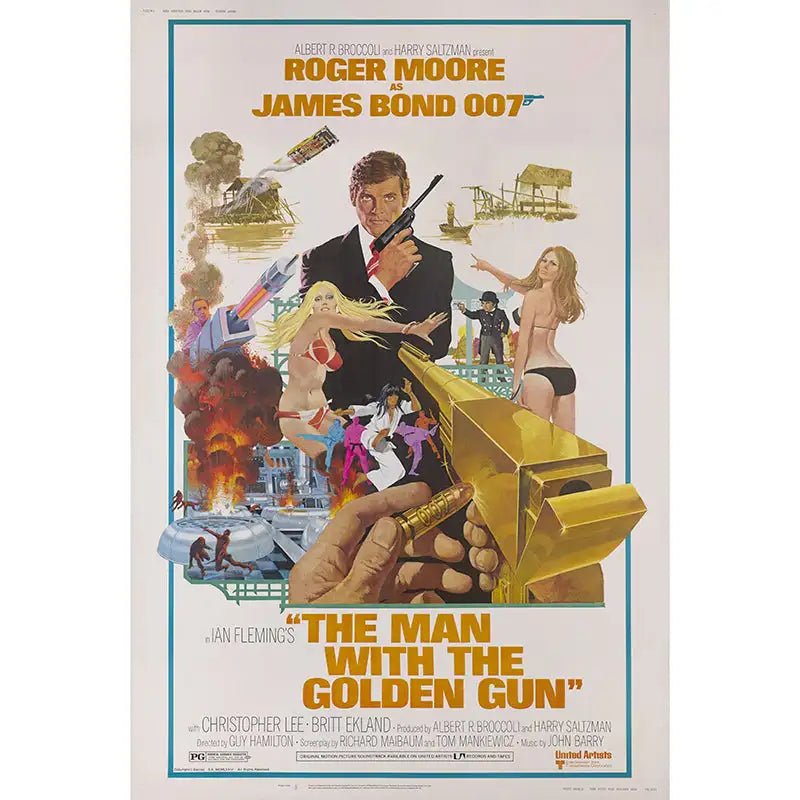
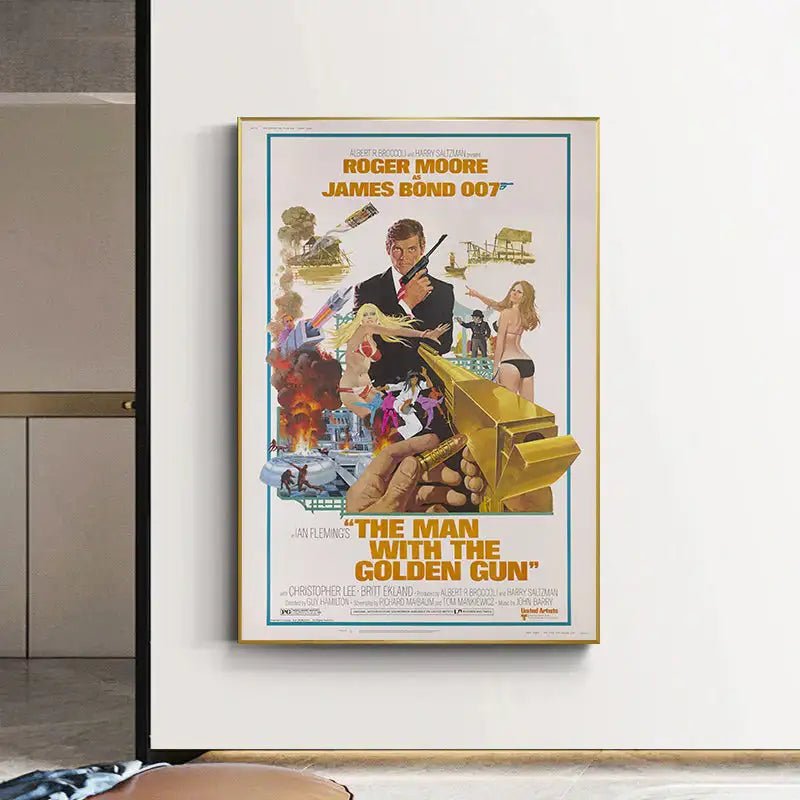
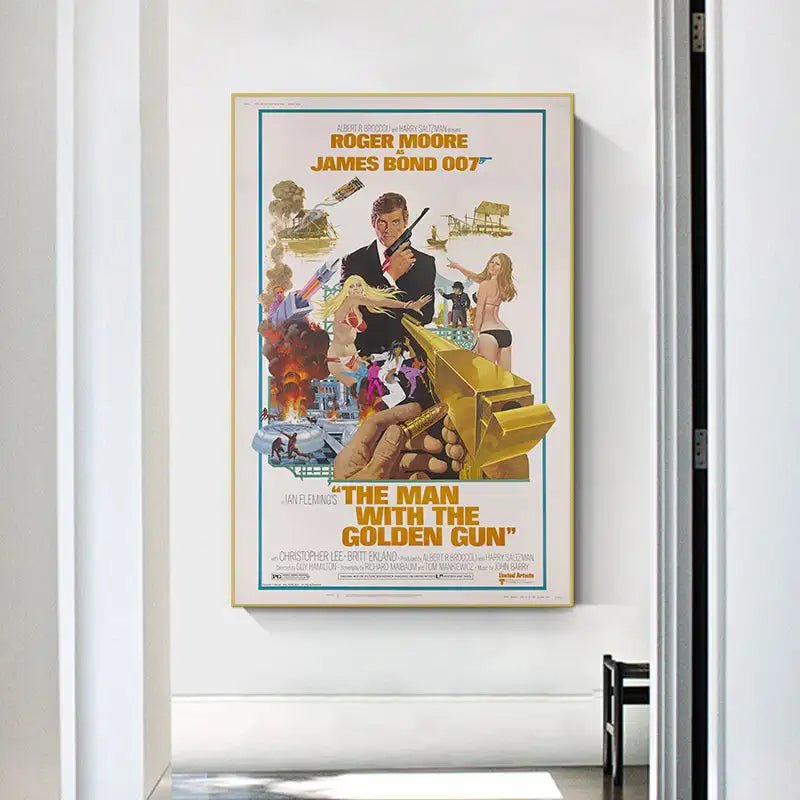
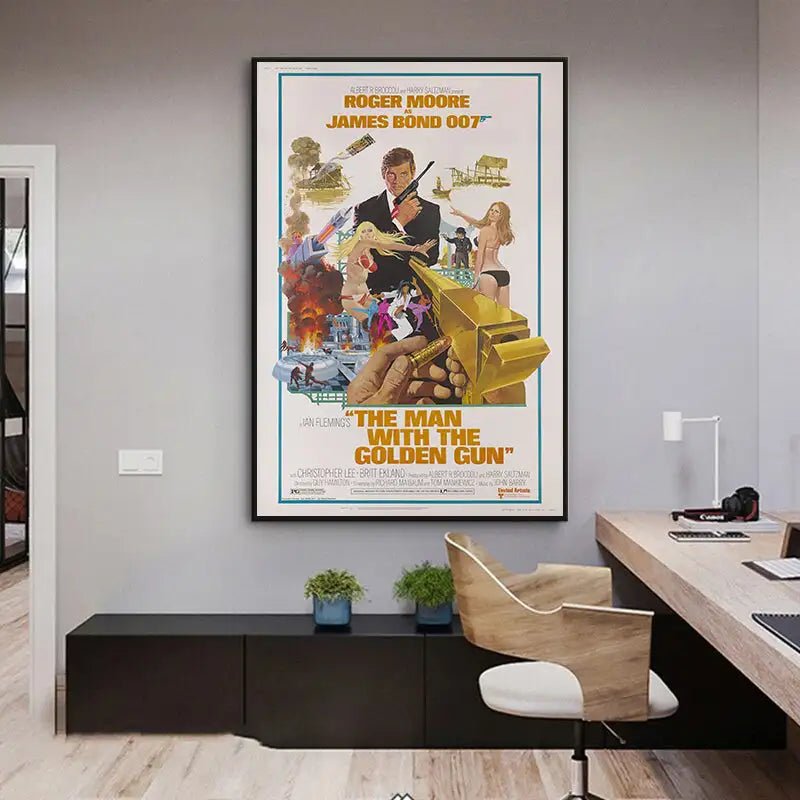
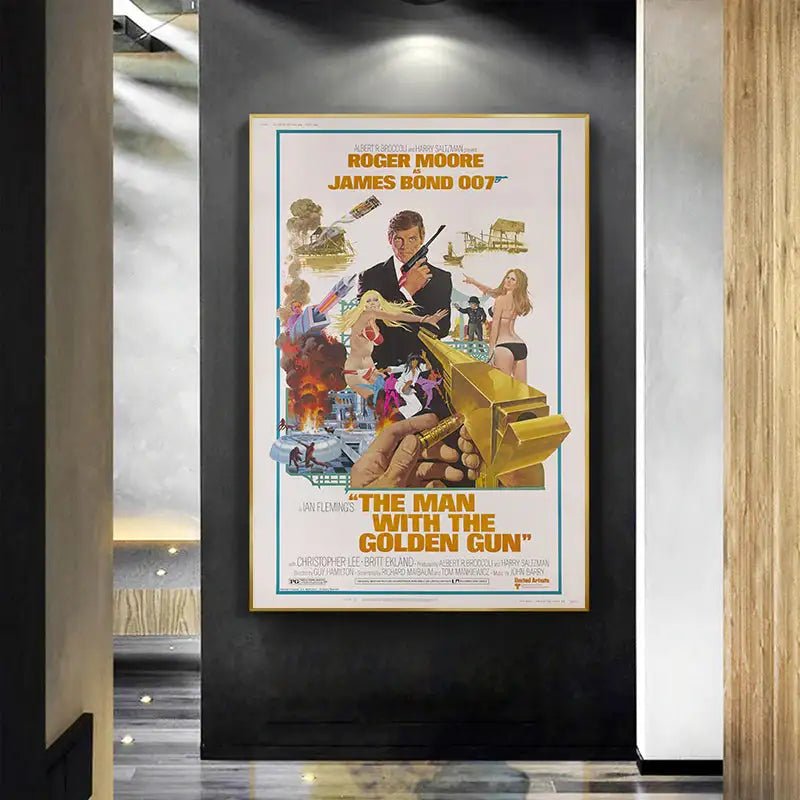
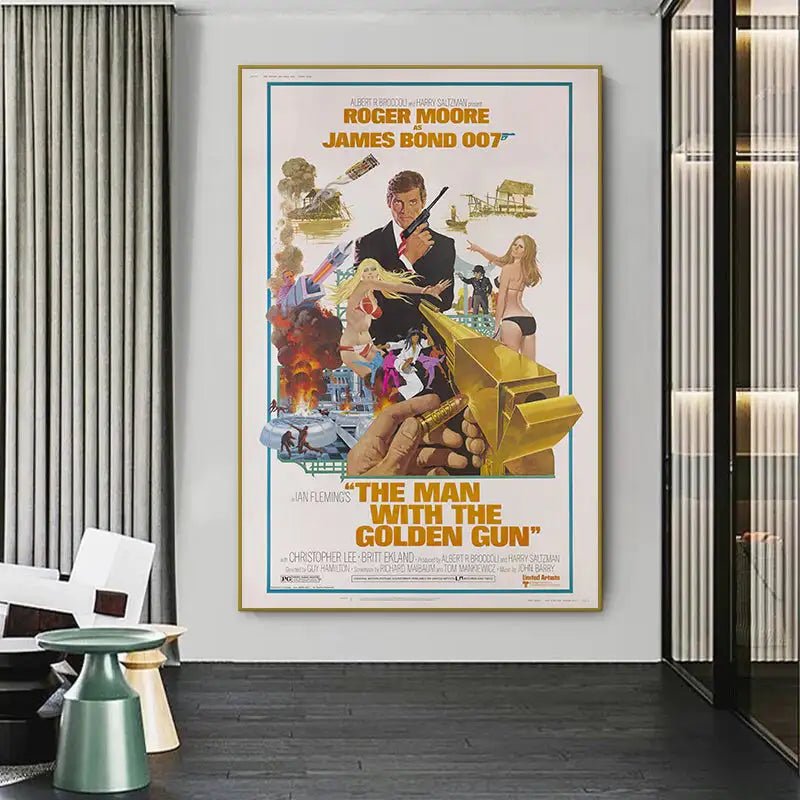
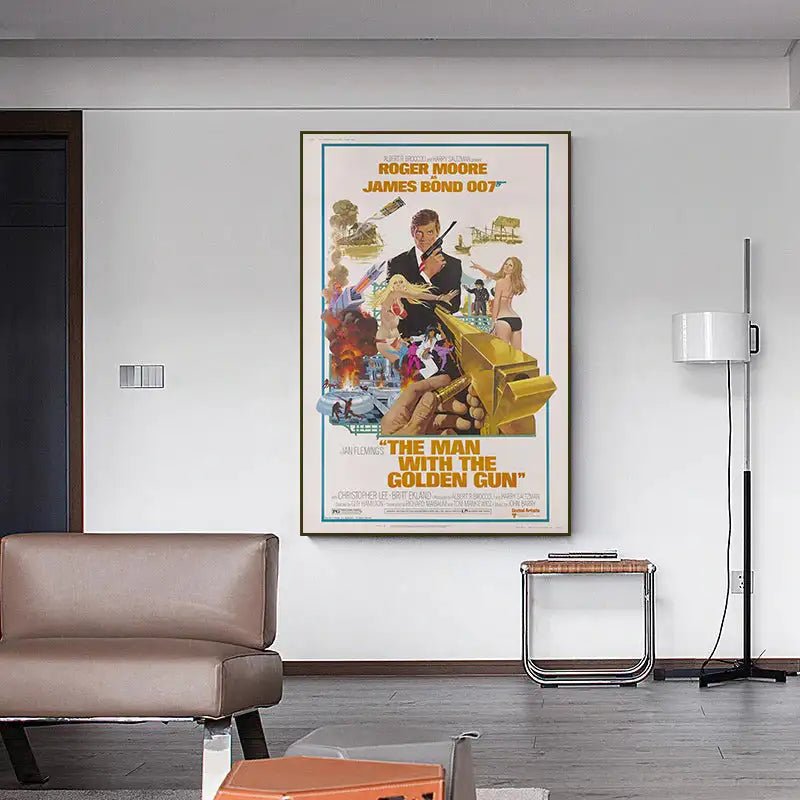
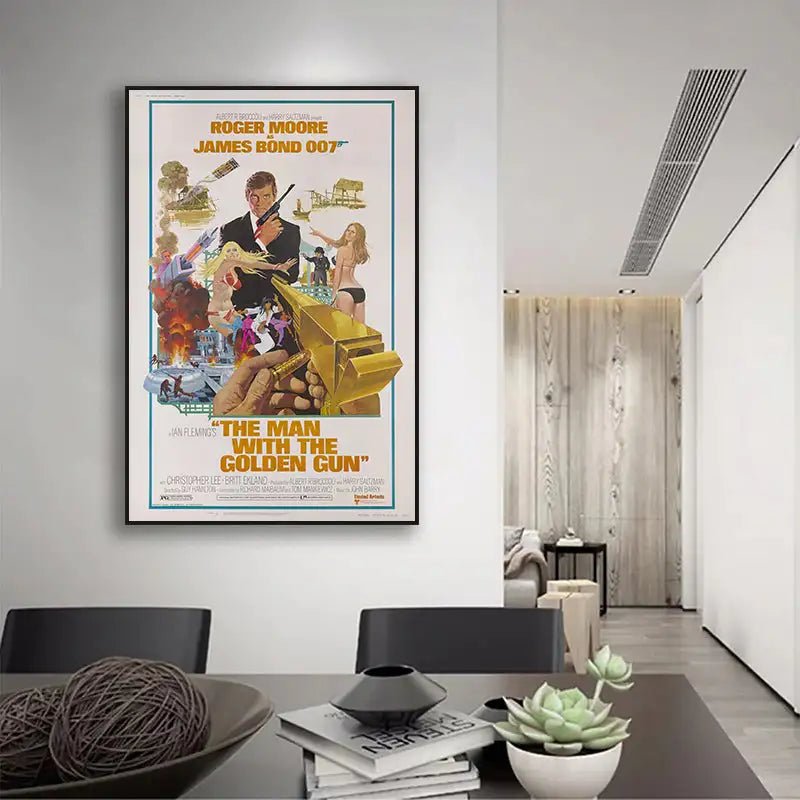
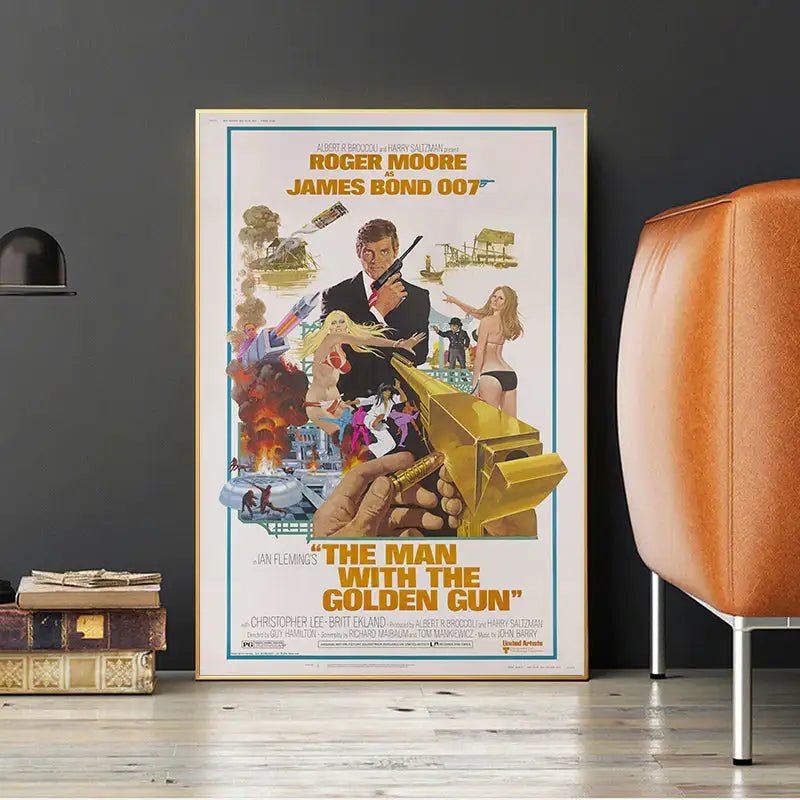
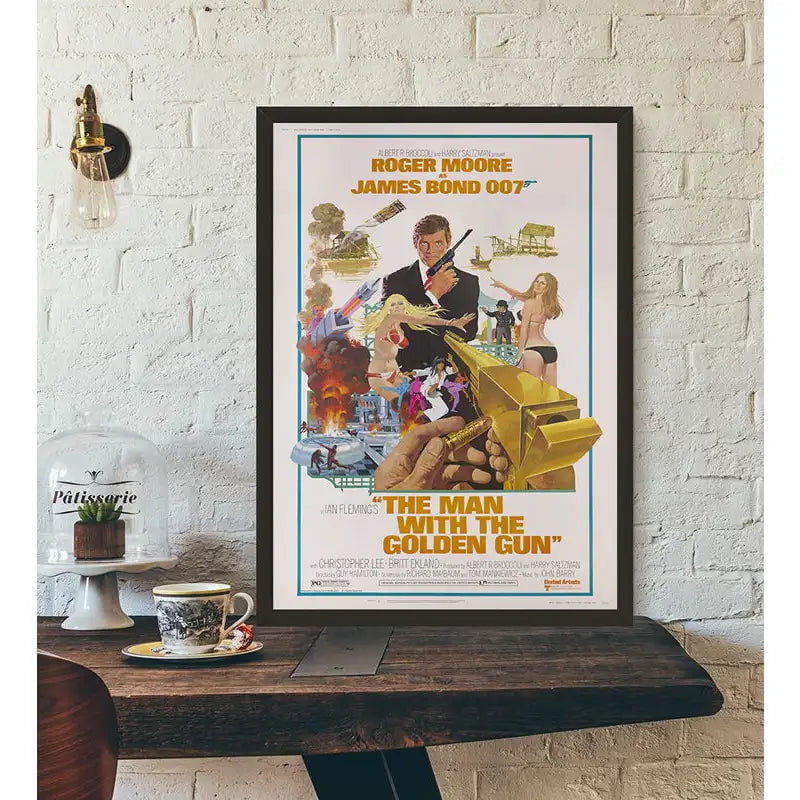
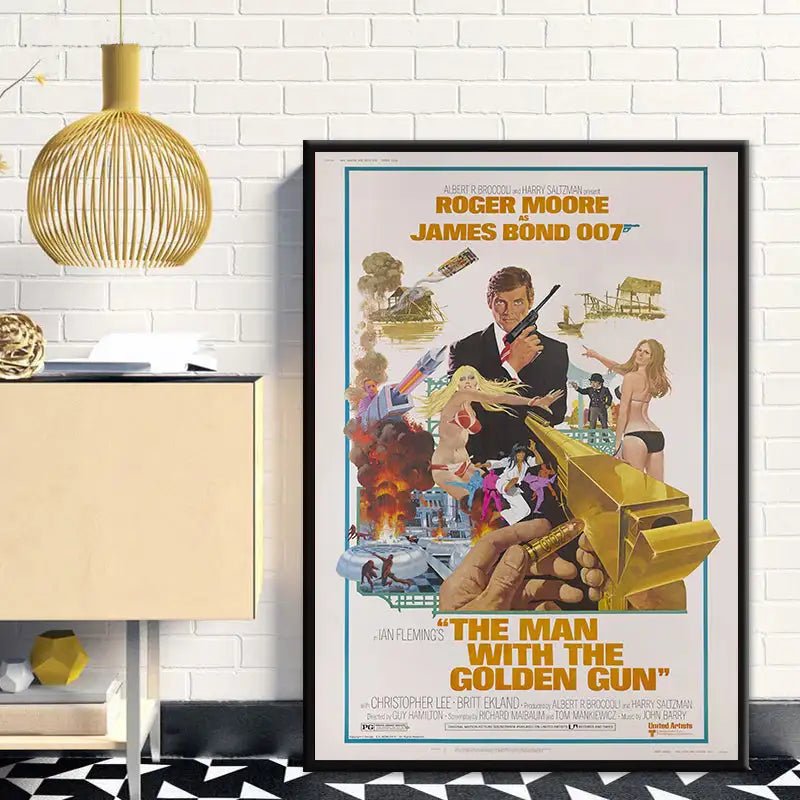
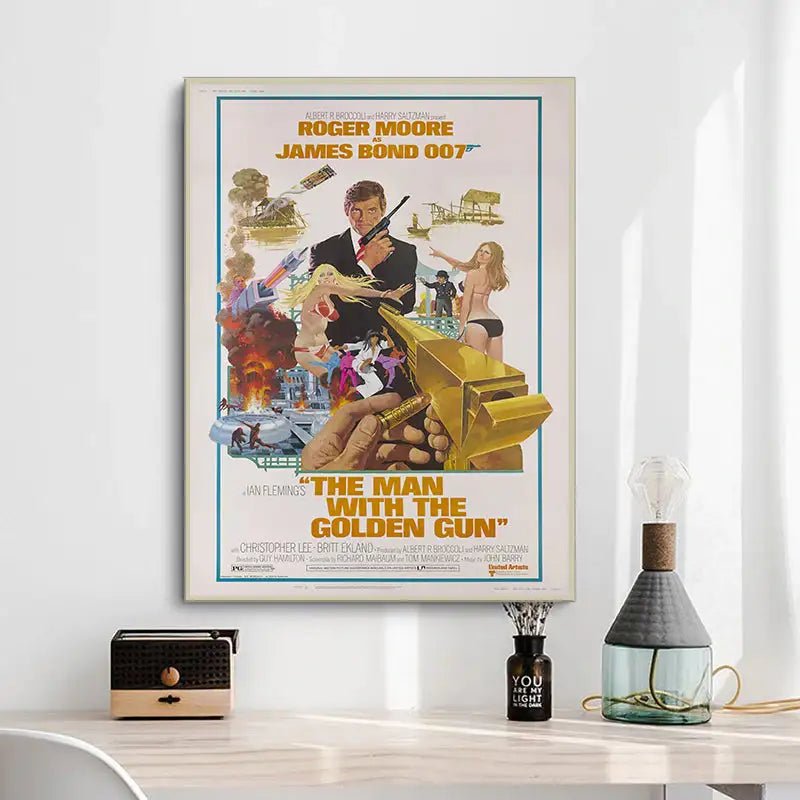













With this splendid The Man with the Golden Gun Poster, immerse yourself in the atmosphere of 60s spy films in the company of 007!
- Paper characteristics:
- 🎨 Canvas: world standard in terms of printing and imitating a “painting canvas” look.
- By default, the poster contains a 4 cm white border for framing (frame not included). If you don’t want it, please choose “without white border”.
- ✅ Size: Multiple choices available. ✅
- High UV resistance.
- Maximum color vibrancy, no glare.
- Recycled paper, ensuring environmental friendliness.
- Poster packaged carefully and delivered in a protective tube for total protection.
- FREE STANDARD DELIVERY.
⚠️Frame not included. ⚠️
Description of this The Man with the Golden Gun Poster
The Man with the Golden Gun is a 1974 spy film, the ninth in the James Bond series produced by Eon Productions, and the second to star Roger Moore as the fictional MI6 agent James Bond. Loosely based on Ian Fleming’s posthumously published 1965 novel of the same name, Bond is sent to search for the Solex Agitator, a revolutionary technological solution to contemporary energy shortages, while also battling the assassin Francisco Scaramanga, “the Man with the Golden Gun.” The action culminates in a duel between them that settles the fate of the Solex.
The Man with the Golden Gun is the fourth and final film in the series directed by Guy Hamilton. The screenplay was written by Richard Maibaum and Tom Mankiewicz. The film takes place in the face of the 1973 energy crisis, a dominant theme of the story; Britain had not yet fully recovered from the crisis when the film was released in December 1974. The film also reflects the then-popular martial arts craze, with several kung fu scenes and a primarily Asian location in Thailand, Hong Kong, and Macau. Part of the film is also set in Beirut, Lebanon, but was not filmed there. The film received mixed reviews, with some critics describing it as the weakest in the series up to that time. Christopher Lee’s performance as Scaramanga, a villain with Bond-like skills, was praised, but critics criticized the film as a whole, particularly its comedic approach and the performances of Moore and Britt Ekland. Although profitable, the film is the fourth lowest-grossing in the series, and its relatively modest earnings compared to Live and Let Die (1973) would have jeopardized the continuation of the franchise.[3] It was the last Bond film to be co-produced by Albert R. Broccoli and Harry Saltzman, the latter of whom sold his 50% stake in Danjaq, LLC, the parent company of Eon Productions, after the film’s release.