


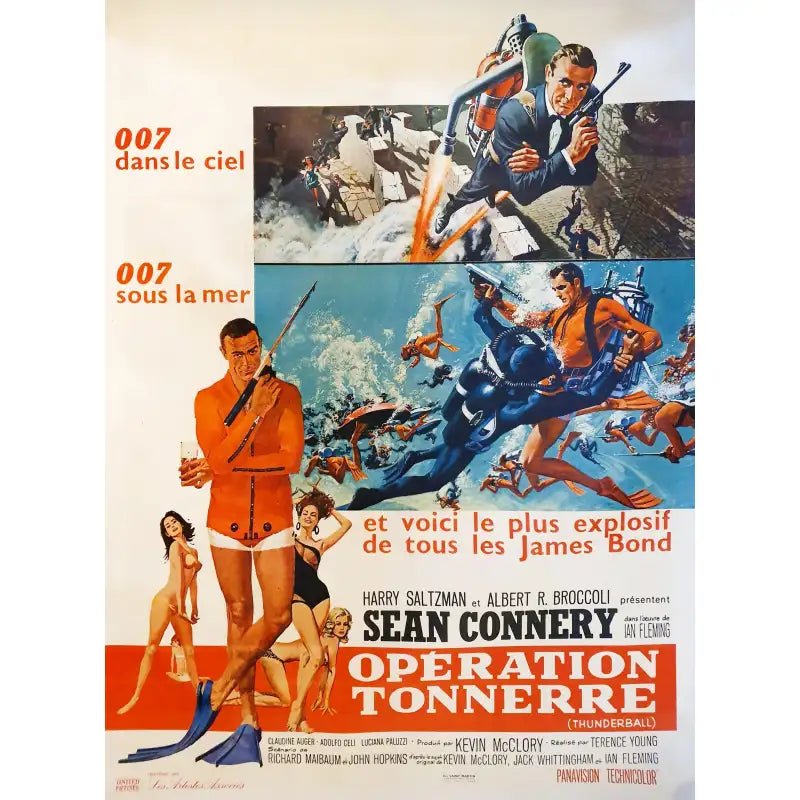
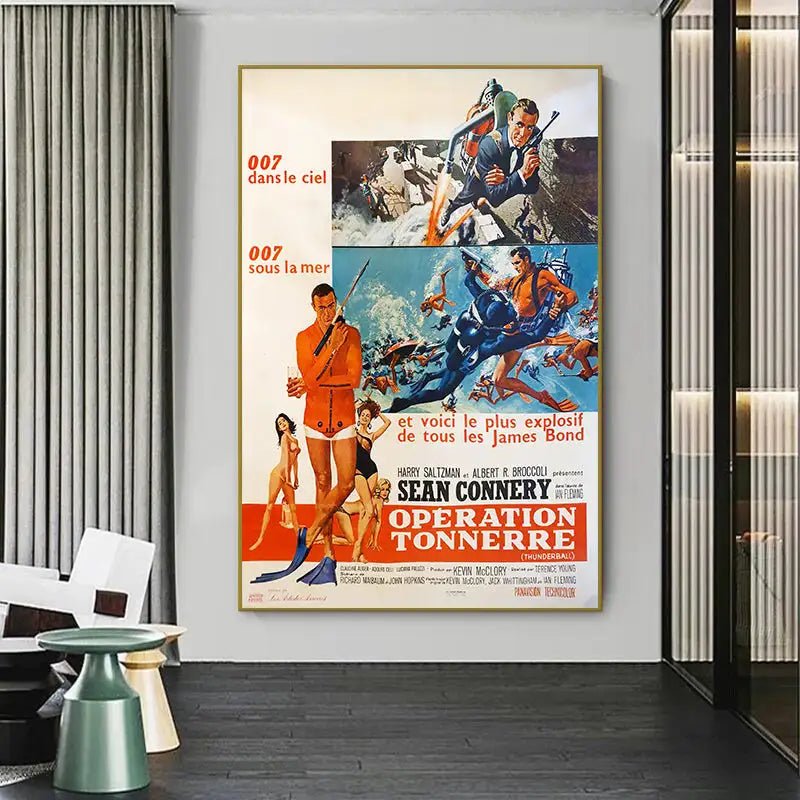

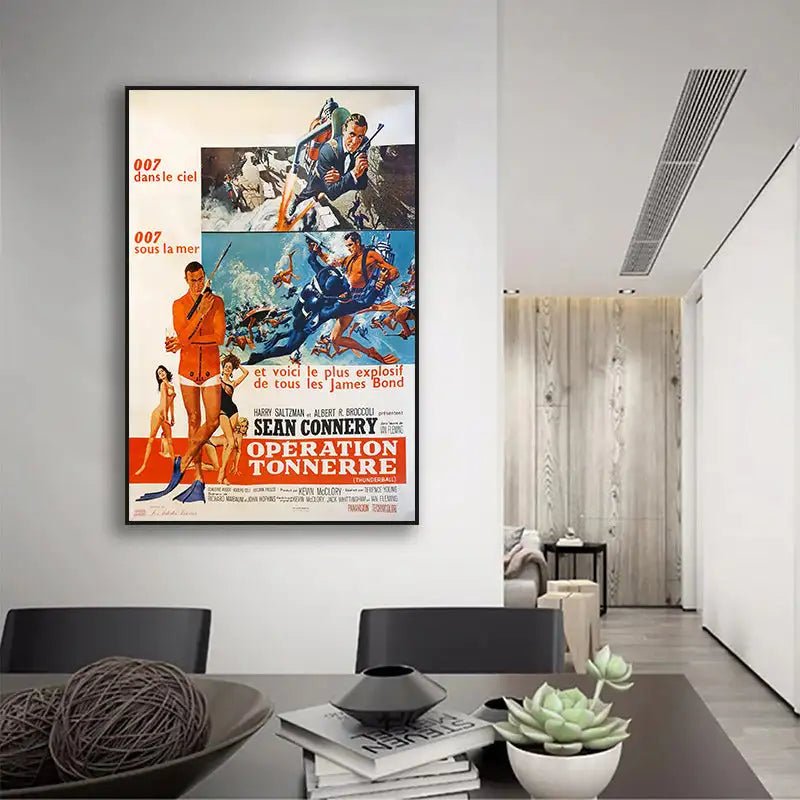
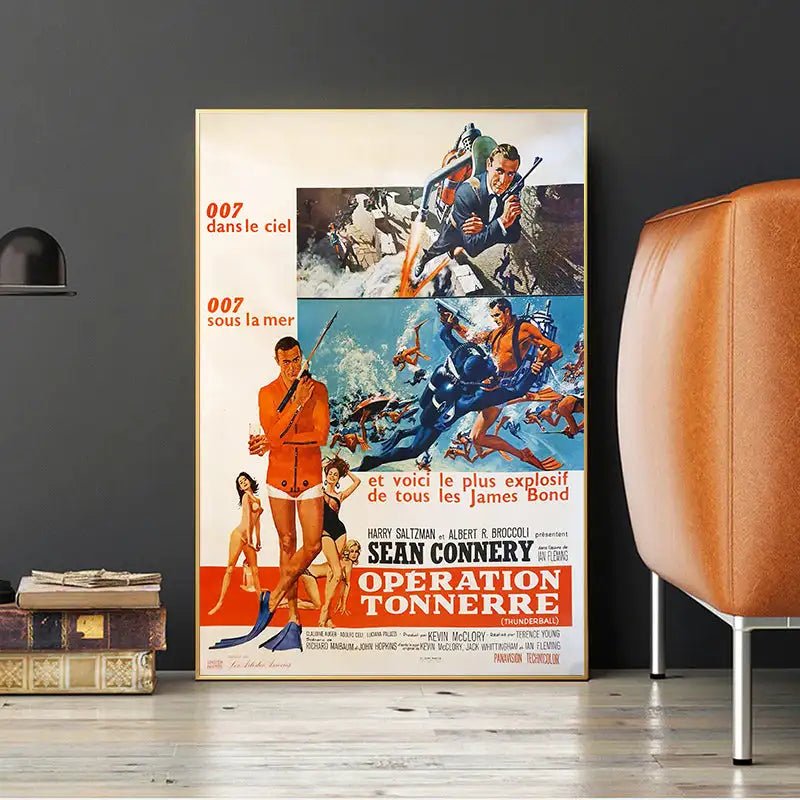
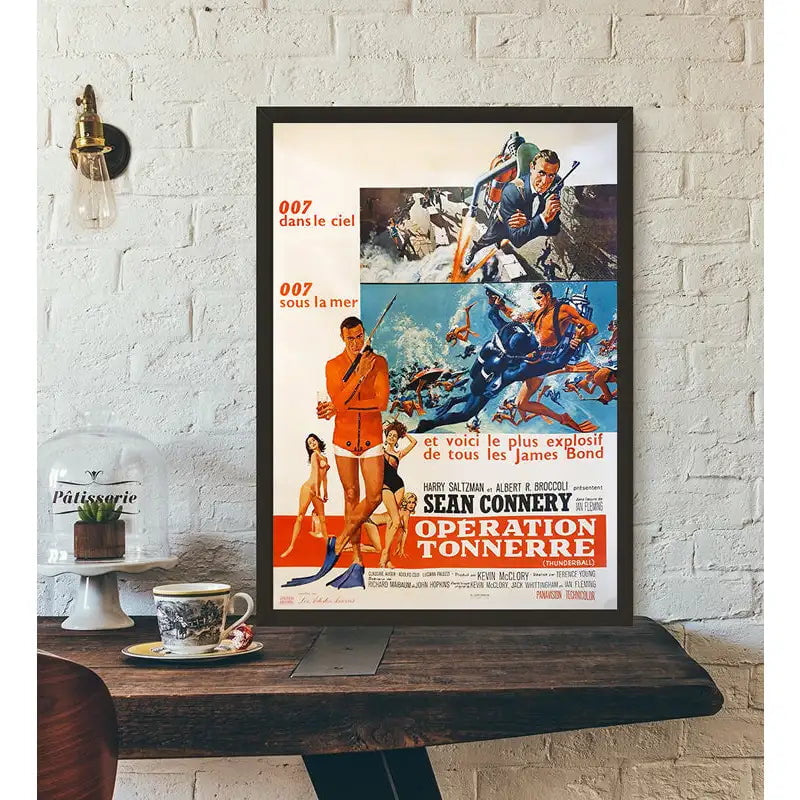
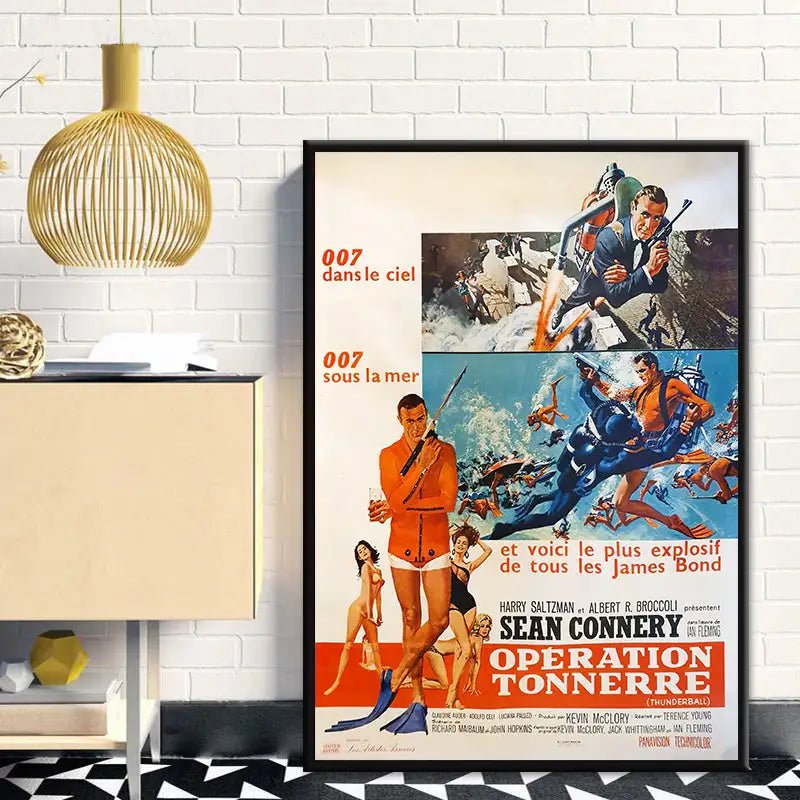
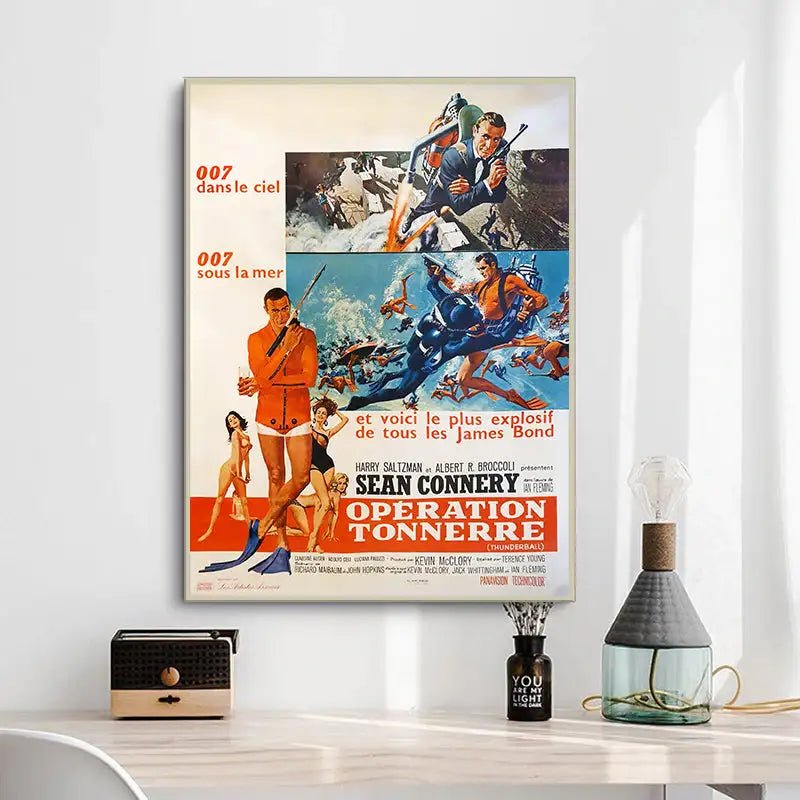

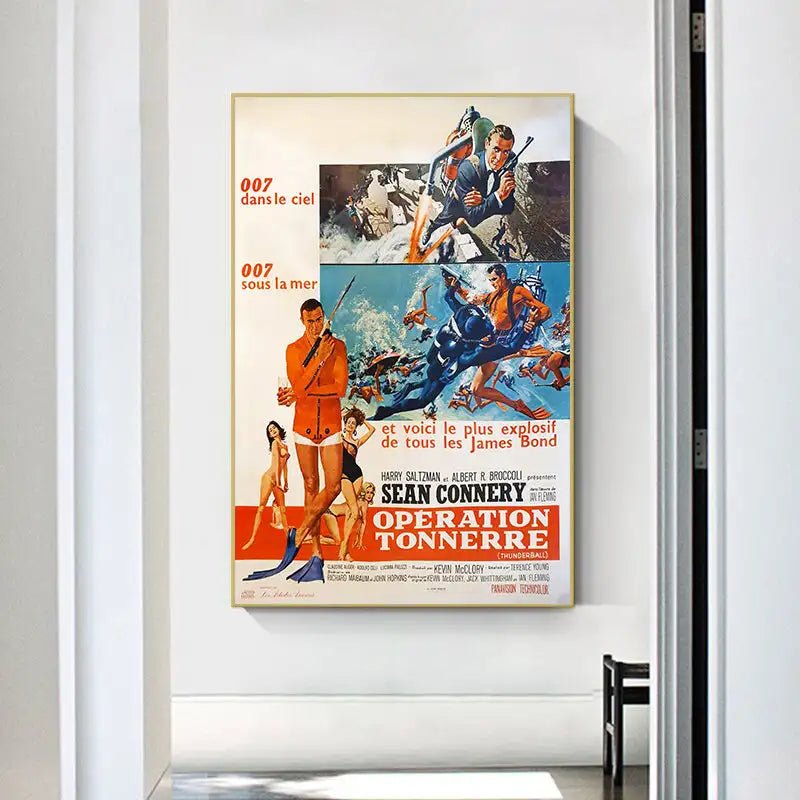

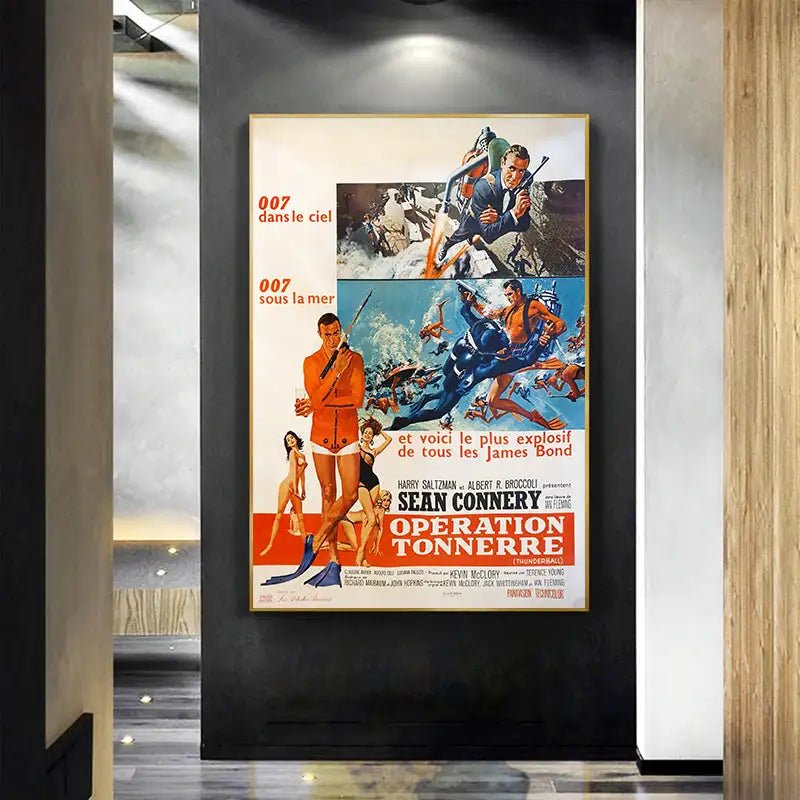



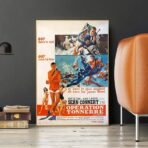













4th installment of the James Bond saga with Sean Connery in the lead role, this superb Thunderball Poster will make you nostalgic!
- Paper Feature:
- 🎨 Canvas: world standard in terms of printing and imitating a “painting canvas” look.
- By default, the poster contains a 4 cm white border for framing (frame not included). If you don’t want it, please choose “without white border”.
- ✅ Size: Multiple choices available. ✅
- High UV resistance.
- Maximum color vibrancy, no glare.
- Recycled paper, ensuring environmental friendliness.
- Poster packaged carefully and delivered in a protective tube for total protection.
- FREE STANDARD DELIVERY.
⚠️Frame not included. ⚠️
Description of this Thunderball Poster
Thunderball is a 1965 spy film, the fourth in the James Bond series produced by Eon Productions, starring Sean Connery as the fictional MI6 agent James Bond. It is an adaptation of Ian Fleming’s 1961 novel of the same name, based on an original screenplay by Jack Whittingham, based on a story conceived by Kevin McClory, Whittingham, and Fleming. This is the third and final Bond film to be directed by Terence Young, with a screenplay by Richard Maibaum and John Hopkins.
The film follows Bond’s mission to recover two NATO atomic bombs stolen by SPECTRE, which is demanding a ransom of £100 million in diamonds from the world by threatening to destroy an unspecified metropolis in the United Kingdom or the United States (later revealed to be Miami). The search takes Bond to the Bahamas, where he encounters the card-playing, eye-patch-wearing Emilio Largo, SPECTRE’s number two. Supported by CIA agent Felix Leiter and Largo’s mistress, Domino Derval, Bond’s search culminates in an underwater battle with Largo’s henchmen. The film’s complex production included four different units, and approximately a quarter of the film comprises underwater scenes.[5] Thunderbolt was the first Bond film shot in Panavision on a widescreen and the first to have a running time of over two hours.
Although planned by the producers of the Bond film series, Albert R. Broccoli and Harry Saltzman, as the first entry in the franchise, Thunderbolt was associated with a legal dispute in 1961 when Fleming’s former collaborators, McClory and Whittingham, sued him shortly after the novel’s publication in 1961, claiming that he had based it on the screenplay the trio had written for a film translation of James Bond. [The lawsuit was settled out of court, and Broccoli and Saltzman, fearing a rival film by McClory, allowed him to retain certain copyrights to the novel’s plot and characters, and to receive sole producer credit on that film; Broccoli and Saltzman served as executive producers.[8] The film was exceptionally successful: its worldwide box office receipts of $141.2 million exceeded not only those of each of its predecessors, but also those of each of the five Bond films that followed it. Thunderball remains the most financially successful film in the series in North America, after adjusting for ticket price inflation.[9] In 1966, John Stears won the Academy Award for Best Visual Effects,[10] and production designer Ken Adam was nominated for a BAFTA award.[11] Some critics and audiences praised the film as a welcome addition to the series, while others found the aquatic action repetitive and the film’s length excessive.[citation needed] In 1983, Warner Bros. Warner Bros. released a second film adaptation of the novel under the title Never Say Never Again, with McClory as executive producer.