



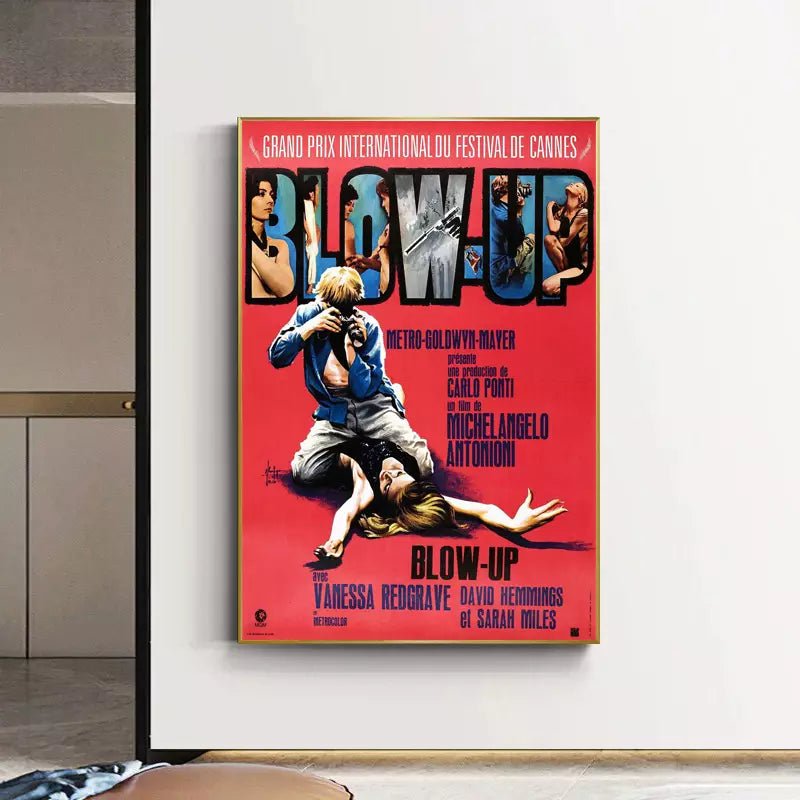
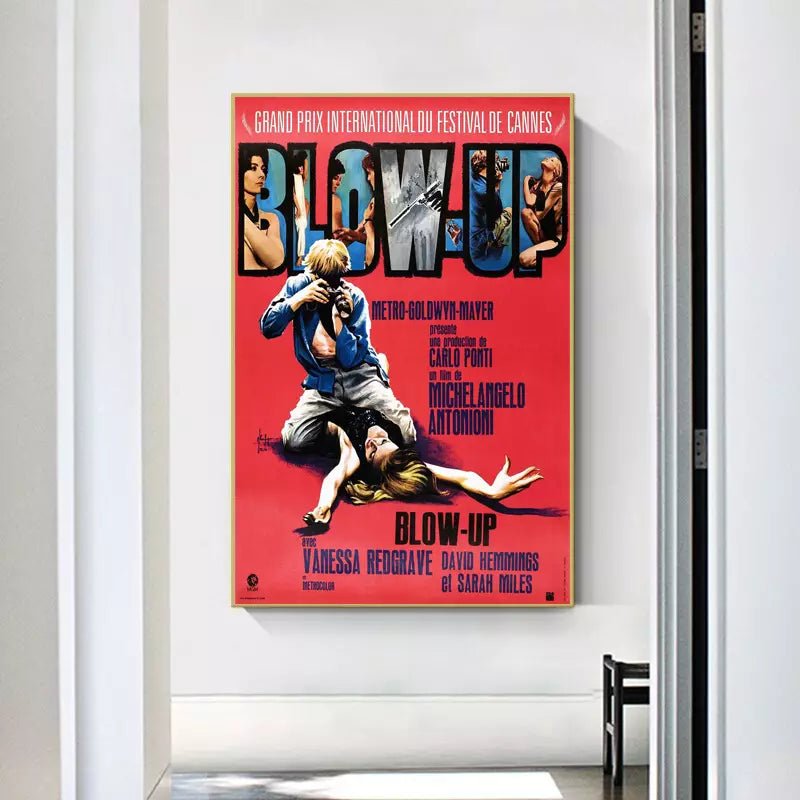


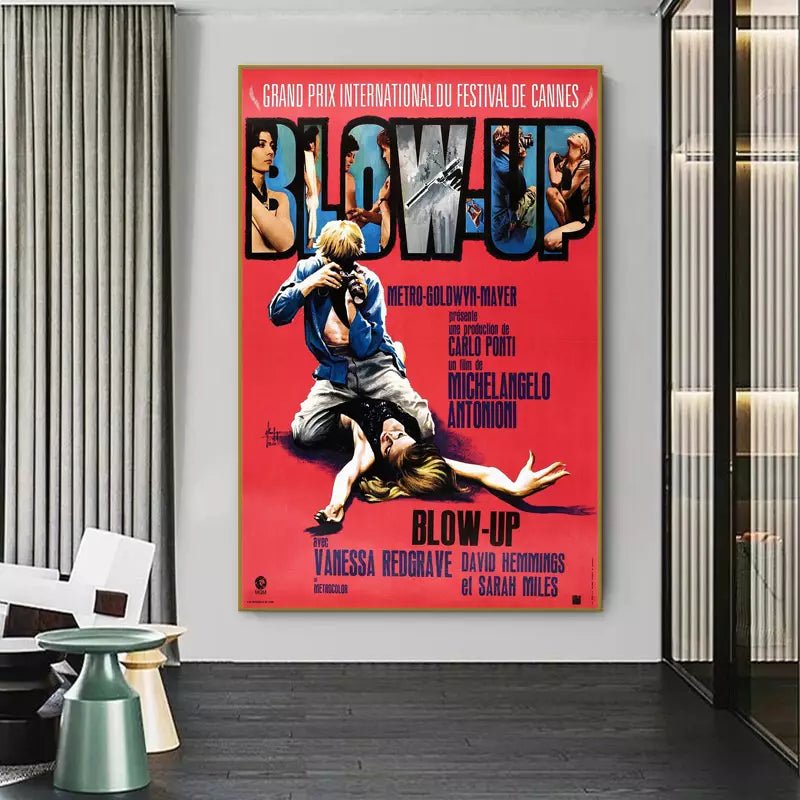


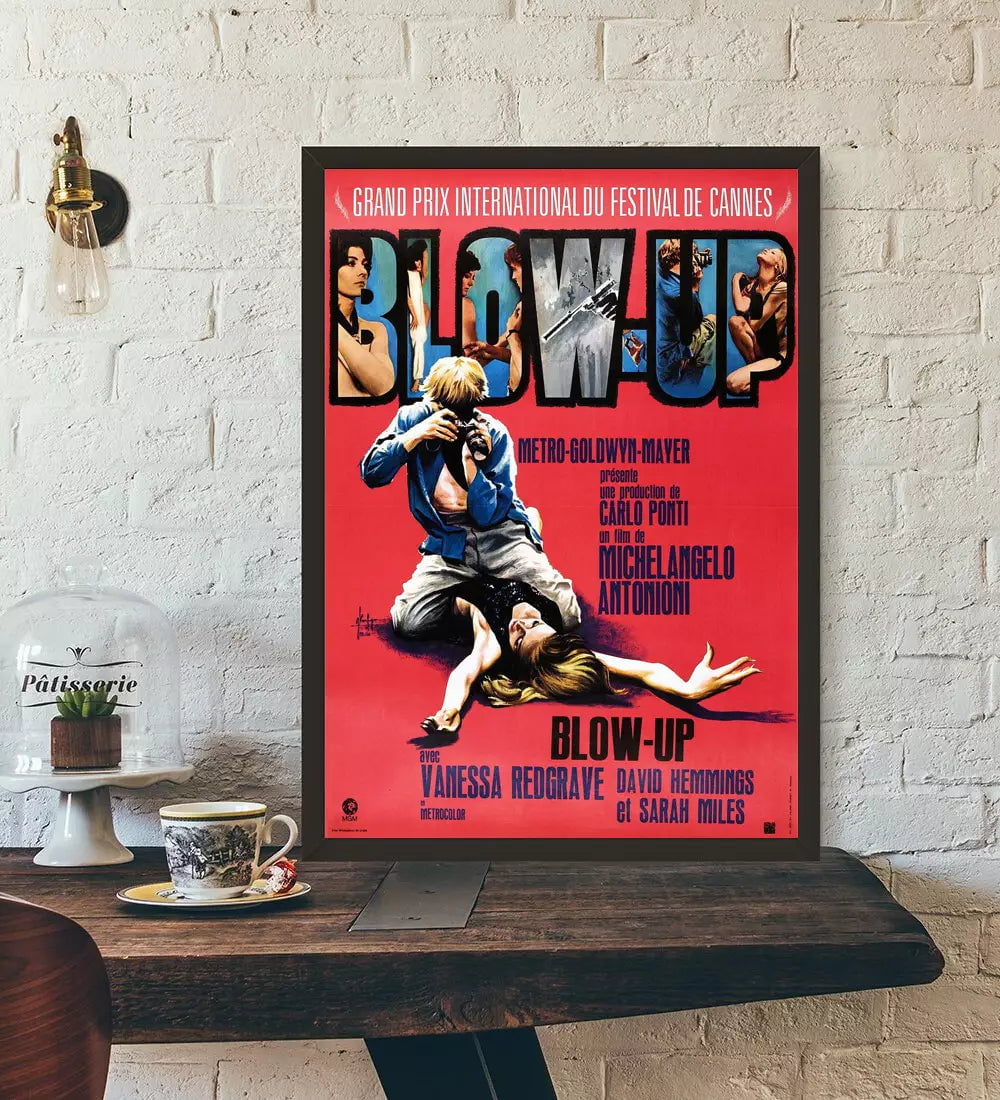
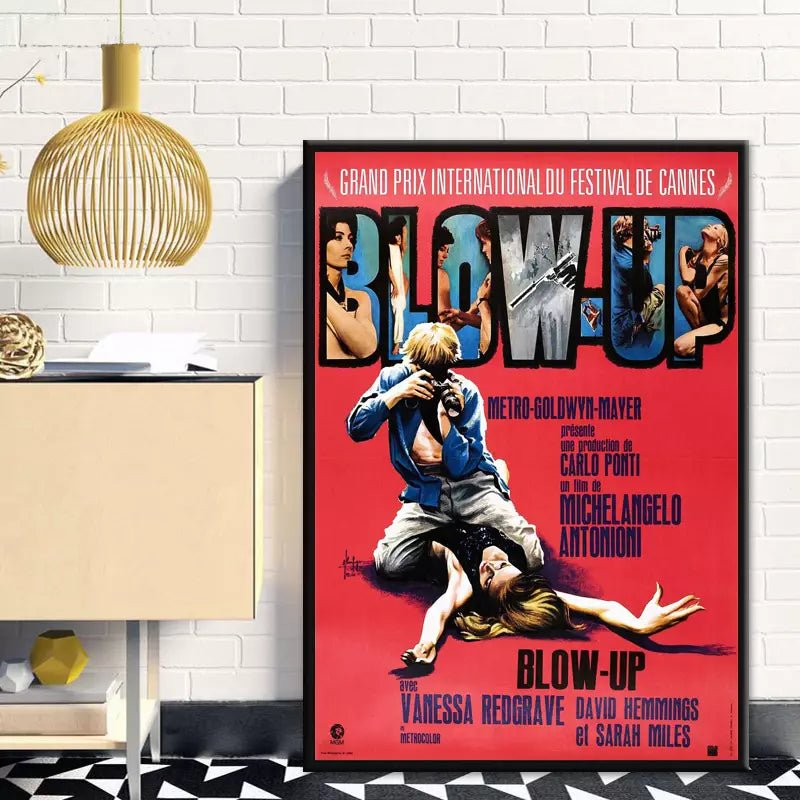










With our Blow Up Poster, discover all the visual and emotional intensity of the film through our captivating visual. Immerse yourself in the mysterious and exciting world of this iconic cinematic masterpiece, where reality and illusion intertwine in an obsessive quest for truth. Explore the thrilling emotions, striking aesthetics, and memorable performances of this iconic film that has left its mark on cinematic history. Get your ‘Blow Up’ poster now and let yourself be carried away by an unforgettable cinematic experience.
- Paper Feature:
- 🎨 Canvas: global standard in terms of print and imitating a “painting canvas” look.
- By default, the poster contains a 4cm white border for framing (frame not included). If you don’t want it, please choose “without white border”.
- ✅ Size: Multiple choices available. ✅
- High UV resistance.
- Maximum color brilliance without reflections.
- Recycled paper guaranteed environmental friendliness.
- Poster wrapped carefully and delivered in a protective tube for total protection.
- FREE STANDARD DELIVERY.
⚠️ Frame not included. ⚠️
Description of this Blow Up Poster
Blow-Up (sometimes referred to as Blowup or Blow Up) is a 1966 mystery thriller film directed by Michelangelo Antonioni and produced by Carlo Ponti. It was Antonioni’s first entirely English-language film and stars David Hemmings alongside Vanessa Redgrave and Sarah Miles. 1960s model Veruschka is also featured. The film’s plot was inspired by Julio Cortázar’s short story “Las babas del diablo” (1959).
The story is set in the mod subculture of 1960s Swinging London and follows a fashion photographer (Hemmings) who believes he has unwittingly captured a murder on film. The screenplay was written by Antonioni and Tonino Guerra, with English dialogue by British playwright Edward Bond. The director of photography was Carlo di Palma. The film’s non-diegetic music was scored by jazz pianist Herbie Hancock, while the rock band Yardbirds also featured.
In the main competition section of the Cannes Film Festival, Blow-Up won the Palme d’Or, the festival’s highest honor. The American release of the counterculture-era film, with its explicit sexual content, was in direct defiance of the Hollywood Production Code. Its subsequent critical and box-office success influenced the abandonment of the code in 1968 in favor of the MPAA film rating system.
Blow-Up would inspire subsequent films, including Francis Ford Coppola’s The Conversation (1974) and Brian De Palma’s Blow Out (1981). In 2012, Blow-Up was ranked No. 144th in Sight & Sound’s critics’ poll of the world’s greatest films.
After spending the night in a bib house, where he took photographs for a book of fine art photography, photographer Thomas is late for a photoshoot with model Veruschka in her studio, which in turn makes him late for a session with other models later that morning. He becomes bored and leaves, leaving the models and production staff in the lurch. As he leaves the studio, two aspiring teenage girls ask to speak to him, but Thomas leaves to visit her in an antique shop.
Wandering through Maryon Park, Thomas takes photographs of two lovers. The woman, Jane, is furious at being photographed and chases Thomas, demands his film, and eventually tries to snatch the camera from him. He refuses and photographs her as she runs off into a meadow. Thomas then meets his agent, Ron, for lunch and notices a man following him and looking in his car. Back at his studio, Jane arrives, desperately demanding the film. She and Thomas have a chat and flirt, but he deliberately hands her a different roll of film. She, in turn, writes down a fake phone number and gives it to him.
Thomas, curious, zooms in several times on the black-and-white film of Jane and her lover. They reveal Jane staring at a third person lurking in the trees with a gun. Thomas excitedly calls Ron, claiming that his impromptu photoshoot may have saved a man’s life. Thomas is disturbed by a knock at the door, and it is the two girls again, with whom he is busted into his studio and falls asleep. Waking up, he finds they are hoping he will photograph them, but he realizes there may be more to the photographs in the park. He tells them to leave, saying, “Tomorrow! Tomorrow!”
A closer look at a blurry figure under a bush makes Thomas suspect that the man in the park may have been murdered after all, during the time Thomas was arguing with the woman on the bend.
As evening falls, the photographer returns to the park and finds the man’s body, but he did not bring his camera and is startled by the sound of a twig breaking, as if someone were walking. Thomas returns to find his studio ransacked. All the negatives and prints are gone, except for a very grainy explosion of what may be the body.
After driving into town, he sees the woman and follows her to a club where the Yardbirds, featuring Jimmy Page and Jeff Beck on guitar and Keith Relf on vocals, are seen performing the song “Stroll On.” A buzz from Beck’s amplifier makes him so angry that he breaks his guitar on stage, then throws his neck into the crowd. A riot ensues. The photographer grabs the neck and runs out of the club before anyone can snatch it. Then, thinking about it, he throws it on the pavement and walks away. A passerby picks up the neck and throws it back, not realizing it came from Beck’s guitar. Thomas never locates the elusive woman.
At a drug-fueled party in a house on the Thames near central London, the photographer finds Veruschka, who had told him she was going to Paris; to his face, she says she is in Paris. Thomas asks Ron to come to the park as a witness, but cannot convince him of what happened because Ron is so stoned. Instead, Thomas joins the party and wakes up in the house at sunrise. He returns to the park alone, only to find the body gone.
Famously, Thomas watches a mime troupe play a tennis match, is drawn to it, and after a bit, picks up the imaginary ball and brings it back to the two players. As he watches the mime, the sound of the ball being played is heard, and his image fades out, leaving only grass at the end of the film.