


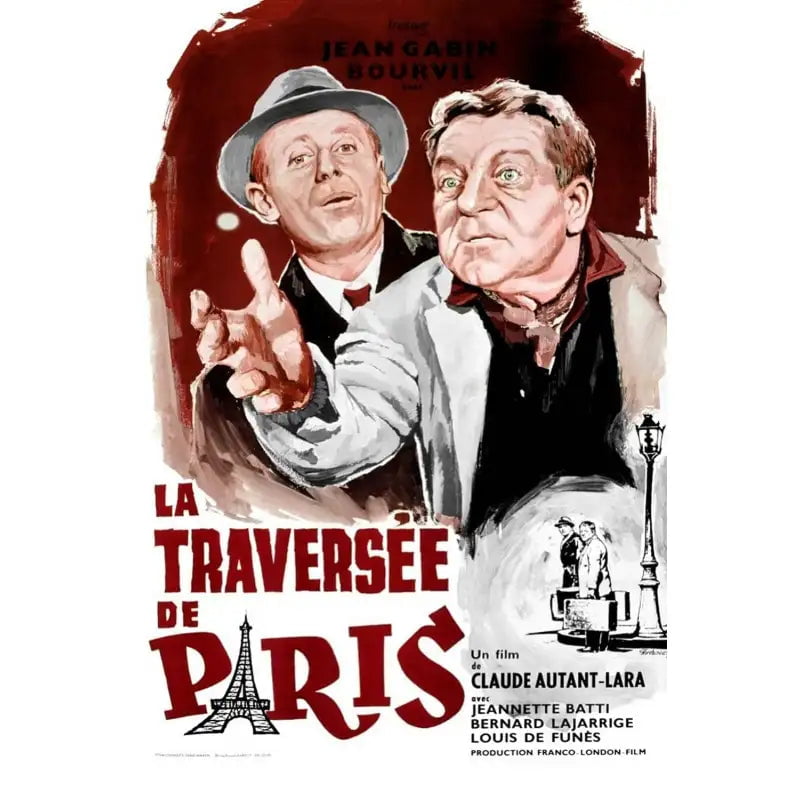
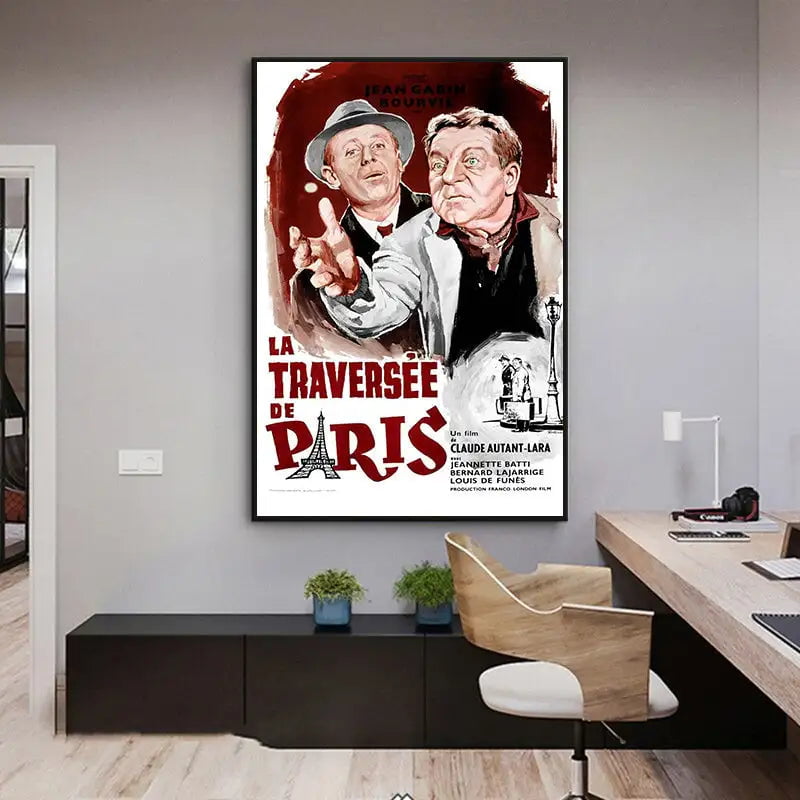
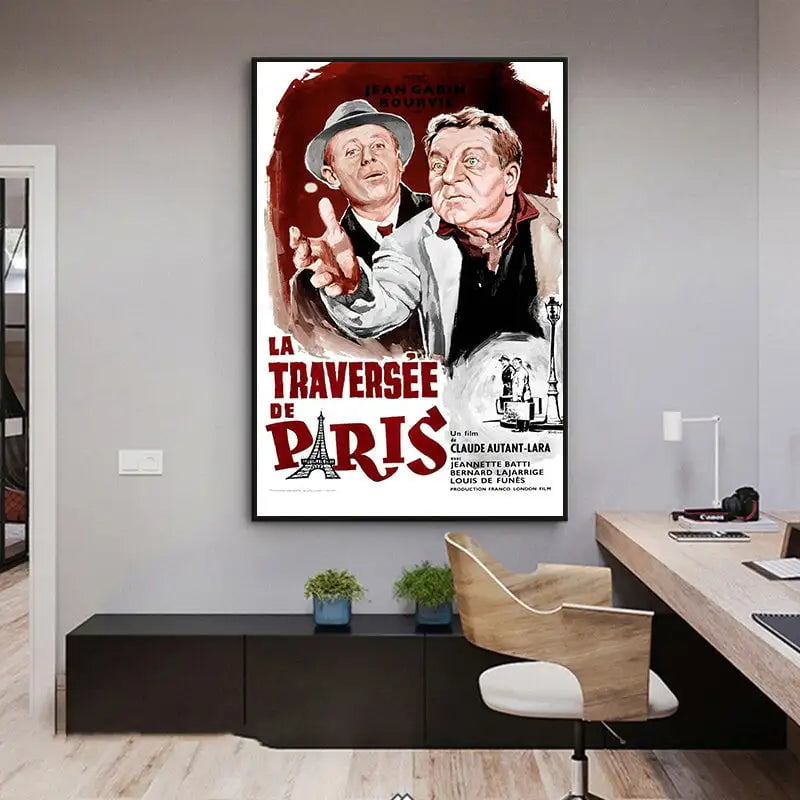
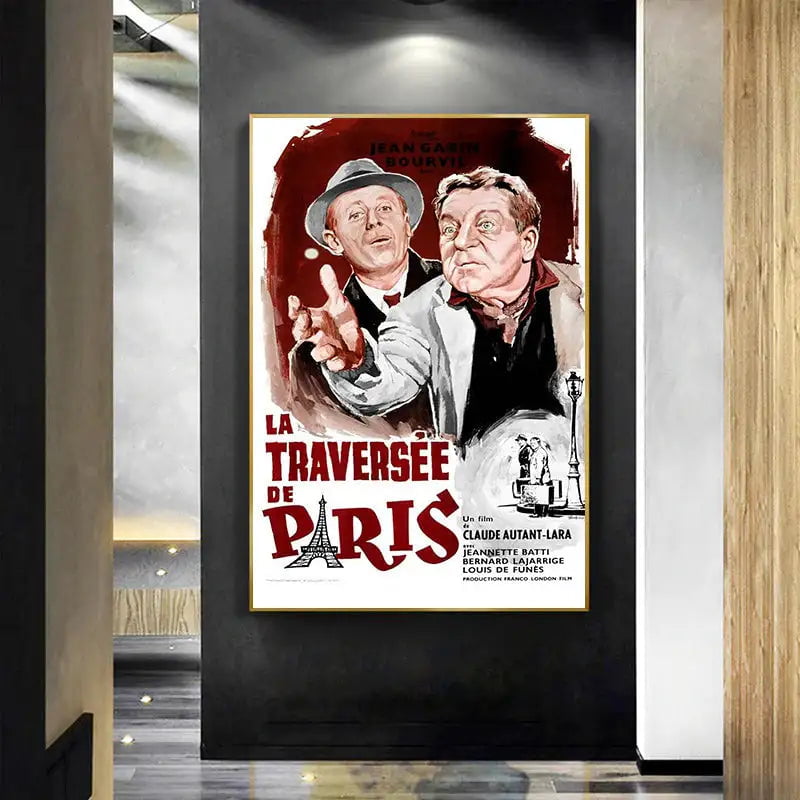
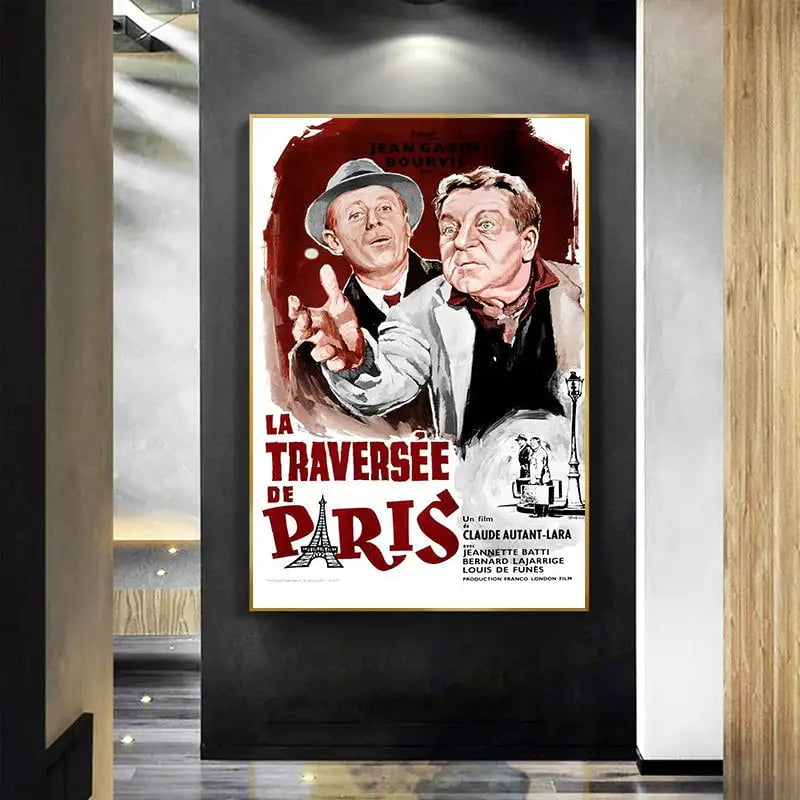
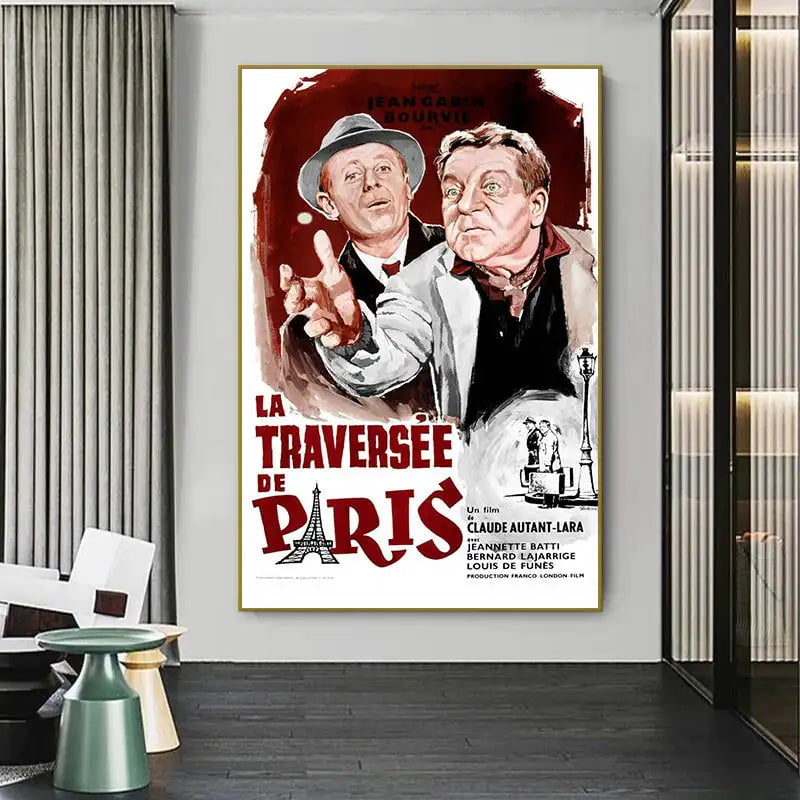
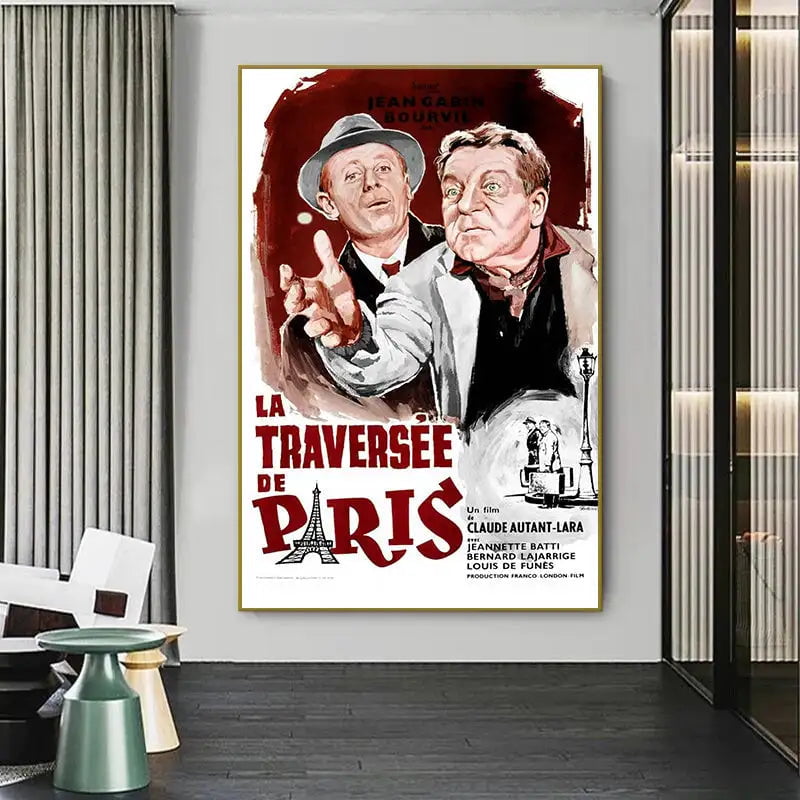
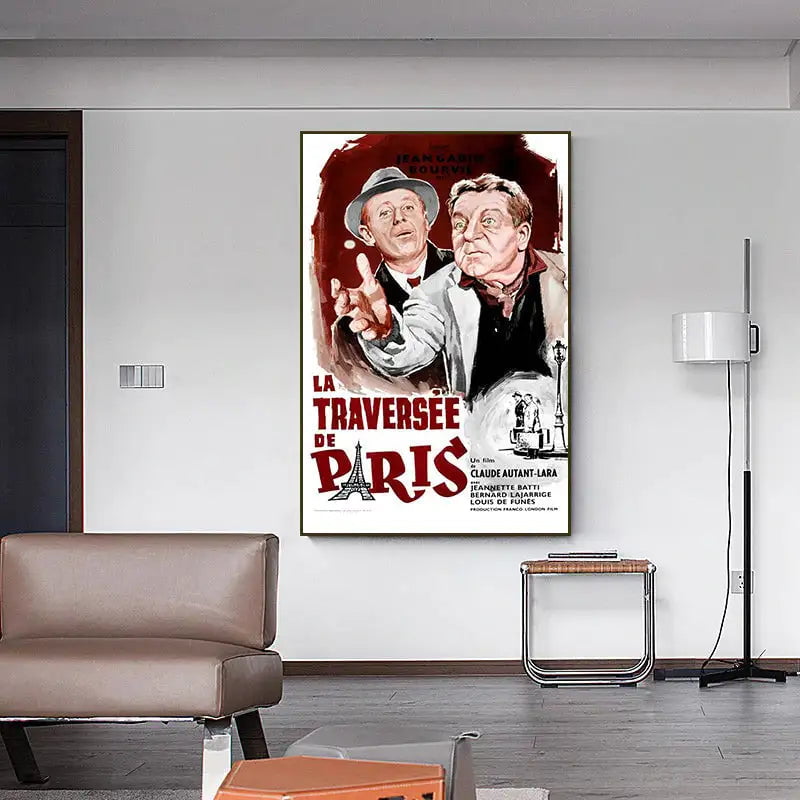
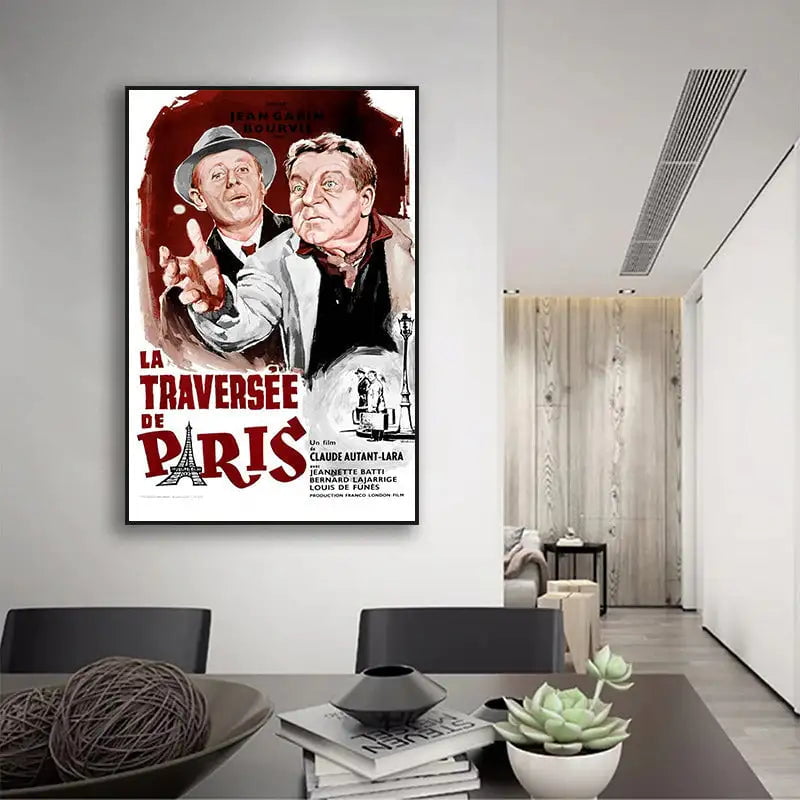
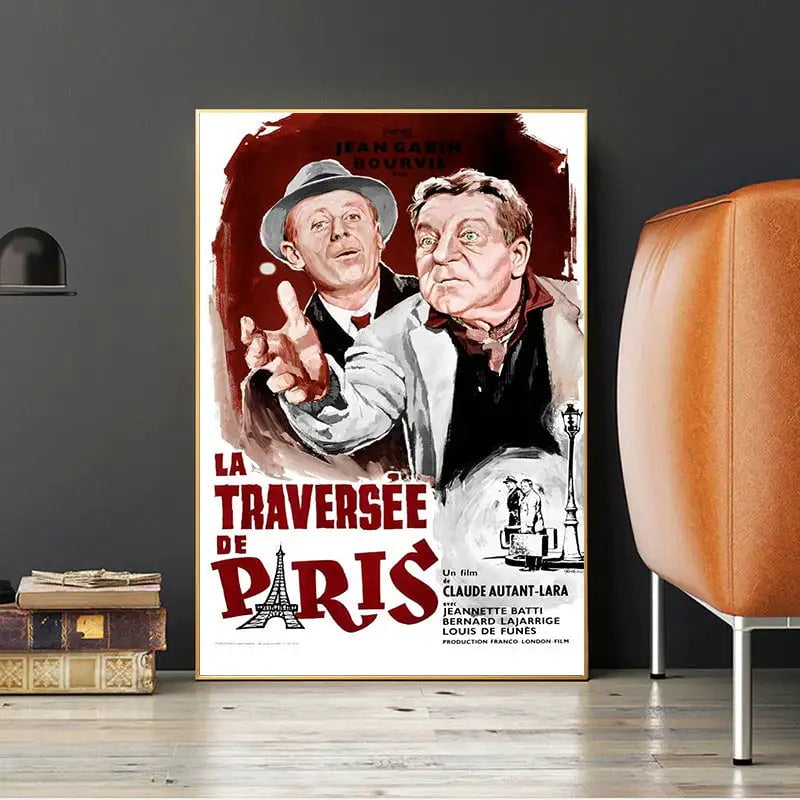
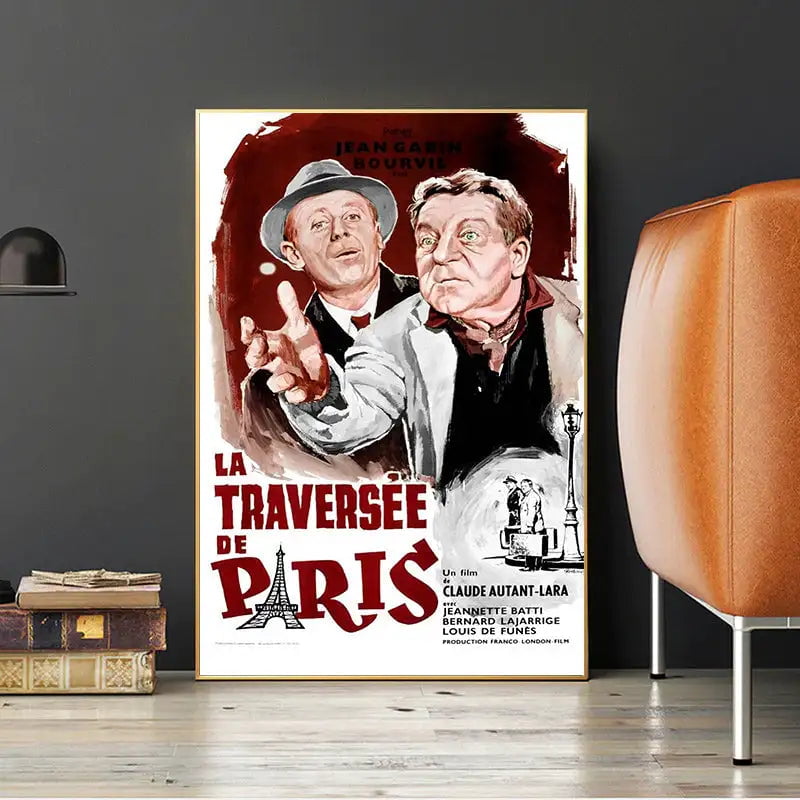
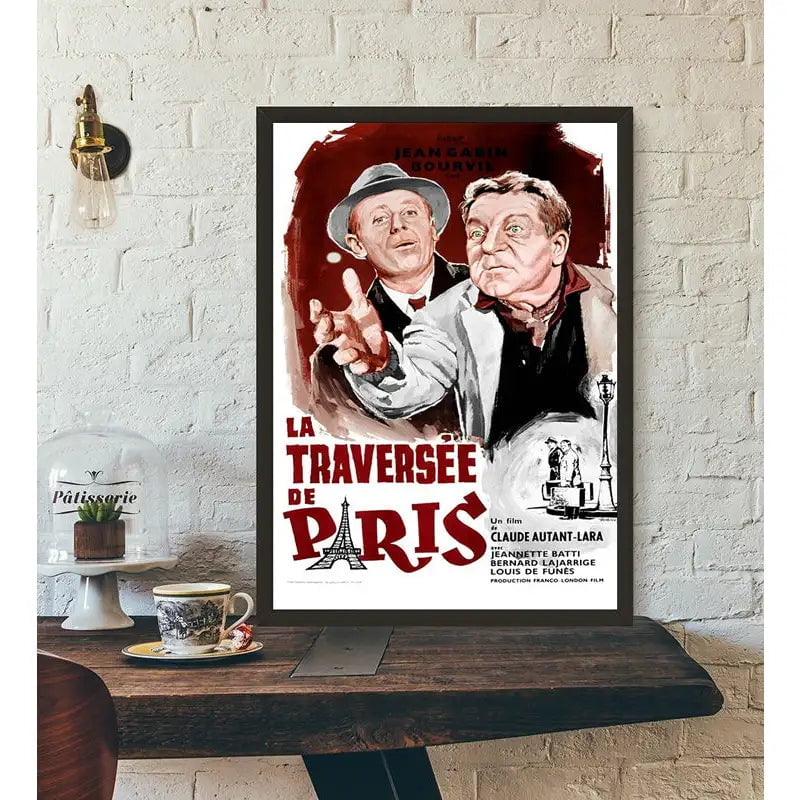
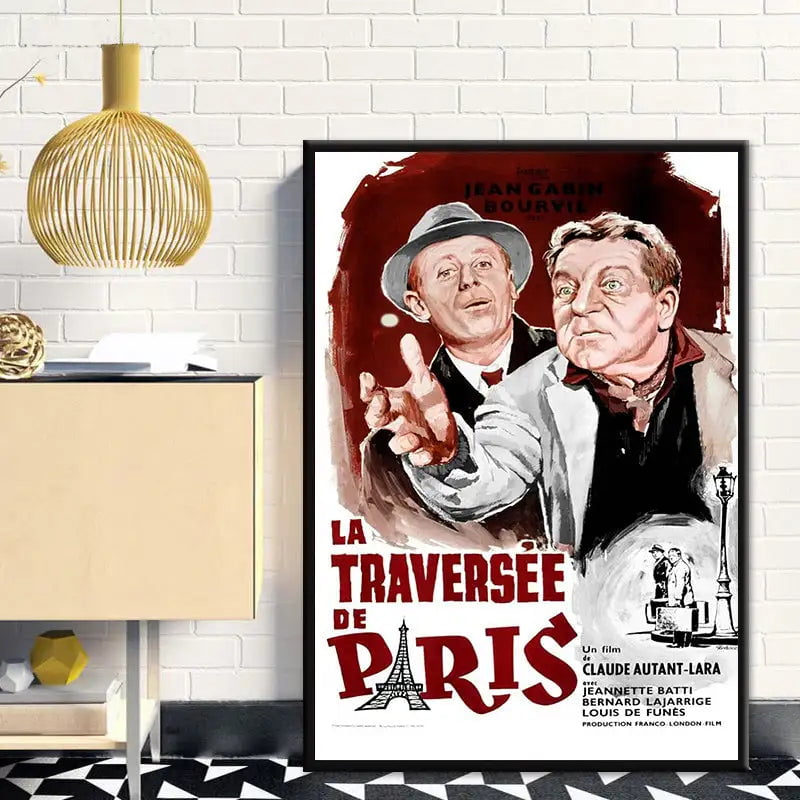
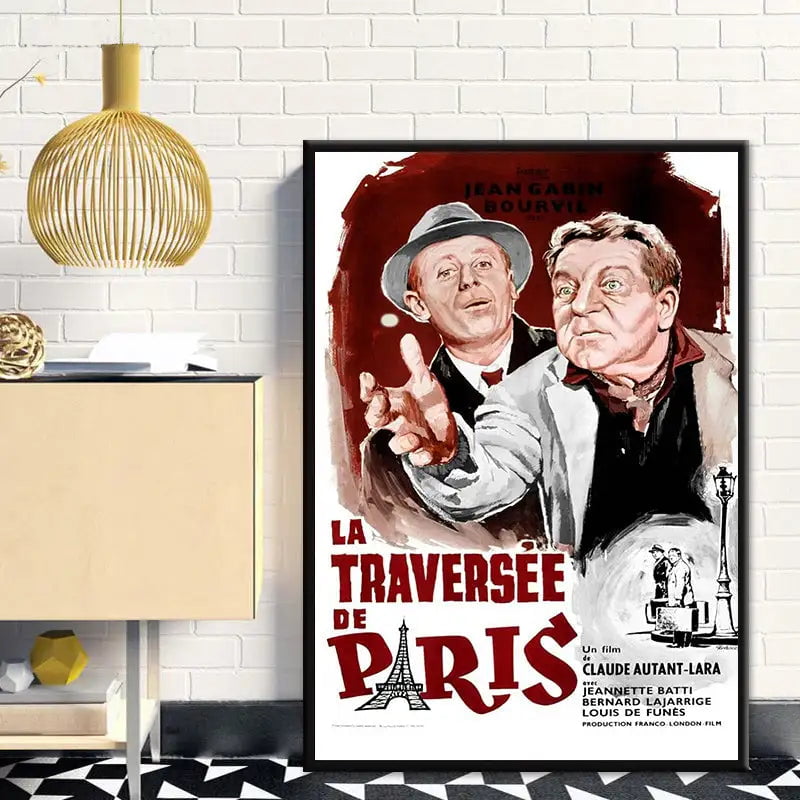
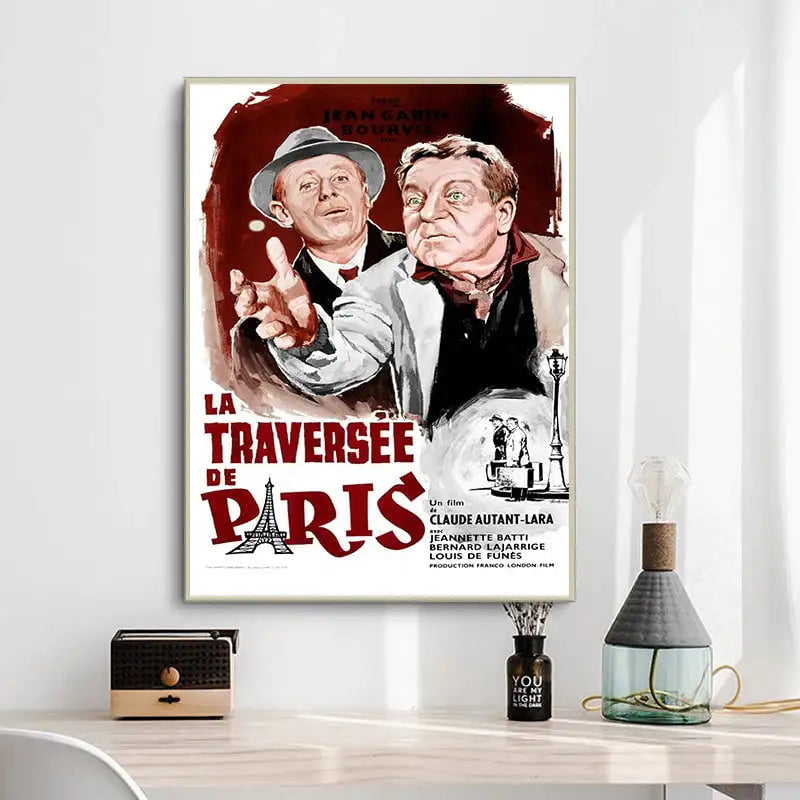
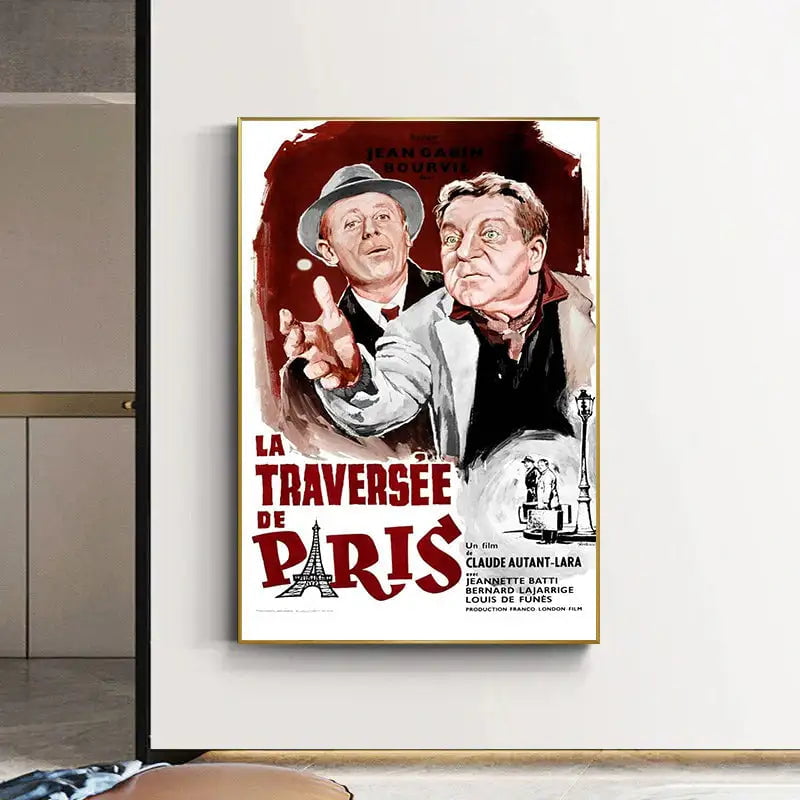
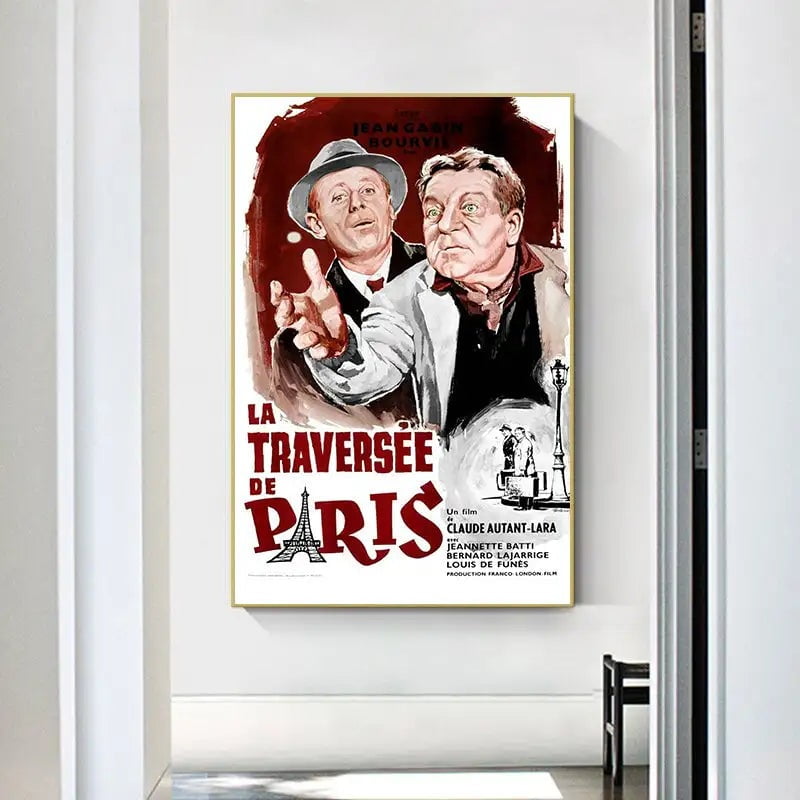
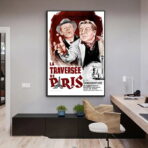
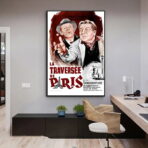
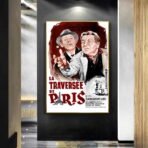
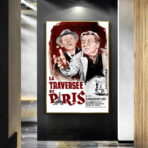
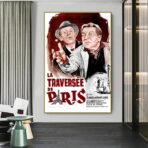
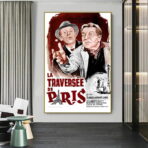
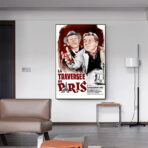
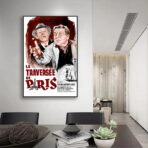
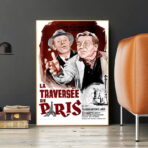
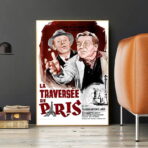
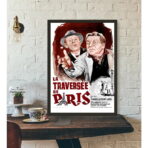
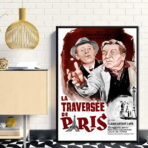
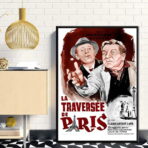
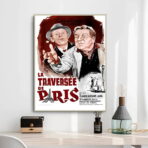
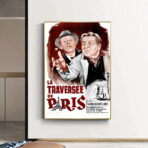
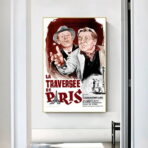









Discover this Poster of La Traversée de Paris, a classic of French cinema with Jean Gabin and Bourvil in a comic adventure during the Occupation.
- Paper characteristics:
- 🎨 Canvas: global standard in terms of printing and imitating a “painting canvas” look.
- By default, the poster contains a 4cm white border for framing (frame not included). If you don’t want it, please choose “without white border”.
- ✅ Size: Multiple choices available. ✅
- High UV resistance.
- Color vibrancy maximum, glare-free.
- Paper recycled, guaranteeing environmental friendliness.
- Poster packaged carefully and delivered in a protective tube for Total protection.
- FREE STANDARD DELIVERY.
⚠️ Frame not included. ⚠️
Description of this La Traversée De Paris Poster
La Traversée de Paris is a 1956 French comedy-drama film directed by Claude Autant-Lara, starring Jean Gabin, Bourvil, and Louis de Funès. It is set in occupied Paris in 1942 and tells the story of two men who defy the curfew to deliver pork to the black market. The film is loosely based on the short story “La traversée de Paris” by Marcel Aymé.
The film premiered at the 17th Venice International Film Festival, where Bourvil won the Volpi Cup for Best Actor. The film’s cynical portrayal of the occupation era was unconventional and made the film controversial upon its original release.
In Paris in 1942, under German occupation, Marcel Martin, an unemployed taxi driver, earns his living by delivering packages on the black market at night. One evening, he has to carry four suitcases containing pork on foot to the other side of the capital. He goes to the cellar of a grocer named Jambier and plays the accordion to mask the noise during the slaughter of the animal. Martin then goes with his wife Mariette to the restaurant where he is to meet his accomplice, but learns that he has been arrested by the police.
A stranger then enters the restaurant and, after a misunderstanding, Martin invites him to share his meal and replace his former accomplice. This decision quickly proves disastrous because the new character, named Grandgil, is not very cooperative. He first demands a drastic increase in payment, terrorizing the unfortunate grocer Jambier. Then, taking a dislike to the owners of a bar where the two are hiding with their suitcases of fresh meat to avoid paper checks, he begins to wreck the place. Back outside, when they are stopped by a lone police officer, he headbutts him, knocking him to the ground. When two other police officers approach, he begins speaking loudly in German, and they quietly withdraw.
They go to the hotel where Martin lives with his wife, and Grandgil makes a quick phone call, still in German. An air raid begins, and the two men take refuge in what turns out to be Grangil’s apartment. Martin is stunned to discover that his companion is in fact a world-renowned painter who has agreed to come primarily for entertainment and insists on returning the money he extorted.
When they finally arrive at their destination, everything is locked. Angry after all the danger they have been in, they rattle the bars and shout. The noise attracts a German patrol, which takes them to army headquarters. A German major recognizes the famous painter Grandgil and is about to release them when news reaches them that a German colonel has been shot dead. All the French suspects in the building are loaded onto a truck, from which the major can only save Grandgil.
Years later, Grandgil leaves Paris for vacation, and a porter carries his luggage to the train. When Grandgil tips him, he recognizes it as Martin. “Always carrying suitcases,” he says as the train moves off.