



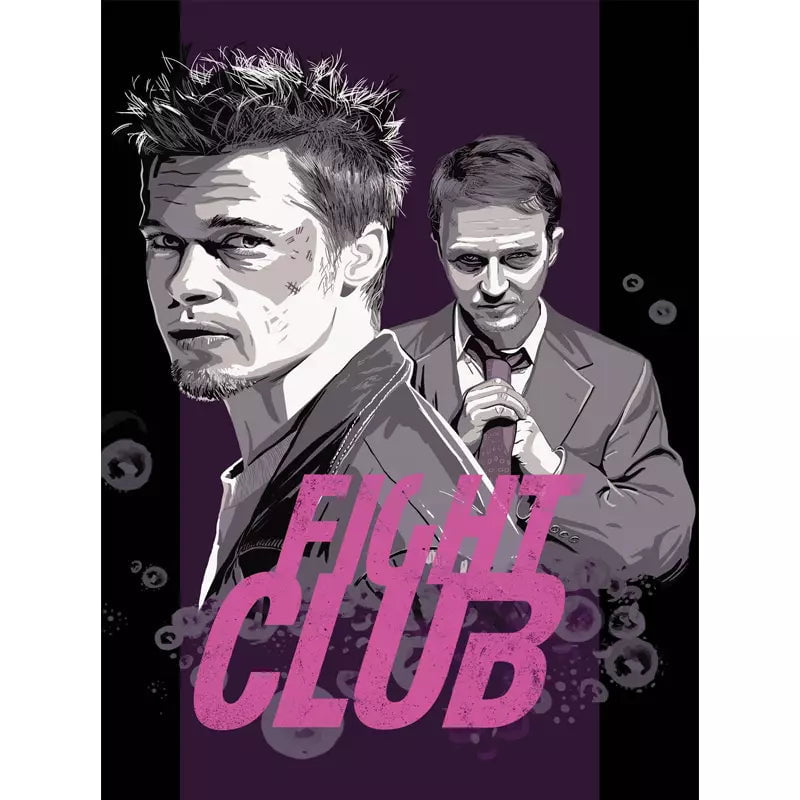

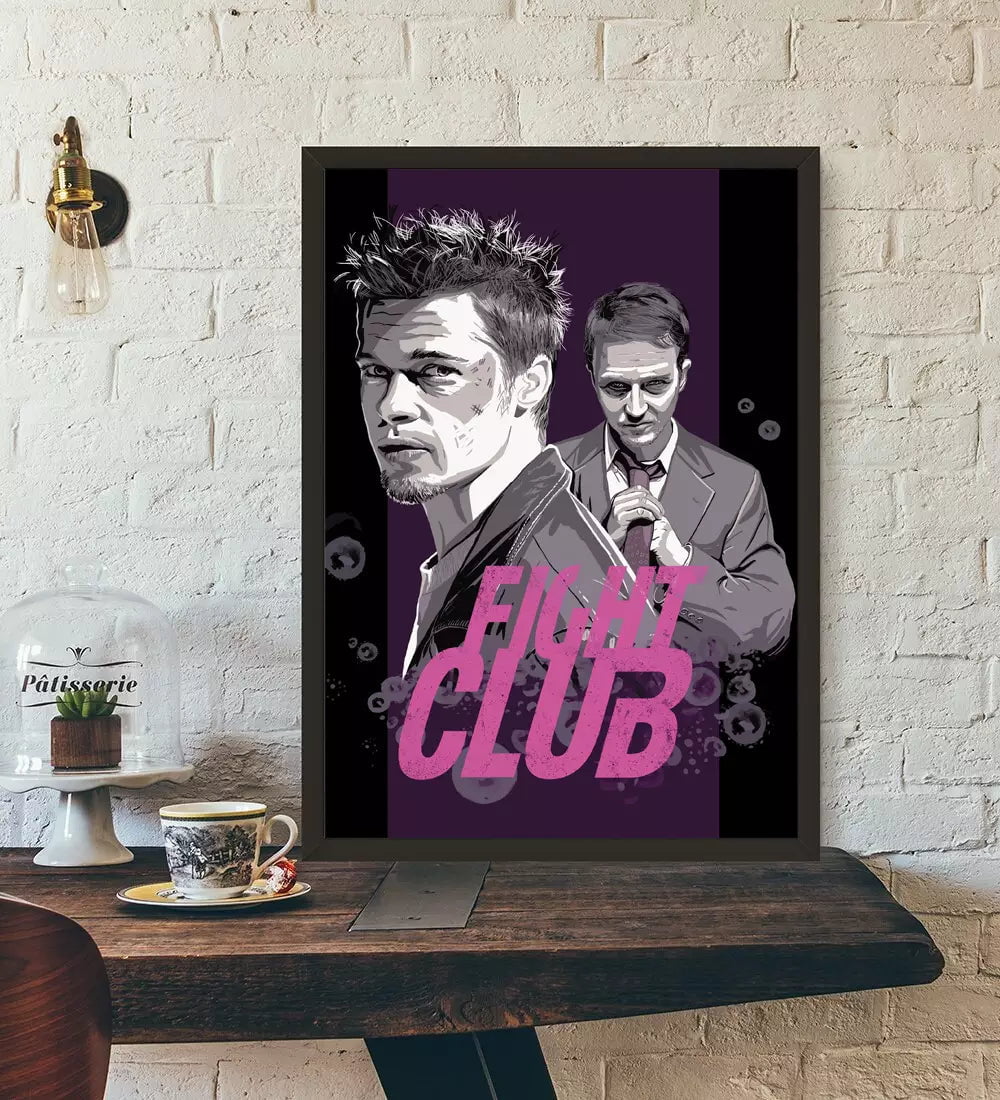
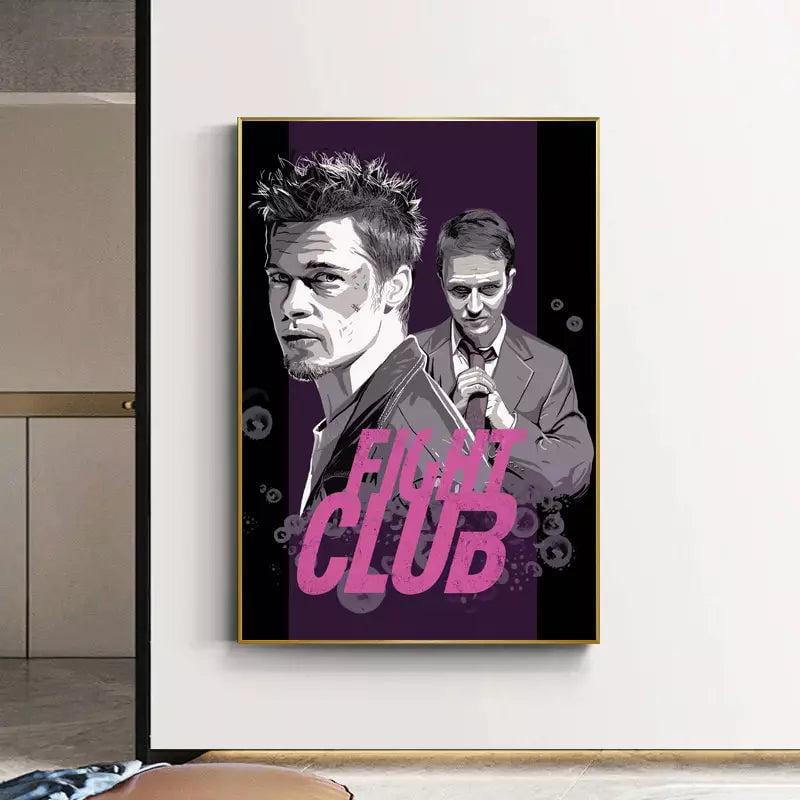
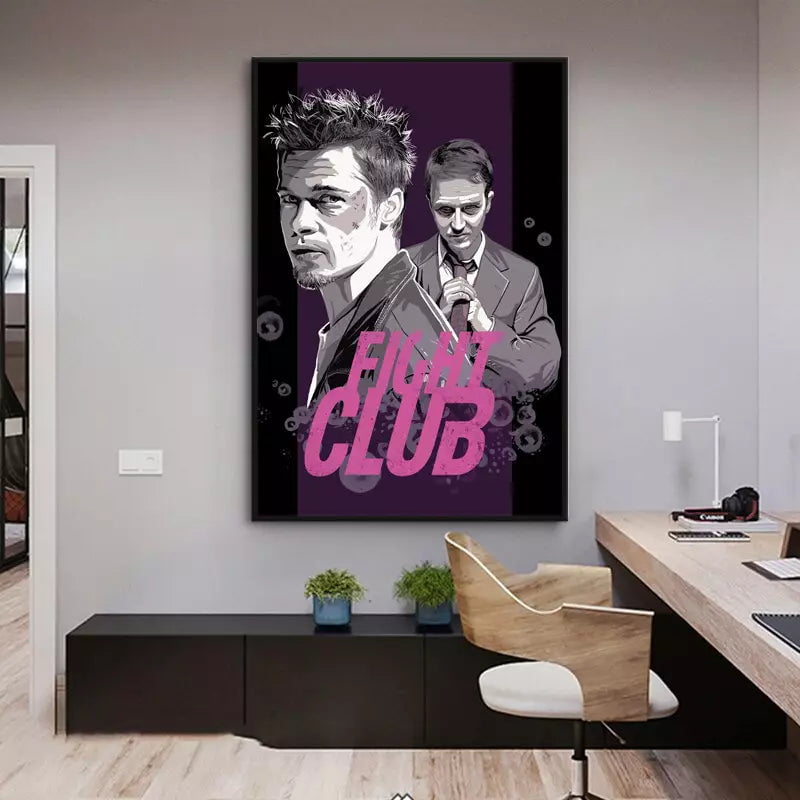
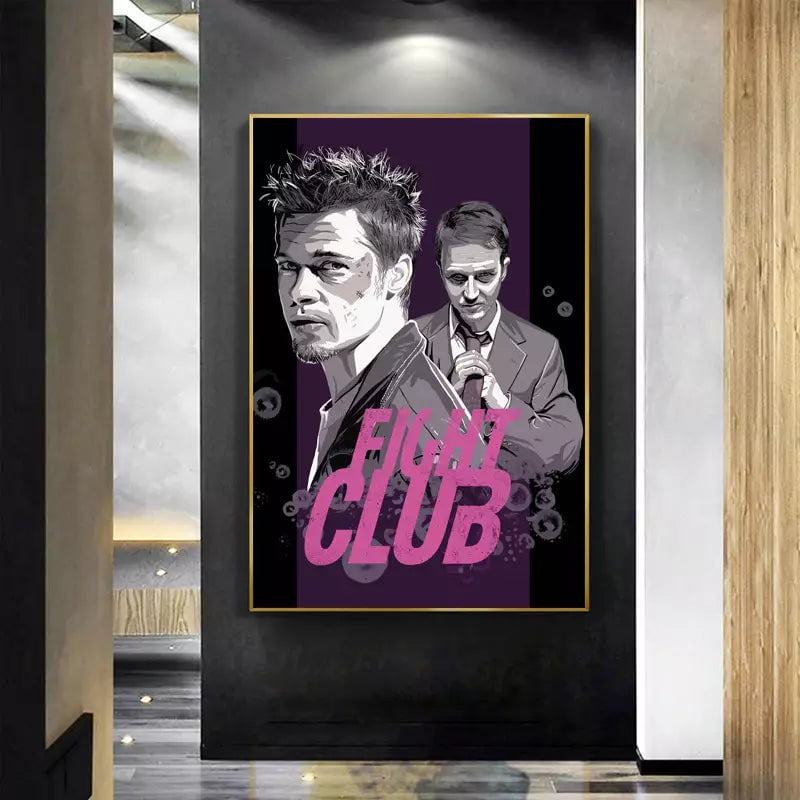







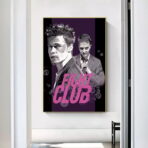
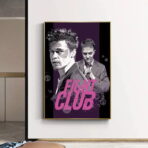
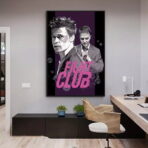
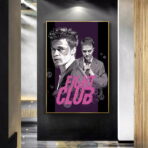











Immerse yourself in the dark and captivating world of fighting with our Fight Club Poster. Feel the palpable tension, frenetic excitement, and intense emotions emanating from this groundbreaking cinematic masterpiece. Our striking poster captures the essence of rebellion, self-discovery, and societal challenge, creating an unforgettable viewing experience. Get this iconic piece now to showcase the lasting impact of “Fight Club” on the world of cinema.
- Paper Feature:
- 🎨 Canvas: Global Standard in print and imitating a “painting canvas” look.
- By default, the poster contains a 4cm white border for framing (frame not included). If you don’t want it, please choose “without white border”.
- ✅ Size: Multiple choices available. ✅
- High UV resistance.
- Maximum color brilliance without reflections.
- Recycled paper guaranteed environmental friendliness.
- Poster wrapped carefully and delivered in a protective tube for total protection.
- FREE STANDARD DELIVERY.
⚠️ Frame not included. ⚠️
Description of this Fight Club Poster
“Fight Club is a 1999 American psychological thriller film directed by David Fincher and based on the novel of the same name by Chuck Palahniuk, published three years earlier. The main roles are played by Edward Norton, Brad Pitt, and Helena Bonham Carter. Norton plays an anonymous narrator, an impersonal philistine who is dissatisfied with his life in a post-industrial, white-collar consumer society. He creates a clandestine organization called “Fight Club” with Tyler Durden, a soap salesman played by Brad Pitt.
The film was not well received by audiences and critics after its release and only grossed $37 million at the North American box office compared to the $63 million invested in its production. Ten years after its release, the influential New York Times published an article by Dennis Lim called Fight Club “the most influential cult film of our time.” It is ranked among the 20 best films by IMDb and appears in many other such rankings. It is one of the films that generated the most public reaction in the 1990s.
The tone of the film is set by the opening shots, which show the frantic movement of a nerve impulse (which can be interpreted as pain, fear, or thought) through a maze of nerve fibers in the narrator’s brain tissue. These images already hint at the essence of what will be shown later. The linear narrative begins after a brief but effective flashforward and several confused attempts by the protagonist to decide where to begin his story.
The narrator (Edward Norton) is a typical yuppie, a nameless 30-year-old man. Working in the offices of a car company, he spends a lot of time visiting accident sites. In his free time, he furnishes his apartment with IKEA furniture (“What kind of set can serve to characterize my personality?”). It seems to him that a few more purchases and there will be nothing left to covet. “We used to read pornography, now we read Horchow catalogs,” he reflects on his domestic conformity.
The narrator suffers from insomnia and is often unable to distinguish between sleep and reality. Instead of a cure, the doctor suggests he exercise and, more seriously, attend a gathering of men with testicular cancer to see men suffering for real. There, the protagonist meets Fat Bob, a former bodybuilder who abused steroids (Mit Lough). The protagonist’s confrontation with real suffering and the loss of his masculinity allows him to emerge from his gloom and regain some vitality. Every day, at the end of his work, a dark life begins for him of a “vampire” who feeds on the misery of others.
As he visits more and more groups of sick people, he notices a second imposter, one Marla Singer (Helena Bonham Carter). Her philosophy is that one can die at any moment; the tragedy is that it doesn’t happen. Similarly, the Narrator, on every plane trip, cherishes the hope of dying in a plane crash. The Narrator and Marla try to space out the groups they visit so as not to overlap. However, the encounter with the “double” throws the hero off balance, and insomnia sets in again.
Upon returning from yet another business trip, the hero meets Tyler Durden (Brad Pitt), a soap manufacturer and salesman, in the cabin. Arriving from the airport at his well-appointed and comfortable home, the narrator is horrified to discover that the apartment has been completely destroyed by a massive explosion: “The explosion didn’t just destroy a pile of junk, it destroyed me!” Something tells the shocked hero that he can call Tyler and find support in him. The conversation he has with Tyler at a nearby restaurant shows him that the man is no stranger to narrow-mindedness: “What you get, gets you” is his catchphrase. Tyler leads an unusual life: he engages in singular antics, which the narrator describes as “fighting the system.” When he worked as a projectionist, Tyler inserted shortcuts into home movies with pornographic scenes (most often male penises) that jumped out at the audience in a split second; and when he was a waiter, he spat and defecated in the food served to customers.
Tyler pushes the firebrand to ask to stay at his place, which he immediately agrees to. Immediately afterward, Tyler asks the narrator, present at the bar, to hit him. Despite the Despite initial dismay, the Narrator grants this strange request. After beating each other up, the satisfied friends head to Tyler’s dilapidated but spacious apartment in the vacant lot. Later, they “finish” their punching in the parking lot. Their strange relationship attracts a crowd of interested people, and a “fight club” is born in the bar’s basement. Tyler wastes no time in formulating a series of commandments for the recruits: “The first rule of the club: do not mention the fight club…”. Tyler makes a living making high-quality fat soaps, which he steals from liposuction clinics: “We used to sell rich women their own fat buttocks.” One day, Marla takes a dangerous dose of sleeping pills and contacts the Narrator on the phone. The conversation is intercepted by Tyler: he takes her home and has an intimate relationship with her. Their moans echo throughout the house, awakening in the Narrator, envy of his companion’s sexual exploits and the infantile feeling that Tyler and Marla are his parents. Under Tyler’s leadership, the Fight Club gradually transforms into Project Mayhem, undertaking increasingly destructive acts of vandalism under the slogan of fighting today’s zombifying consumer society. The project’s explosive growth and its acts of violence frighten the Narrator, who gradually withdraws from its activities.
After a heated argument and a car accident, Tyler disappears from the Narrator’s life. When Bob (who has also joined the club and become one of Project Mayhem’s “black arms”) is killed during a mission, the Narrator attempts to put an end to the subversion. Following Tyler’s trail, the Narrator discovers fight clubs in every major city across the country, and their members mistake him for Tyler. A phone call to Marla confirms the Narrator’s intuition that Tyler is himself, or rather, the facet of his personality, which he tries not to display (his alter ego). Tyler appears before his eyes, explaining that he takes possession of the Narrator’s body whenever he sleeps, that he is a projection, a blob of his misplaced desires. Thus, all of Tyler’s actions were committed by the Narrator himself, and he also destroyed his own “glamour” apartment.
After waking up after several hours of unconsciousness, the Narrator discovers that, during this time, Tyler has managed to make several phone calls. The hero discovers that Tyler is planning the destruction of major financial companies. He attempts to contact the police, but discovers that they are also part of Project Mayhem. The Narrator attempts to defuse an explosive device planted in one of the office buildings himself. He is confronted by Tyler, who takes advantage of the hero’s unconsciousness to lead him to the top floor at gunpoint, in order to demonstrate the power of the explosions that will soon hit the city. The narrator finally realizes that he and Tyler, despite his split personality, share the same body. Deciding to take advantage of this, he shoots himself in the mouth. The bullet passes through the narrator’s cheek, while Tyler is shot in the back of the head. Tyler’s alter ego dies, and the hero regains his consciousness and unity of personality.
In the finale, the members of Project Mayhem bring Marla, whom they have kidnapped, back to the Narrator and leave them alone. Holding hands, the narrator and Marla watch through huge windows as the skyscrapers that represent America’s financial power collapse. The narrator takes Marla’s hand and says, “We met at a strange time in my life. The last frame before the credits shows a penis.”