




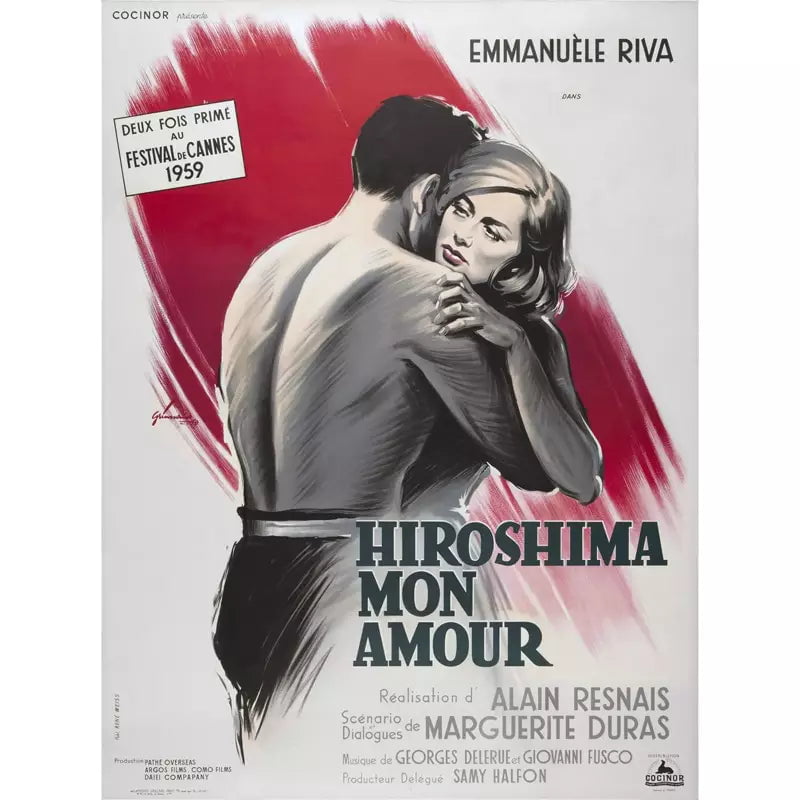
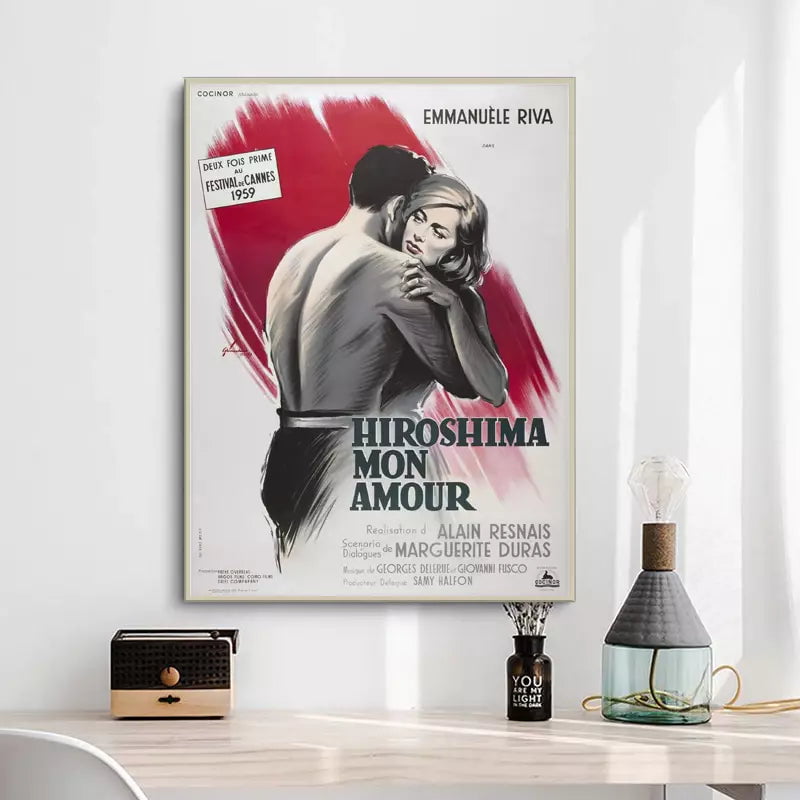
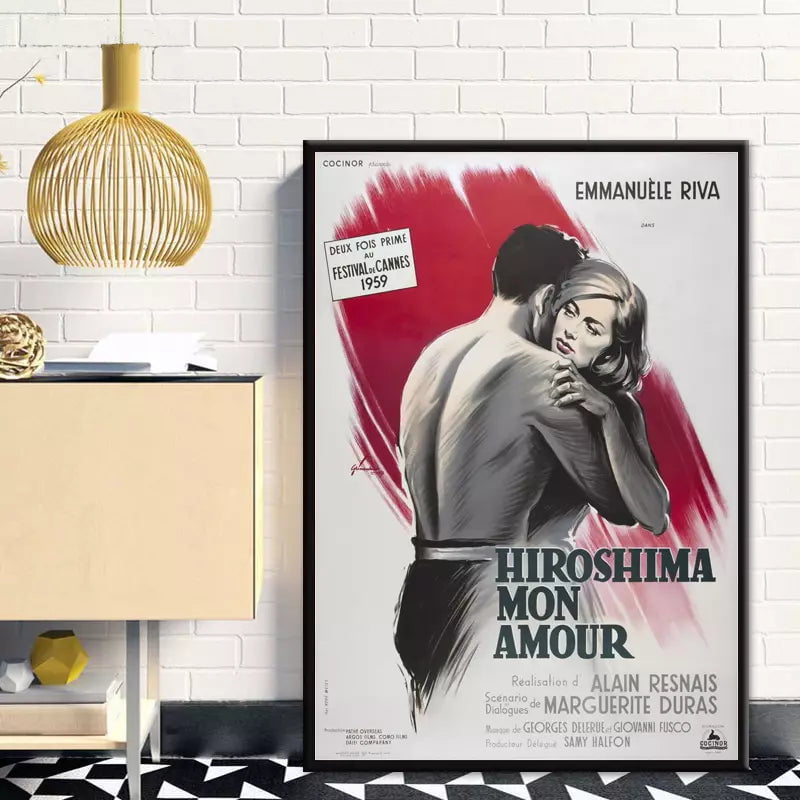
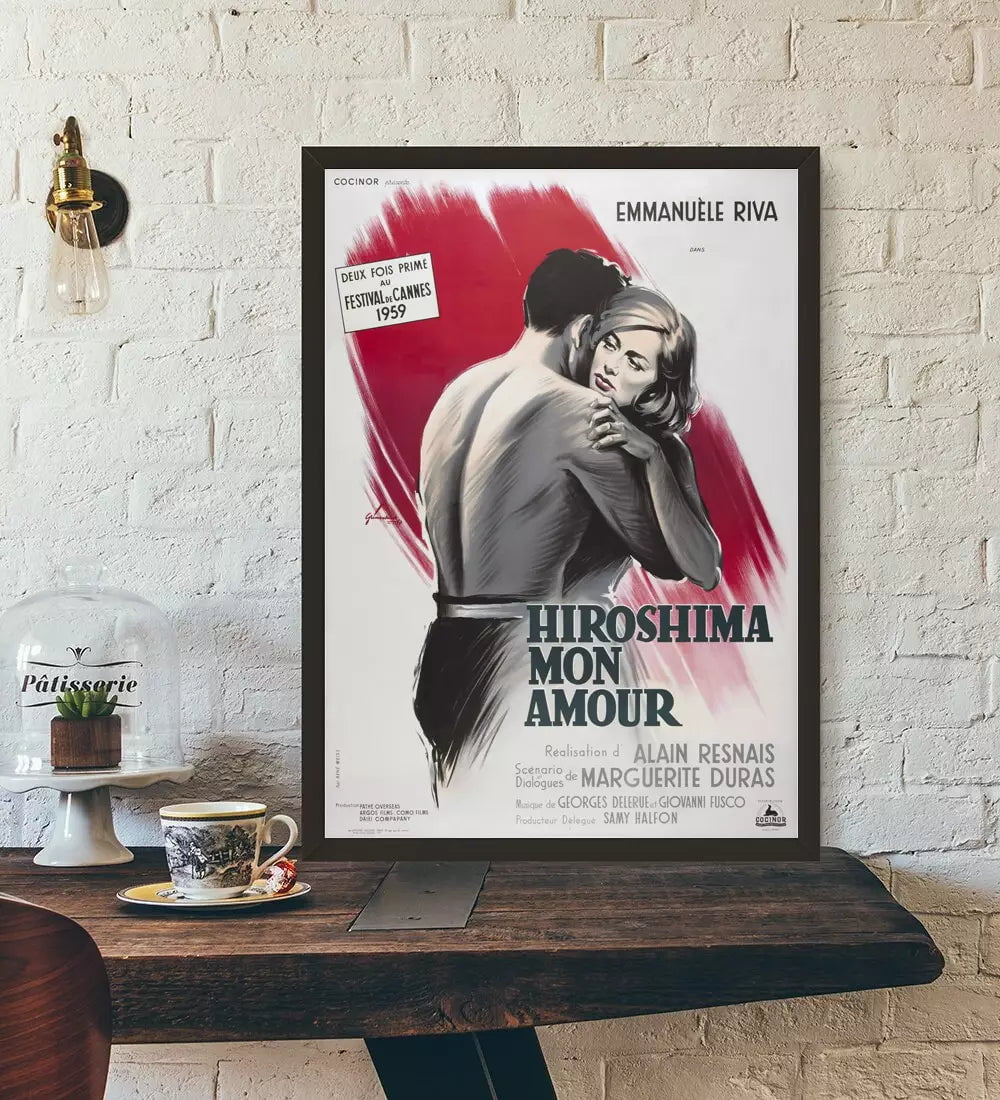
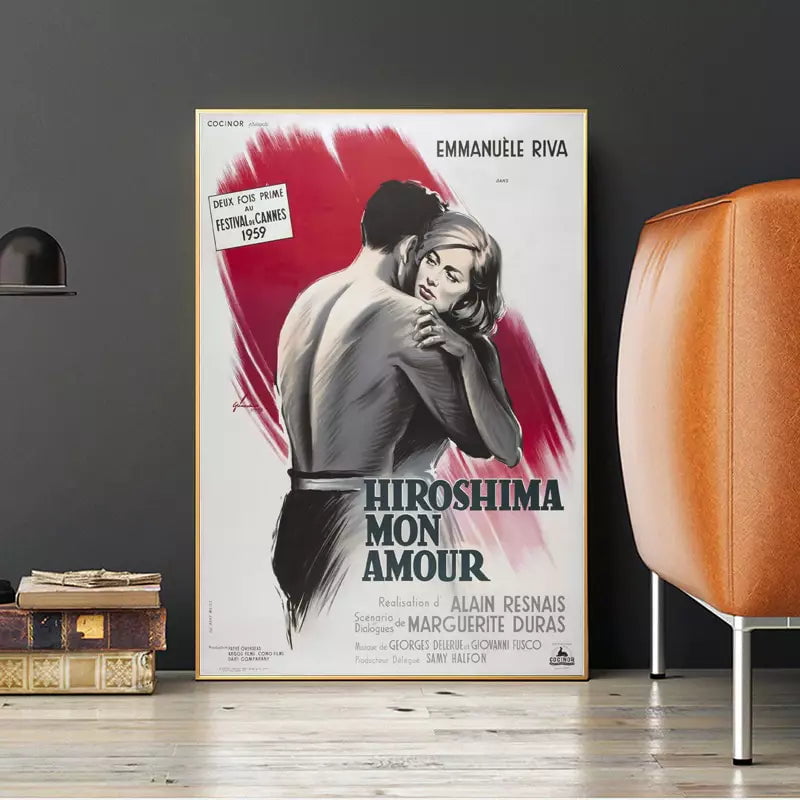
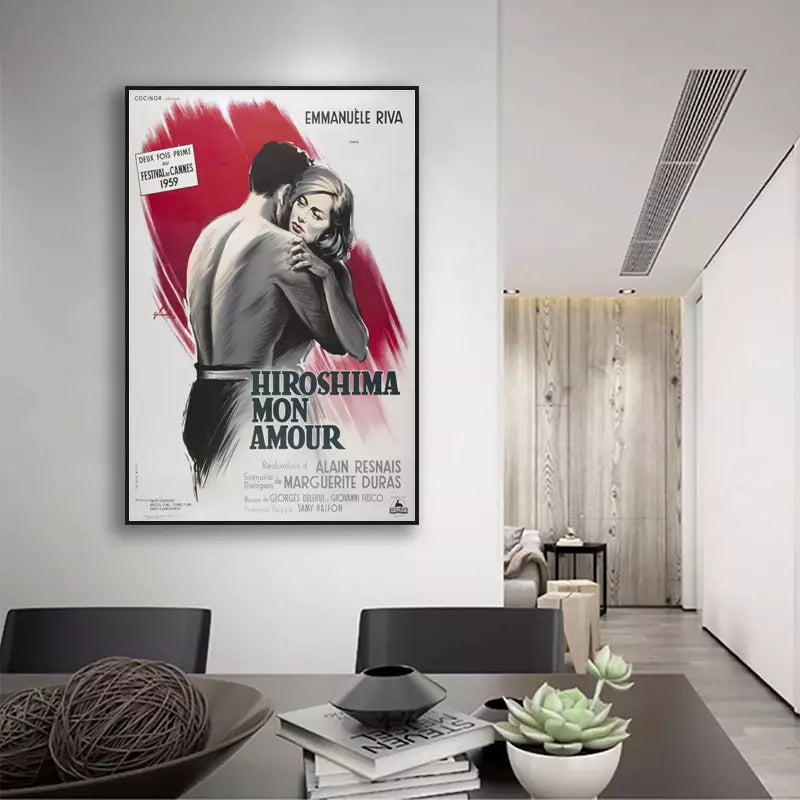
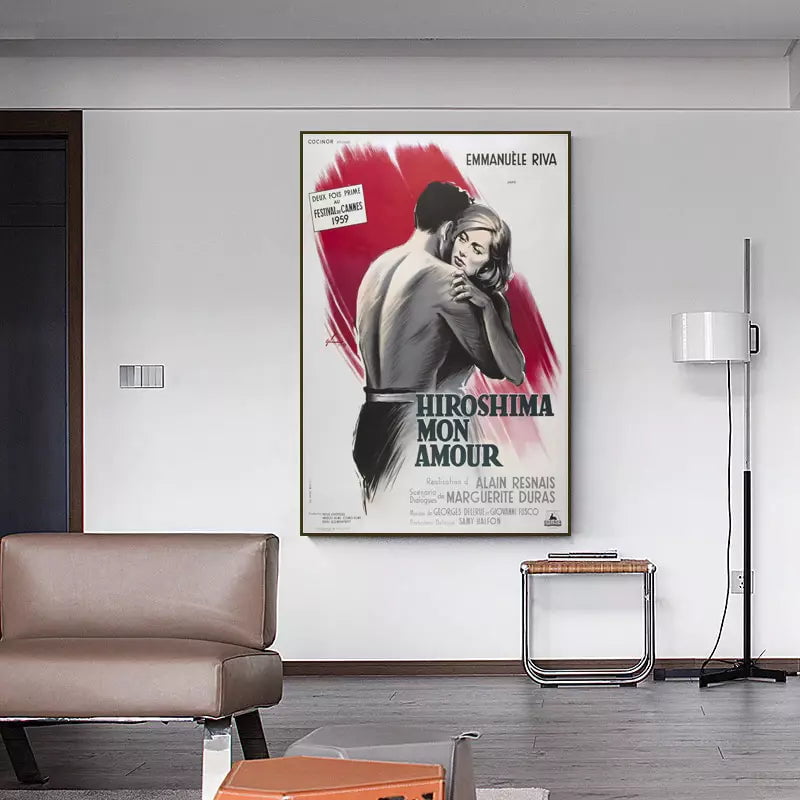
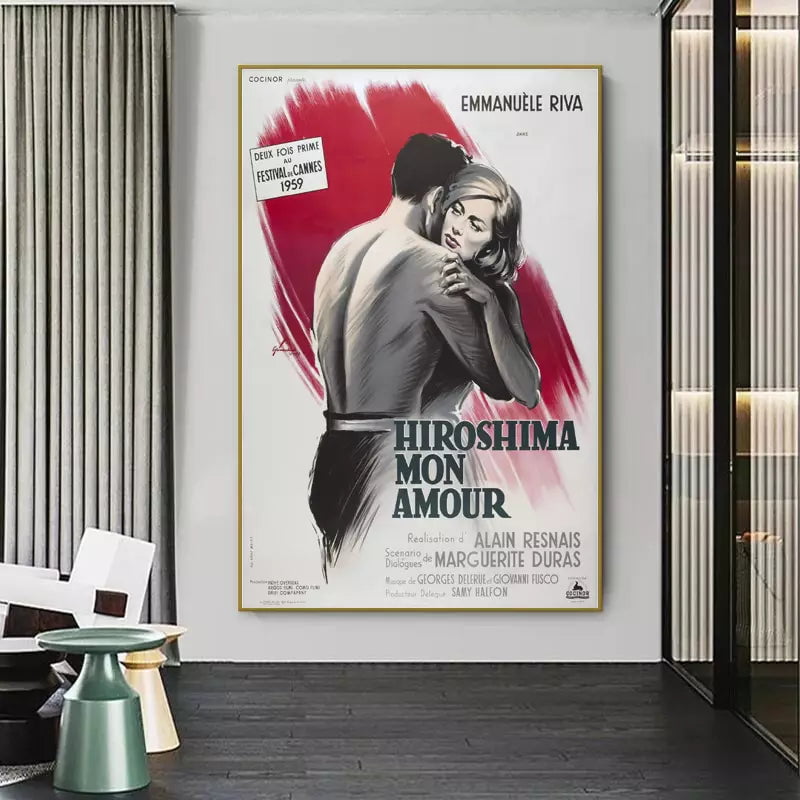
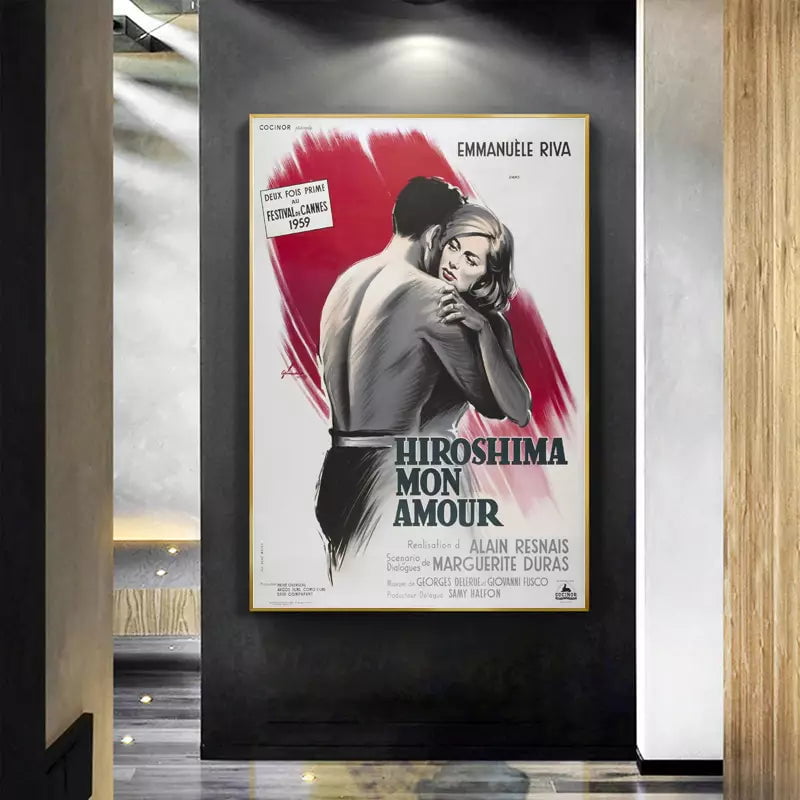
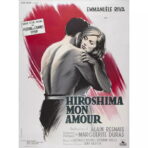



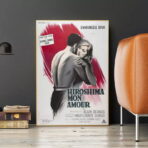

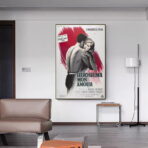

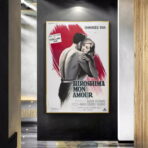








Discover the poster for “Hiroshima mon amour,” a masterpiece of the French New Wave. Immerse yourself in the intense and tragic love of two lovers lost in the memories of war. A poignant work that explores memory, loss, and redemption.
- Paper Feature:
- 🎨 Canvas: global standard in terms of printing and imitating a “painting canvas” look.
- By default, the poster contains a 4cm white border for framing (frame not included). If you don’t want it, please choose “without white border”.
- ✅ Size: several choices available. ✅
- High UV resistance.
- Maximum color brilliance without reflections.
- Recycled paper guaranteed environmental friendliness.
- Poster wrapped carefully and delivered in a protective tube for total protection.
- FREE STANDARD DELIVERY.
⚠️ Frame not included. ⚠️
Description of this Hiroshima Mon Amour Poster
Hiroshima mon amour is a 1959 romantic drama film directed by French filmmaker Alain Resnais and written by French author Marguerite Duras.
Resnais’s first feature film, it is a co-production between France and Japan, and documents a series of intensely personal conversations (or one long conversation) over a period of just over 24 hours between an unnamed French actress and a Japanese architect. The film is notable for Resnais’s innovative use of brief flashbacks to suggest flashes of memory, creating a non-linear plot.
Along with films like Breathless (1960) and The 400 Blows (1959), Hiroshima, My Love brought international attention to the new movement in French cinema and is widely considered one of the most influential films of the French New Wave. It was notably a major catalyst for New Wave cinema.
A series of close-ups of the backs and arms of a man and a woman embracing, amid falling ash, then covered in sweat. In a voiceover, the woman recounts the aftermath of the atomic bombing of Hiroshima, which she saw during her trip to the city, while newsreel and fictional footage shows victims, demonstrations, war memorials, and the streets and buildings of modern-day Hiroshima. The man calmly says that the woman saw nothing and doesn’t know what it’s like to forget. He is from Hiroshima, and his family died in the bombings while he was away fighting in the war. The woman is a French actress in the city to make an anti-war film.
In the morning, the woman watches the man sleep. His twitching hand reminds her of her first love, a soldier whose hand moved in the same way as he lay dying. The Japanese man wakes up, and it appears that he and the woman met the night before in a cafe. She learns that he is an architect and involved in politics. They discuss the bombings and the end of the war, and he is enchanted by the word “Nevers,” her hometown, where she never wants to return. The man says he would like to see the woman again, but she tells him that she is leaving for Paris the next day. Neither this nor the revelation that she has children changes her feelings, but she, though torn, repeatedly refuses to arrange another meeting.
The man visits the woman at the filming location, and she is happy to see him. He takes her home. She asks if he lives alone, and he tells her that his wife is away for a few days. They both say they are happy in their marriage, despite having had occasional affairs before, and make love again. After deciding to spend the woman’s remaining time in Hiroshima together, they go to a teahouse, where the man asks the woman to tell him more about Nevers and her life there. Interspersed with flashbacks, she recounts how she and an occupying German soldier fell in love and planned to elope to Bavaria before he was shot while waiting for her on the day Nevers was liberated, how she stayed with him as he died over the next two days, how the villagers shaved her head when they discovered their relationship, and how her parents alternately locked her in her room and the cellar while her hair grew and she came out of her madness, then sent her to Paris just before the bombing of Hiroshima. She attempts to express the pain she feels at having forgotten the German man and their love, and indicates that she has tried to keep her distance from the Japanese man because she no longer wants such heartache.
The man is delighted to learn that the woman has never spoken to her husband about the German man, but when they leave the teahouse, she tells him to go away and that they will probably never see each other again. In her hotel room, she feels guilty about having spoken to the man about the German man, but decides to stay in Hiroshima. She returns to the teahouse, now closed, and the man finds her and asks her to stay. She weakly replies that she will, but again tells him to go away. They walk through the city, together and apart, images of Hiroshima alternating with those of Nevers. The woman goes to a train station, where she shakes off some problems related to her first love and decides she would like to visit Nevers. She takes a taxi to a nightclub, followed by the man. The place is almost empty, and they sit next to each other. At sunrise, a Japanese man sits next to the woman and flirts with her in English.
Back in the woman’s hotel room, the architect knocks on the door. She lets him in and shouts that she’s already starting to forget him, but suddenly calms down and tells him his name is “Hiroshima.” He replies affirmatively, and her name is “Nevers.”