


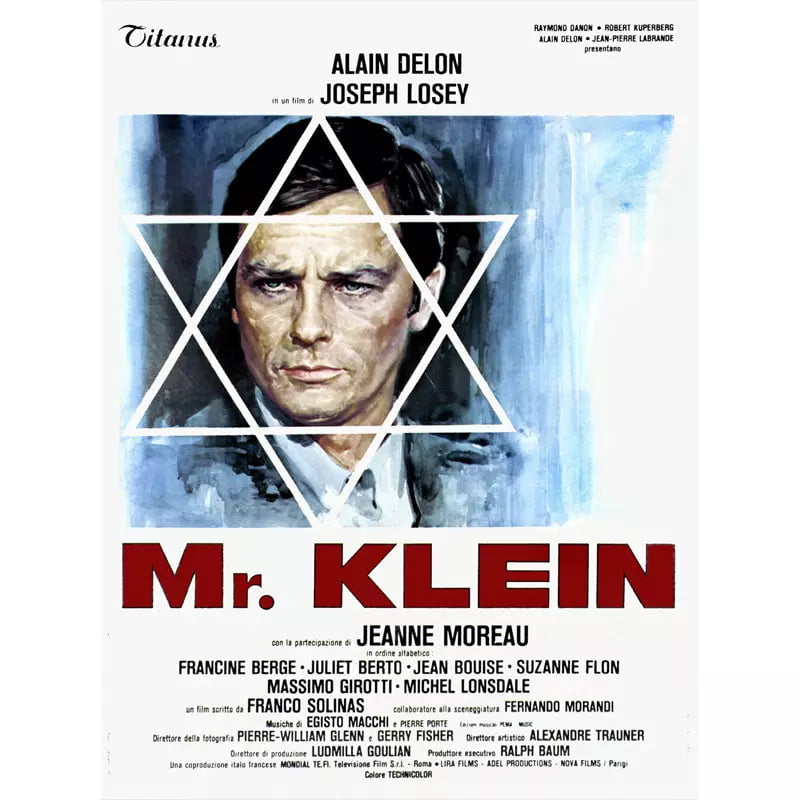
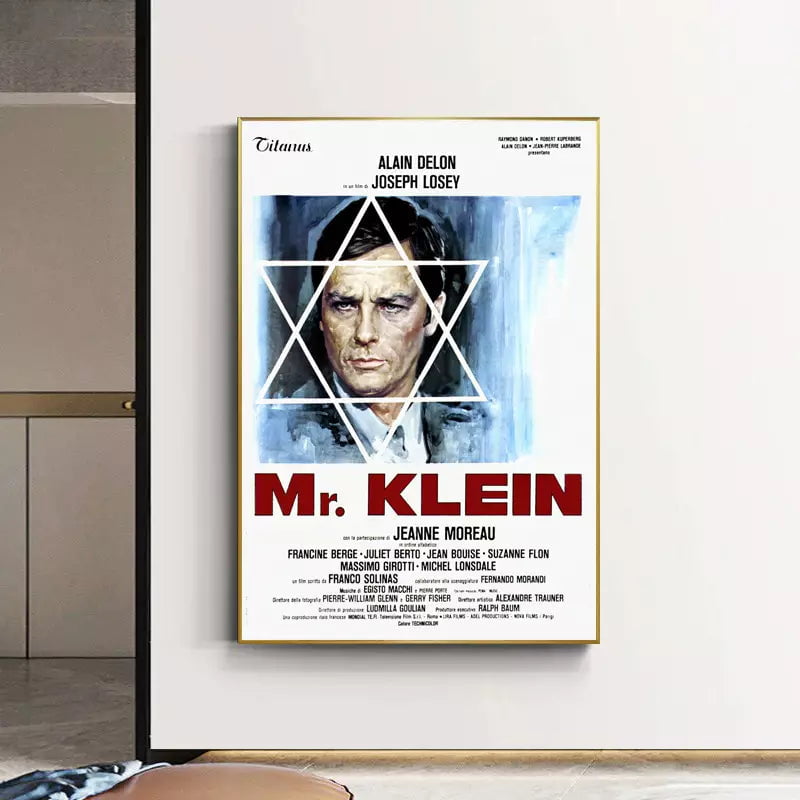
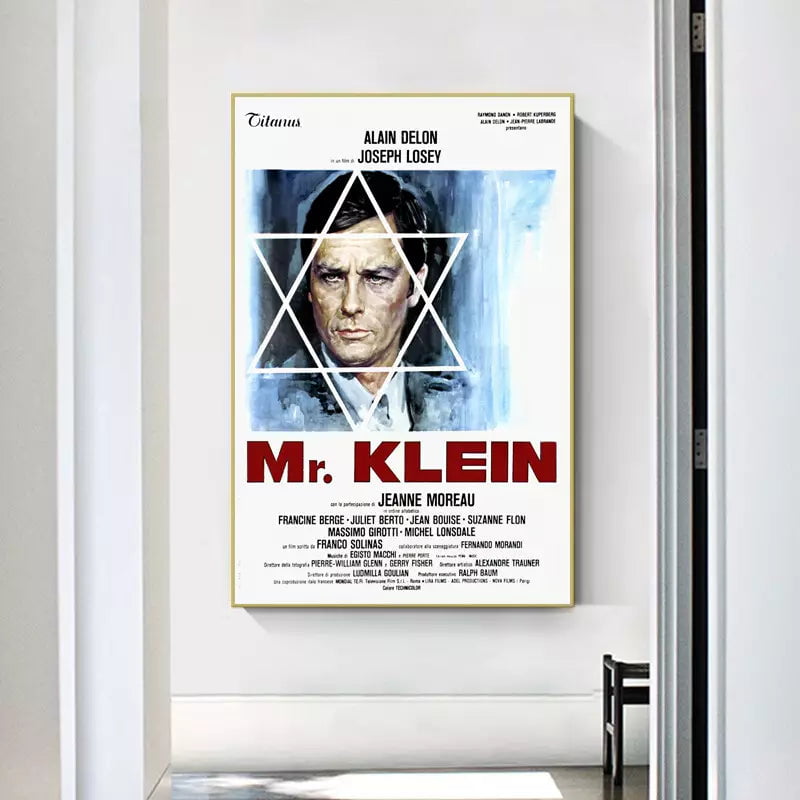
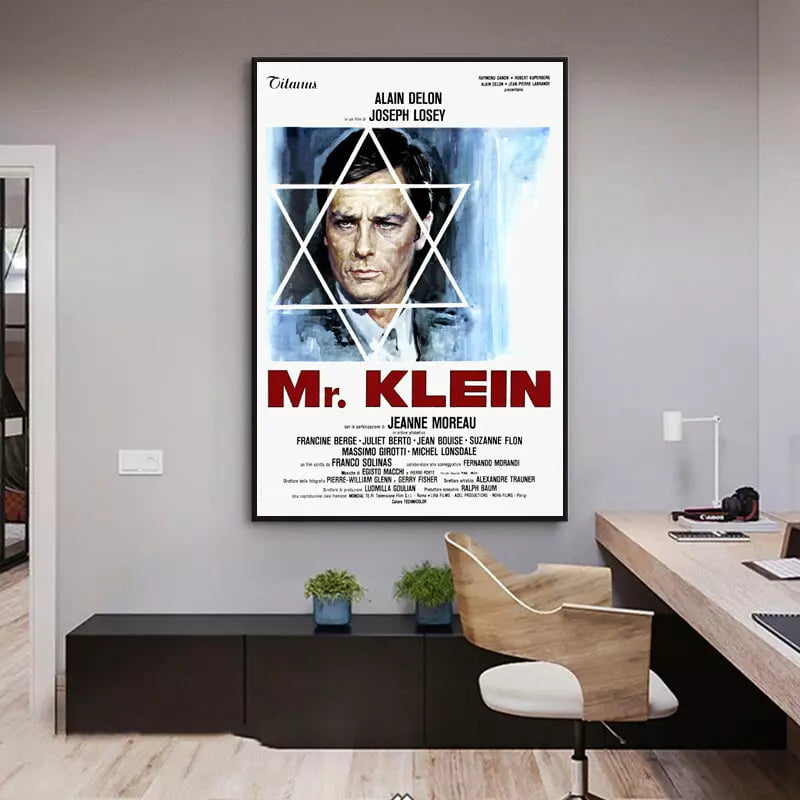
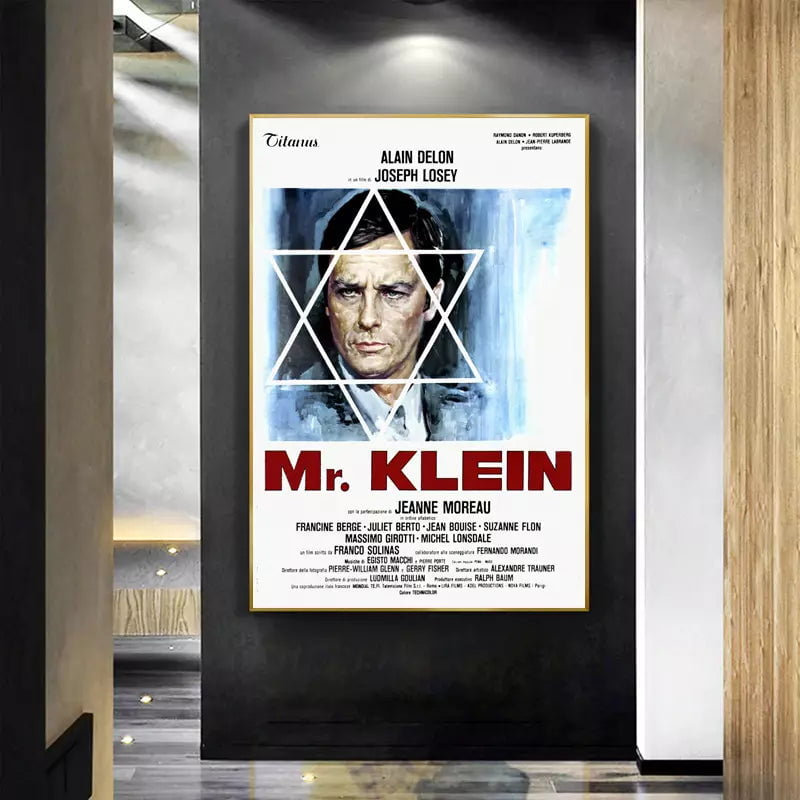
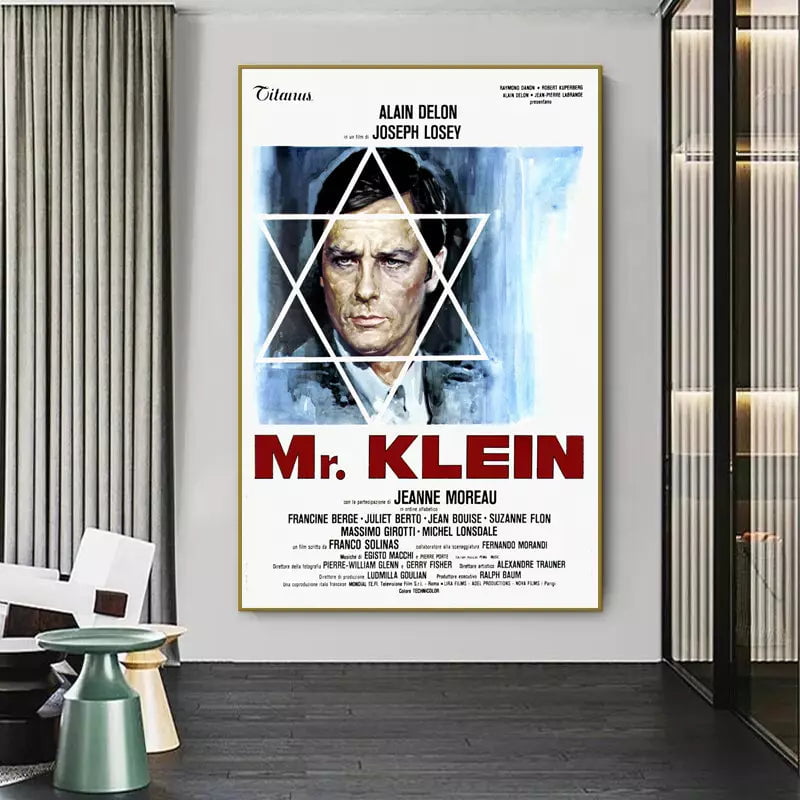
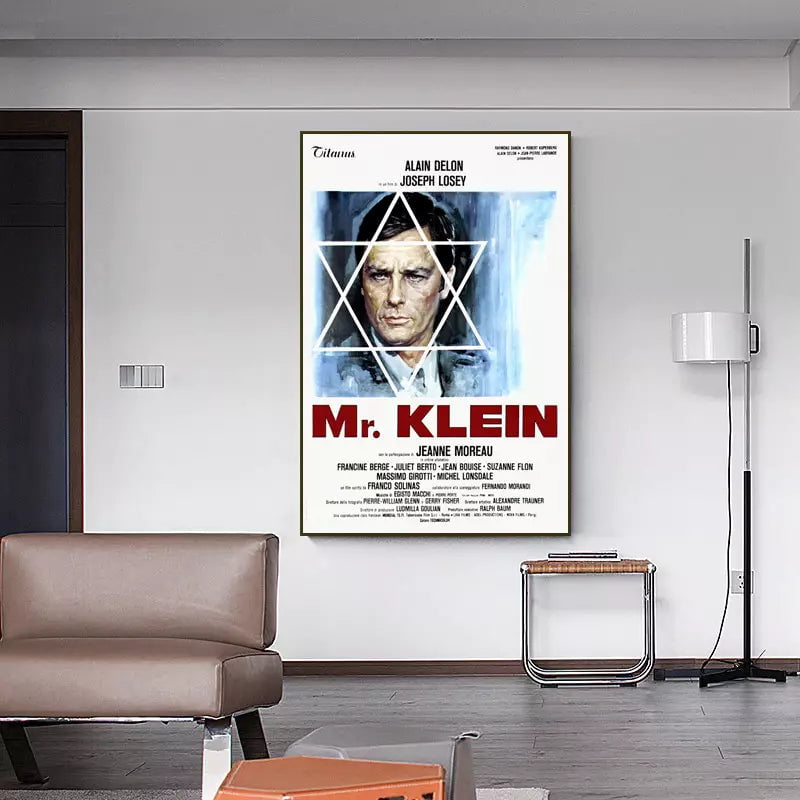
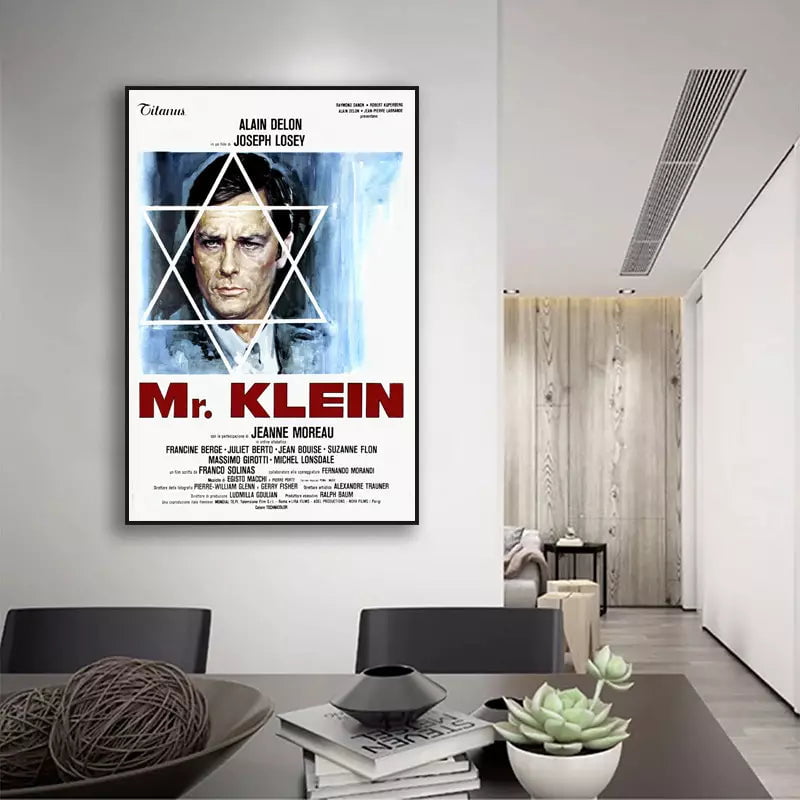
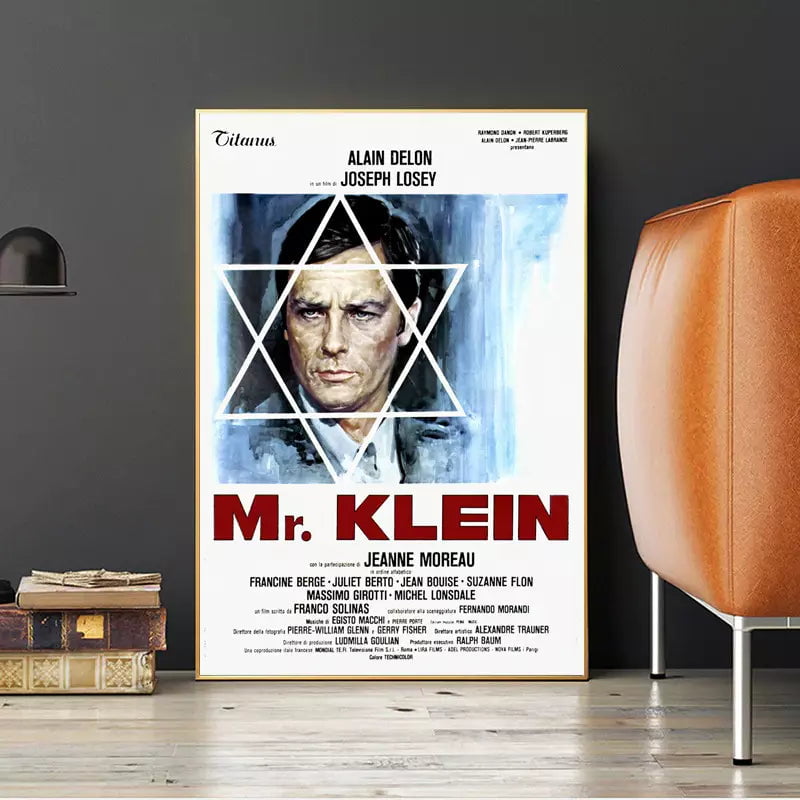
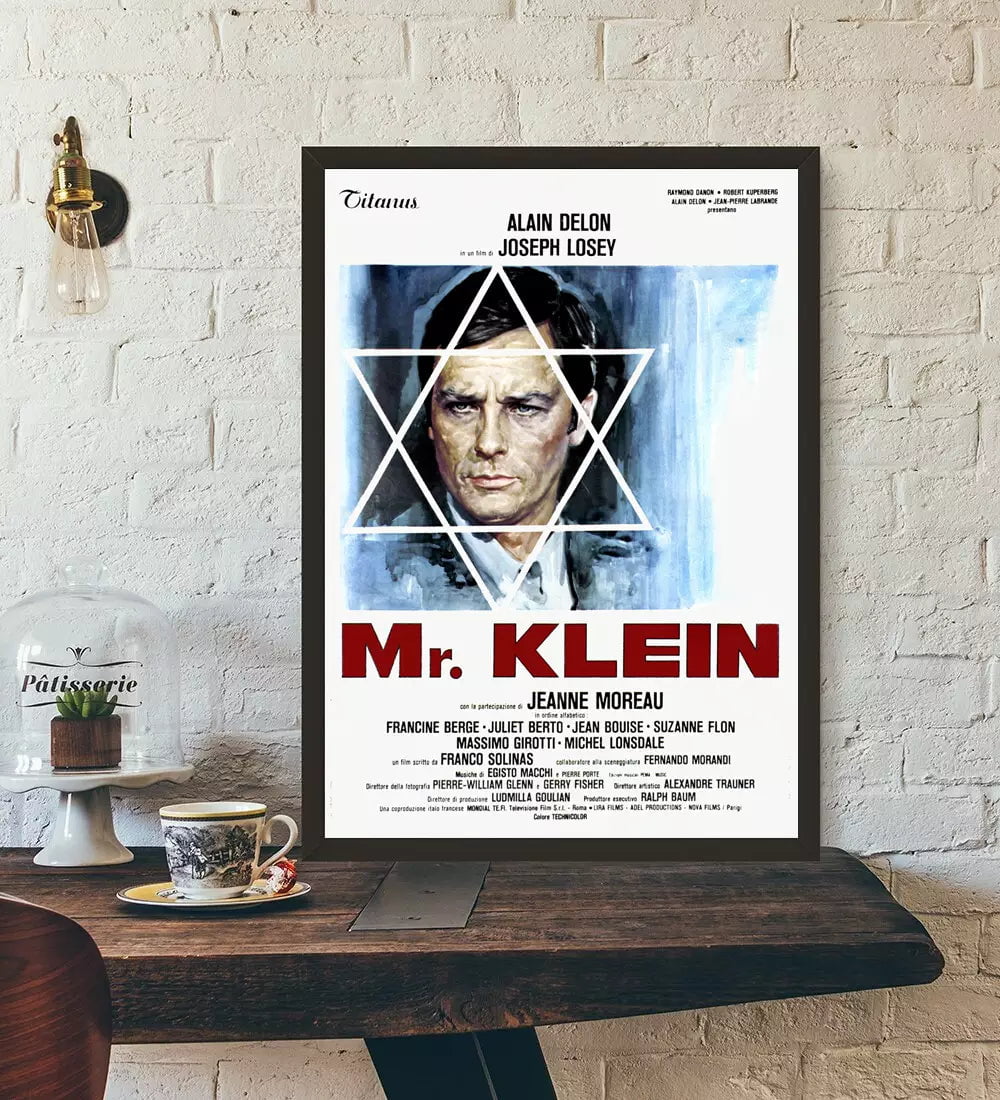
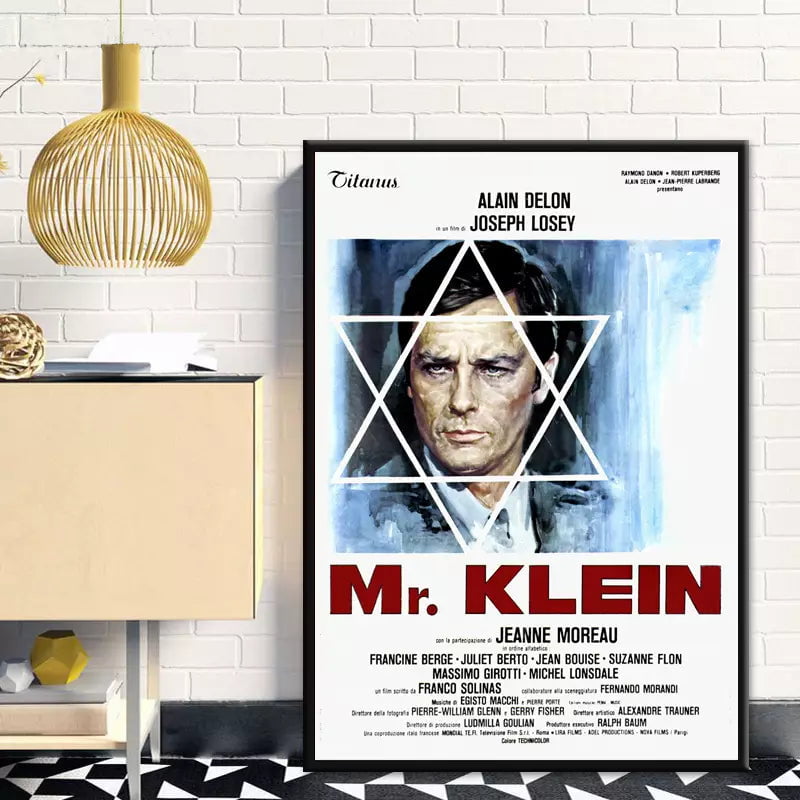

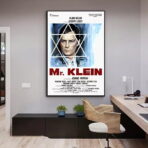
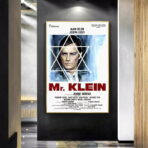
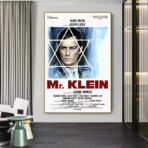
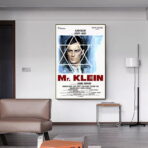

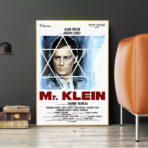














This Monsieur Klein Poster exudes a heavy and oppressive atmosphere, reflecting the dark period of the Nazi occupation of Paris in 1942. The sets, costumes and music contribute to creating this heavy and distressing atmosphere.
- Paper characteristics:
- 🎨 Canvas: global standard in terms of printing and imitating a “painting canvas” look.
- By default, the poster contains a 4cm white border for framing (frame not included). If you don’t want it, please choose “without white border”.
- ✅ Size: several choices available. ✅
- High UV resistance.
- Maximum color brilliance without reflections.
- Recycled paper guaranteed environmental friendliness.
- Poster wrapped carefully and delivered in a protective tube for total protection.
- FREE STANDARD DELIVERY.
⚠️ Frame not included. ⚠️
Description of this Poster Monsieur Klein
Monsieur Klein is a 1976 crime film directed by Joseph Losey, produced by Alain Delon, and starring him in the title role. Set in Vichy France, the Kafkaesque tale follows a seemingly pagan Parisian art dealer who is seemingly mistaken for a Jewish man of the same name and targeted during the Holocaust, unable to prove his identity.
The film is a French and Italian co-production and premiered at the 1976 Cannes Film Festival. It received widespread critical acclaim and won three César Awards: Best Film, Best Director (Joseph Losey), and Best Direction (Alexandre Trauner). Alain Delon was nominated for Best Actor.
Paris, January 1942. France is occupied by the Nazis. Robert Klein, apparently apolitical and amoral[6], is a well-to-do art dealer, Catholic and Alsatian by birth, who takes advantage of French Jews who need to sell works of art to raise money to leave the country.
One day, the local Jewish newspaper, addressed to him, is delivered to his home. He learns that another Robert Klein living in Paris, a Jew wanted by the police, has forwarded his own mail to him with the apparent aim of destroying his social reputation and making him the target of official anti-Semitism. He reports this to the police, who suspect him of trying to conceal his true identity by exposing this scheme.
His own investigations lead him in contradictory directions: toward Klein living in a slum while having an affair with his caretaker, and toward Klein visiting a palatial country estate where he has seduced an apparently Jewish married woman.
When the art dealer fails to locate the other Klein, the authorities demand that he provide proof of his non-Jewish French ancestry. While waiting for the documents to arrive, he strives to find his namesake and learn his motives. Before he can resolve the situation by either means, he is caught up in the July 1942 roundup of Parisian Jews.
The film offers no clear resolution of its conflicting evidence and dead ends. It ends when he finds the Jews who were his clients boarding train cars for Auschwitz.