


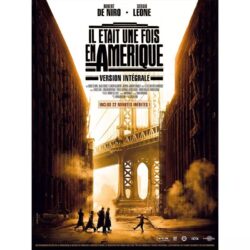
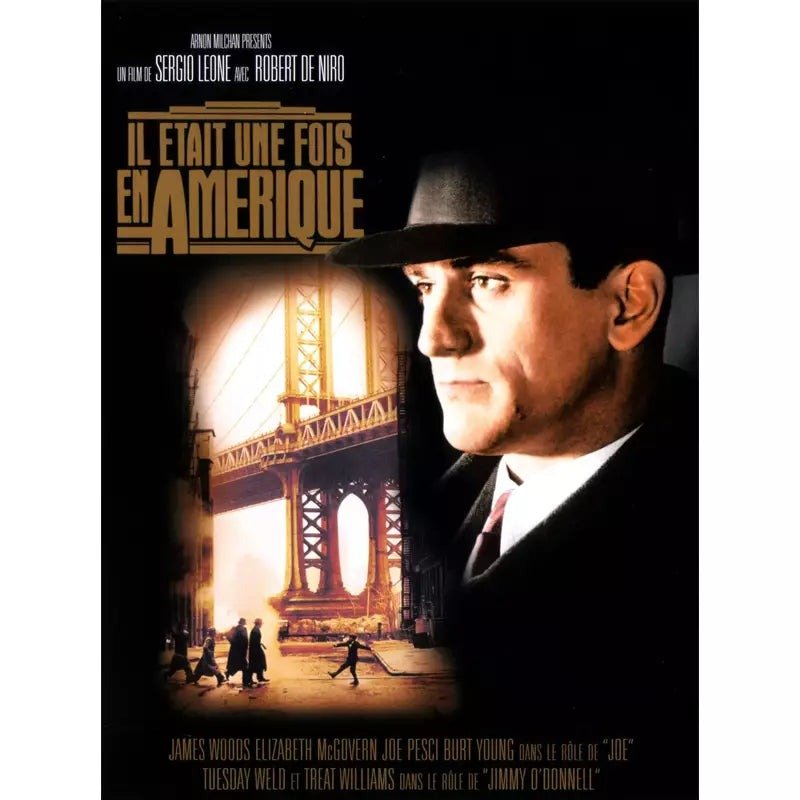
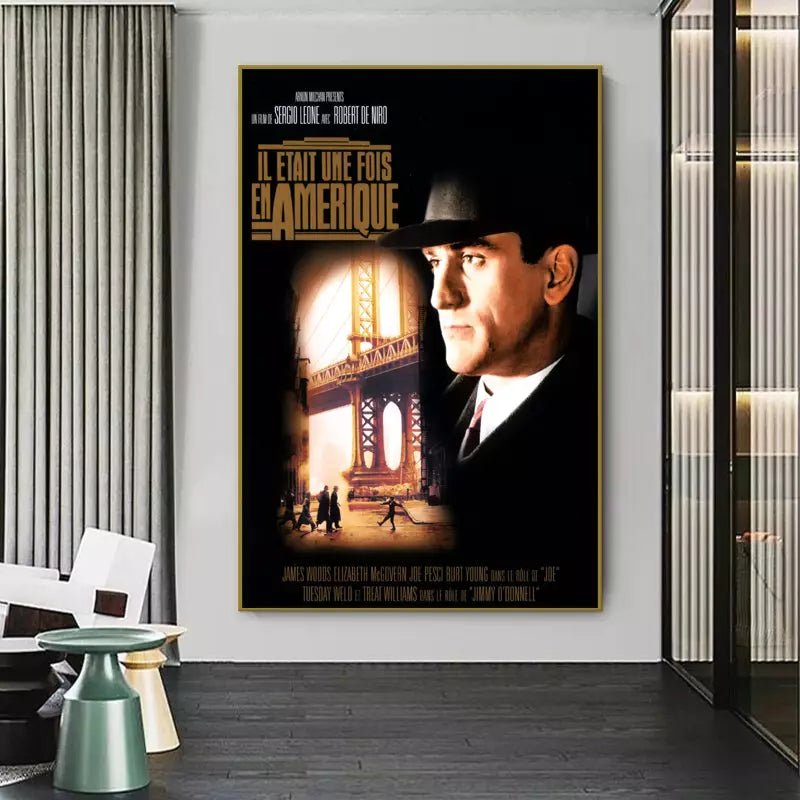
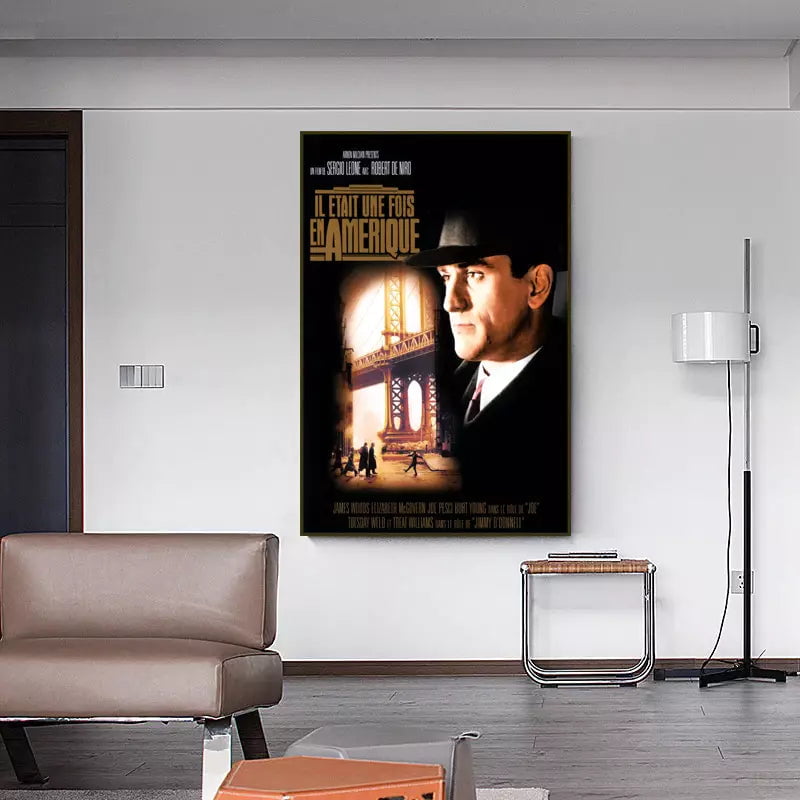
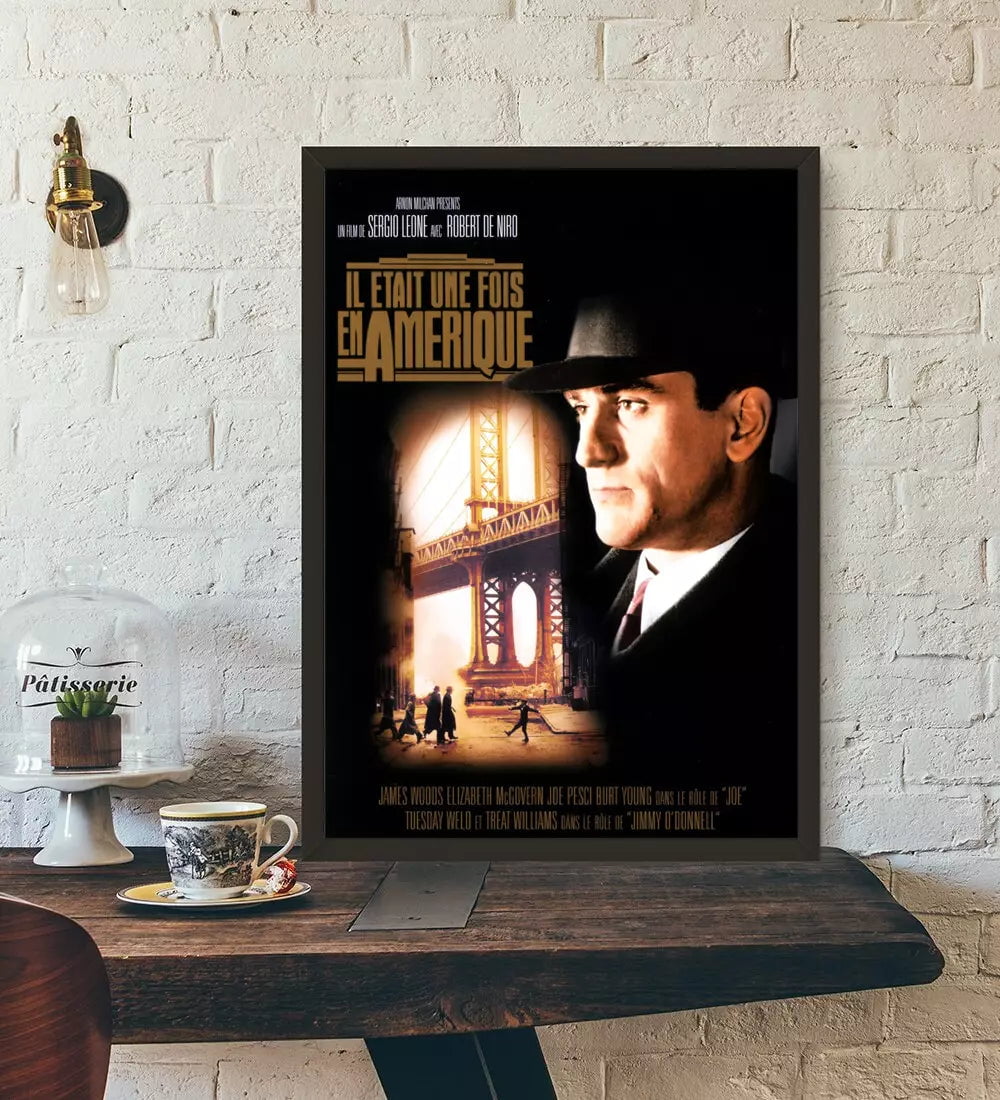
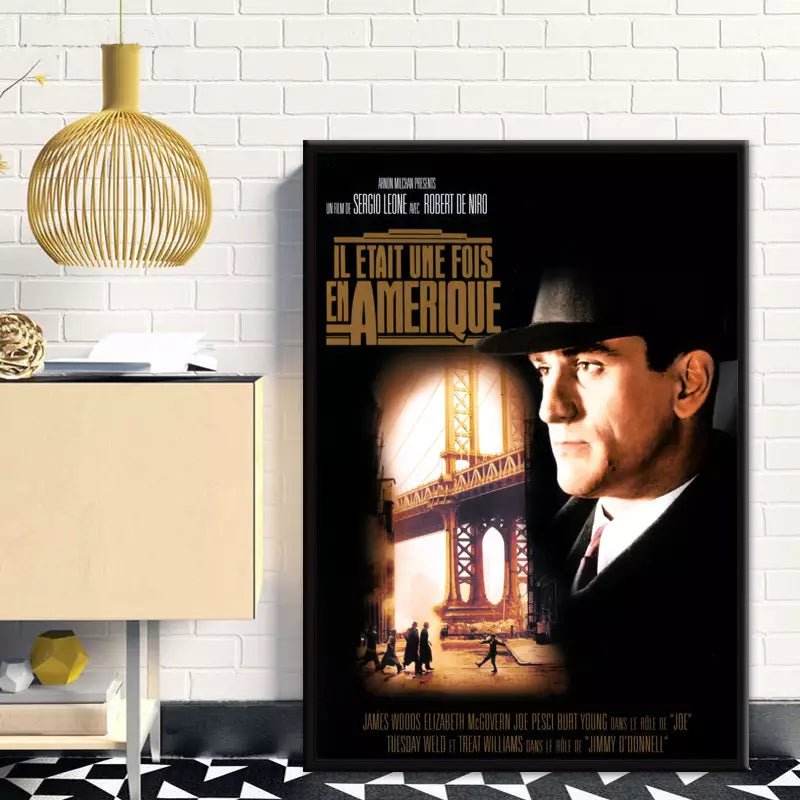
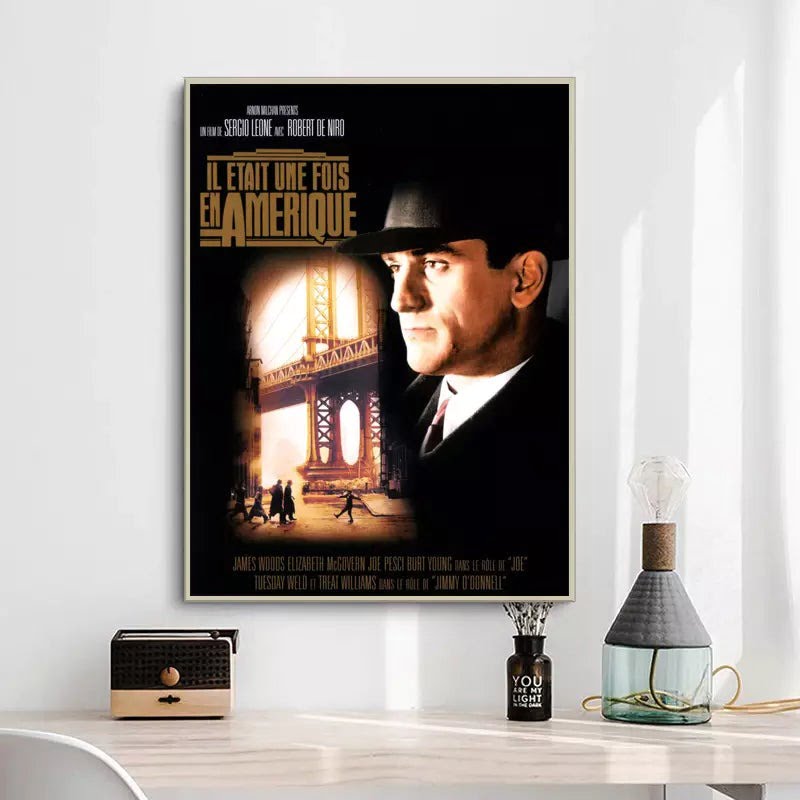
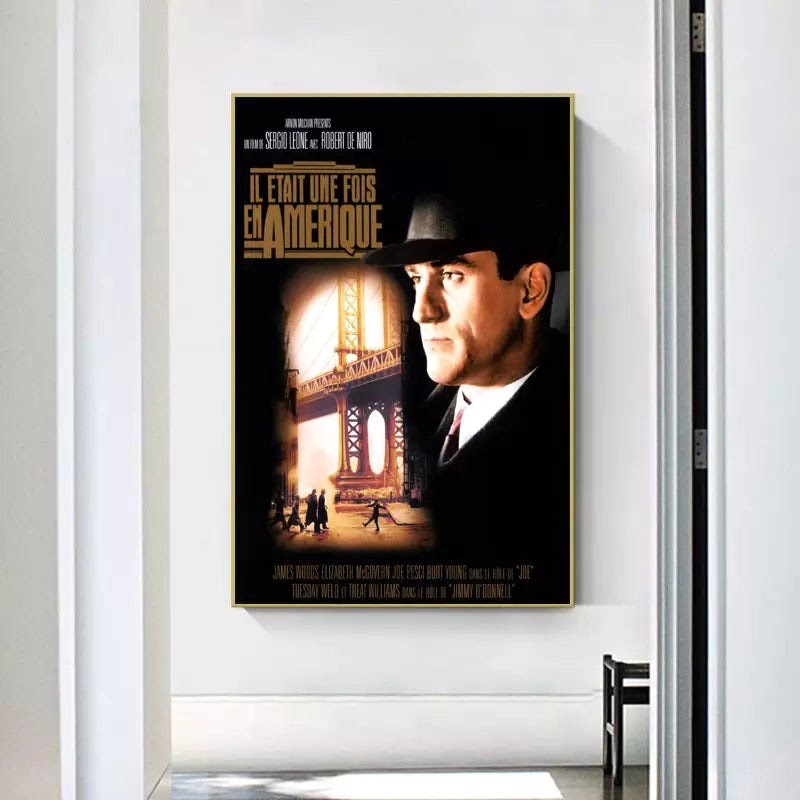
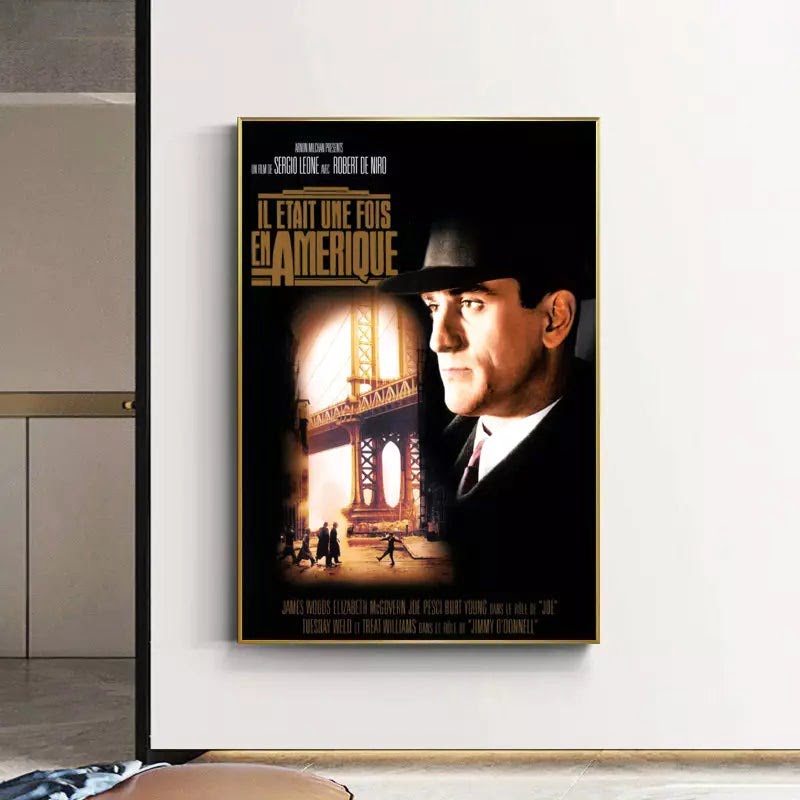
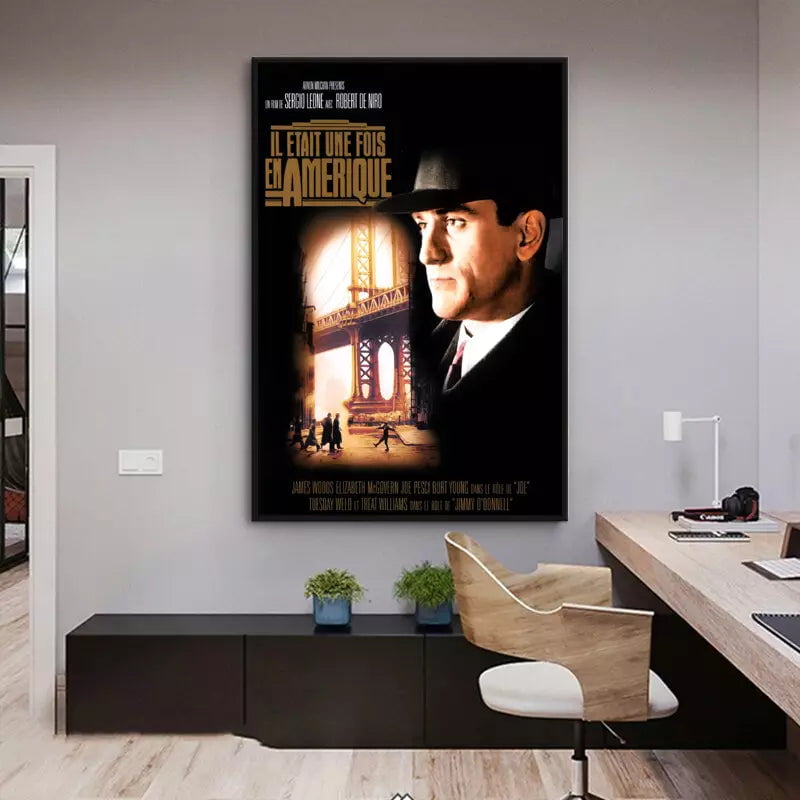
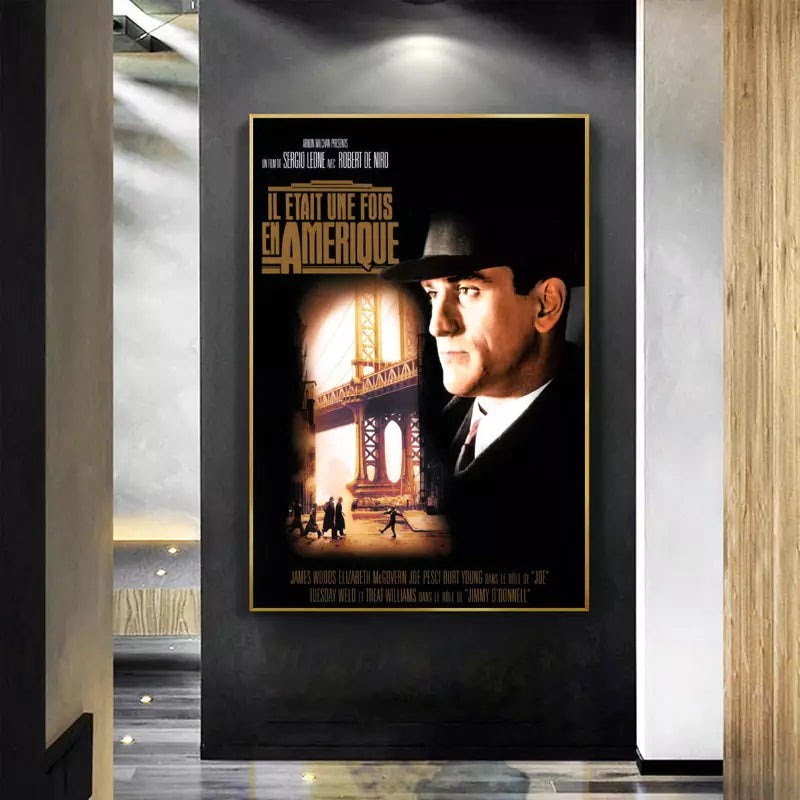


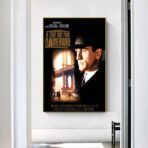











Discover the iconic Once Upon a Time in America Movie Poster and immerse yourself in an unforgettable cinematic epic. This captivating poster evokes the emotional depth of this timeless masterpiece directed by Sergio Leone. The poster takes viewers on a fascinating journey through the dark and mysterious streets of New York, revealing the captivating atmosphere of the film. The warm tones and dramatic shades reflect the visual palette of the feature film, creating a sense of intensity and passion.
- Paper Feature:
- 🎨 Canvas: Global standard in terms of print and imitating a “painting canvas” look.
- By default, the poster contains a 4cm white border for framing (frame not included). If you don’t want it, please choose “without white border”.
- ✅ Size: Multiple choices available. ✅
- High UV resistance.
- Maximum color brilliance without reflections.
- Recycled paper guaranteed environmental friendliness.
- Poster wrapped carefully and delivered in a protective tube for total protection.
- FREE STANDARD DELIVERY.
⚠️ Frame not included. ⚠️
Description of this Once Upon a Time in America Movie Poster
Once Upon a Time in America (C’era una volta in America) is a 1984 epic crime drama film co-written and directed by Italian filmmaker Sergio Leone, starring Robert De Niro and James Woods.
The film is an Italian-American project[3] produced by The Ladd Company, Embassy International Pictures, PSO Enterprises, and Rafran Cinematografica, and distributed by Warner Bros. Based on the novel The Hoods by Harry Grey, it follows the lives of best friends David “Noodles” Aaronson and Maximilian “Max” Bercovicz, who lead a group of young Jews from the ghetto who become prominent Jewish gangsters in the world of organized crime in New York City. The film explores themes of childhood friendships, love, lust, greed, betrayal, loss, broken relationships, and the rise of mobsters in American society.
It was the last film Leone directed before his death five years later, and his first feature film in 13 years. It is also the third installment in Leone’s Once Upon a Time trilogy, which includes Once Upon a Time in the West (1968) and Once Upon a Revolution (1971). Cinematography was by Tonino Delli Colli, and the film’s score was by Ennio Morricone. Leone originally envisioned two three-hour films, then a single 269-minute version (4 hours and 29 minutes), but distributors convinced him to shorten it to 229 minutes (3 hours and 49 minutes). The American distributors, The Ladd Company, shortened it further to 139 minutes (2 hours and 19 minutes) and rearranged the scenes chronologically, without Leone’s participation.
The American cut was a critical and commercial failure in the United States, and critics who had seen both versions harshly condemned the changes. The original “European cut” has remained a critical favorite and frequently appears on lists of the greatest films of all time, particularly in the gangster genre.
In 1933, three thugs search for a man named “Noodles,” torturing people for information. They enter a wayang theater, where the owners slip into an opium den hidden in the building and warn Noodles. He is listless, drugged, and grabbing a newspaper featuring the disappearance of bootleggers Patrick Goldberg, Philip Stein, and Maximilian Bercovicz. He remembers watching the police remove his corpses; Max burned beyond recognition. Noodles eludes capture and leaves the town alone and penniless.
In 1918, David “Noodles” Aaronson and his friends “Patsy” Goldberg, “Cockeye” Stein, and Dominic fight like street kids on Manhattan’s Lower East Side, committing petty crimes for local boss Bugsy. Max foils one of their robberies, but the loot is stolen by a corrupt police officer, Whitey. Later, they blackmail the officer, catching him sleeping with Peggy, a prostitute, and the five youths create a gang with the same level of police protection as Bugsy. Max and Noodles become best friends.
The group rises through the ranks after implementing Noodles’s idea to hide bootleg liquor. They hide half of their earnings in a train station locker, giving the key to “Fat Moe,” a friend not directly involved in their activities. Noodles is in love with Moe’s sister, Deborah, who dreams of becoming a dancer and actress. Bugsy, now a rival, eventually ambushes the boys and shoots Dominic, who dies in Noodles’s arms. In a fit of rage, Noodles kills Bugsy and wounds a police officer and is sentenced to prison.
Noodles is released in 1930 and rejoins his friends, now successful bootleggers during Prohibition. His first job with them is a diamond heist using a jewelry clerk and occasional prostitute named Carol as an informant. During the robbery, Carol tricks Noodles into hitting her, after which he rapes her; she later becomes Max’s moll. The fact that the job was commissioned by a Union figure to eliminate competition falls badly on Noodles, who, unlike Max, dislikes hierarchy and lacks political ambition. The gang protects Teamsters Union boss Jimmy O’Donnell, but Noodles later rejects Max’s plan to deepen these ties.
Seeking to form a genuine intimacy with Deborah, Noodles takes her on a lavish date, where she reveals her plans to pursue a career in Hollywood. On the way home, a frustrated Noodles rapes her in a limousine. He later encounters Deborah’s aloofness as he watches her board the train to California.
The gang’s success ends with the 1933 repeal of Prohibition. Max suggests a robbery of the Federal Reserve Bank of New York, which Noodles and Carol dismiss as a suicide mission. Carol convinces Noodles to inform the police of a lesser offense, hoping that a brief incarceration will dampen Max’s ambition. After Noodles calls the police, Max knocks him unconscious during a seemingly impromptu argument. This leads to the events shown in the prologue: upon regaining consciousness and learning that Max, Patsy, and Cockeye have been killed by the police, a guilt-ridden Noodles hides in the opium den. He rescues Moe but discovers that his new girlfriend, Eve, has been murdered and the money from the railroad locker is missing. With his gang killed and himself hunted by Syndicate thugs, Noodles settles in Buffalo under an alias.
In 1968, Noodles is belatedly informed that Beth Israel Cemetery is being redeveloped and has requested to rebury his loved ones. After investigating, the rabbi who sent the letter informs him that the bodies of his three dead friends have since been transferred to Riverdale. Realizing that someone has deduced his identity, Noodles returns to Manhattan and stays with Moe. Inside the Riverdale mausoleum, Noodles finds a key to the railway locker. The legend on the commemorative plaque falsely states that the mausoleum was erected by Noodles himself. The locker reveals a suitcase full of money, and a note stating that it is a down payment on his next job. Noodles watches the news of an assassination attempt on controversial U.S. Commerce Secretary Christopher Bailey. The report shows Jimmy O’Donnell, still a Teamsters boss, walking away from the Bailey corruption scandal. Noodles finds Carol in a nursing home run by the Bailey Foundation. She tells him that Max manipulated them into reporting him to the police and opened fire first, wishing to die young rather than in an insane asylum like his father.
After spotting her in the retirement home’s autograph photo, Noodles tracks down Deborah, still an actress.[a] He tells her about his invitation to a party at Bailey’s mansion. Deborah admits to being Bailey’s lover and begs Noodles to leave before being confronted with any hurtful revelations. Ignoring Deborah’s advice, Noodles sees Bailey’s son just outside, who obviously looks like a young Max.
At the party, Noodles meets Bailey, who reveals that he is actually Max and that he faked his death with the help of the police and the Union, stole the gang’s money, and reinvented himself as a self-made politician with connections to the Teamsters. He confirms having made Deborah his mistress years earlier. Faced with ruin and the specter of a Teamster assassination, Max reveals that the job he has for Noodles is to kill him. Noodles, stubbornly referring to him as Bailey, refuses, explaining that in his eyes, Max died with the gang. As Noodles leaves the estate, a garbage truck starts up and a man, presumably Max, walks from the entrance toward Noodles until the truck passes between them. Noodles sees the truck’s auger crushing the garbage, but the man is nowhere to be seen. The epilogue flashes back to 1933 with Noodles entering the opium den after his friends’ deaths, taking the drug and smiling broadly.