


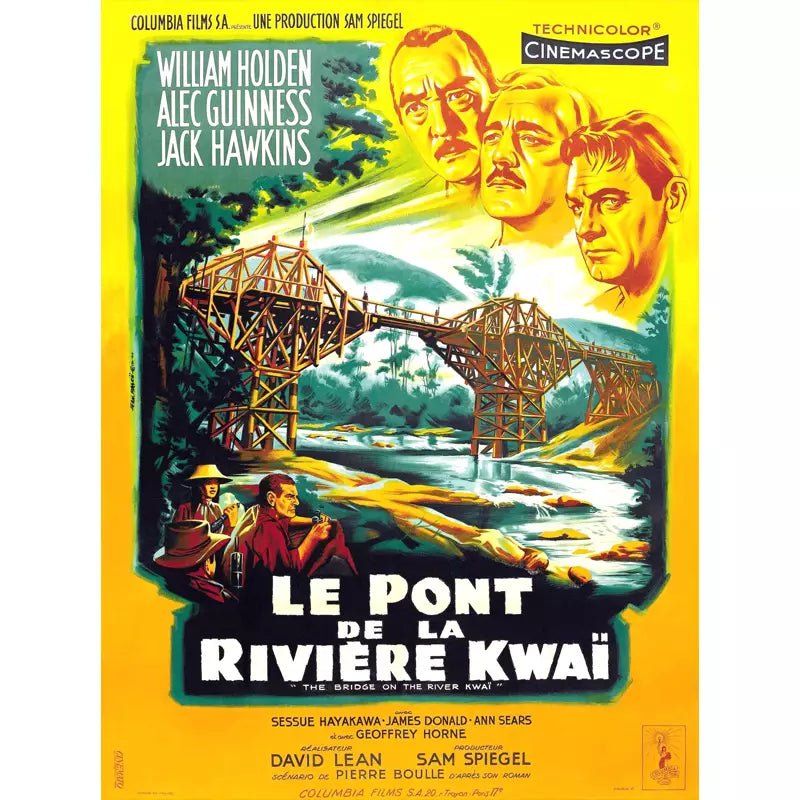
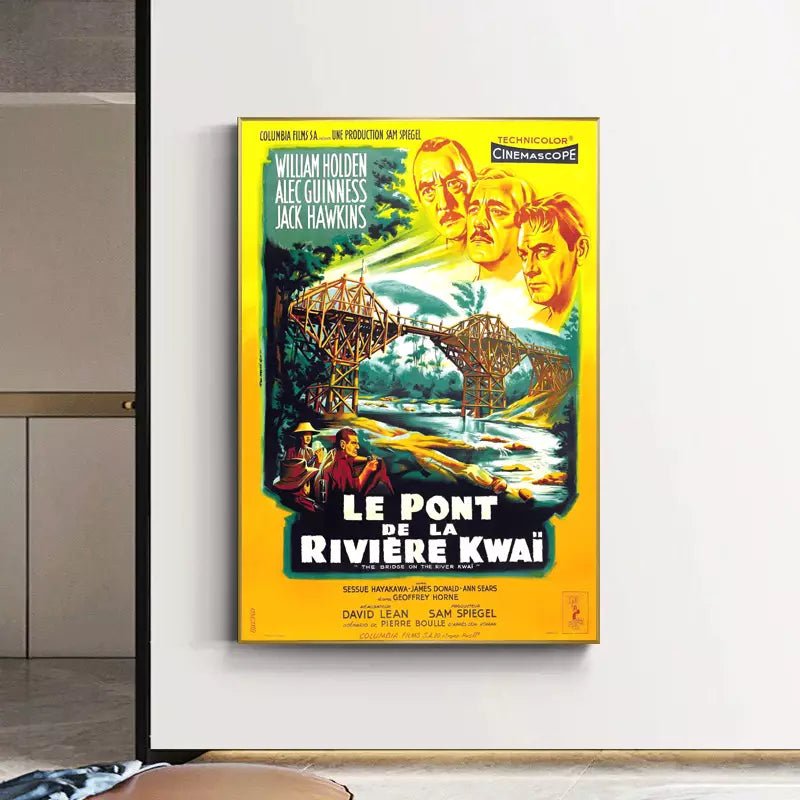
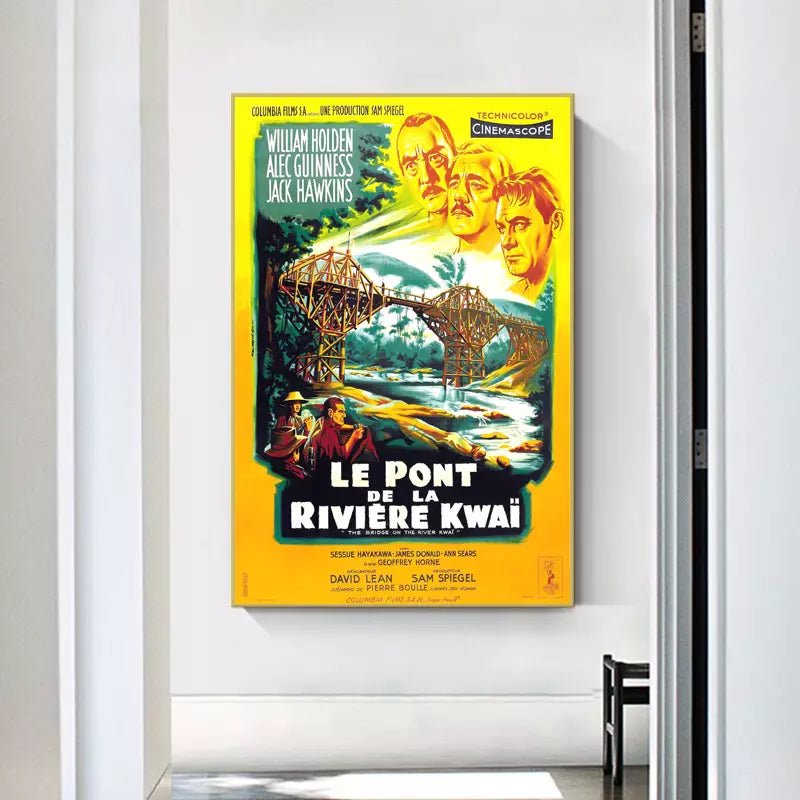
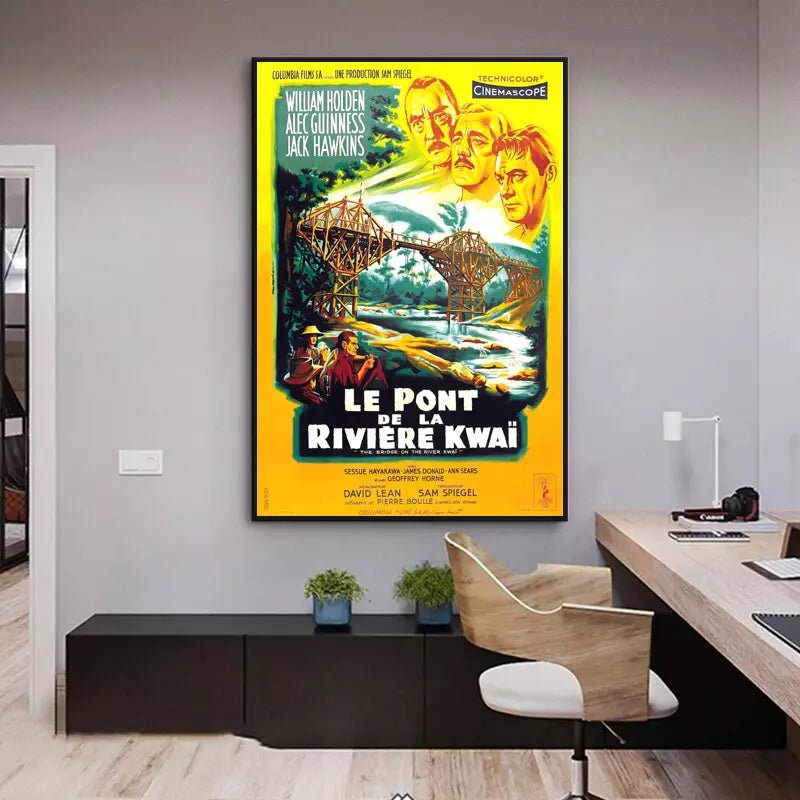
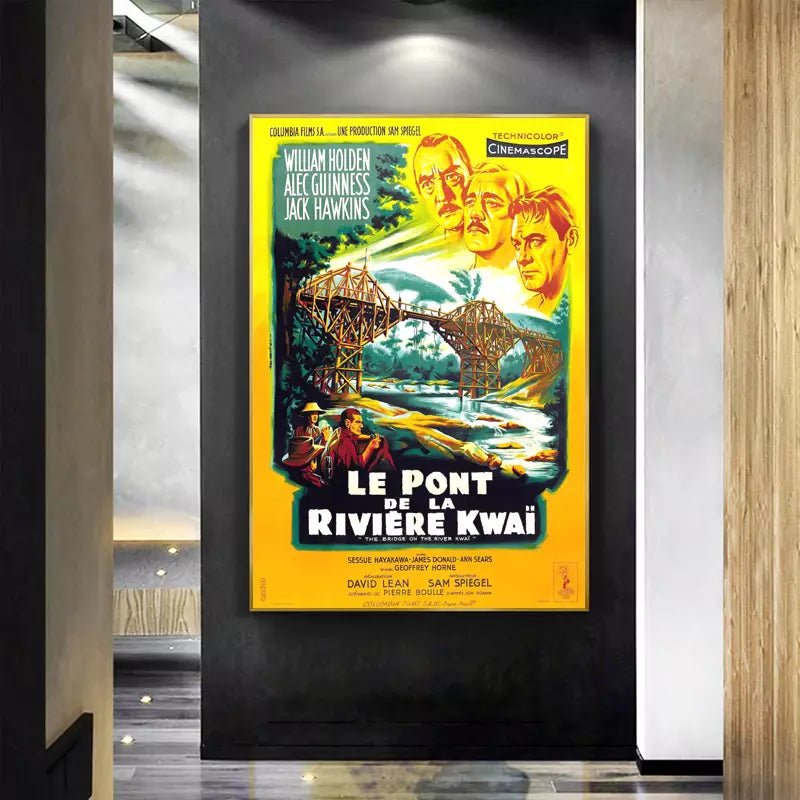
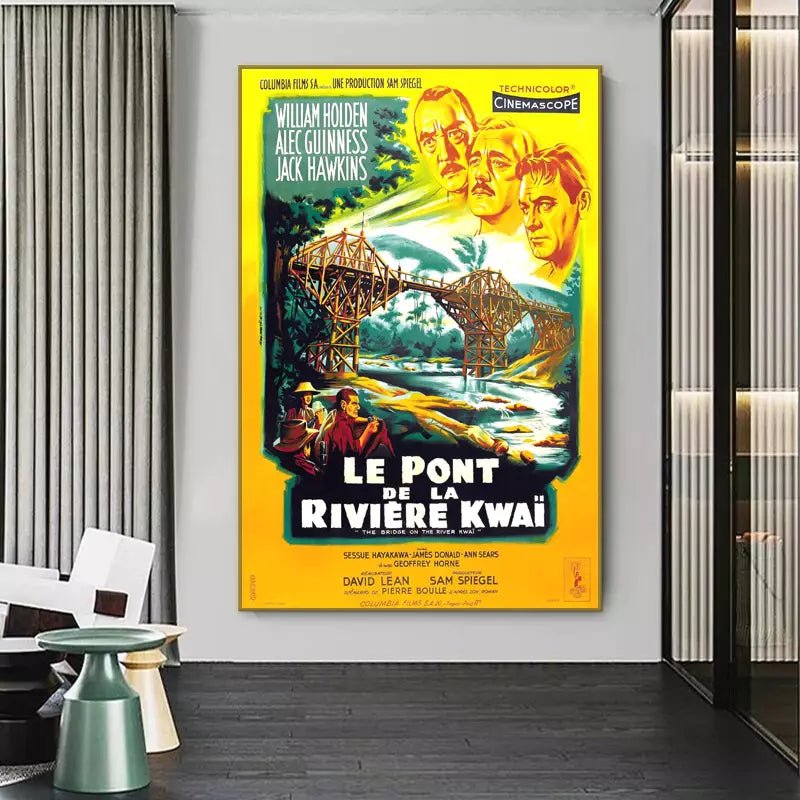
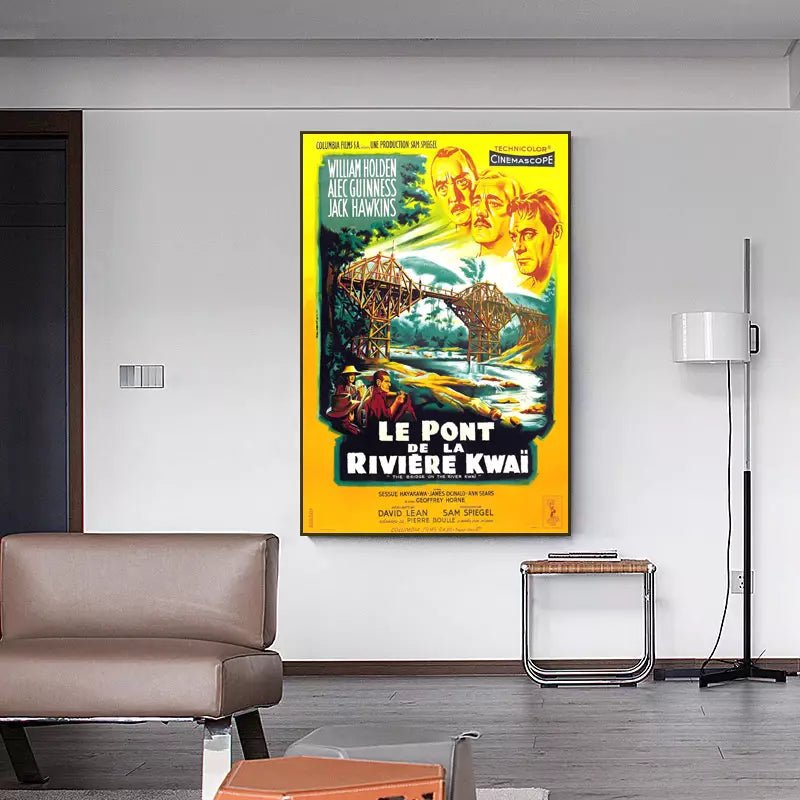
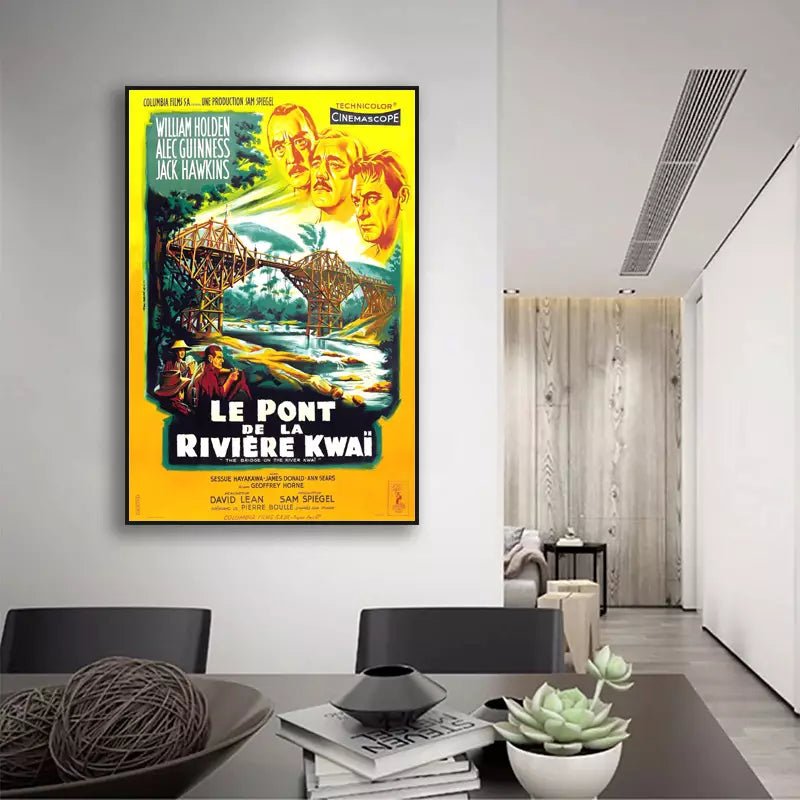
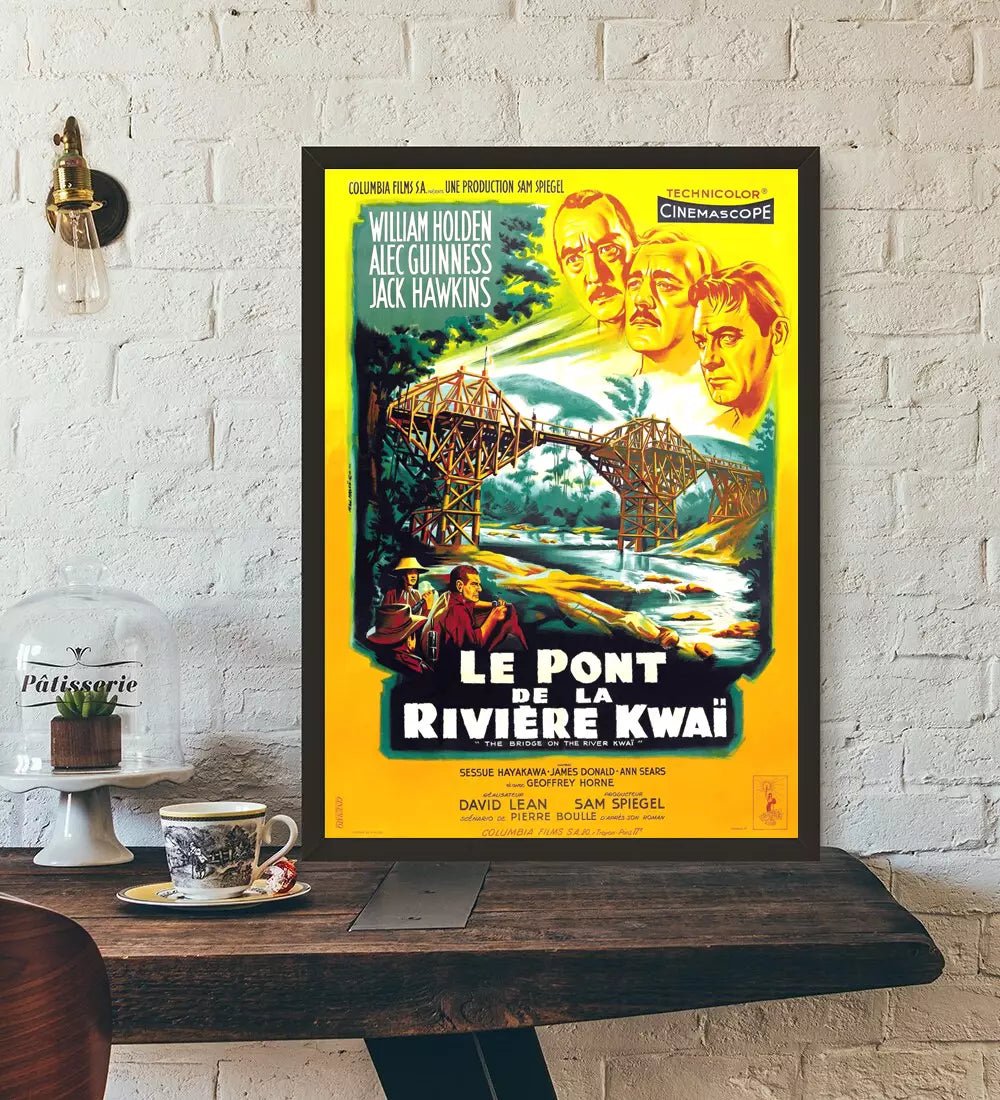
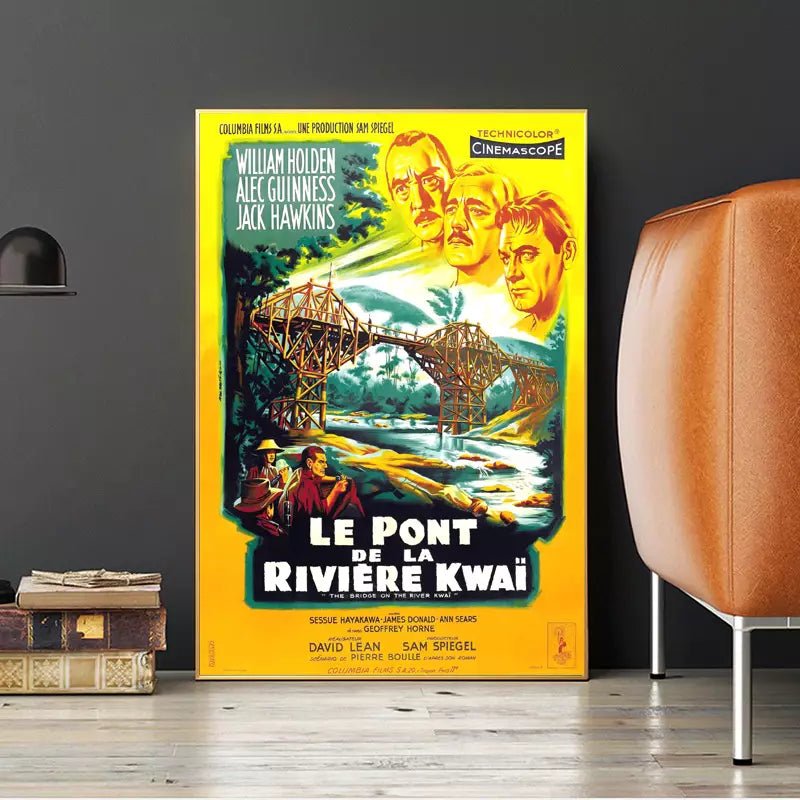
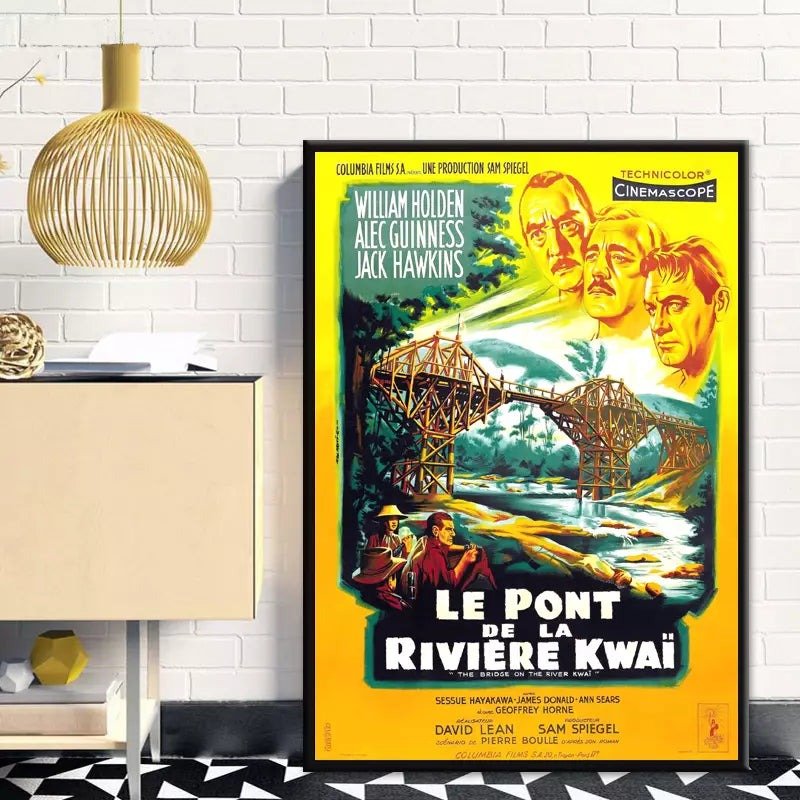
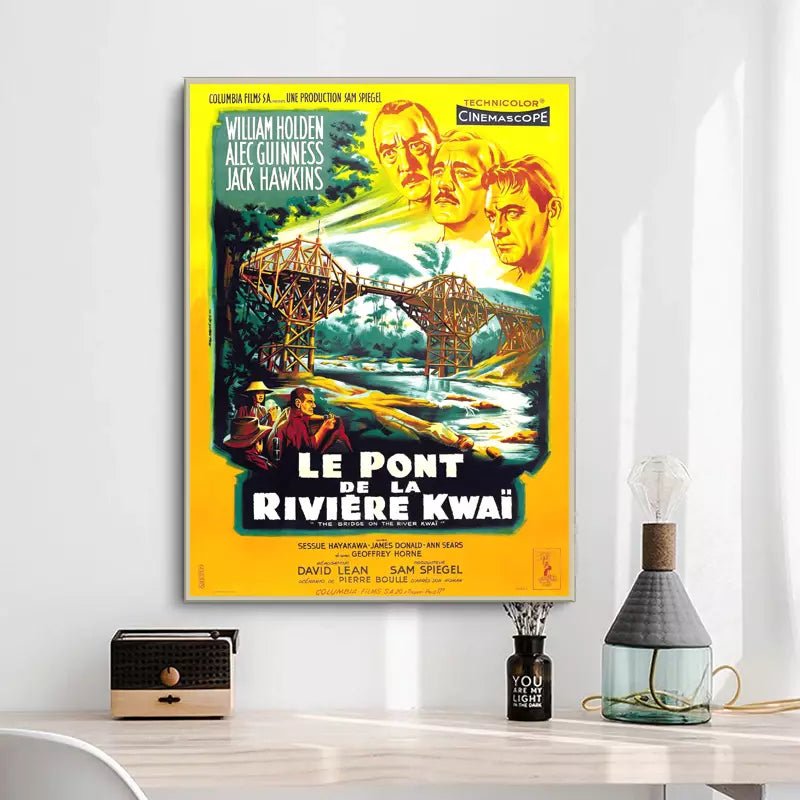
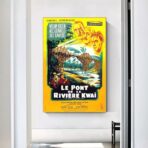

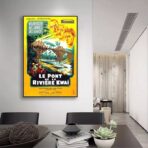
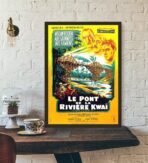
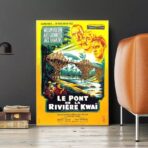
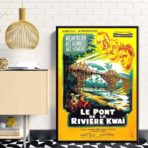
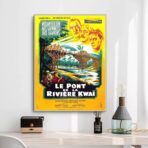




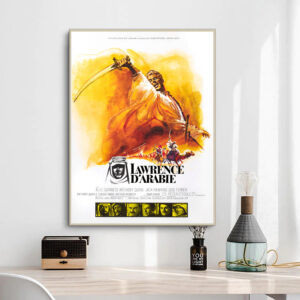


Dive into a moving and moving story with our stunning The Bridge on the River Khai Movie Poster. This cinematic masterpiece takes you on a tumultuous journey filled with passionate love, poignant sacrifices, and indomitable hope. Let yourself be swept away by the intense emotions that unfold in every moment, and immerse yourself in an unforgettable story that will remain etched in your memory.
- Paper Feature:
- 🎨 Canvas: Global Standard in print and imitating a “painting canvas” look.
- By default, the poster contains a 4cm white border for framing (frame not included). If you don’t want it, please choose “without white border”.
- ✅ Size: Multiple choices available. ✅
- High UV resistance.
- Maximum color brilliance without reflections.
- Recycled paper guaranteed environmental friendliness.
- Poster wrapped carefully and delivered in a protective tube for total protection.
- FREE STANDARD DELIVERY.
⚠️ Frame not included. ⚠️
Description of this The Bridge on the River Kwai Movie Poster
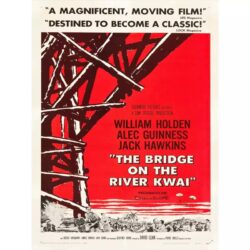
The Bridge on the River Kwai is a 1957 epic war film directed by David Lean and based on the 1952 novel by Pierre Boulle. Although the film uses the historical setting of the construction of the Burma Railway in 1942–1943, the plot and characters in Boulle’s novel and screenplay are almost entirely fictional. The cast includes William Holden, Alec Guinness, Jack Hawkins, and Sessue Hayakawa.
It was originally written by screenwriter Carl Foreman, who was later replaced by Michael Wilson. Both writers had to work in secret, as they were blacklisted by Hollywood and had fled to the United Kingdom in order to continue working. As a result, Boulle, who spoke no English, was credited and received the Academy Award for Best Adapted Screenplay; many years later, Foreman and Wilson were posthumously awarded the Academy Award.
The Bridge on the River Khai is now widely recognized as one of the greatest films ever made. It was the highest-grossing film of 1957 and received overwhelmingly positive reviews from critics. The film won seven Oscars (including Best Picture) at the 30th Academy Awards. In 1997, the film was deemed “culturally, historically, or aesthetically significant” and selected for preservation in the National Film Registry by the United States Library of Congress. It was included in the American Film Institute’s list of the greatest American films ever made. In 1999, the British Film Institute voted The Bridge on the River Kwai the 11th greatest British film of the 20th century.
In early 1943, a contingent of British prisoners of war, led by Colonel Nicholson, arrives at a Japanese prison camp in Thailand. U.S. Naval Commander Shears recounts the horrific conditions. Nicholson forbids any escape attempts because headquarters has ordered them to surrender, and escapes could be seen as defiance of orders. Moreover, the dense surrounding jungle makes escape virtually impossible.
Colonel Saito, the camp commandant, informs the new prisoners that they will all be working, even officers, on the construction of a railway bridge over the River Kwai that will connect Bangkok and Rangoon. Nicholson objects, informing Saito that the Geneva Convention exempts officers from manual labor. After the enlisted men go to the bridge site, Saito threatens to be shot, until Major Clipton, the British doctor, warns Saito that there are too many witnesses for him to get away with murder. Saito leaves the officers standing all day in the intense heat. That evening, the officers are placed in a punishment hut, while Nicholson is beaten and locked in an iron box.
Shears and two others escape. Only he survives, although wounded. He wanders through a Burmese village, is treated, and eventually reaches the British colony of Ceylon.
Work on the bridge is going poorly, due both to faulty Japanese engineering plans and the slow pace and deliberate sabotage by prisoners. Saito is expected to commit ritual suicide if he does not meet the fast-approaching deadline. Desperate, he uses the anniversary of Japan’s 1905 victory in the Russo-Japanese War as a face-saving excuse; he announces a general amnesty, freeing Nicholson and his officers and exempting them from manual labor. Nicholson is shocked by the shoddy work his men have done and orders the construction of a proper bridge, intending it to pay tribute to the ingenuity of the British Army for centuries to come. Clipton objects, believing it to be collaboration with the enemy. Nicholson’s obsession with the bridge ultimately leads him to allow his officers to volunteer for manual labor.
Shears unknowingly enjoys his hospital stay in Ceylon at a commando school called “Force 316” (presumably based on the real-world Special Operations Executive (SOE) Force 136). The Director General of SOE invites Shears to join a commando mission to destroy the bridge as completed. Shears tries to get out of the mission by confessing that he impersonated an officer, hoping for better treatment from the Japanese. Warden replies that he already knew and that the US Navy had agreed to transfer him to British SOE with the feigned rank of Major to avoid embarrassment. Realizing he has no choice, Shears volunteers.
Warden, Shears, and two other commandos parachute into Thailand; one, Chapman, dies after falling into a tree, and Warden is wounded in an encounter with a Japanese patrol and has to be carried on a litter. He, Shears, and Joyce reach the river in time with the help of Siamese porters and their village chief, Khun Yai. Under cover of darkness, Shears and Joyce plant explosives on the bridge towers. A train carrying important dignitaries and soldiers was scheduled to be the first to cross the bridge the next day, and the warden wanted to destroy both. By daybreak, however, the river level had dropped, exposing part of the wire connecting the explosives to the detonator. Nicholson spotted the wire and brought it to Saito’s attention. As the train approached, they hurried to the riverbank to investigate. Joyce, who was manning the detonator, broke the cover and stabbed Saito to death. Nicholson shouted for help while trying to prevent Joyce from reaching the detonator. When Joyce was wounded by Japanese gunfire, Shears swam across but was himself shot. Recognizing Shears, Nicholson exclaimed, “What have I done?”
Warden fired a mortar, killing Shears and Joyce and mortally wounding Nicholson. Dying, Nicholson stumbles toward the detonator and falls onto the piston, blowing up the bridge and sending the train hurtling down the river. The manager tells the conjoined women that he had to prevent anyone from falling into enemy hands and leaves with them. Witnessing the carnage, Clipton shakes his head and mutters, “Madness! … Madness!”