


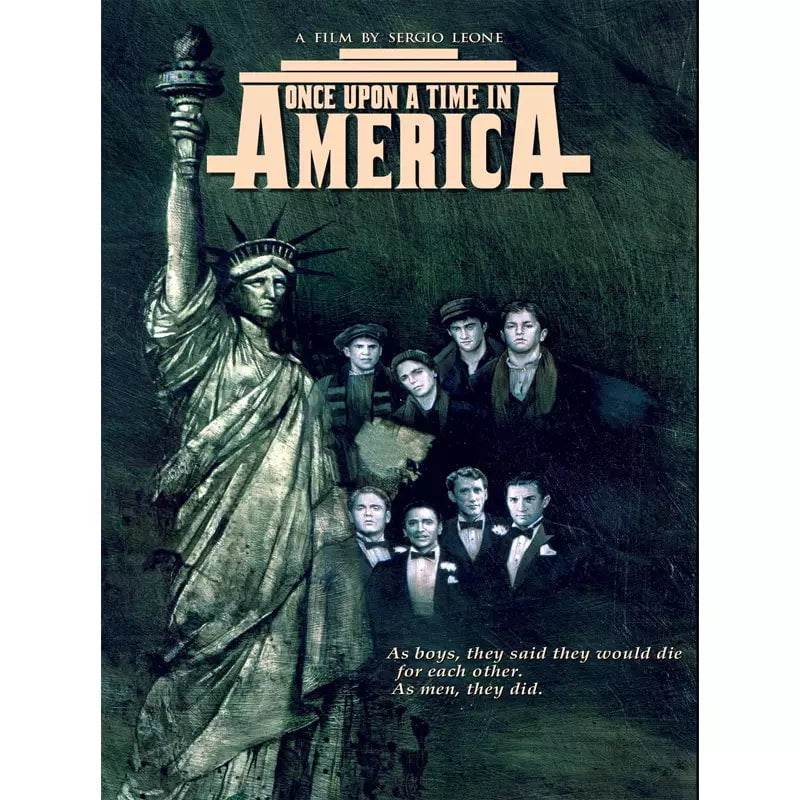
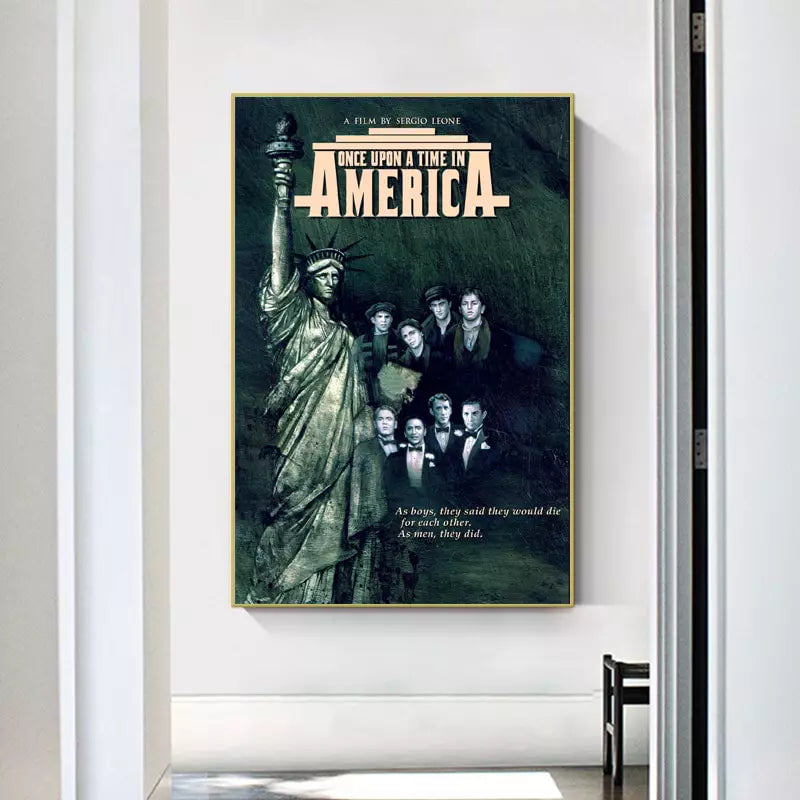
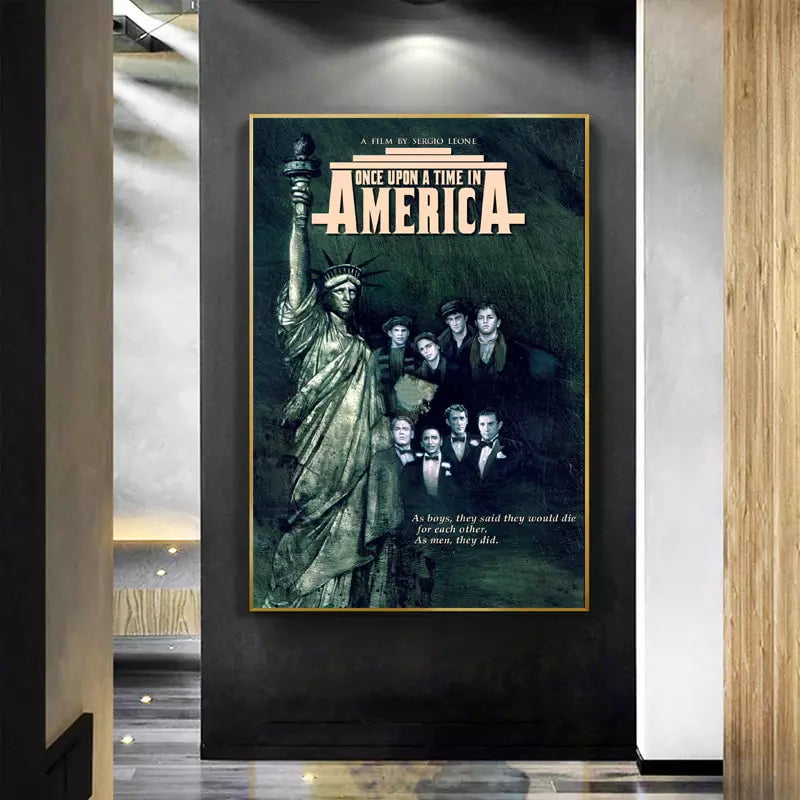
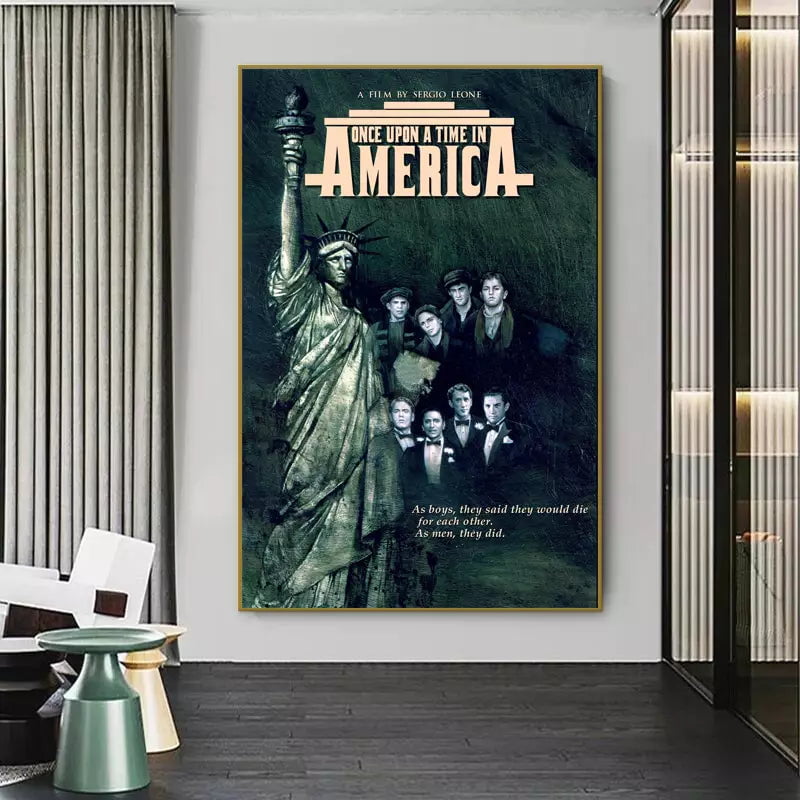
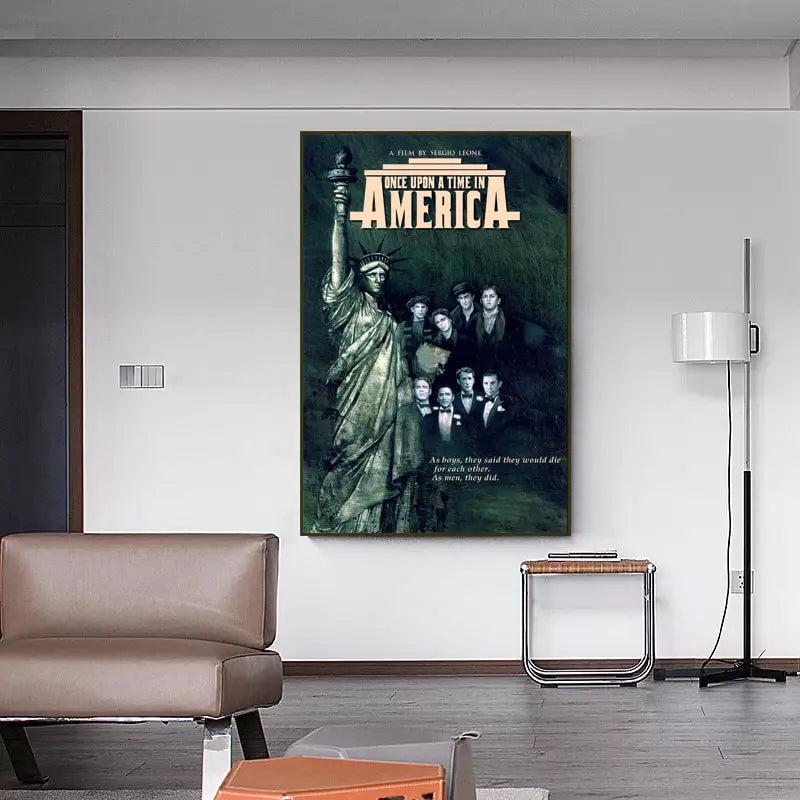
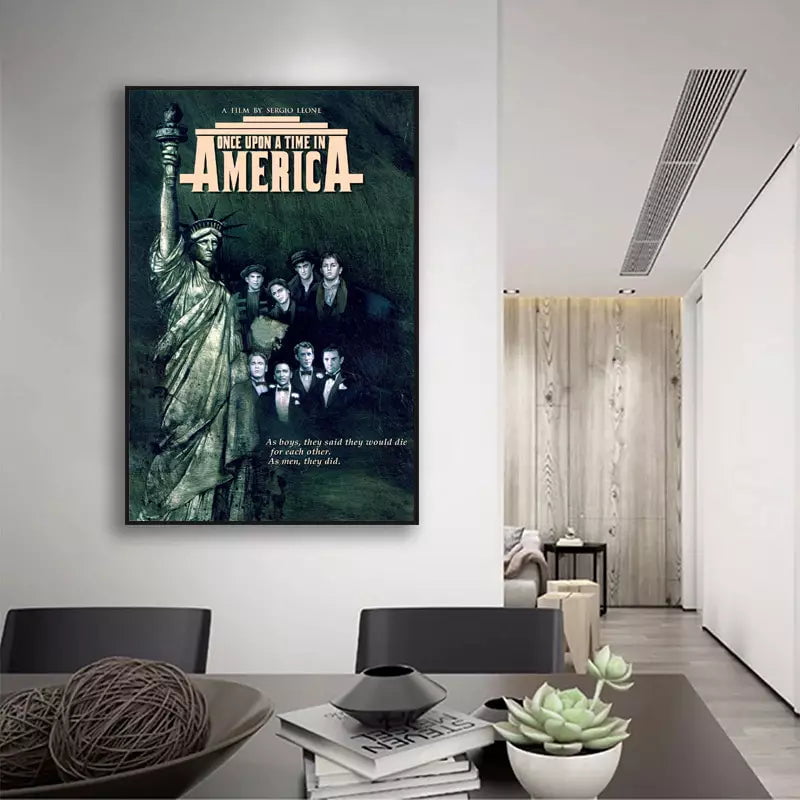
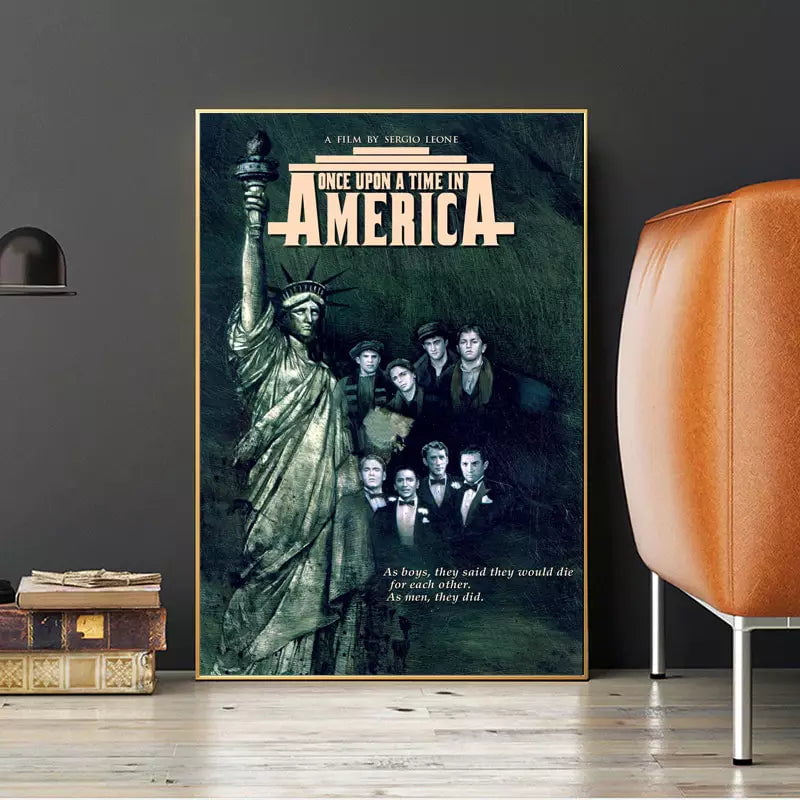
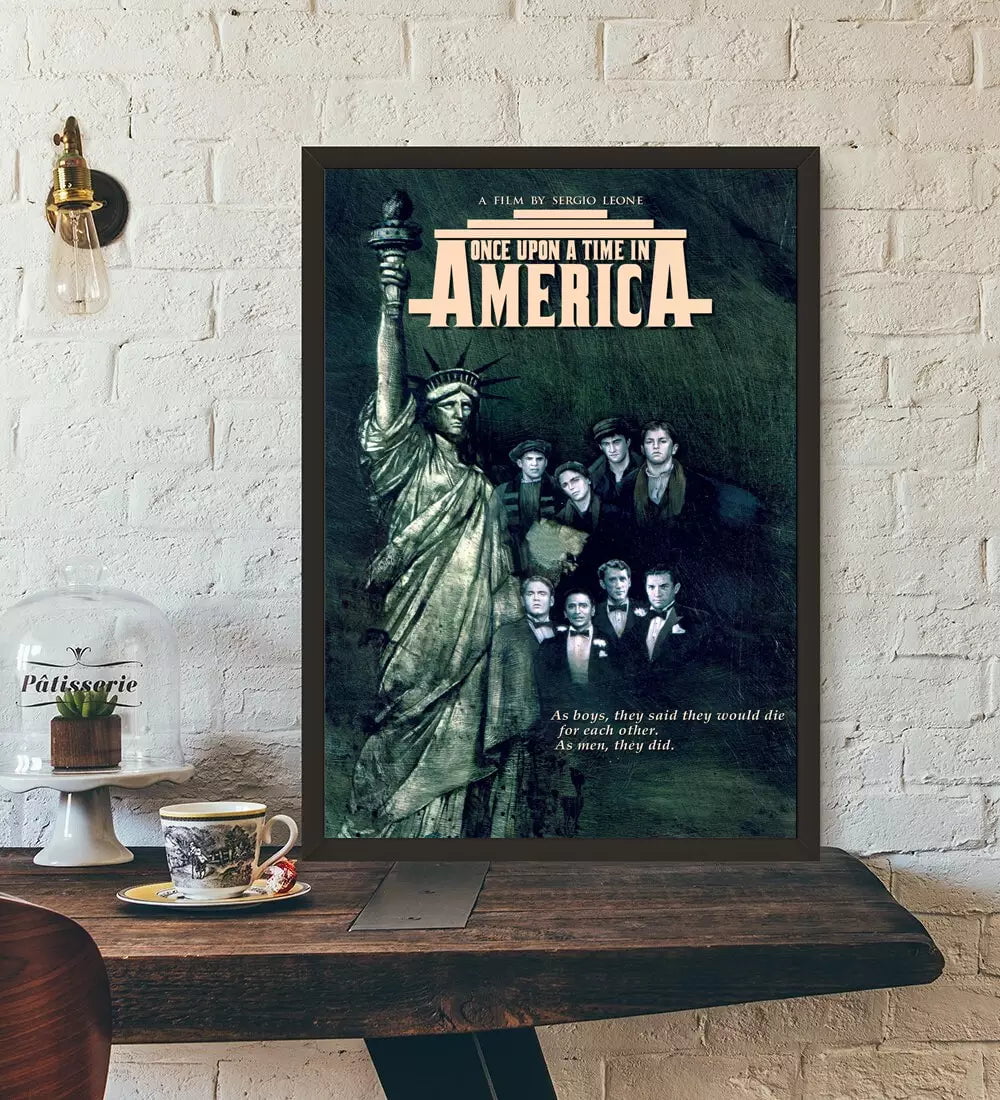
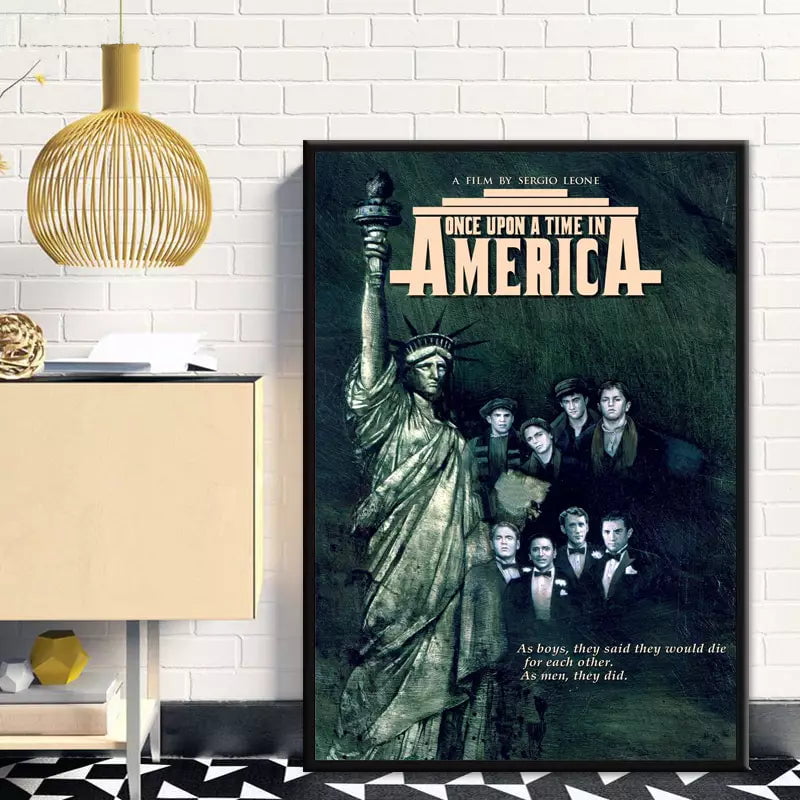
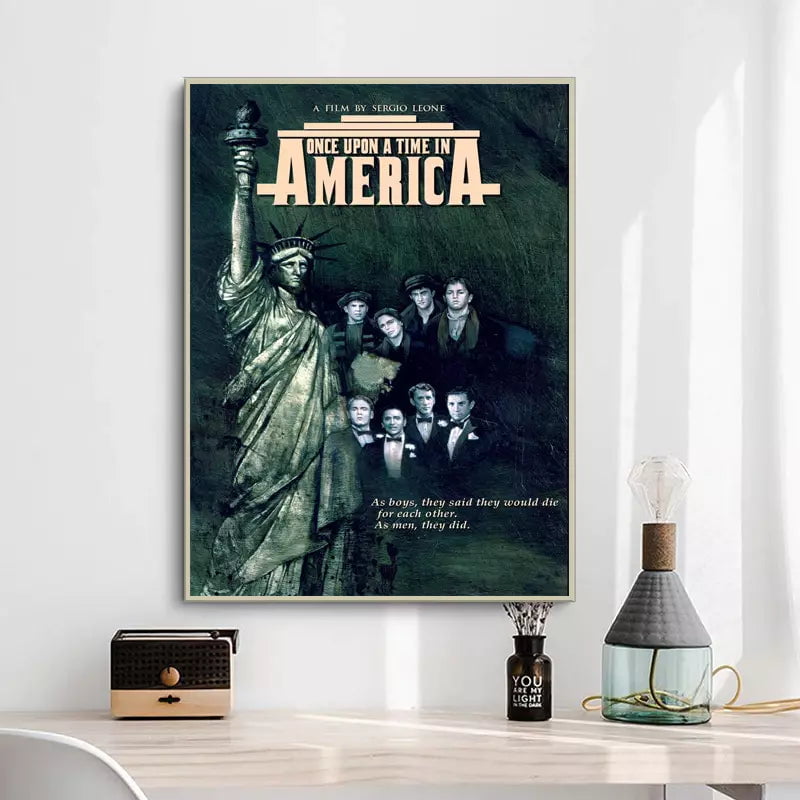
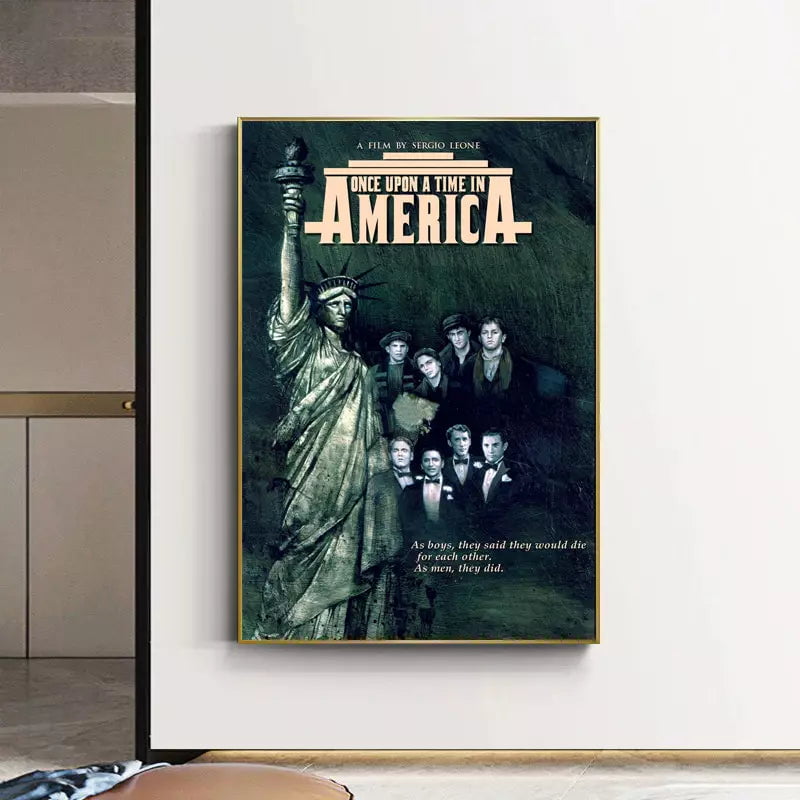
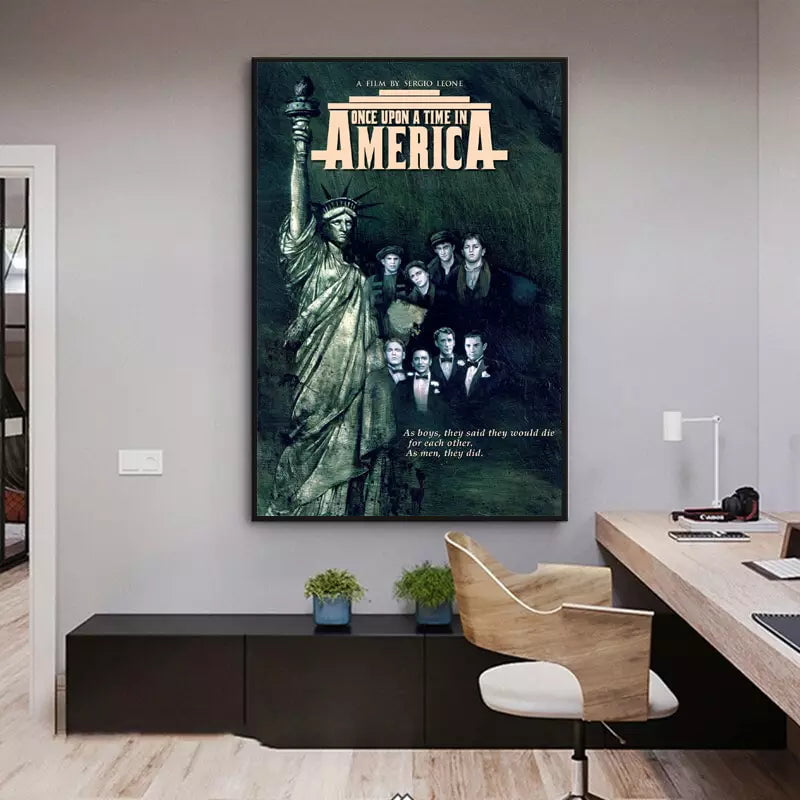
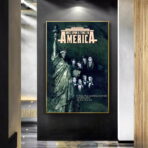





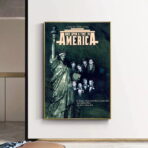










Discover the captivating poster for “Once Upon a Time in America”: a timeless cinematic masterpiece that transports you to a world of profound emotions. Immerse yourself in the captivating world of this iconic film and let yourself be swept away by its thrilling story, striking characters, and unique atmosphere. The poster, a true window into this masterful world, subtly and powerfully captures the feelings evoked by the film: nostalgia for a bygone era, the strength of friendship, and the bitterness of regret. Every visual detail of this carefully crafted poster tells a story of its own and sparks the imagination. Immerse yourself in the evocative visual world of “Once Upon a Time in America” through this poster that captures the very essence of the film, arousing in you an unforgettable blend of fascination, wonder and emotion.
- Paper Feature:
- 🎨 Canvas: global standard in terms of printing and imitating a “painting canvas” look.
- By default, the poster contains a 4cm white border for framing (frame not included). If you don’t want it, please choose “without white border”.
- ✅ Size: several choices available. ✅
- High UV resistance.
- Maximum color brilliance without reflections.
- Recycled paper guaranteed environmental friendliness.
- Poster wrapped carefully and delivered in a protective tube for total protection.
- FREE STANDARD DELIVERY.
⚠️ Frame not included. ⚠️
Description of this Once Upon a Time in America Poster
Once Upon a Time in America is Sergio Leone’s final film of 1984. Starring Robert De Niro and James Woods as young Jews who grow from boys in New York’s Jewish ghetto into leading figures in New York’s organized crime.
The film premiered at the 1984 Cannes Film Festival in the original version, which lasted 229 minutes (3 hours and 49 minutes). In the United States, the film was released in a shortened version, which was almost 90 minutes shorter than the original, which was screened in Europe. In the shortened version, scenes of reverence were included and events were arranged chronologically. The American version was therefore widely criticized and failed commercially at the box office. Disappointed by the poor success, as well as the critical and public reactions to this version, Leone did not make another film until his death in 1989.
The film is associated with three eras of American history, with two flashback sequences (mainly in 1921 and 1933), with 1968, in which the main character recalls his life. After an anonymous call to return to New York after 35 years in hiding, David “Noodles” Aaronson is forced to confront his past while searching for the person who found him.
After his friends Max, Patsy, and Cockeye are killed by the police in a shootout in 1933, Noodles, who is being pursued by a mob, hides in an opium den. Hidden away, he indulges in memories of his childhood in 1920s New York. Young Tiler (1921) retreats around the Jewish ghetto of Brooklyn as a poor street bum. His gang consists of Patrick “Patsy” Goldberg (Bloom), Phillip “Cockeye” Stein (Curran), and Dominic (Moazezi), who has no last name. Crime in the ghetto is controlled by local gangster Bugsy (Russo), who also has his own gang.
Noodles and his gang meet Max Bercovitz (Jacobs) and start their own businesses with Noodles and Max’s co-leader. The film’s most important secondary themes are the collection of loot in a bag they leave in a locker at the bus stop (a key action detail), Noodles’s incessant flirtation with Deborah (Connelly), a neighborhood girl who wants to be a dancer and actress, and a gang relationship with Deborah’s brother, Fat Moe (Monetti). The childhood memory ends in tragedy when Bugsy, enraged by the boy’s success and independence, kills Dominic. Noodles retaliates by stabbing Bugsy to death with a knife. At that moment, police officers appear, and Noodles is sentenced to 12 years in prison.
The new flashback sequence begins in 1933, when Noodles (De Niro) was released from prison. He soon meets his old gang: Max (Woods), Patsy (Hayden), and Cockey (Forsythe), who have become major bootleggers. After a brief encounter with Deborah (McGovern), his brother Fat Moe (Rapp), who runs their illegal bar, and Patsy’s girlfriend Peggy (Ryder), who runs their brothel, Noodles returns to his old ways when he is hired by the Minaldi brothers, Joe (Young) and Frankie (Pesci). The Minaldis want the gang to steal a shipment of diamonds from the jewelers and bring them to Joe.
During the robbery, we meet Carol (Weld), the jeweler’s secretary, whom Noodles rapes while the others steal the diamonds. Afterward, on an abandoned dock, they kill Joe and his men. Noodles is outraged, but Max reveals to him that Frankie arranged to eliminate Joe and tells him that this could bring more gang business. Noodles resists cooperating with the mob, particularly emphasizing that Frankie may one day order him to kill Max, but soon digresses.
The gang quickly becomes more deeply connected to the mob. They intervene in a steelworkers’ strike to protect union boss Jimmy Conway O’Donnell (Williams) from tycoon Crowning (Gerard Murphy) and his hitmen, led by Joe Kukavica (Bright). The gang is forced to become involved with corrupt police chief Vincent Aiello, who is bribed by a steelworker. They replace the newborn’s boss with another baby at the hospital. Soon after, Carol becomes increasingly associated with the gang and falls in love with Max. Noodles goes to a meeting with Deborah and, after she rejects him, rapes her in the back seat of a rented limousine.
Max increasingly connects four friends to the mob, unions, and politics. He becomes greedy in his desire for the gang to take a more respectable stance, but Noodles still disagrees. After the ban, Max proposes robbing a New York Federal Reserve Bank, and Noodles begins to oppose it, believing it to be suicide. Carol convinces Noodles to give the police a plan in the hopes that three friends will be arrested. Unfortunately, Max, Patsy, and Cockeye were killed during a standoff with the police; it turns out that Max’s body was burned so that he cannot even be identified. Noodles, who needs money to escape, goes to the bus stop but
Discovers that someone has taken money from a bag and replaced it with newspapers.
The action was later moved to 1968. Noodles returns from Buffalo, where he has lived for 35 years under an assumed name. Back in the old neighborhood, he visits Moe, who still holds court, and Deborah, now a successful actress who is in a relationship with Commerce Secretary Christopher Bailey. Noodles goes to the bus stop again and finds money in the suitcase with an anonymous note that he was paid in advance for the last job. It immediately becomes clear to him that Max is still alive, having faked his death in 1933 with the help of the mob, and rising again, this time as the powerful and wealthy Bailey. While being followed by a corruption investigation, “Bailey” sends a coffin full of money, with which he intends to hire Noodles to kill him. Max will walk away with his honor untarnished, and Noodles has a chance to get revenge on the man who stole his life. Noodles refuses and leaves. Leaving Bailey’s estate, he notices the man, Max, as he follows. At that moment, a garbage truck passes between the two, and when it pulls away, the other man is gone. The camera focuses on the way the truck grinds the garbage, suggesting that Max kills himself by throwing himself into the machine. As the truck’s lights disappear into the night, two cars full of drunks pass in the opposite direction. One vehicle dates back to the 1930s, and the people were dressed in clothing from that period. It’s unclear whether this is another flashback or a costume party on wheels. The film returns to the 1930s with Noodles in an opium den. He lies on a small bed as he did at the beginning of the story, takes some opium from a pipe, turns to the camera, and begins laughing happily. The image freezes, and the rush to leave begins.