



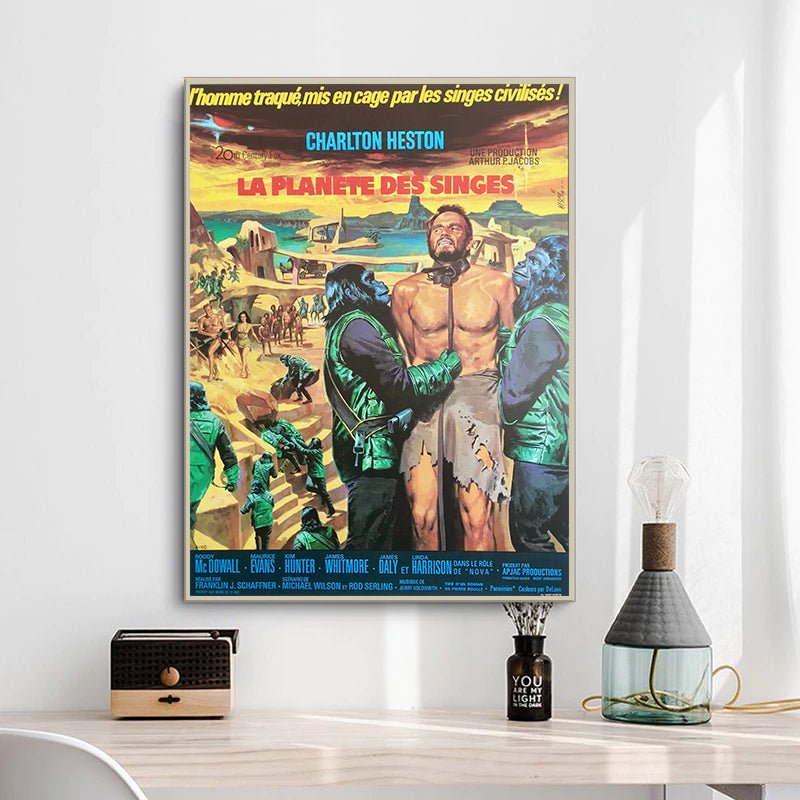

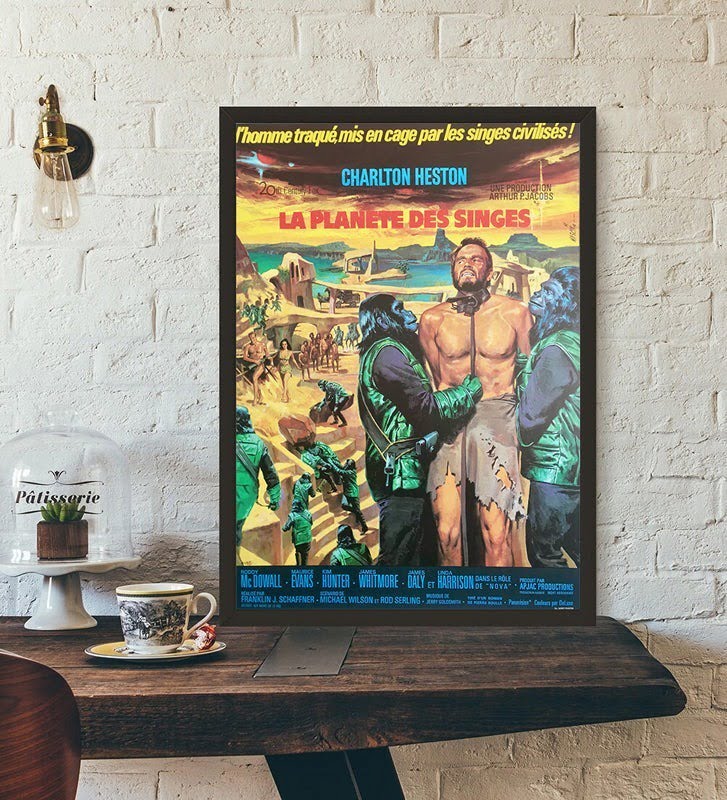
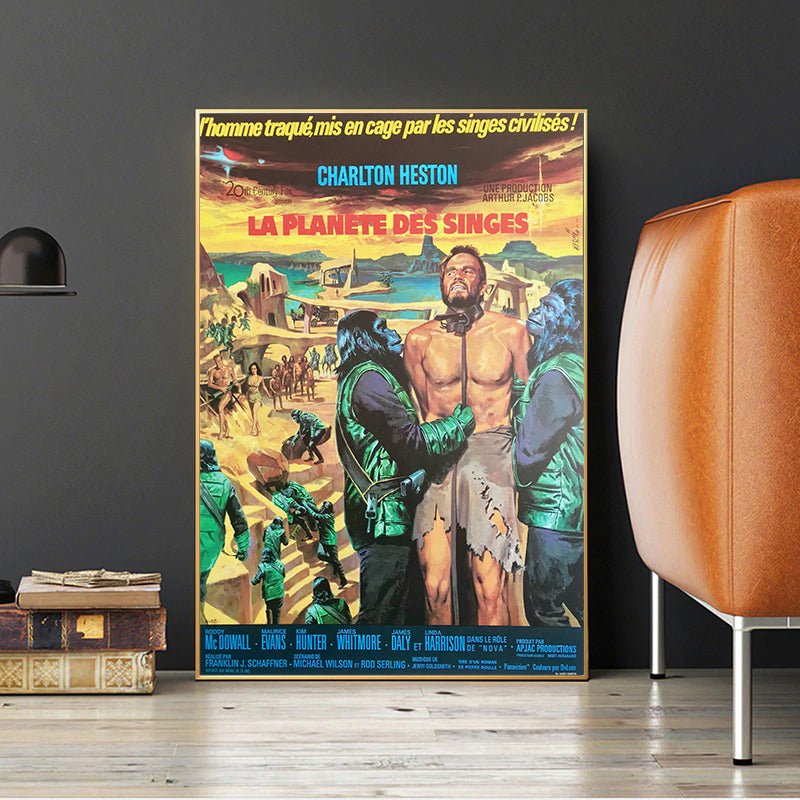
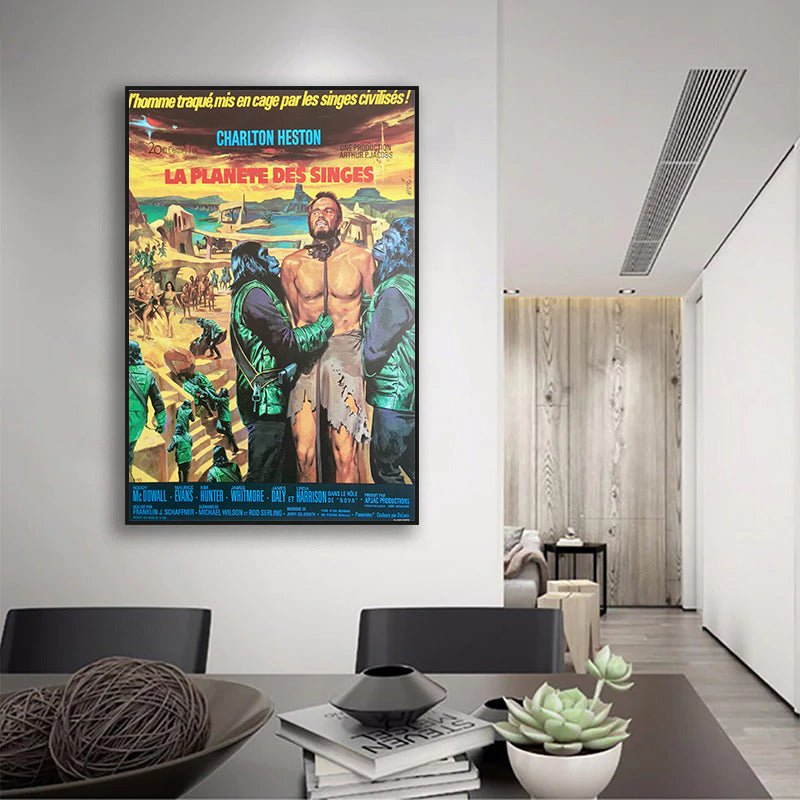
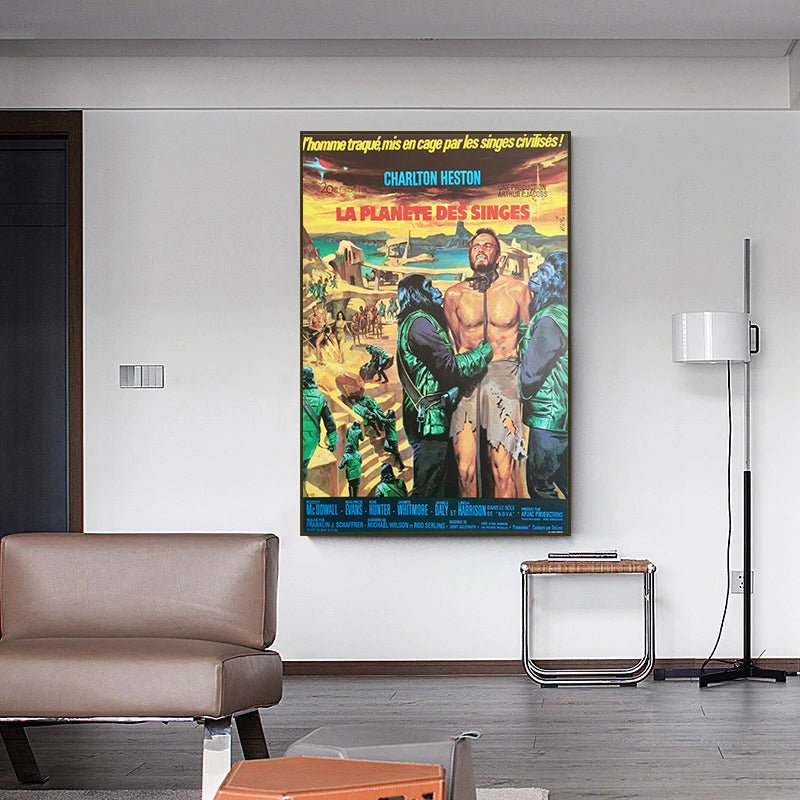

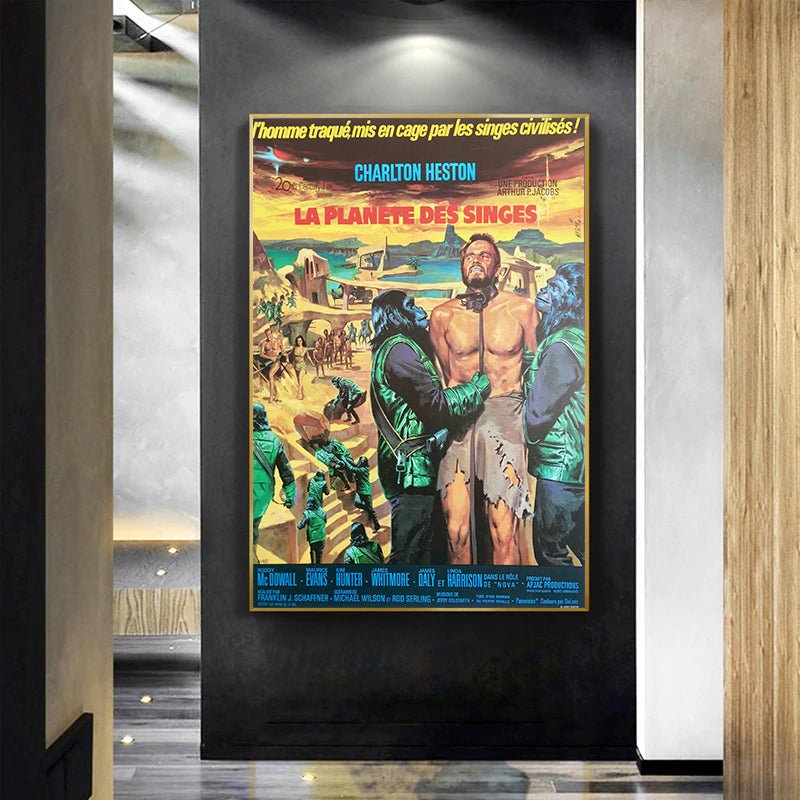
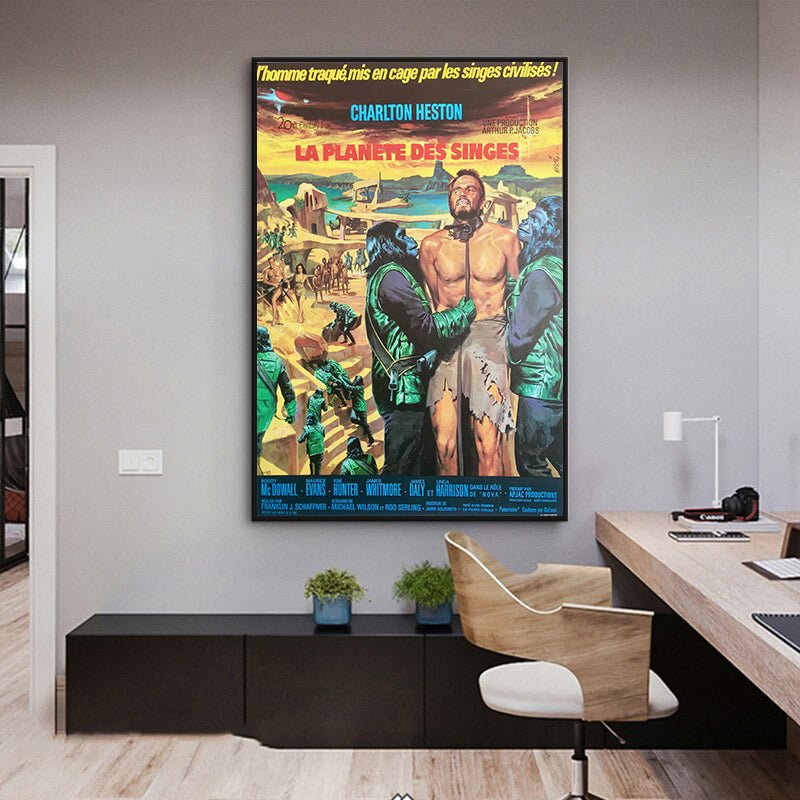
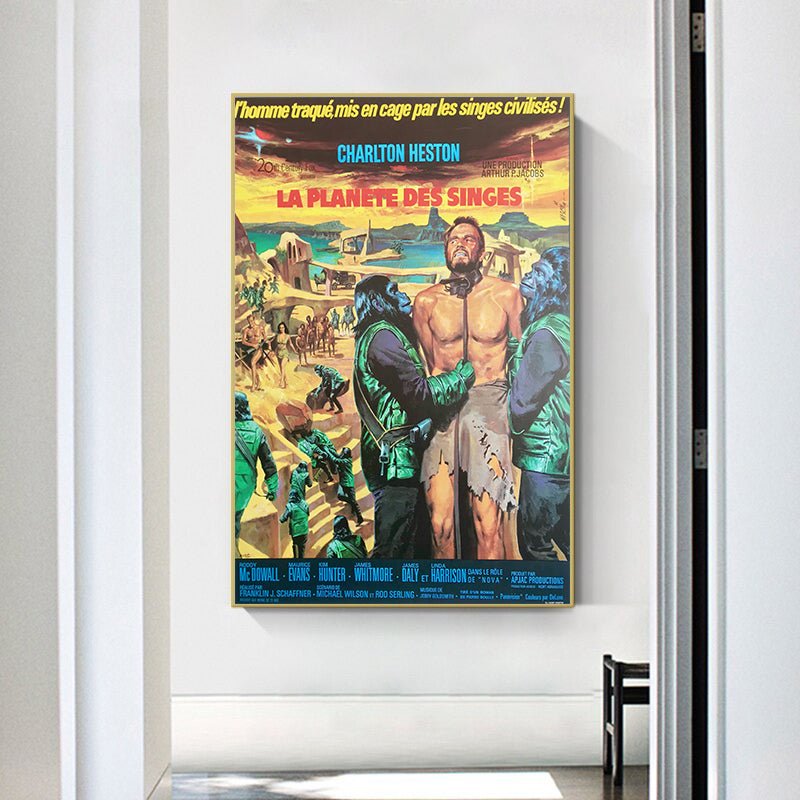





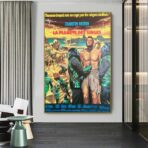














How about discovering the film that started the franchise with this sublime 1968 Planet of the Apes Movie Poster, perfect for your decor?
- Paper Feature:
- 🎨 Canvas: global standard in terms of printing and imitating a “painting canvas” look.
- By default, the poster contains a 4cm white border for framing (frame not included). If you don’t want it, please choose “without white border”.
- ✅ Size: Multiple choices available. ✅
- High UV resistance.
- Color vibrancy maximum, glare-free.
- recycled paper, guaranteeing environmental friendliness.
- Poster packaged carefully and delivered in a protective tube for Total protection.
- FREE STANDARD DELIVERY.
⚠️ Frame not included. ⚠️
Description of this Planet of the Apes Movie Poster
Planet of the Apes is a 1968 American science fiction film directed by Franklin J. Schaffner and loosely based on the 1963 French novel Planet of the Apes by Pierre Boulle. Written by Michael Wilson and Rod Serling, it stars Charlton Heston, Roddy McDowall, Kim Hunter, Maurice Evans, James Whitmore, James Daly, and Linda Harrison. In the film, a crew of astronauts crash-lands on a strange planet in the distant future. Although the planet appears desolate at first, the surviving crew members stumble upon a society in which apes have evolved into creatures with human-like intelligence and speech. The apes have assumed the role of the dominant species, and humans are mute creatures wearing animal skins.
The basic outline of Planet of the Apes originated from a screenplay, originally written by Serling, which underwent numerous rewrites before filming began. Directors J. Lee Thompson and Blake Edwards were approached, but the film’s producer, Arthur P. Jacobs, on the recommendation of Charlton Heston, chose Franklin J. Schaffner to direct. Schaffner’s changes included a less advanced—and therefore less expensive—ape society than that of the original novel. Filming took place between May 21 and August 10, 1967, in California, Utah, and Arizona, with desert sequences filmed in and around Lake Powell, Glen Canyon National Recreation Area. The final “closed” cost of the film was $5.8 million.
The film was released in the United States on February 8, 1968, and was a commercial success, grossing $32.6 million. The film was revolutionized by the prosthetic makeup techniques of artist John Chambers and was well received by critics and audiences, launching a film franchise, including four sequels, as well as a short-lived television show, an animated series, comic books, and various merchandise. Roddy McDowall, in particular, has had a long association with the Apes series, appearing in four of the original five films (absent from the second film in the series, Beneath the Planet of the Apes, in which he was replaced by David Watson as Cornelius), and also in the television series.
The original series was followed by Tim Burton’s 2001 remake Planet of the Apes, and the reboot series began with Rise of the Planet of the Apes in 2011. In 2001, Planet of the Apes was selected by the Library of Congress for preservation in the United States National Film Registry due to its “cultural, historical, or aesthetic significance.”