


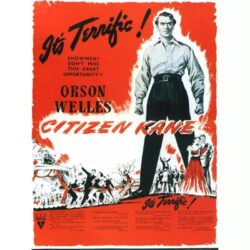
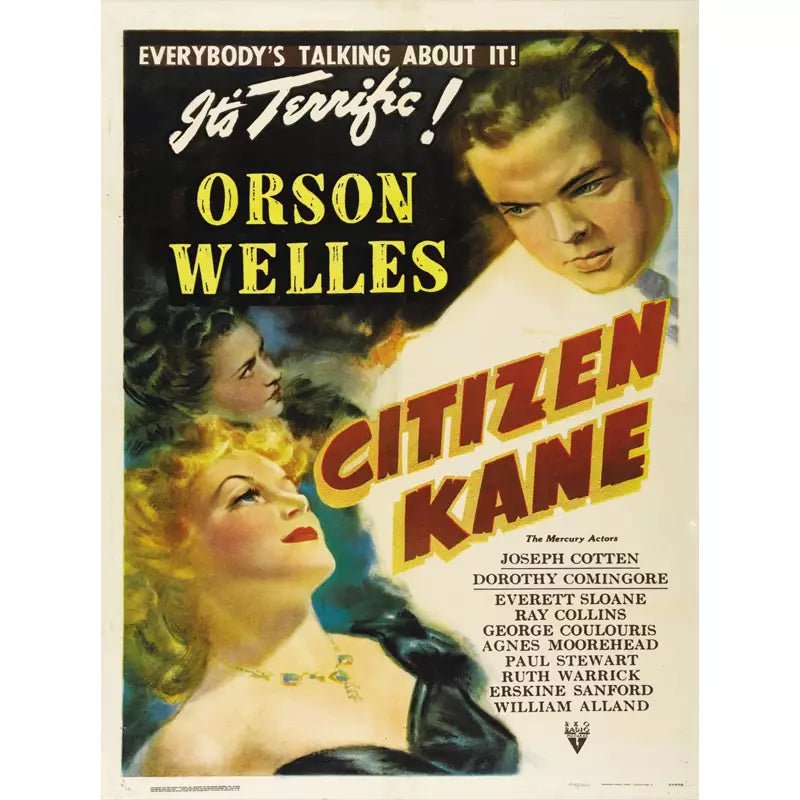

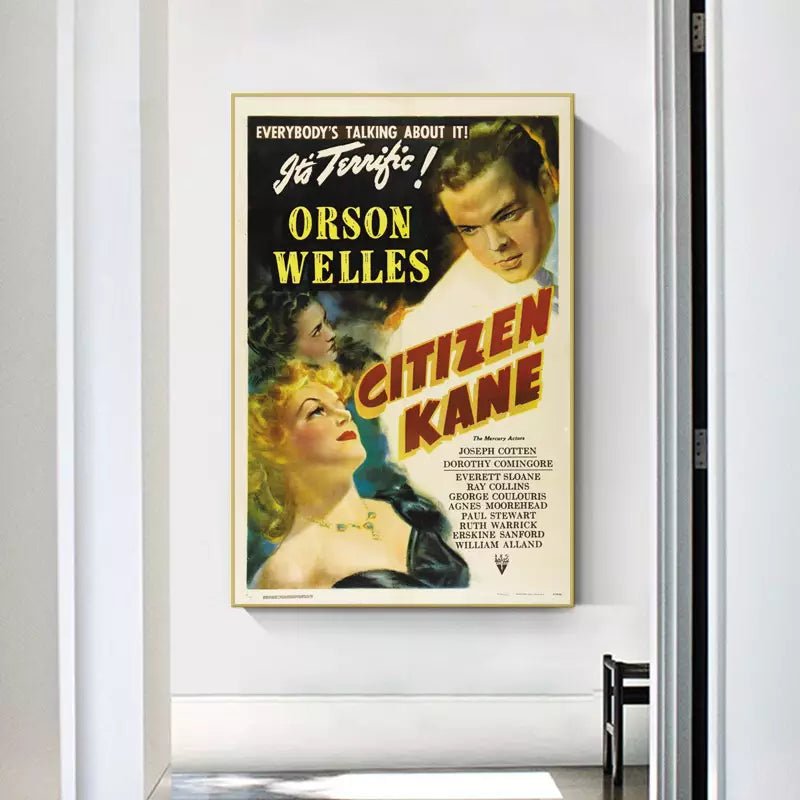
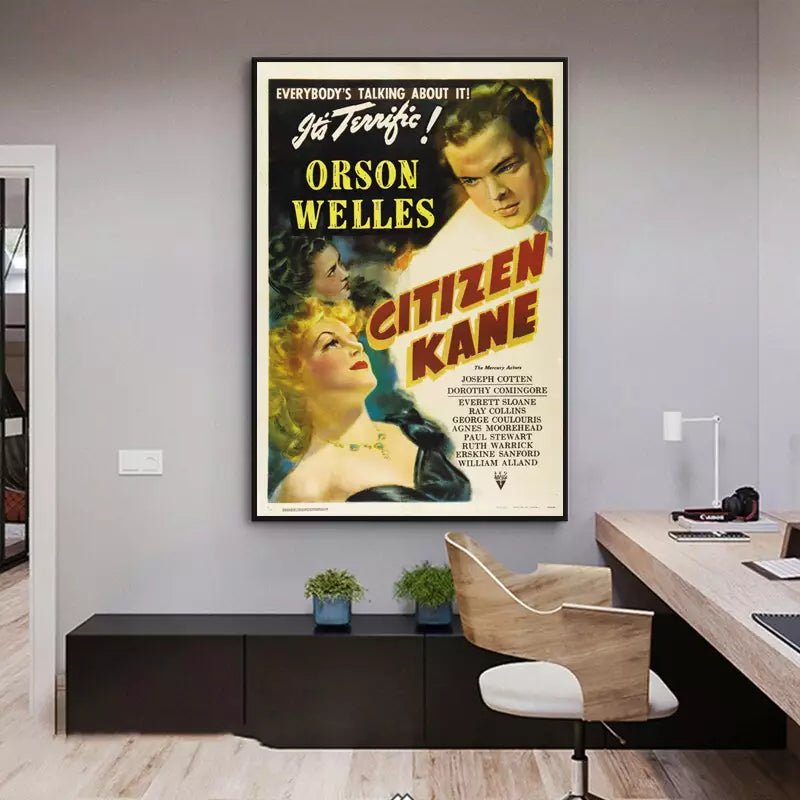

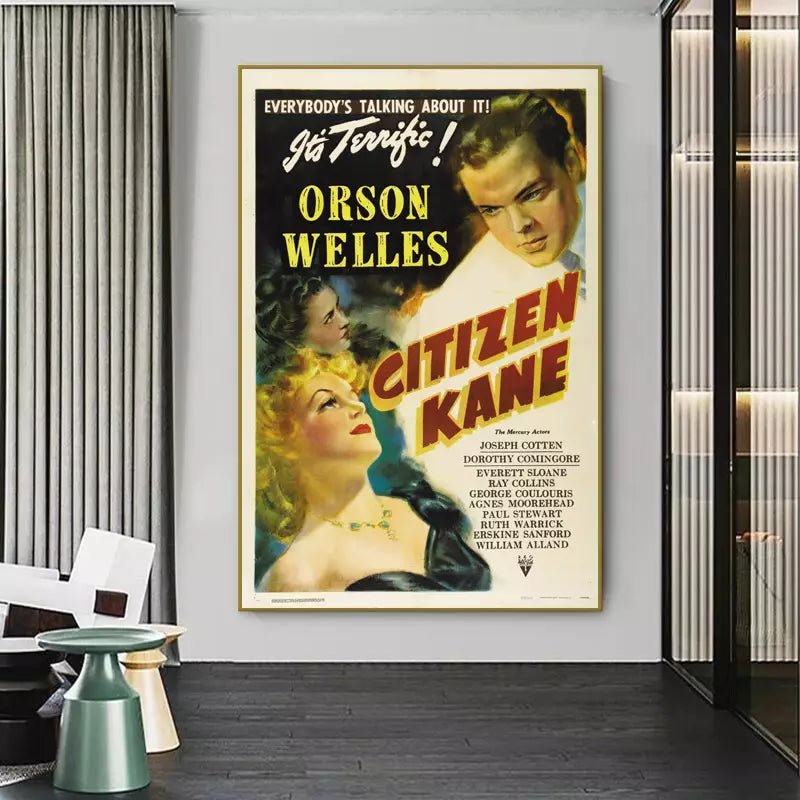
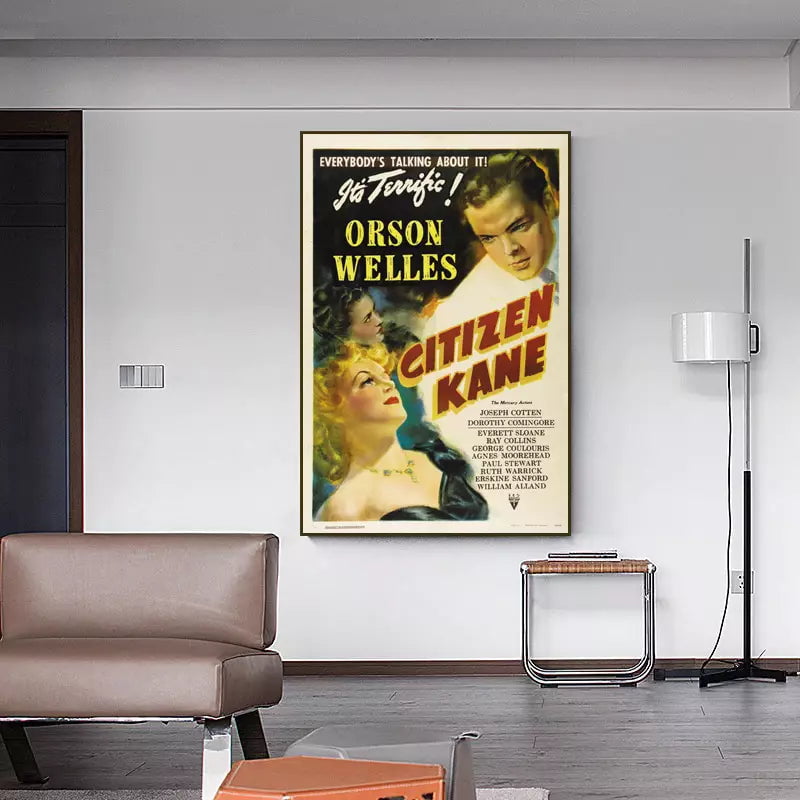
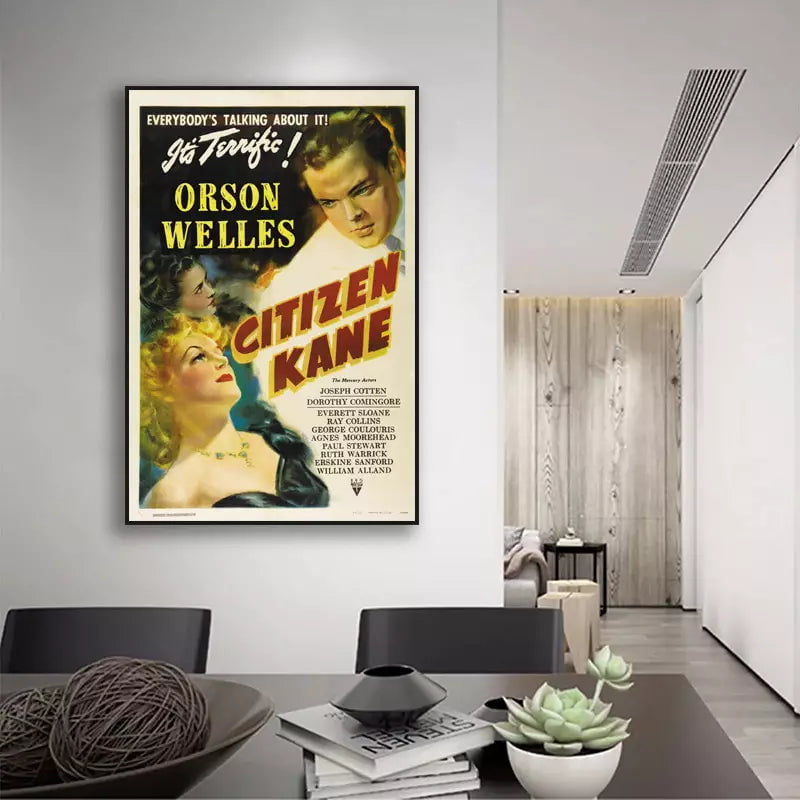
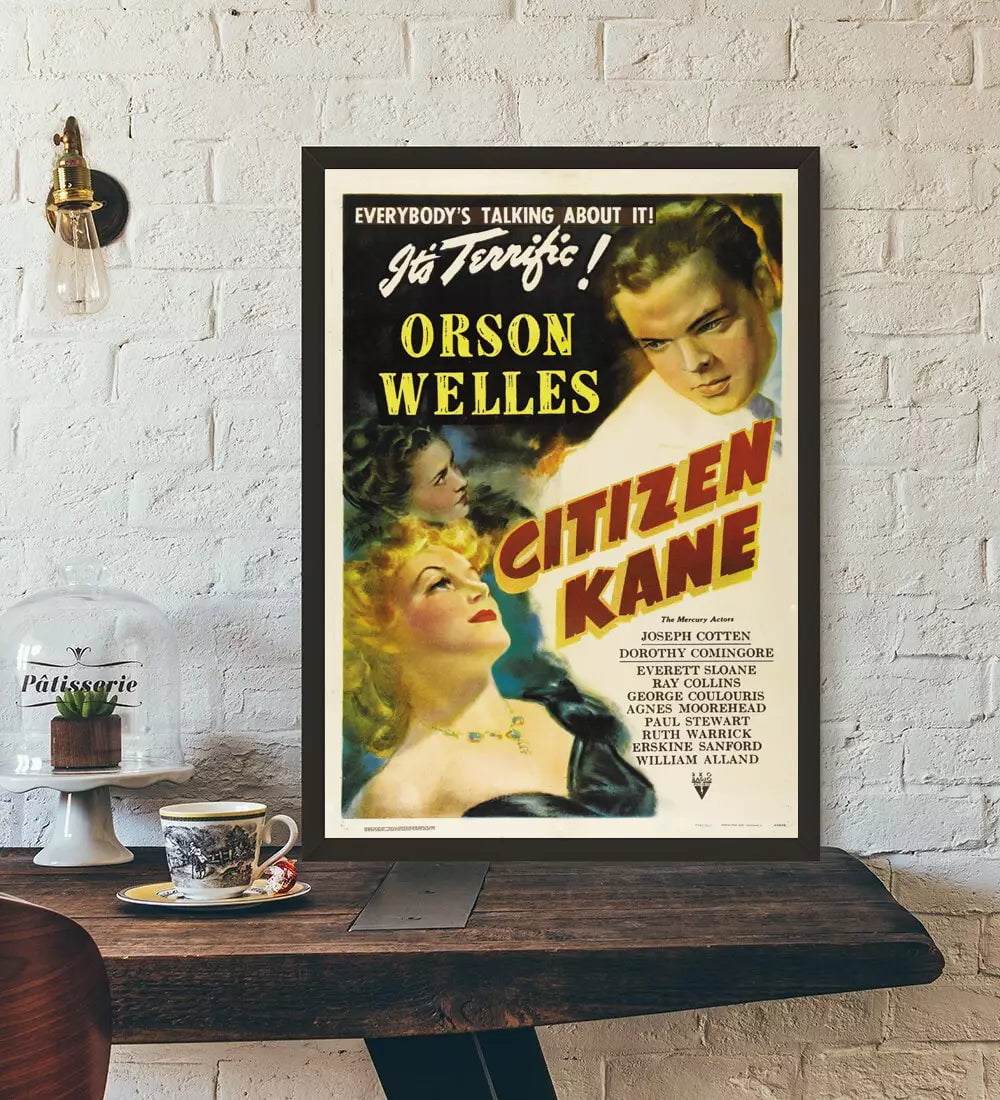
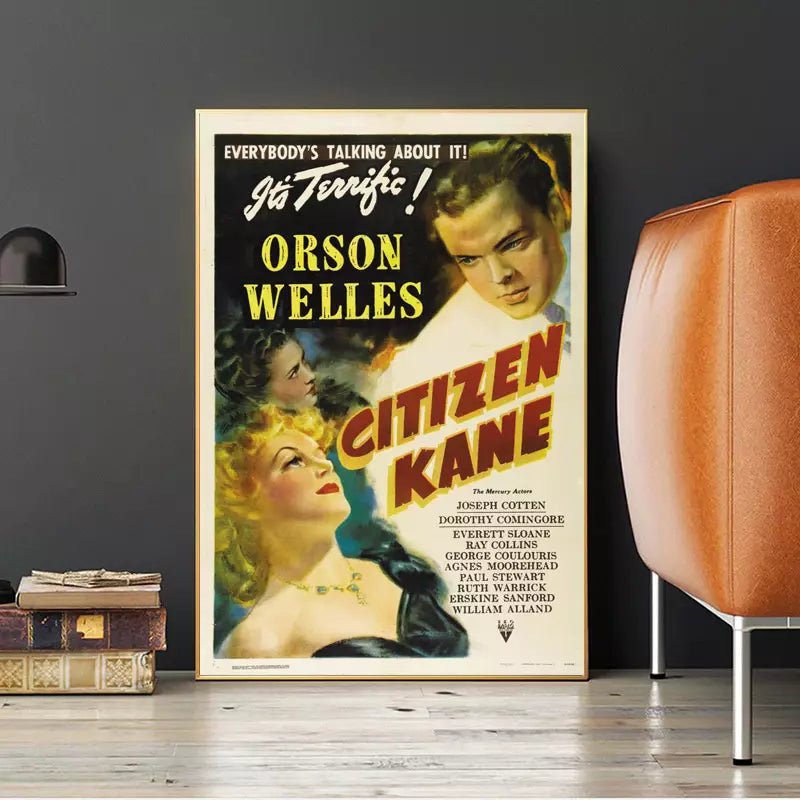

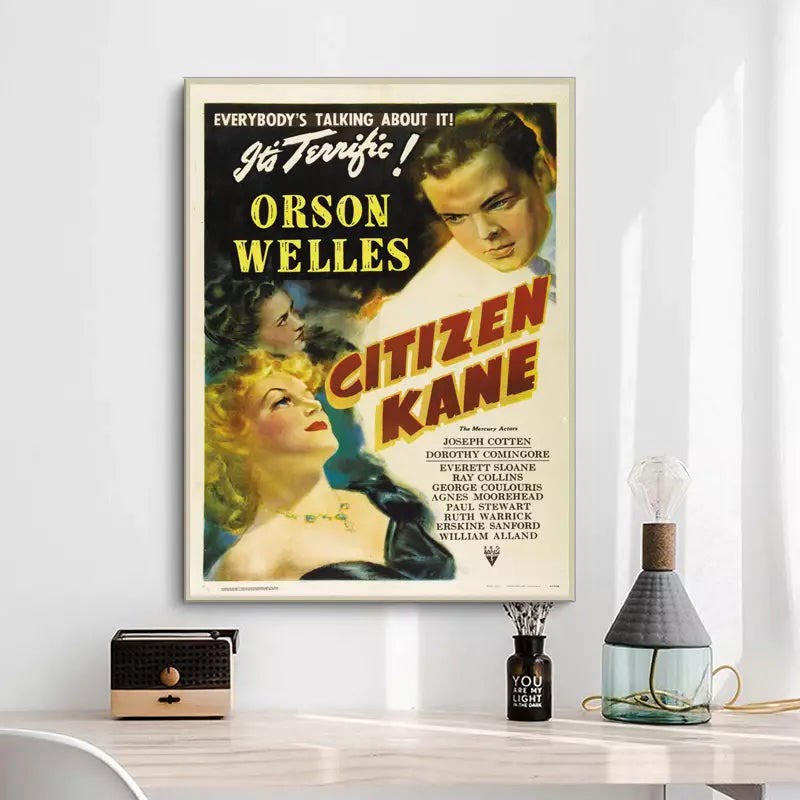

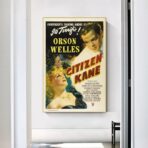

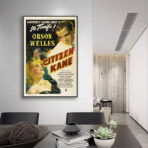
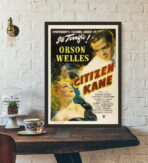
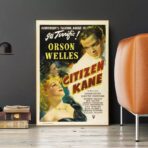








With this Citizen Kane Poster, immerse yourself in the fascinating world of this iconic cinematic masterpiece. Discover the captivating plot of an ambitious man in search of power, as emotions unfold through every scene. With a dose of nostalgia, this unforgettable film takes you on an intense emotional journey and leaves you reflecting on human nature and the weight of success. Don’t miss the opportunity to relive this legendary cinematic experience by decorating your space with the Citizen Kane poster, a true artistic testament to the greatness of the seventh art.
- Paper Feature:
- 🎨 Canvas: global standard in terms of print and imitating a “painting canvas” look.
- By default, the poster contains a 4cm white border for framing (frame not included). If you don’t want it, please choose “without white border”.
- ✅ Size: Multiple choices available. ✅
- High UV resistance.
- Maximum color brilliance without reflections.
- Recycled paper guaranteed environmental friendliness.
- Poster wrapped carefully and delivered in a protective tube for total protection.
- FREE STANDARD DELIVERY.
⚠️ Frame not included. ⚠️
Description of this Citizen Kane Poster
Citizen Kane is a 1941 American drama film directed, produced, and starring Orson Welles. He also co-wrote the screenplay with Herman J. Mankiewicz. It is Welles’s feature film debut. Citizen Kane is often cited as the greatest film ever made. For 50 consecutive years, it held the number one spot in the British Film Institute’s Sight & Sound decennial critics’ poll, and it topped the American Film Institute’s 100 Years…100 Movies list in 1998, as well as its 2007 update. The film was nominated for Academy Awards in nine categories and won Best Original Screenplay for both Mankiewicz and Welles. Citizen Kane is praised for Gregg Toland’s cinematography, Robert Wise’s editing, Bernard Herrmann’s music, and its narrative structure, all considered innovative and precedent-setting.
The quasi-biographical film examines the life and legacy of Charles Foster Kane, played by Welles, a composite character based on American media barons William Randolph Hearst and Joseph Pulitzer, Chicago tycoons Samuel Insull and Harold McCormick, as well as aspects of the screenwriters’ own lives. Upon its release, Hearst forbade the film from being mentioned in his diaries.
After the Broadway success of Welles’s Mercury Theatre and the controversial 1938 radio broadcast “The War of the Worlds” on The Mercury Theatre on the Air, Welles was courted by Hollywood. He signed a contract with RKO Pictures in 1939. Although this was an unusual contract for a first-time director, he was free to develop his own story, use his own cast and crew, and have final editing privileges. After two failed attempts at a project, he wrote the screenplay for Citizen Kane, working with Herman J. Mankiewicz. Principal photography took place in 1940, the same year the innovative trailer was introduced, and the film was released in 1941.
Although a critical success, Citizen Kane failed to break even at the box office. The film disappeared after its release, but it returned to public attention when it was praised by French critics such as André Bazin and was reissued in 1956. In 1958, the film was voted number 9 on the prestigious Brussels 12 list at the 1958 World’s Fair. Citizen Kane was selected by the Library of Congress to be part of the 1989 inaugural group of 25 films to be preserved in the United States National Film Registry because of their “cultural, historical, or aesthetic significance.”
In a mansion called Xanadu, part of a sprawling palatial estate in Florida, the elderly Charles Foster Kane lies on his deathbed. Holding a snow globe, he utters his last word, “Rosebud,” and dies. An obituary recounts the life of Kane, an extremely wealthy newspaper publisher and industrial magnate. Kane’s death becomes sensational news worldwide, and the newsreel producer assigns journalist Jerry Thompson to uncover the meaning of “Rosebud.”
Thompson begins interviewing Kane’s friends and associates. He attempts to approach his second wife, Susan Alexander Kane, now an alcoholic and manager of her own nightclub, but she refuses to speak to him. Thompson visits the private archives of the now-deceased banker Walter Parks Thatcher. Through Thatcher’s memoirs, Thompson learns of Kane’s rise from boarding school in Colorado to the decline of his personal fortune.
In 1871, gold is discovered on a mining claim owned by Kane’s mother, Mary Kane. She hires Thatcher to create a trust that will provide for Kane’s education and guardianship. While the parents and Thatcher discuss arrangements inside the boarding house, young Kane happily plays with a sled in the snow outside. When Kane’s parents introduced him to Thatcher, the boy hit Thatcher with his sled and tried to run away.
When Kane took control of his trust at the age of 25, the mine’s productivity and Thatcher’s prudent investments had made Kane one of the richest men in the world. Kane took control of the New York Inquirer newspaper and embarked on a career in “yellow journalism,” publishing scandalous articles that attacked Thatcher’s (and his own) business interests. Kane sold his empire to Thatcher after the 1929 stock market crash left him short of money.
Thompson interviews Kane’s personal business manager, Mr. Bernstein. Bernstein recalls that Kane hired the best journalists available to increase the Inquirer’s circulation. Kane rose to power by successfully manipulating public opinion about the Spanish-American War and by marrying Emily Norton, the niece of the President of the United States.
Thompson interviews Kane’s best friend, Jedediah Leland, at a nursing home. Leland recounts that Kane’s marriage to Emily disintegrated over the years and that he began an affair with amateur singer Susan Alexander while running for governor of New York. His wife and his political opponent discovered the affair, and the public scandal ended his political career. Kane married Susan and forced her into a humiliating operatic career for which she had neither the talent nor the ambition, even going so far as to build a large opera house for her. After Leland began writing a negative review of Susan’s disastrous opera debut, Kane fired him but finished the negative review and printed it. Susan protests that she never wanted an opera career, but Kane forces her to continue the season.
Susan agrees to an interview with Thompson and describes the consequences of her opera career. She attempted suicide, and Kane finally allowed her to give up singing. After many unhappy years and being beaten by Kane, she finally decided to leave him. Raymond, Kane’s butler, says that after Susan left, he began violently destroying the contents of her room. When he came across a snow globe, he calmed down and said, “Rosebud.” Thompson concludes that he cannot solve the mystery and that the meaning of Kane’s last word will remain a mystery.
Back at Xanadu, Kane’s belongings are being cataloged or discarded by the staff. They find the sled that eight-year-old Kane was playing on the day he was taken from his Colorado home and throw it into a furnace with other items. Behind their backs, the sled slowly burns, and its business name, printed on the back, becomes visible through the flames: “Rosebud.”