



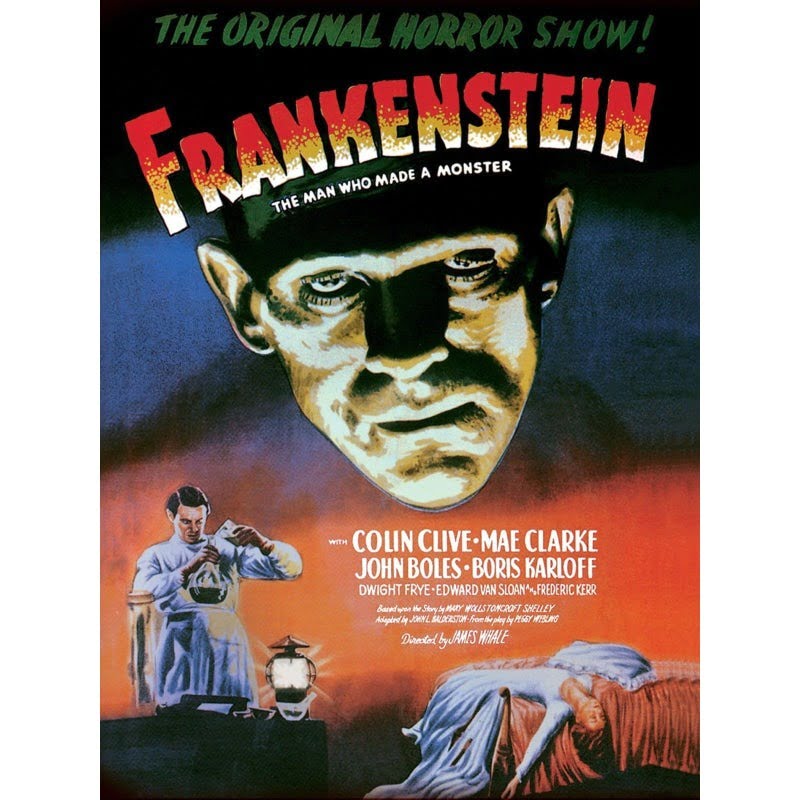
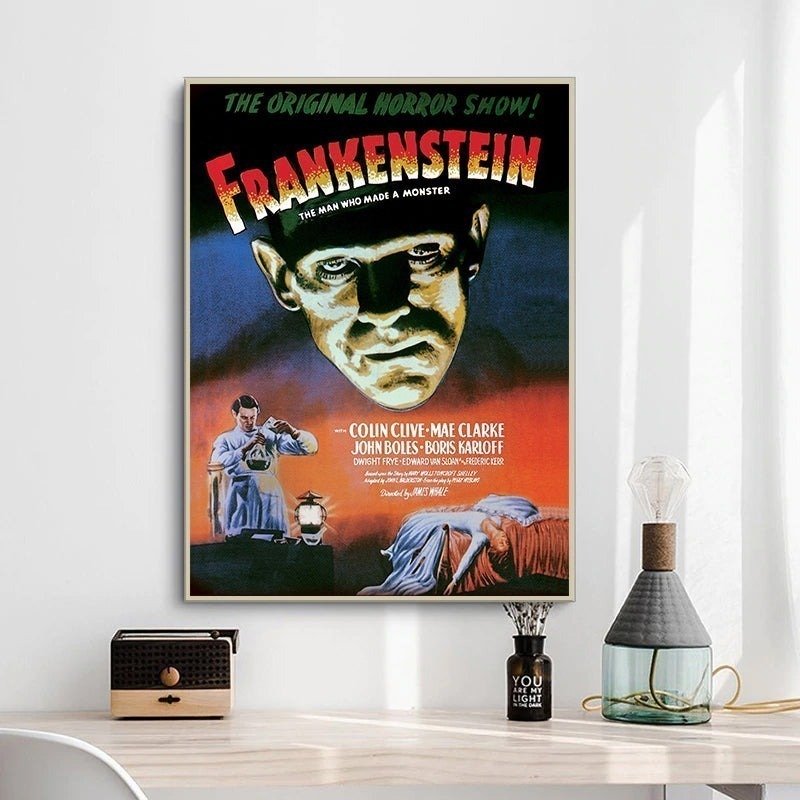
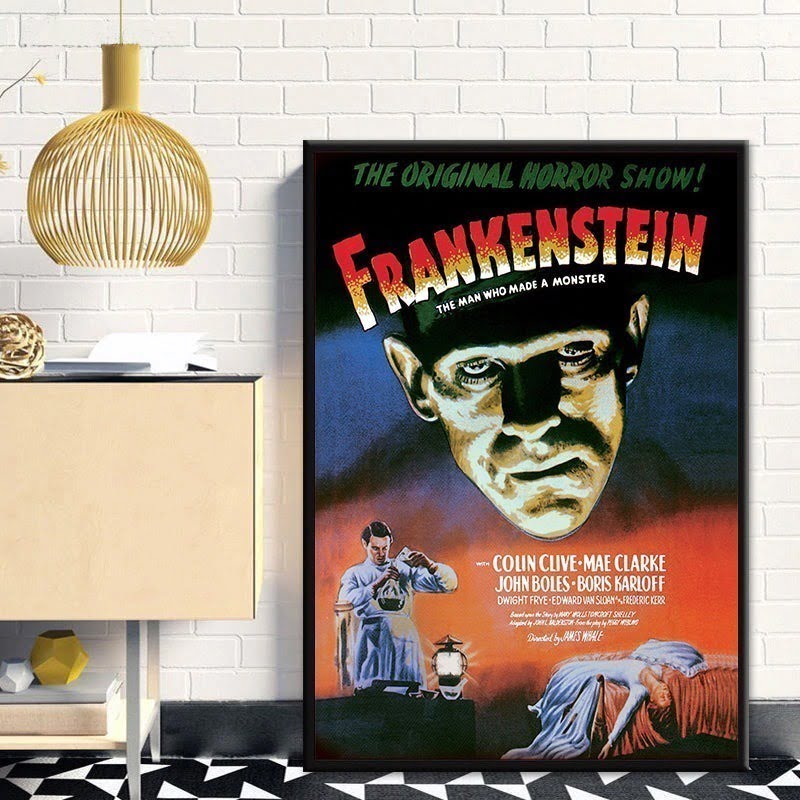
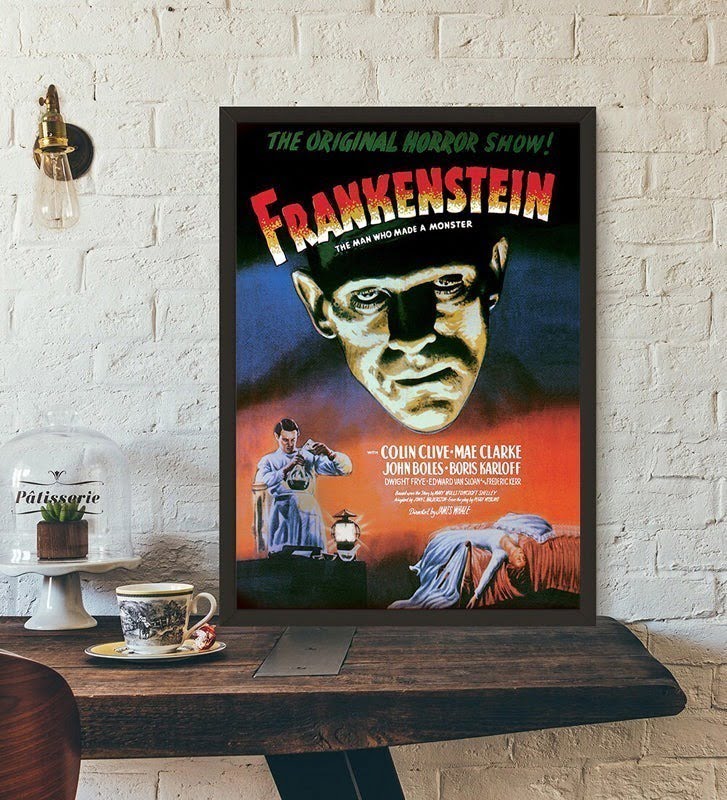
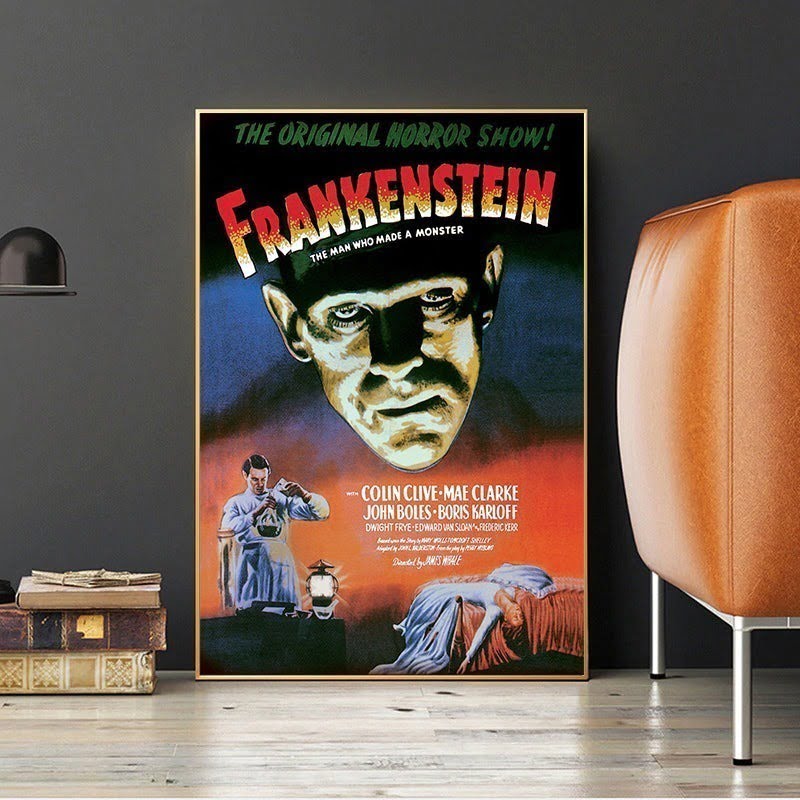
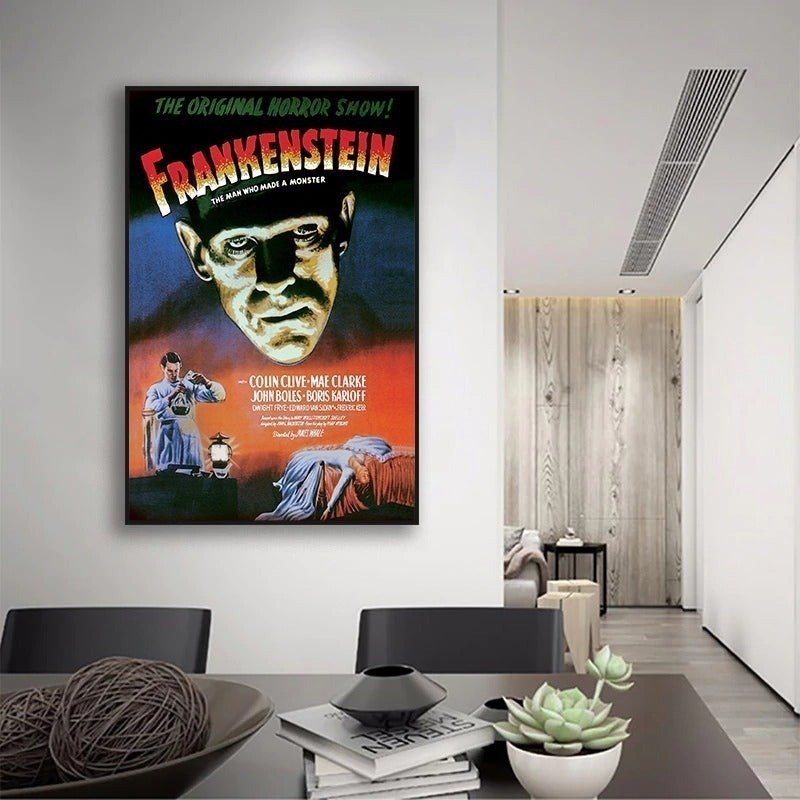
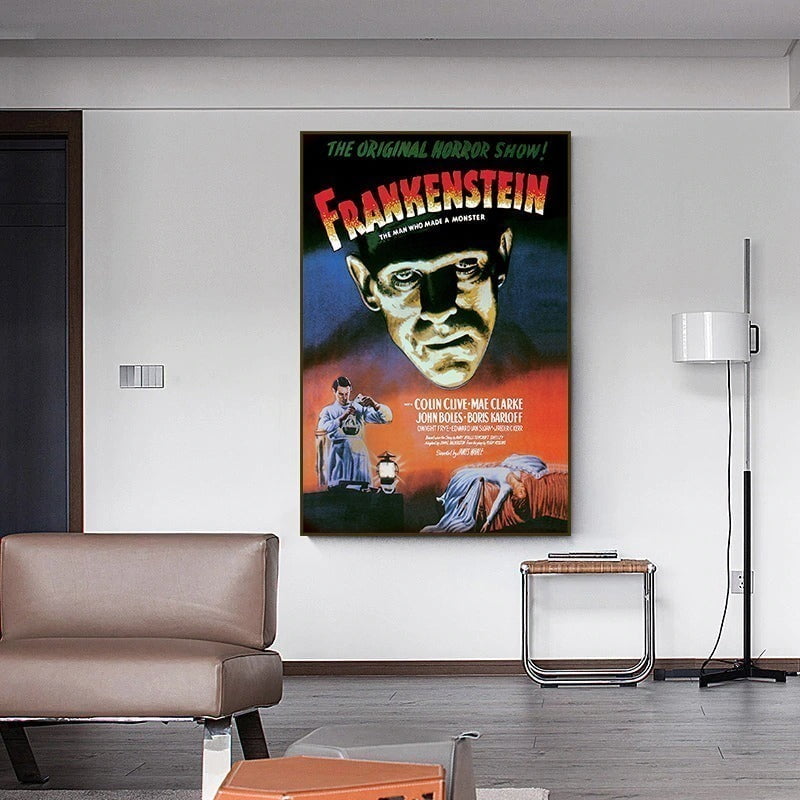
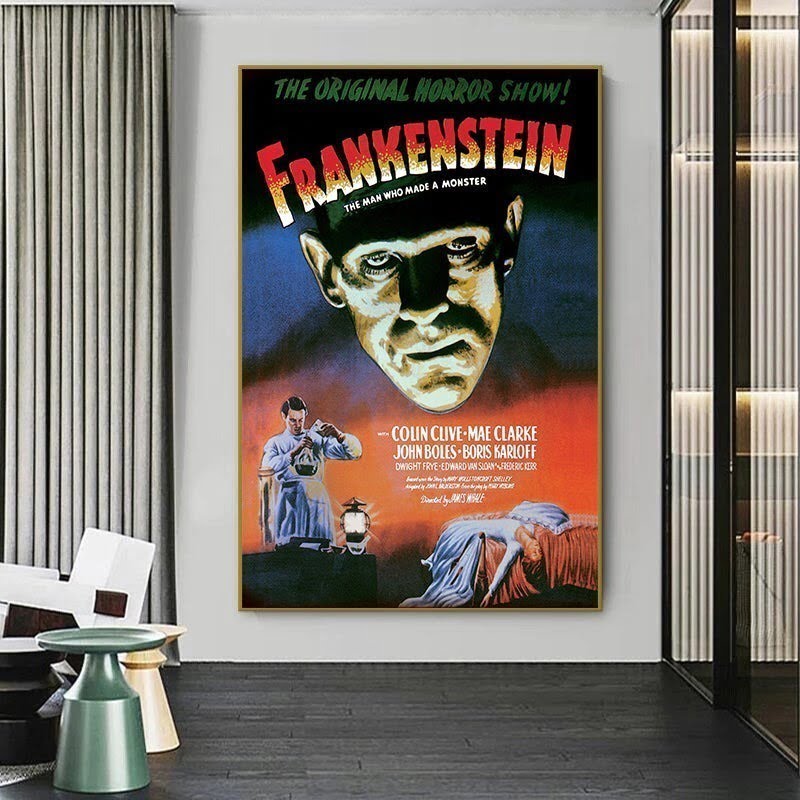

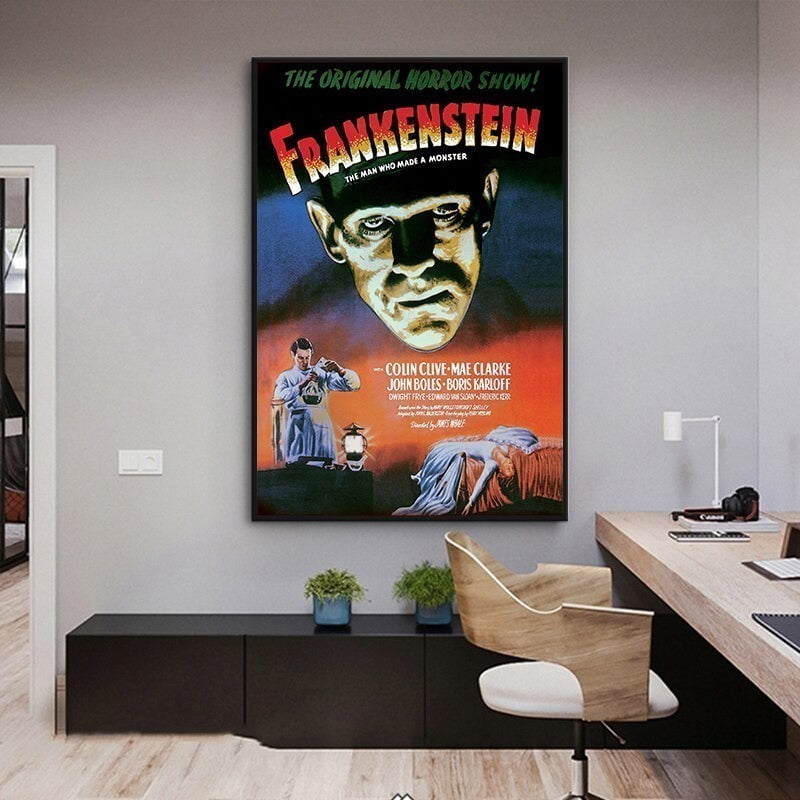
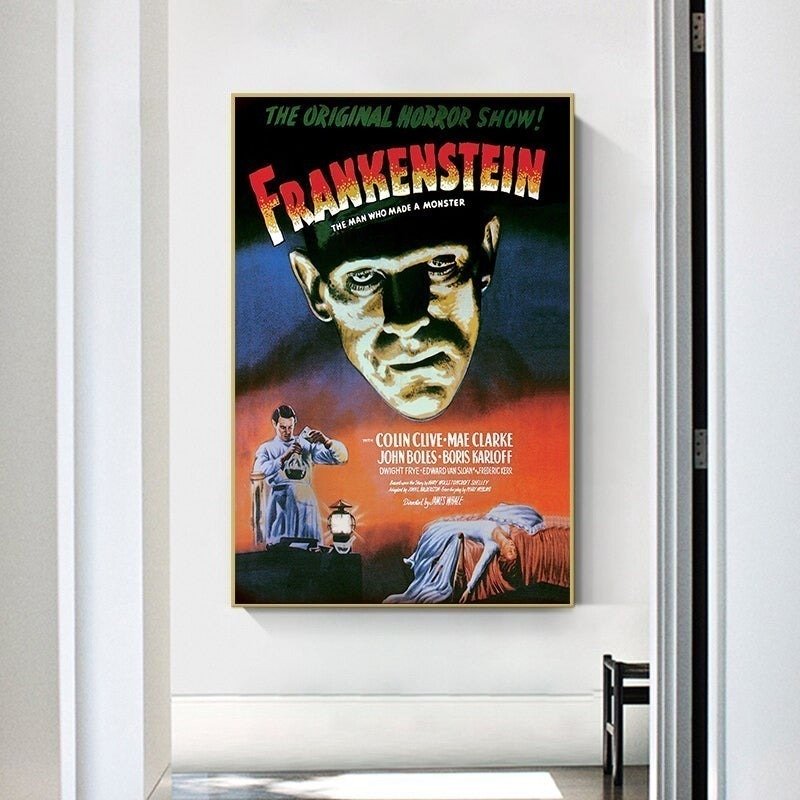
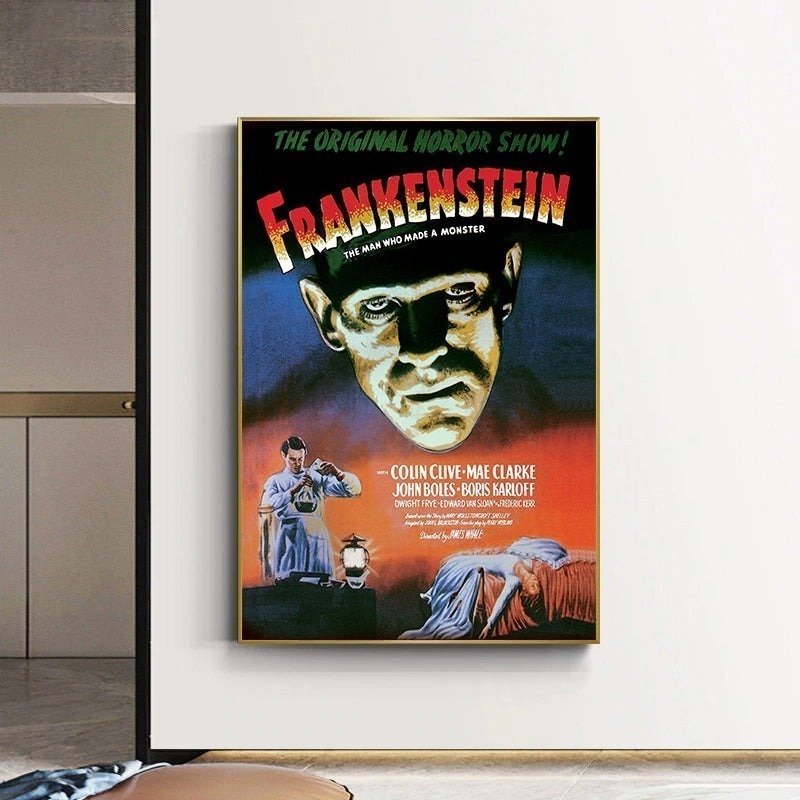
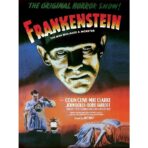





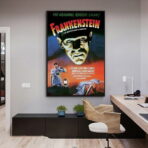
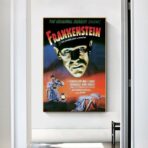
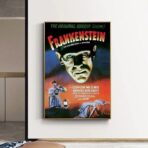








Rediscover Frankenstein’s famous creature with this sublime poster from the 1931 Frankenstein film directed by Universal Studios!
- Paper characteristics:
- 🎨 Canvas: global standard in terms of printing and imitating a “painting canvas” look.
- By default, the poster contains a 4cm white border for framing (frame not included). If you don’t want it, please choose “without white border”.
- ✅ Size: Multiple choices available. ✅
- High UV resistance.
- Color vibrancy maximum, glare-free.
- recycled paper, guaranteeing environmental friendliness.
- Poster packaged carefully and delivered in a protective tube for total protection.
- FREE STANDARD DELIVERY.
⚠️ Frame not included. ⚠️
Description of this Frankenstein 1931 Movie Poster
Frankenstein is a 1931 American science fiction horror film, directed by James Whale, produced by Carl Laemmle Jr., and adapted from a 1927 play by Peggy Webling, which was itself based on Mary Shelley’s 1818 novel Frankenstein, or the Modern Prometheus. Webling’s play was adapted by John L. Balderston and the screenplay written by Francis Edward Faragoh and Garrett Fort, with uncredited contributions from Robert Florey and John Russell. Frankenstein stars Colin Clive as Henry Frankenstein, an obsessed scientist who digs up corpses with his assistant in order to assemble a living being from body parts. The resulting creature, often known as Frankenstein’s monster, is played by Boris Karloff. The monster’s makeup was done by Jack Pierce. In addition to Clive and Karloff, the film’s cast also includes Mae Clarke, John Boles, Dwight Frye, and Edward Van Sloan. Produced and distributed by Universal Pictures, the film was a commercial success upon its release and was generally well received by critics and audiences. It spawned a number of sequels and spin-offs and had a significant impact on popular culture, with the image of a scientist’s hunchbacked assistant—as well as the film’s depiction of Frankenstein’s monster—becoming iconic. In 1991, the United States Library of Congress chose to preserve Frankenstein in the National Film Registry because of its “cultural, historical, or aesthetic significance.”