


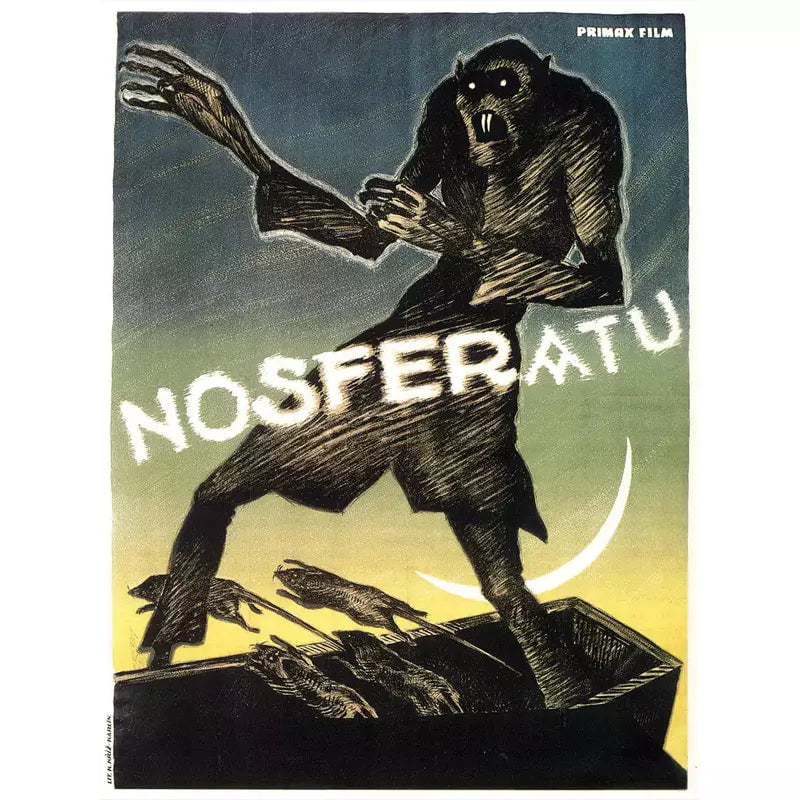

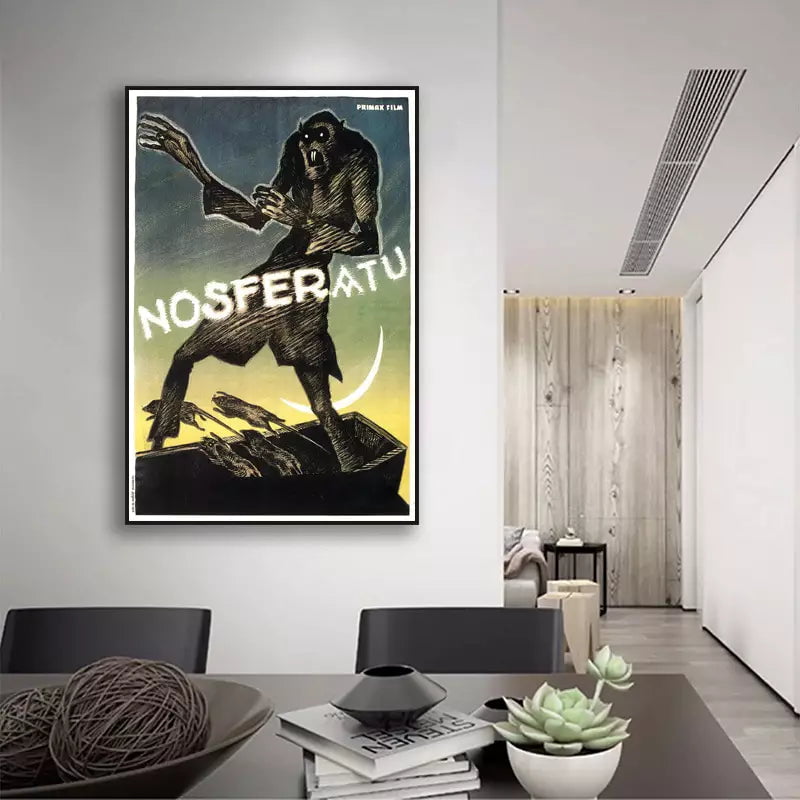
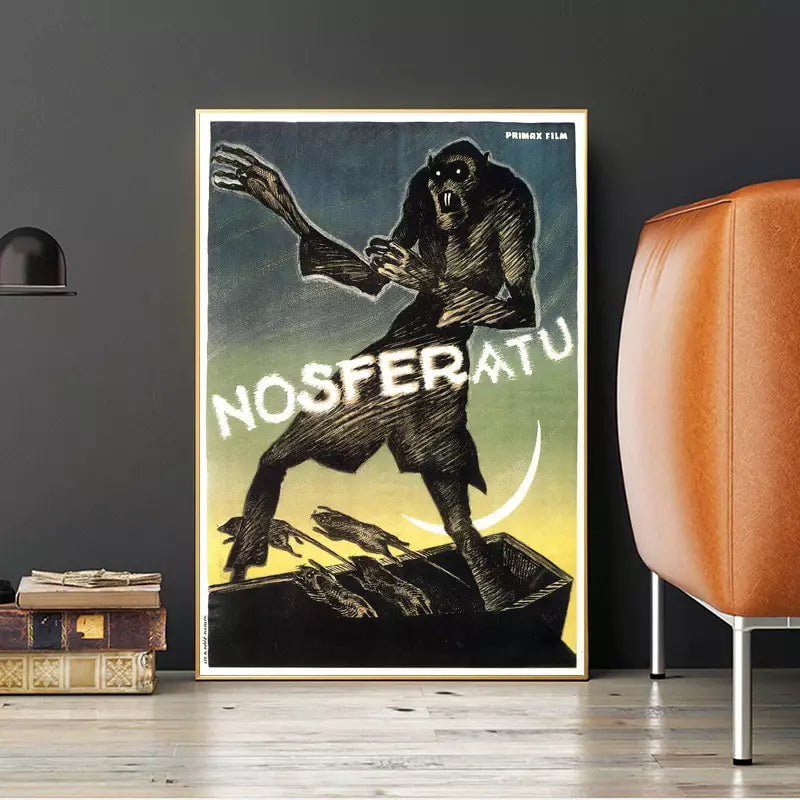
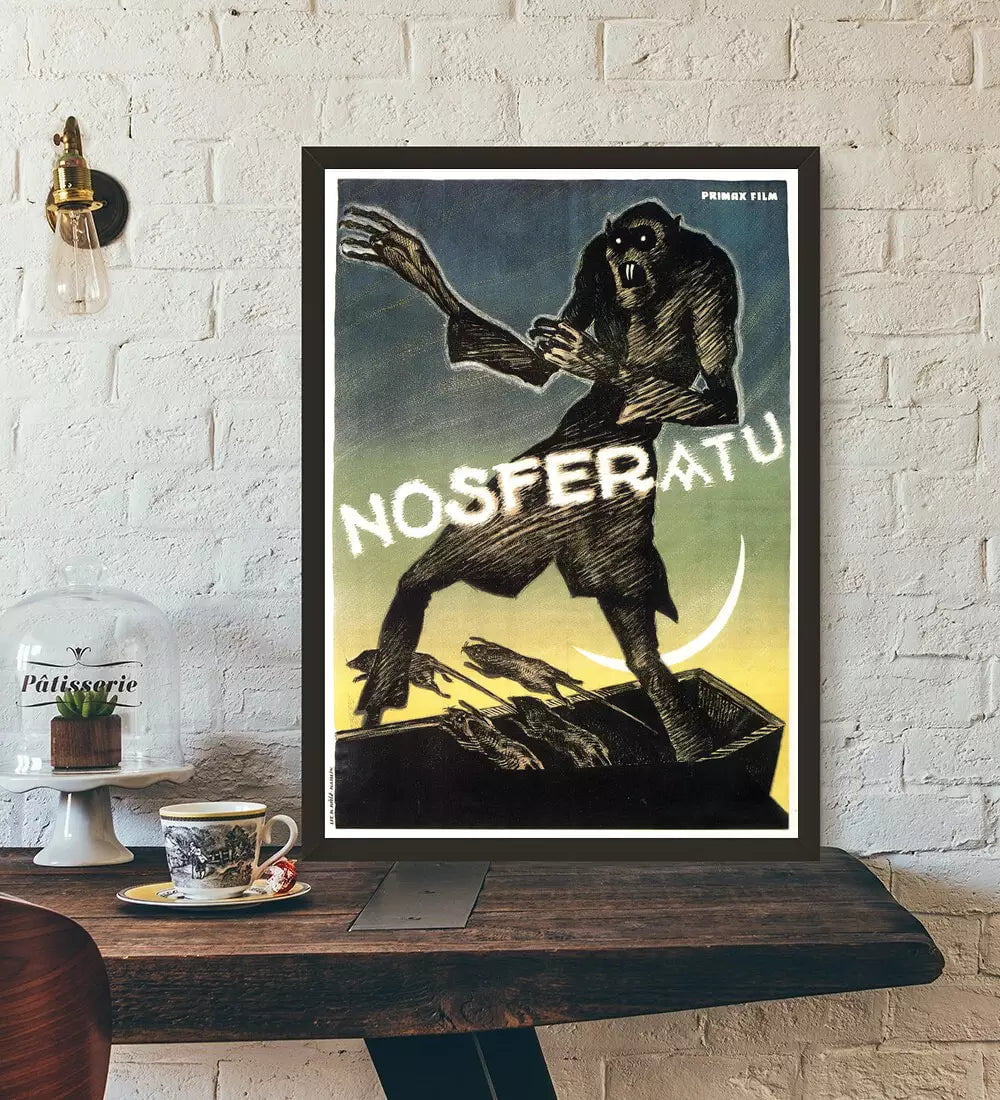

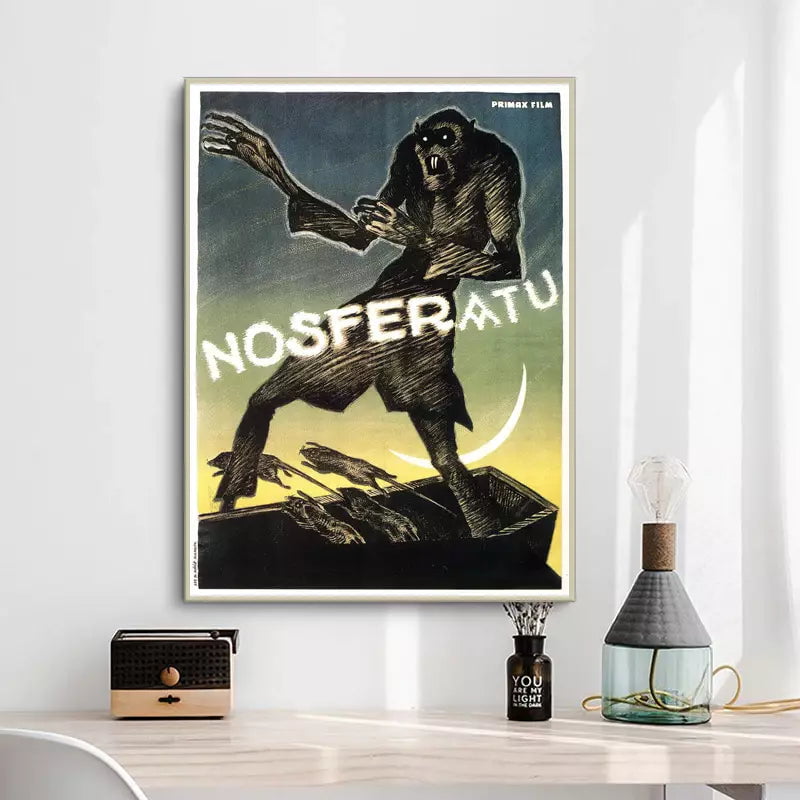


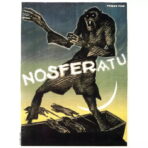
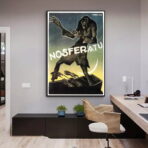
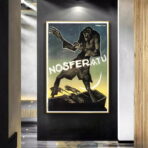

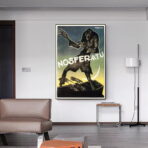
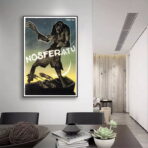
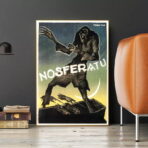
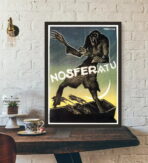
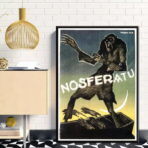
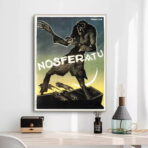
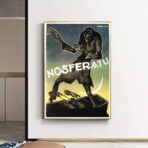
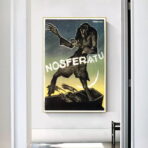











The Nosferatu Movie Poster, a true gem of horror cinema, is a must-have for all cult film lovers. This work by Friedrich Wilhelm Murnau, released in 1922, has left its mark on cinematic history and continues to fascinate with its gothic atmosphere, haunting aesthetic, and masterful interpretation of the vampire myth. The Nosferatu poster perfectly captures the essence of the film, with its dark hues and menacing shadows, which convey an atmosphere of terror and constant tension. It will transport you into the fascinating world of this bloodthirsty monster, both frightening and fascinating. Hang this poster in your home for a unique and striking decoration, or give it as a gift to a fellow film enthusiast. Don’t miss this opportunity to own a true piece of cinematic history, both aesthetically pleasing and terrifying.
- Paper Feature:
- 🎨 Canvas: global standard in terms of printing and imitating a “painting canvas” look.
- By default, the poster contains a 4cm white border for framing (frame not included). If you don’t want it, please choose “without white border”.
- ✅ Size: Multiple choices available. ✅
- High UV resistance.
- Color vibrancy maximum, glare-free.
- Paper recycled, guaranteeing environmental friendliness.
- Poster packaged carefully and delivered in a protective tube for total protection.
- FREE STANDARD DELIVERY.
⚠️ Frame not included. ⚠️
Description of this Nosferatu Movie Poster
Nosferatu is a 1922 German silent horror film directed by Friedrich Wilhelm Murnau. This is an unauthorized adaptation of Bram Stoker’s novel Dracula, which was never acknowledged by the author’s family.
The film tells the story of Thomas Hutter, a young bank clerk who is sent to Transylvania to sell a property to a wealthy landowner, Count Orlok. Hutter is greeted by the villagers with suspicion and dread, and when he arrives at the Count’s castle, he discovers that the Count is a bloodthirsty vampire.
Orlok quickly falls in love with Hutter’s wife, Ellen, after seeing her portrait in Hutter’s study. He leaves Transylvania for the port town of Wisborg, where Ellen and Hutter live. Orlok is attracted to Ellen and decides to pursue her, sowing death and desolation in his wake.
Hutter falls ill after being bitten by Orlok, and Ellen realizes that the vampire is the cause of all the horrors that have occurred in the city. She decides to sacrifice herself to save humanity, allowing Orlok to bite her and drink her blood until he dies at sunrise.
The film is considered one of the greatest classics in cinematic history, with its gothic atmosphere, expressionist aesthetic, and masterful interpretation of the vampire myth. It influenced many future horror films, including Tod Browning’s 1931 Dracula, which popularized the image of the vampire as an elegant and seductive nobleman.
With its dark hues, creepy imagery, and ominous music, Nosferatu captivated audiences upon its release and continues to fascinate filmgoers worldwide. It has become a true benchmark for horror cinema, and its poster has become iconic worldwide.