


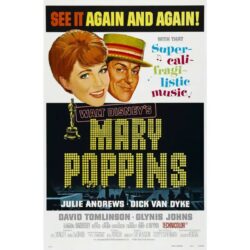
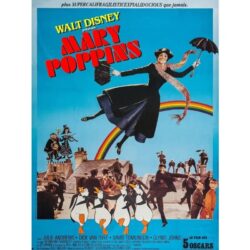

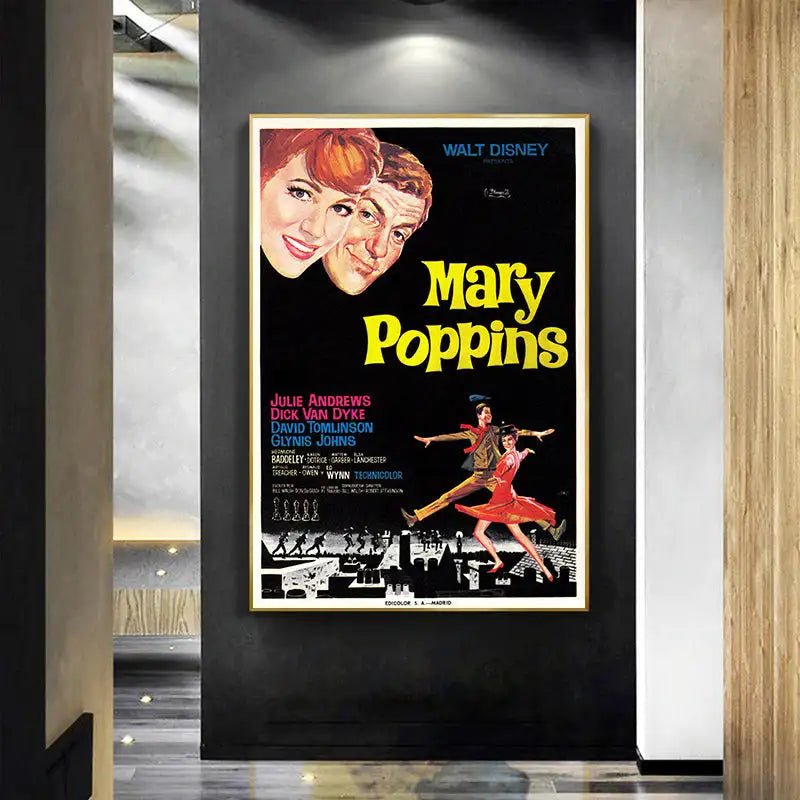
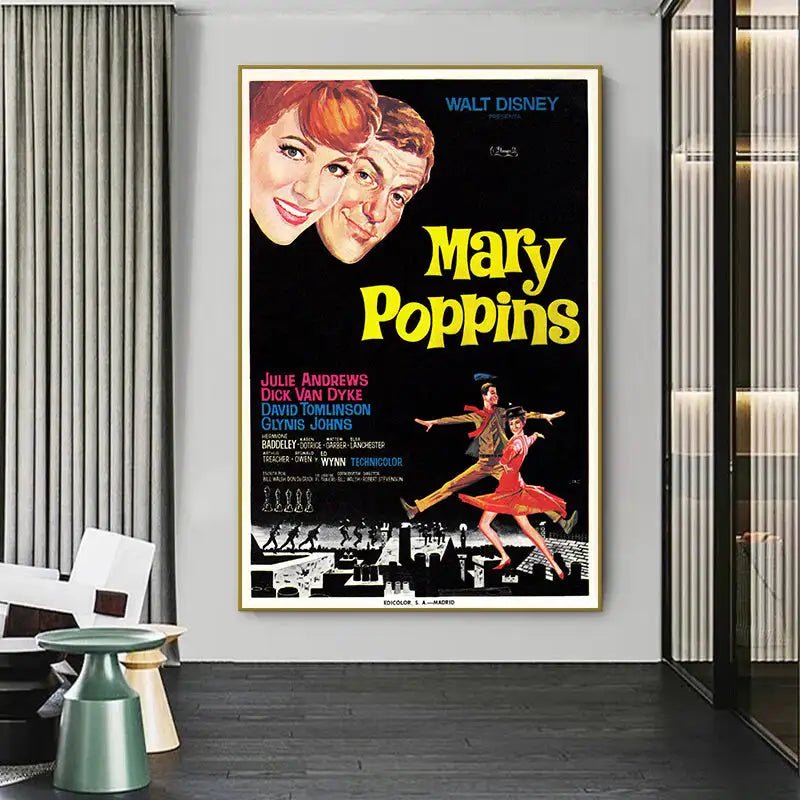

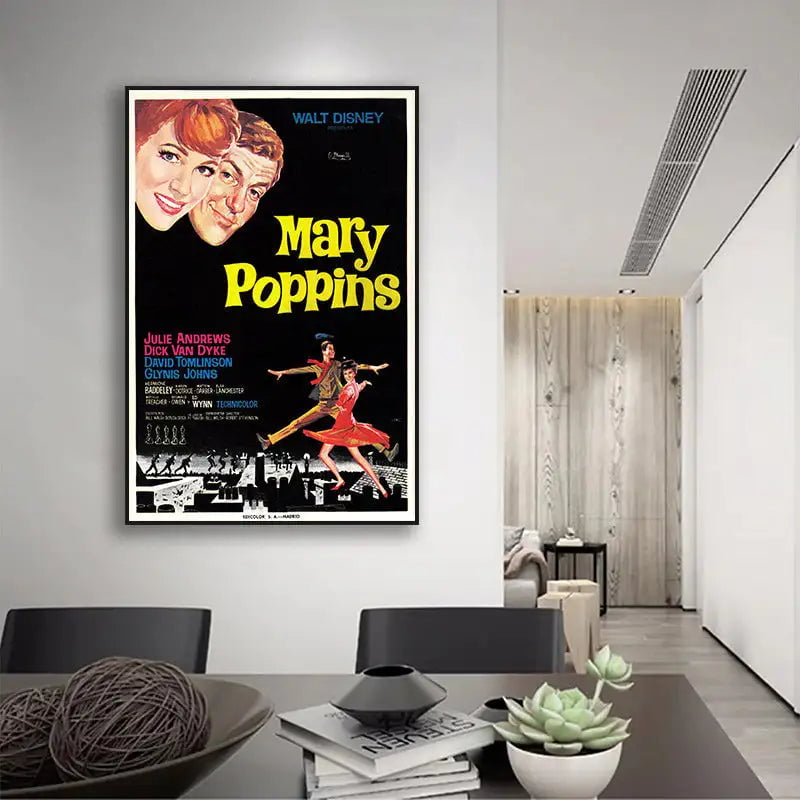
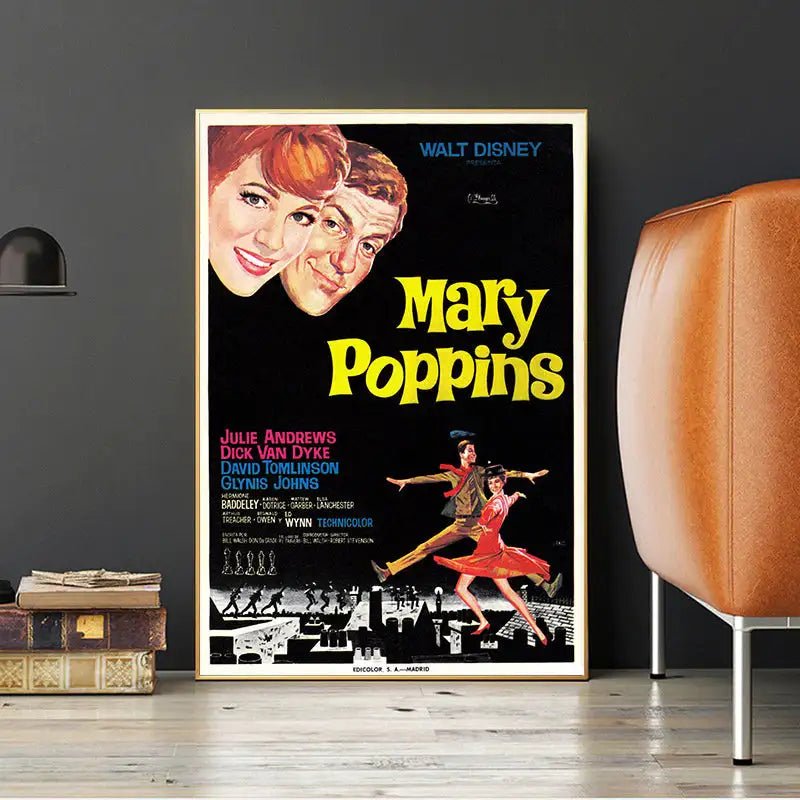
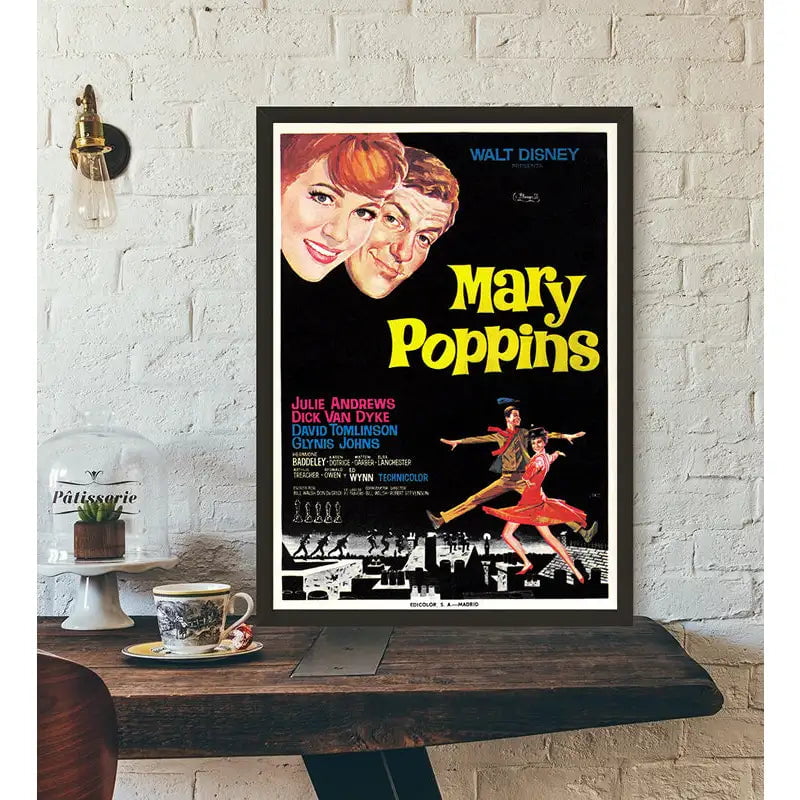
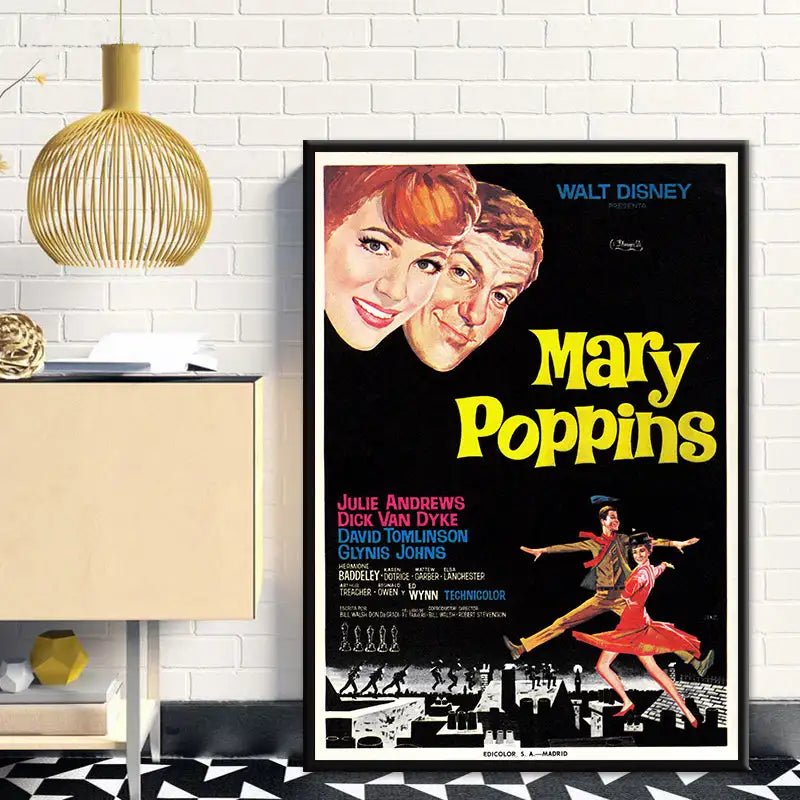
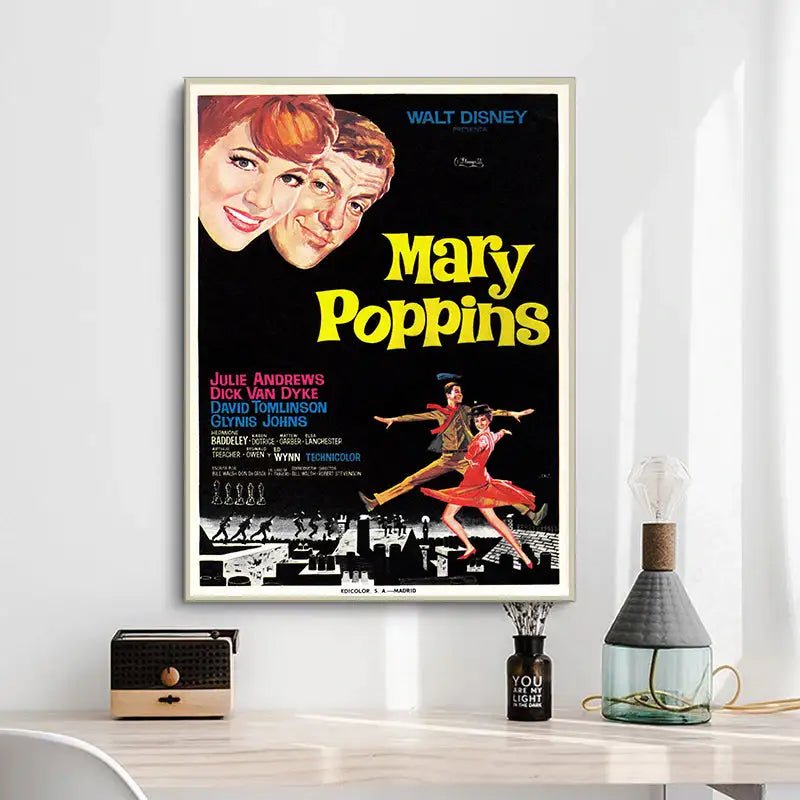


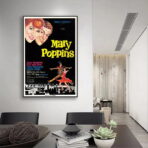
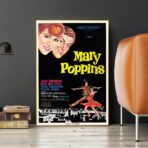
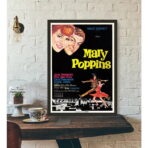
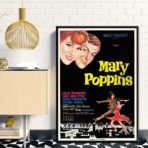
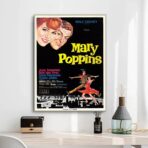









With this Mary Poppins 1964 Poster, your decoration will be Supercalifragilisticexpialidocious!
- Paper Feature:
- 🎨 Canvas: global standard in terms of printing and imitating a “painting canvas” look.
- By default, the poster contains a 4cm white border for framing (frame not included). If you don’t want it, please choose “without white border”.
- ✅ Size: Multiple choices available. ✅
- High UV resistance.
- Color vibrancy maximum, glare-free.
- Paper recycled, guaranteeing environmental friendliness.
- Poster packaged carefully and delivered in a protective tube for Total protection.
- FREE STANDARD DELIVERY.
⚠️ Frame not included. ⚠️
Description of this 1964 Mary Poppins Poster
Mary Poppins is a 1964 American musical fantasy film directed by Robert Stevenson and produced by Walt Disney, with songs written and composed by the Sherman Brothers. The screenplay is by Bill Walsh and Don DaGradi, based on the Mary Poppins book series by P. L. Travers. The film, which combines live-action and animation, stars Julie Andrews in her feature film debut as Mary Poppins, who visits a dysfunctional family in London and uses her unique lifestyle to improve the family dynamics. Dick Van Dyke, David Tomlinson, and Glynis Johns play supporting roles. The film was shot entirely at Walt Disney Studios in Burbank, California, with painted London backdrops.
Mary Poppins was released on August 27, 1964, to critical acclaim and commercial success. It became the highest-grossing film of 1964 and, at the time of its release, the highest-grossing film in Disney history. It received a total of 13 Academy Award nominations, including Best Picture—a record for a Walt Disney Studios film—and won five: Best Actress for Andrews, Best Film Editing, Best Original Score, Best Visual Effects, and Best Original Song for “Chim Chim Cher-ee.” Mary Poppins is considered Walt Disney’s greatest live-action achievement and is the only one of his films to receive a Best Picture nomination during his lifetime. In 2013, the film was selected for preservation in the United States National Film Registry by the Library of Congress because it is “culturally, historically, or aesthetically significant.” A biographical drama about the making of the film, Walking with Mary, was released on October 20, 2013. A sequel, Mary Poppins Returns, was released on December 19, 2018. In Edwardian London in the spring of 1910, George Banks returns home to 17 Cherry Tree Lane to learn from his wife, Winifred, that babysitter Katie Nanna has left their service after their children, Jane and Michael, run away, “for the fourth time this week” (“Life I Lead”). They are brought home soon after by Constable Jones, who reveals that the children were chasing a lost kite. The children ask their father to help them build a better kite, but he rejects them. Taking the initiative to hire a new nanny, Mr. Banks places an advertisement for a stern, no-nonsense nanny. In contrast, Jane and Michael place their own advertisement for a kinder, gentler nanny. (“Perfect Nanny”) Winifred (who completely agrees with the children) tries to keep the peace. After ordering Jane and Michael to go to bed, Mr. Banks tears up the letter and throws the remains down the chimney, but a strong wind blows the fragments up the chimney and into the air. The next day, several stern-faced old nannies wait outside the Banks’ house for Ellen to let them in, but a strong gust of wind blows them away. Jane and Michael then witness a magical young nanny descend from the sky with the aid of her umbrella. Introducing herself to Mr. Banks, Mary Poppins calmly produces the children’s catering advertisement and agrees to his demands, but promises the astonished banker that she will be firm with his children. While Mr. Banks questions the return of the advertisement, Mary Poppins steps up and convinces him that it was originally her idea. She meets the children and magically helps them tidy their nursery with a snap of her fingers, before heading out for a walk in the park (“Spoonful of Sugar”). Outside, they encounter an old friend of Mary’s, Bert, a dabbling street painter; Mary Poppins uses her magic to transport the group into one of her drawings. While the children take a ride on a merry-go-round, Mary Poppins and Bert stroll leisurely. Together, they sing (“Jolly Holiday”), and Bert flirts with Mary Poppins. After reuniting with the children, Mary Poppins enchants the carousel horses; Bert saves a fox from a fox hunt; they enter a horse race that Mary wins. To describe her victory, Mary Poppins uses a nonsense word (“Supercalifragilisticexpialidocious”). The outing ends when a thunderstorm dissolves Bert’s drawings, bringing the group back to London; upon their return, Mary forces the children to take medicine to keep from getting sick and puts them to bed; when Jane and Michael refuse to go to sleep, she calmly sings them a song to help them fall asleep faster (“Stay Awake”). The next day, the three children meet Bert’s strange Uncle Albert, who has flown into the air due to his uncontrollable laughter, and they join him for a tea party on the ceiling with many jokes (“I Like to Laugh”). Afterwards, Mr. Banks is annoyed by the cheerful atmosphere at home and threatens to fire Mary Poppins, but she persuades him to take the children to his workplace the next day. That evening, Mary sings the children a hymn-like lullaby[11] about the woman who sits on the steps of St. Paul’s Cathedral selling bird food (“Feed The Birds”). The next day at the bank, the children meet old Mr. Dawes, senior. Mr. Dawes aggressively pressures Michael to invest his two cents in the bank, and eventually snatches the coins from him (“Fidelity Fiduciary Bank”). Michael demands they be returned; Other customers hear the conflict, and they all begin demanding their own money back, causing a run on the bank.
Jane and Michael run away from the bank, getting lost in London’s East End until they find Bert, now working as a chimney sweep, who gives them a ride home (“Chim Chim Cheree”). The three men and Mary Poppins venture onto the rooftops, where they engage in a song-and-dance routine with other chimney sweeps, which spills over into the Banks’ house (“Step in Time”) after their neighbor Admiral Boom shoots cartoon fireworks at them, mistaking them for robbers and calling them “cheeky devils.” Mr. and Mrs. Banks return home to find Bert’s friends dancing in their house and send them away. Mr. Banks then receives a phone call from the bank asking for a meeting about what the children have been up to. The children hear the phone call and realize their father is in trouble. Bert tells Mr. Banks he needs to spend more time with his children before they grow up (“A Man Has Dreams”). Michael gives his father the two pence in hopes of making amends. Mr. Banks walks across London to the bank, where he suffers a humiliating cashing-out and is fired. Searching for the words in the tuppence, he blurts out “Supercalifragilisticexpialidocious,” recounts Uncle Albert’s “peg-leg named Smith” joke the children told, and happily returns home. Mr. Dawes considers the joke and, finally getting it, flies into the air laughing. The next day, the tide changes, meaning Mary Poppins must leave. A happier Mr. Banks is at home, having repaired his children’s kite, and takes the family out to fly it. In the park, the Banks family meets Mr. Dawes’s son, Mr. Dawes Jr., who reveals that his father died laughing at the joke (“Let’s Go Fly a Kite”). Mr. Dawes Jr. declares that he has never seen his father happier in his life and rehires Mr. Banks as a junior partner. Her work completed, Mary Poppins ends the film by flying away, with Bert telling her from afar not to stay away too long.