


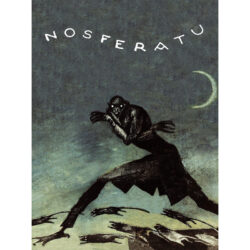

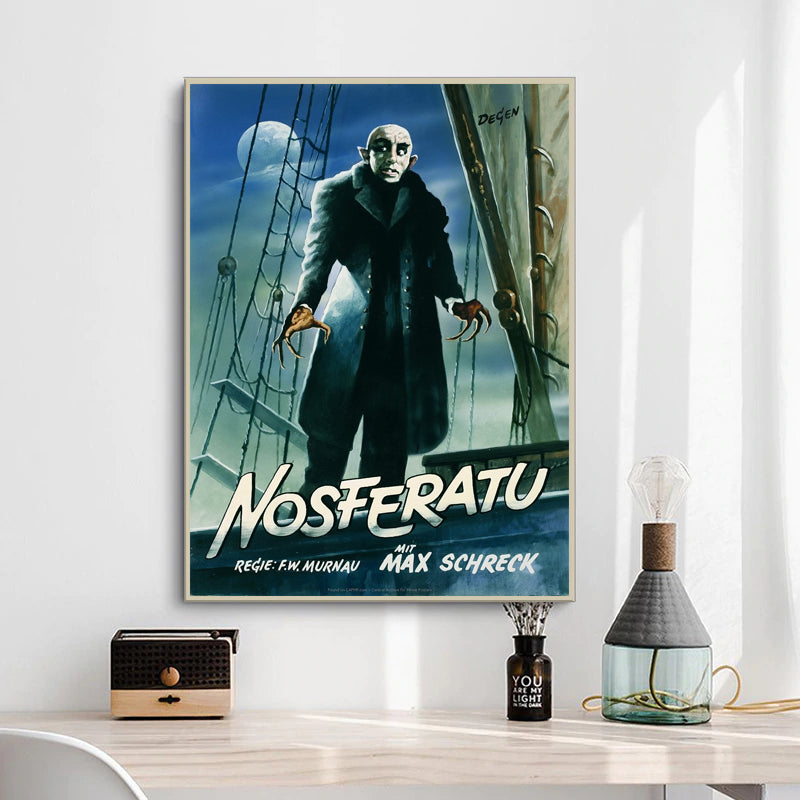
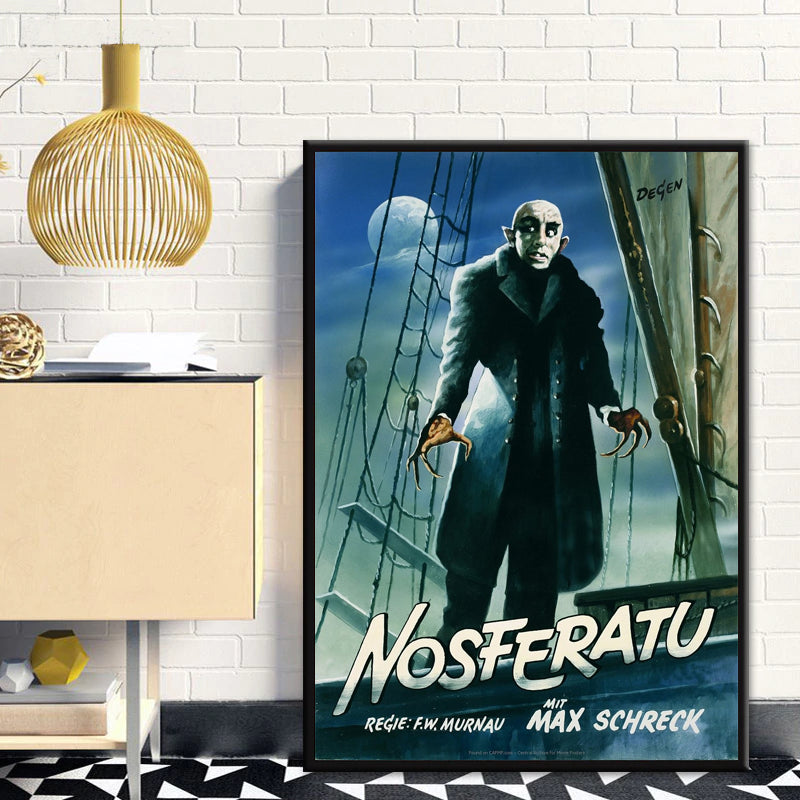


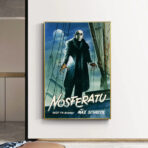


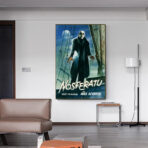












With this Murnau Nosferatu Poster, immerse yourself in the captivating world of Murnau’s cinematic masterpiece and let yourself be swept away by the anguish and tension as the film explores the darkest recesses of the human soul. The poster’s unique visual aesthetic evokes the silent terror of the vampire Nosferatu, creating a thrilling sensory experience. Discover the pure and timeless emotion of this cinematic classic that continues to haunt the minds with its unforgettable atmosphere.
- Paper Feature:
- 🎨 Canvas: World Standard in terms of print and imitating a “painting canvas” look.
- By default, the poster contains a 4cm white border for framing (frame not included). If you don’t want it, please choose “without white border”.
- ✅ Size: Multiple choices available. ✅
- High UV resistance.
- Maximum color brilliance without reflections.
- Recycled paper guaranteed environmental friendliness.
- Poster wrapped carefully and delivered in a protective tube for total protection.
- FREE STANDARD DELIVERY.
⚠️ Frame not included. ⚠️
Description of this Nosferatu Murnau Poster
“Nosferatu,” directed by F.W. Murnau in 1922, is a masterpiece of German Expressionist cinema. Inspired by Bram Stoker’s novel “Dracula,” the film immerses us in a world of mystery, terror, and darkness.
The story follows Thomas Hutter, a young real estate clerk, sent to the Carpathian Mountains to negotiate the sale of a property with the mysterious Count Orlok. From the beginning, an ominous atmosphere is established, reinforced by the play of light and shadow characteristic of the Expressionist movement. When Hutter arrives at Nosferatu’s isolated castle, the aura of unease grows stronger as he discovers the Count’s strange behavior, revealing his true vampiric nature.
The character of Nosferatu, memorably played by Max Schreck, embodies the essence of the vampire, with his fearsome figure, long, hooked fingers, and piercing eyes. Murnau succeeds in creating a frightening creature without the aid of modern special effects, focusing instead on skillful use of lighting and framing.
The plot develops with increasing tension as Nosferatu begins his journey to the town of Wisborg. The anxiety intensifies as the vampire’s threat looms over the lives of Hutter and his wife, Ellen. The intense performances of Gustav von Wangenheim (Hutter) and Greta Schröder (Ellen) add an emotional dimension to the story, strengthening the connection between the viewer and the protagonists.
The soundtrack, often played live during screenings, also contributes to the film’s oppressive atmosphere. The music, composed by Hans Erdmann, perfectly accompanies the images, accentuating moments of terror and suspense.
Beyond horror, “Nosferatu” is a work that explores themes of fear of the unknown, human fragility in the face of supernatural forces, and the struggle between light and darkness. Murnau succeeded in creating a visually and emotionally rich universe that continues to fascinate filmgoers and influence the horror genre to this day. “Nosferatu” remains an unforgettable testament to F.W. Murnau’s artistic genius and the lasting impact of silent cinema.