




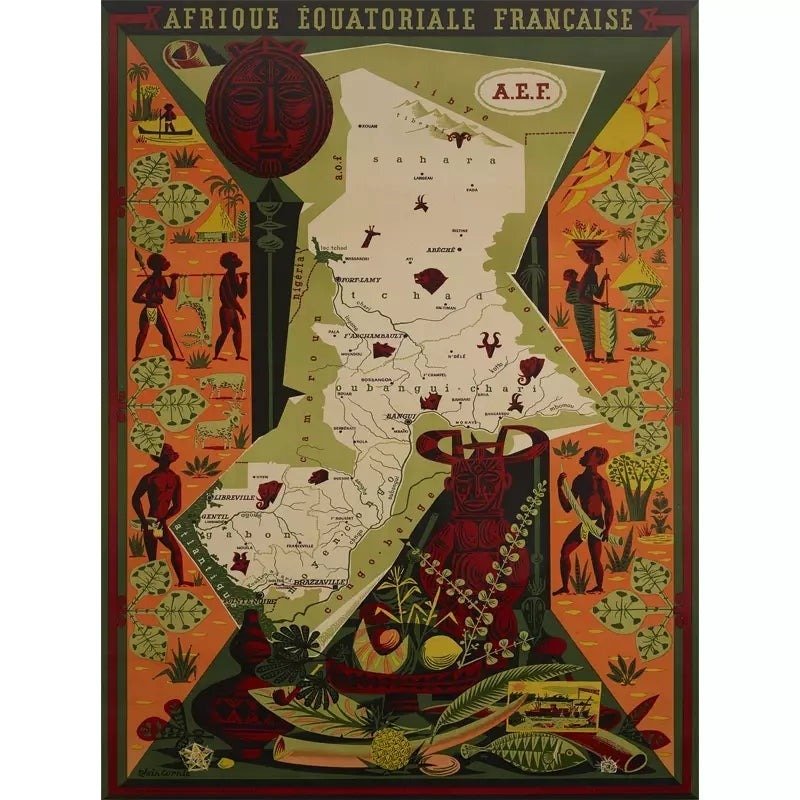

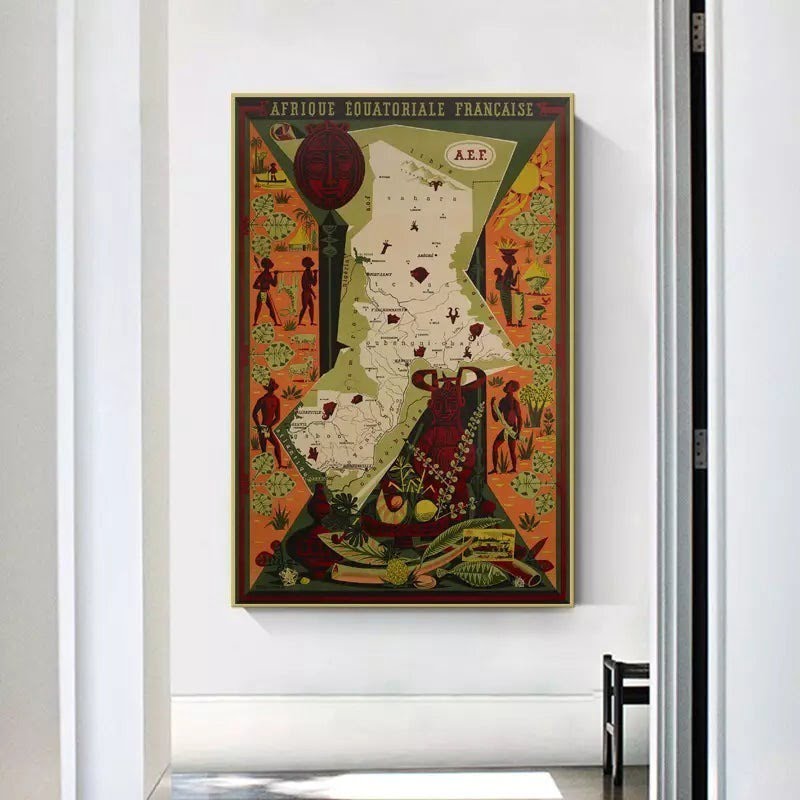


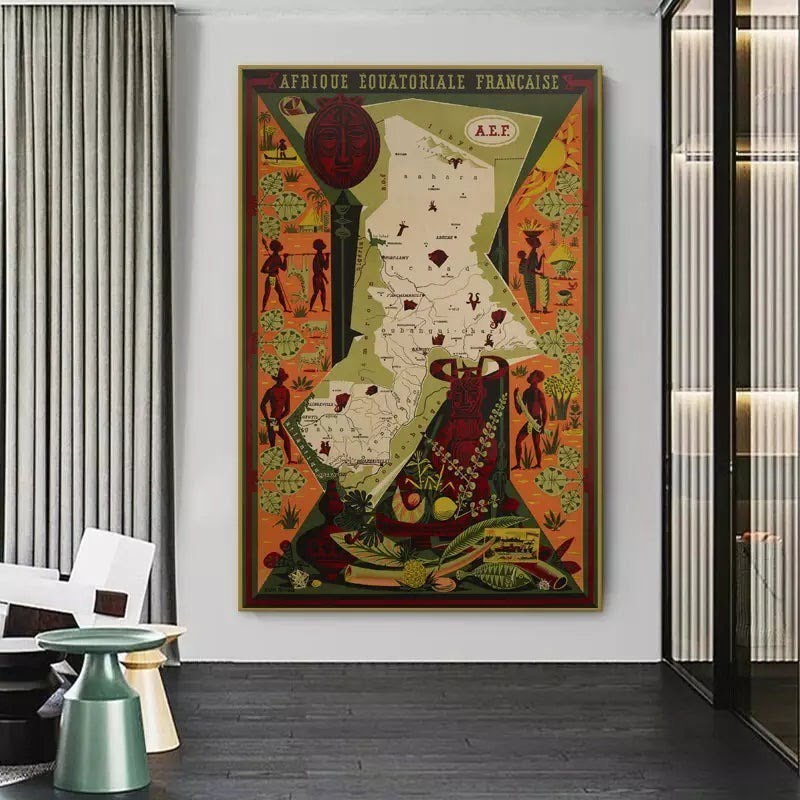


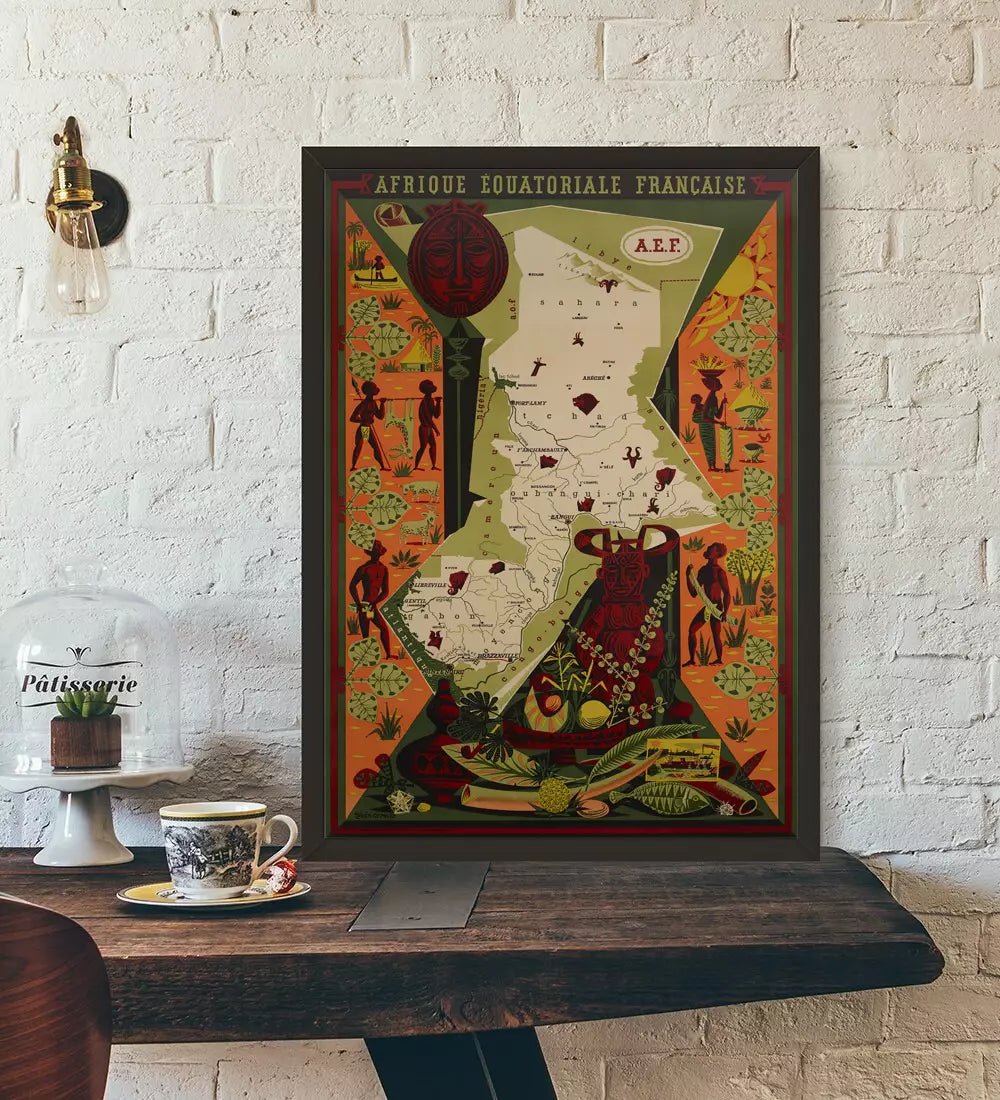
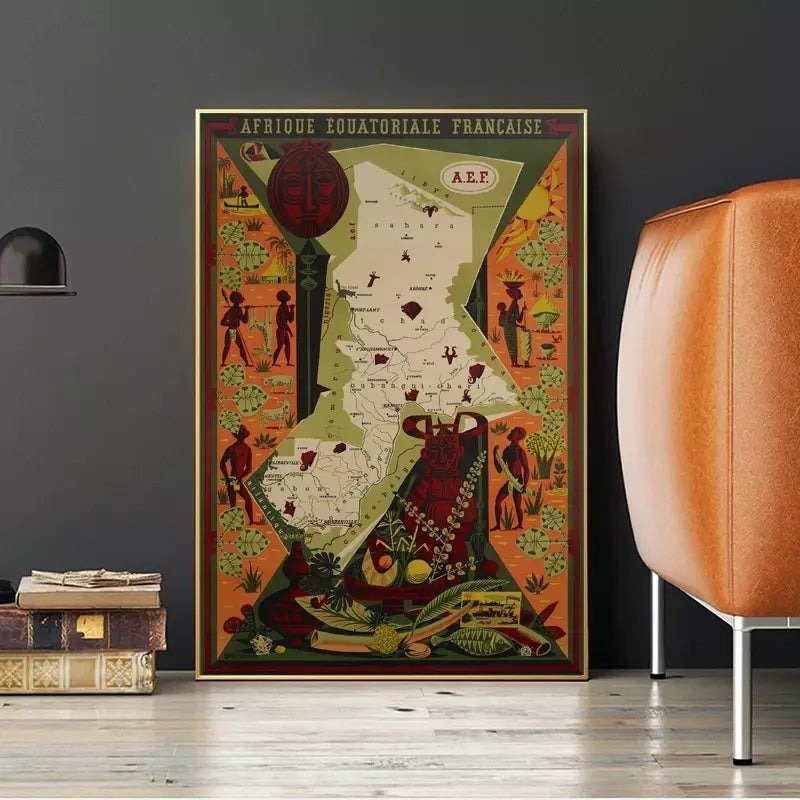

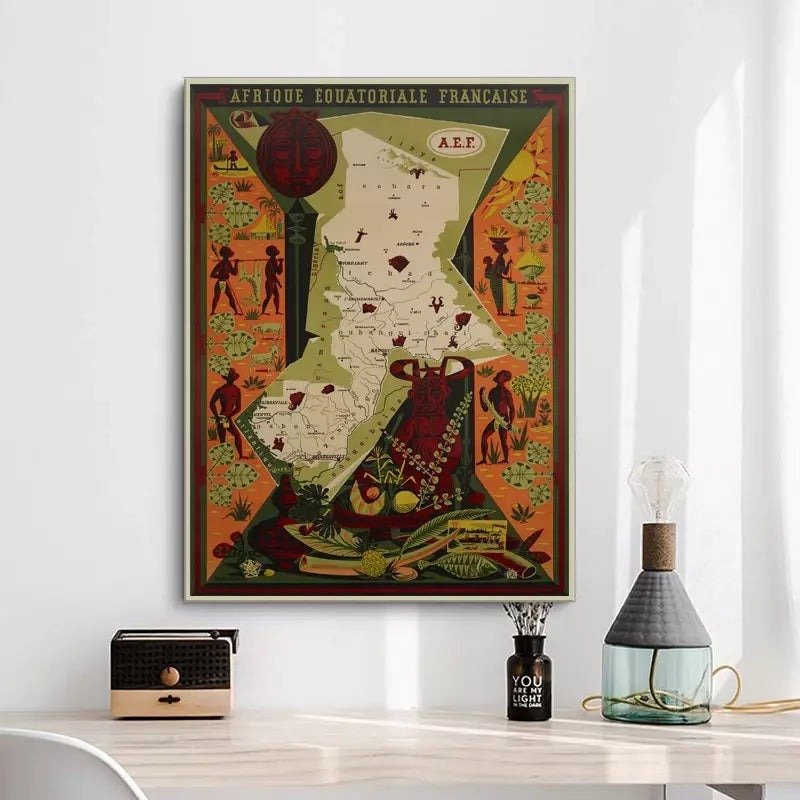






















Discover this Vintage Africa Poster, a true window into the captivating past of French Equatorial Africa. This retro poster transports us to a time when exploring French Equatorial Africa, located in the heart of the African continent, was synonymous with adventure and
Discovery. The image highlights the exotic landscapes and cultural diversity of this region, with vibrant illustrations of the fauna, flora, and inhabitants of this fascinating land. This tourist poster is a testament to the French colonial era, when explorers, scientists, and adventurers ventured into the most remote regions of Africa to unravel its mysteries. It evokes lush jungles, majestic rivers, bustling markets, and encounters with indigenous peoples, offering a glimpse into the atmosphere of a bygone era. Whether you’re a history buff, a travel enthusiast, or simply someone seeking the authenticity of Africa, this Vintage Africa Poster is a treasure that will transport you back in time. Hang it in your home to add a touch of adventure and exploration to your decor, while paying homage to the rich history of this region.
- Paper Feature:
- 🎨 Canvas: Global standard in printing and imitating a “painting canvas” look.
- By default, the poster contains a 4cm white border for framing (frame not included). If you don’t want it, please choose “without white border”.
- ✅ Size: several choices available. ✅
- High UV resistance.
- Maximum color brilliance without reflections.
- Recycled paper guaranteed environmental friendliness.
- Poster wrapped carefully and delivered in a protective tube for total protection.
- FREE STANDARD DELIVERY.
- 🎨 Canvas: Global standard in printing and imitating a “painting canvas” look.
- By default, the poster contains a 4cm white border for framing (frame not included). If you don’t want it, please choose “without white border”.
- ✅ Size: several choices available. ✅
⚠️ Frame not included. ⚠️
Description of this Vintage Africa Poster
French Equatorial Africa (AEF) was a federation of French colonies in Central Africa that existed from 1910 to 1958. It included several territories located near the Equator in Africa and was administered by France. Here is a detailed description of AEF:
- 1. Territories included: AEF included several French colonies in Central Africa, including Gabon, Middle Congo (now the Republic of the Congo), Ubangi-Shari (now the Central African Republic), Chad, and a small part of Cameroon. These territories were spread around the Equator and covered a vast expanse of Central Africa.
- 2. French Colonization: France gradually established its dominance over these territories during the 19th and early 20th centuries. The French East African Region (AEF) was born from the merger of these colonies in 1910, when France sought to streamline its colonial administration by grouping geographically close territories.
- 3. Natural Resources: The French East African Region (AEF) was rich in natural resources, including rainforests, minerals, and agricultural products. This abundance of resources played a key role in the region’s appeal to France, which sought to exploit this wealth.
- 4. Culture and Population: The population of the French East African Region (AEF) was made up of many different ethnic groups, each with their own customs, languages, and traditions. This cultural diversity was an important characteristic of the region.
- 5. Colonial Administration: The French East African Region (AEF) was subject to a centralized French colonial administration. France established political, economic, and educational structures in the region to consolidate its control and exploit local resources.
- 6. End of the Federation: The French Equatorial Africa (AEF) ended in 1958 when the member territories chose to become autonomous communities with a view to independence. This marked the beginning of decolonization in Central Africa, and the territories of the former AEF finally gained their independence in the following years.
Today, these territories form several sovereign nations in Central Africa, each with its own history, culture, and governance. French Equatorial Africa was an important part of France’s colonial history in Central Africa, and it left a significant legacy in the region.