


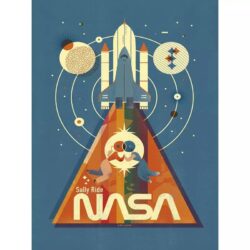

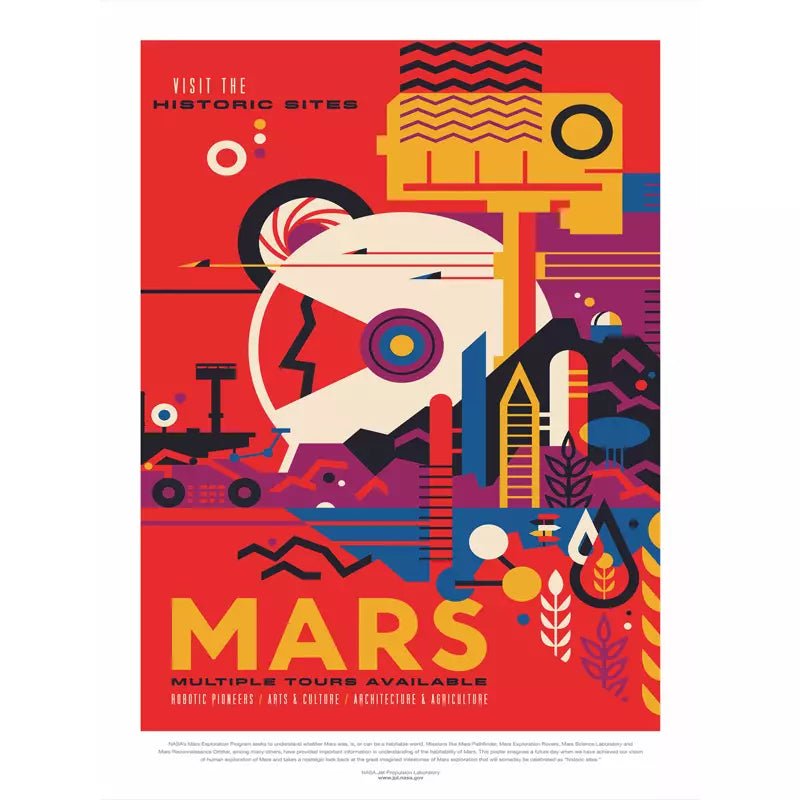





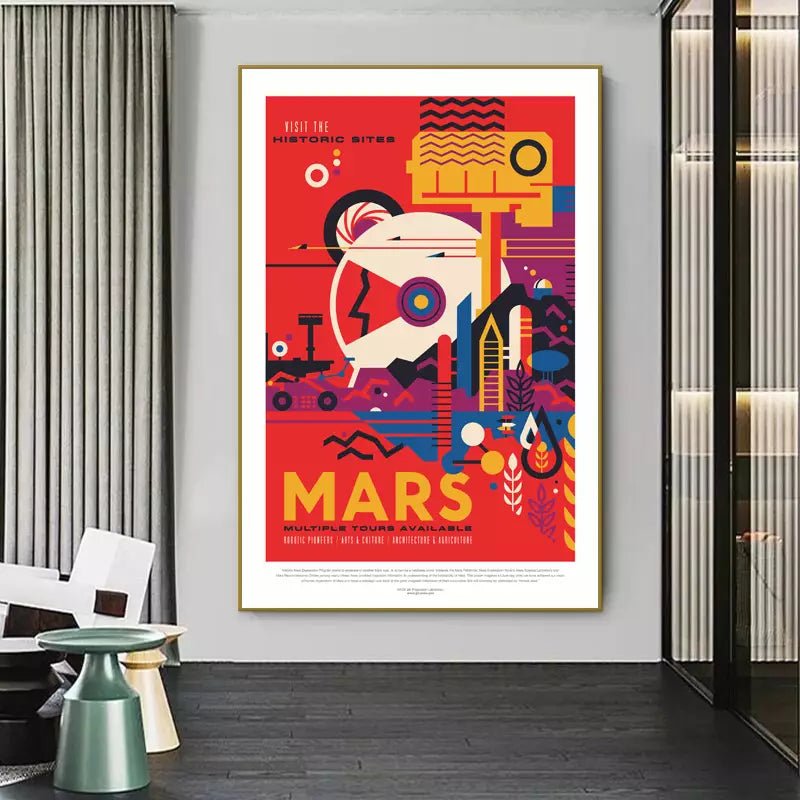


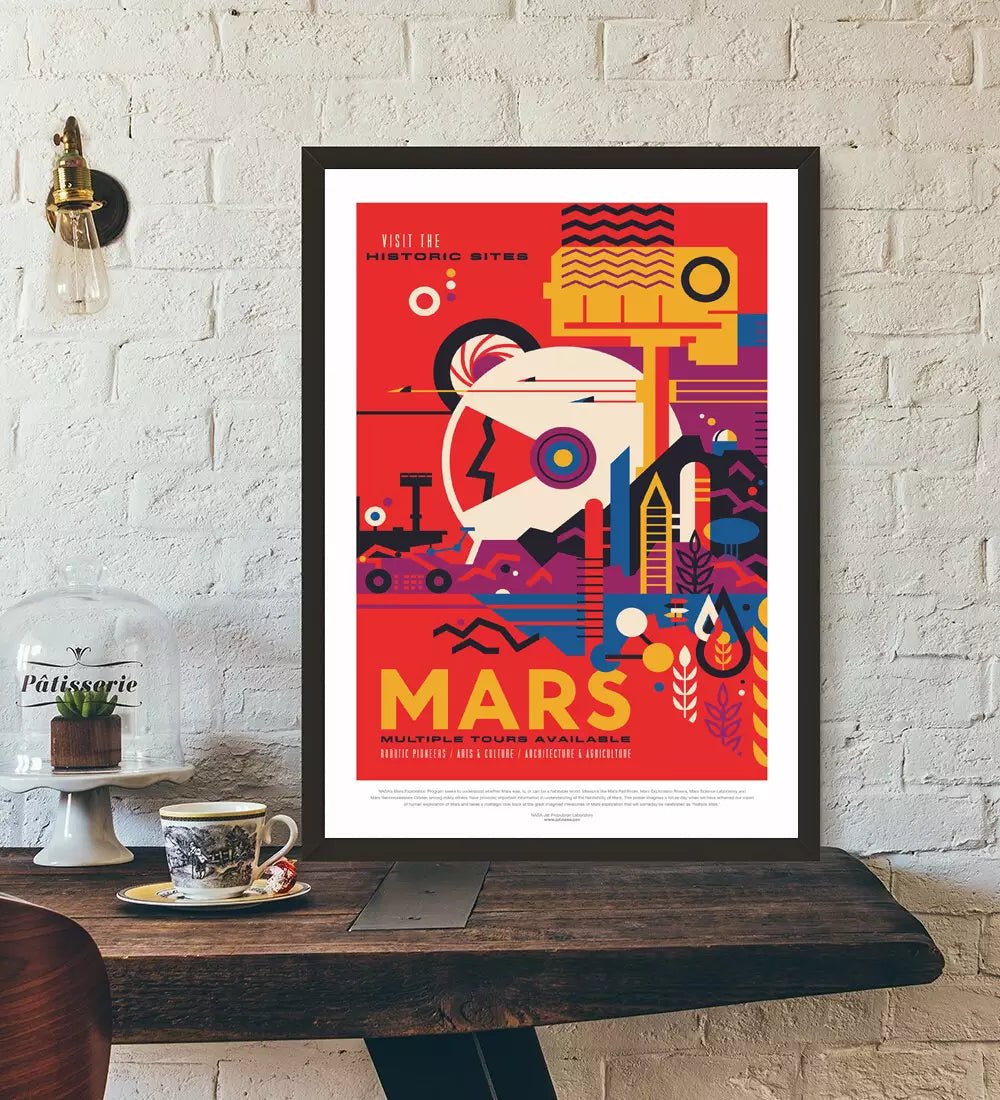




























Discover this Vintage NASA Poster, a window into the imagination and innovation that characterize space exploration. This retro poster transports us to a future that never was, a future where humanity blasts off to Mars. With vibrant colors and a striking design, it captures the bold spirit of NASA and its perpetual quest to push the boundaries of space. The poster evokes a world where interplanetary travel has become a reality, where Mars has become a must-see destination for space explorers. The futuristic patterns and meticulous details recall the early days of space exploration, where imagination and technology combined to open new frontiers. Whether you’re an astronomy enthusiast, a stargazer, or simply someone who appreciates retro aesthetics, this Vintage NASA Poster is a true work of art. It embodies the optimism and creativity that drive space exploration, reminding us that the stars are within reach, even in our imaginations. Hang it in your home to add a touch of space adventure to your decor or to celebrate the pioneering spirit of humanity that continues to inspire us to dream big and push the boundaries of what is possible.
- Paper Feature:
- 🎨 Canvas: Global standard in printing and imitating a “painting canvas” look.
- By default, the poster contains a 4cm white border for framing (frame not included). If you don’t want it, please choose “without white border”.
- ✅ Size: several choices available. ✅
- High UV resistance.
- Maximum color brilliance without reflections.
- Recycled paper guaranteed environmental friendliness.
- Poster wrapped carefully and delivered in a protective tube for total protection.
- FREE STANDARD DELIVERY.
⚠️ Frame not included. ⚠️
Description of this Vintage NASA Poster
NASA, or the National Aeronautics and Space Administration, is the civilian space agency of the United States. Founded on July 29, 1958, NASA has become one of the most prestigious and influential space agencies in the world, playing a key role in space exploration and scientific research.
Here is a detailed description of NASA:
- 1. Mission: NASA’s primary mission is to explore space, conduct scientific research, and develop technology for space exploration. The agency is also responsible for aeronautics research and the development of new technologies for aviation.
- 2. Iconic Programs: NASA has been behind many iconic space programs, including the Apollo program, which allowed American astronauts to walk on the Moon in 1969 during the Apollo 11 mission. It also launched the famous space shuttles and participated in missions to explore Mars, Jupiter, Saturn, and beyond.
- 3. International Space Station (ISS): NASA is a key partner in the International Space Station, a laboratory in Earth orbit where astronauts of different nationalities conduct scientific experiments and research in astronomy, biology, and physics.
- 4. Technological Innovation: NASA has contributed to many technological advances, including the development of lightweight and strong materials, global navigation systems (GPS), and medical devices used on Earth.
- 5. Solar System Exploration: NASA has sent space probes to explore the planets of the solar system, including Mars, Jupiter, Saturn, and Pluto. These missions have provided crucial data for understanding our solar system.
- 6. Terrestrial Research: NASA also monitors our own planet, collecting data on Earth’s climate, atmosphere, oceans, and geology. Its Earth-observing satellites provide essential information for understanding climate and environmental changes.
- 7. International Collaboration: NASA collaborates with many international space agencies, contributing to joint space exploration projects and scientific research.
- 8. Education and Outreach: In addition to its scientific missions, NASA plays an active role in educating and raising public awareness about space exploration, encouraging young people’s interest in science and astronomy.
NASA continues to be a world leader in space exploration and scientific research, constantly pushing the boundaries of what is possible in astronomy and space exploration. It embodies the human ambition to understand the universe around us and explore the mysteries of space.