


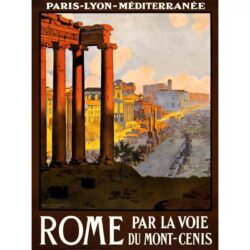


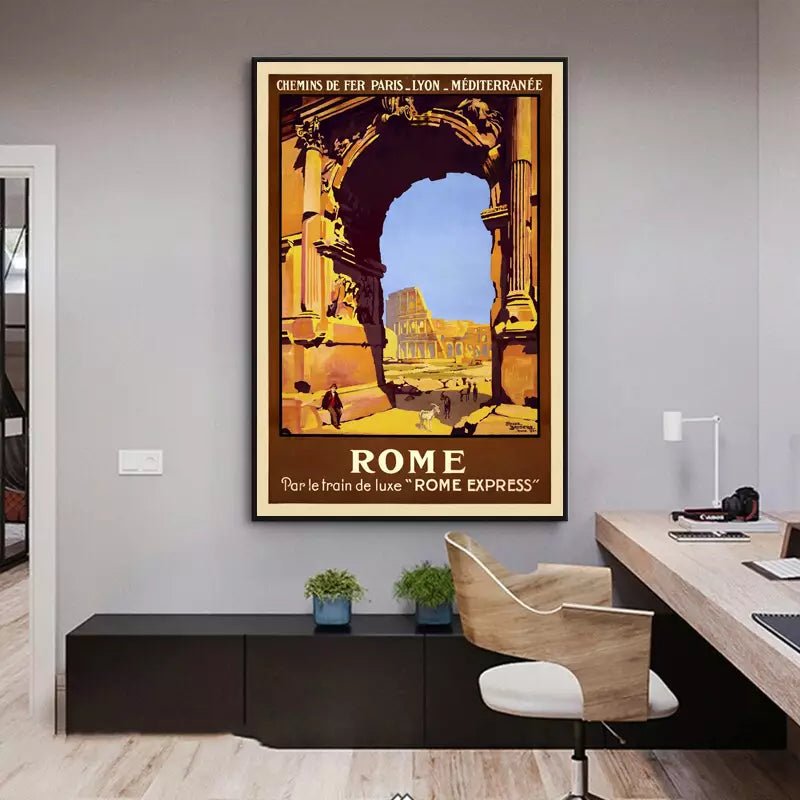
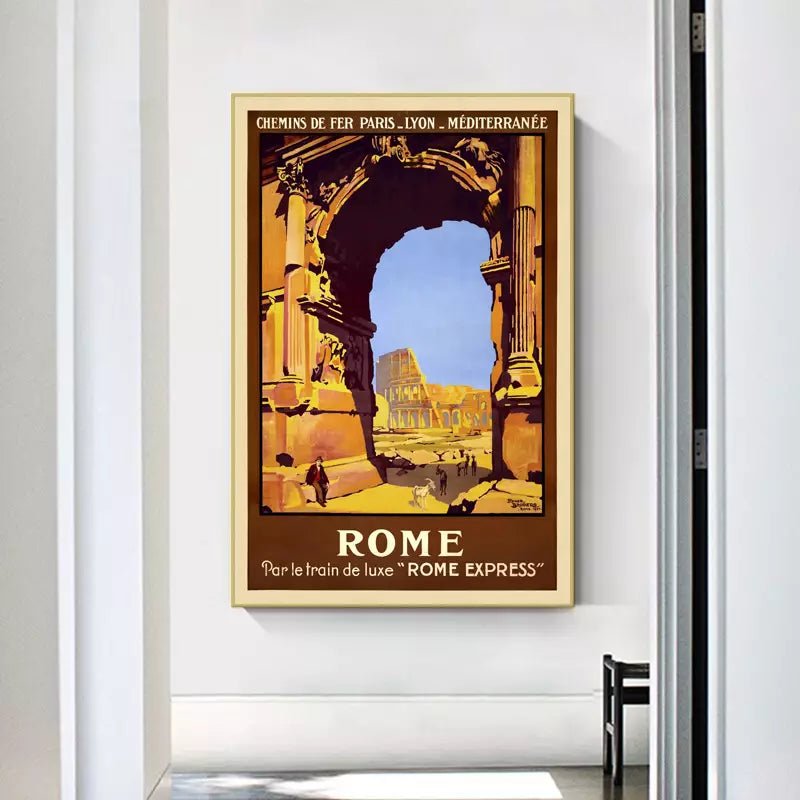
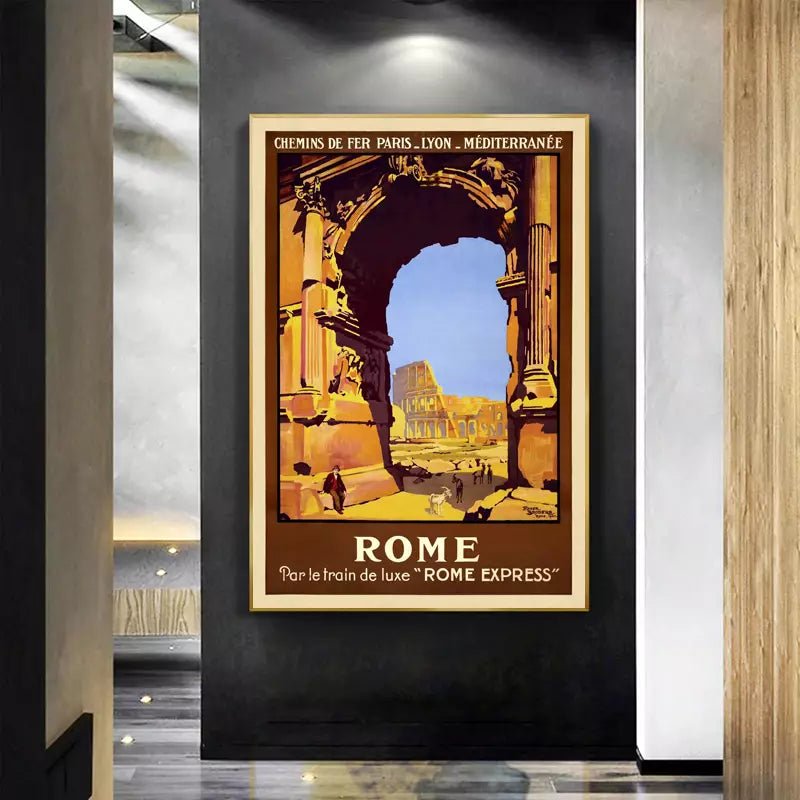
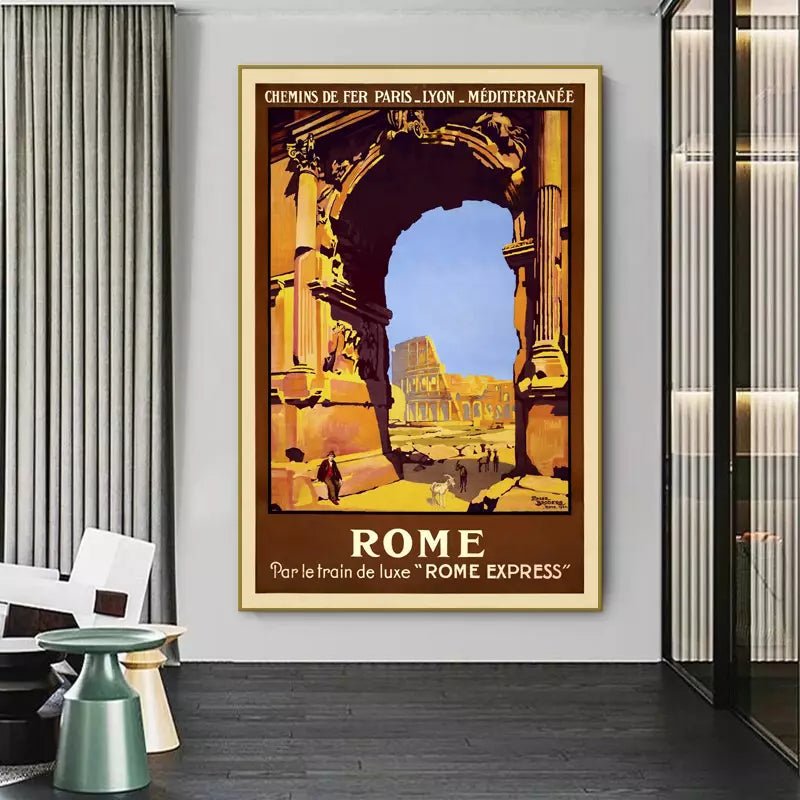

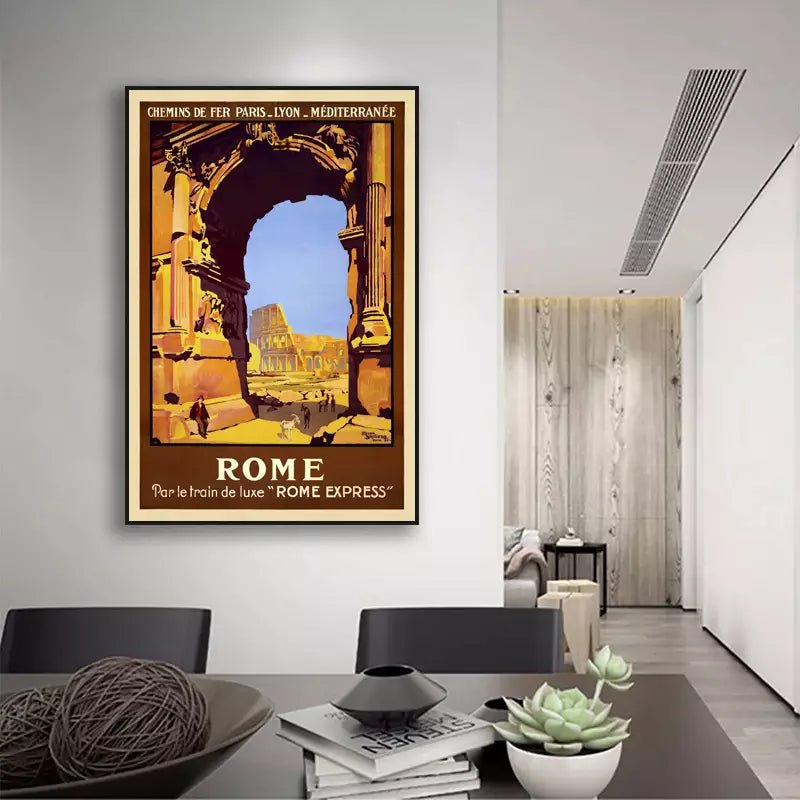
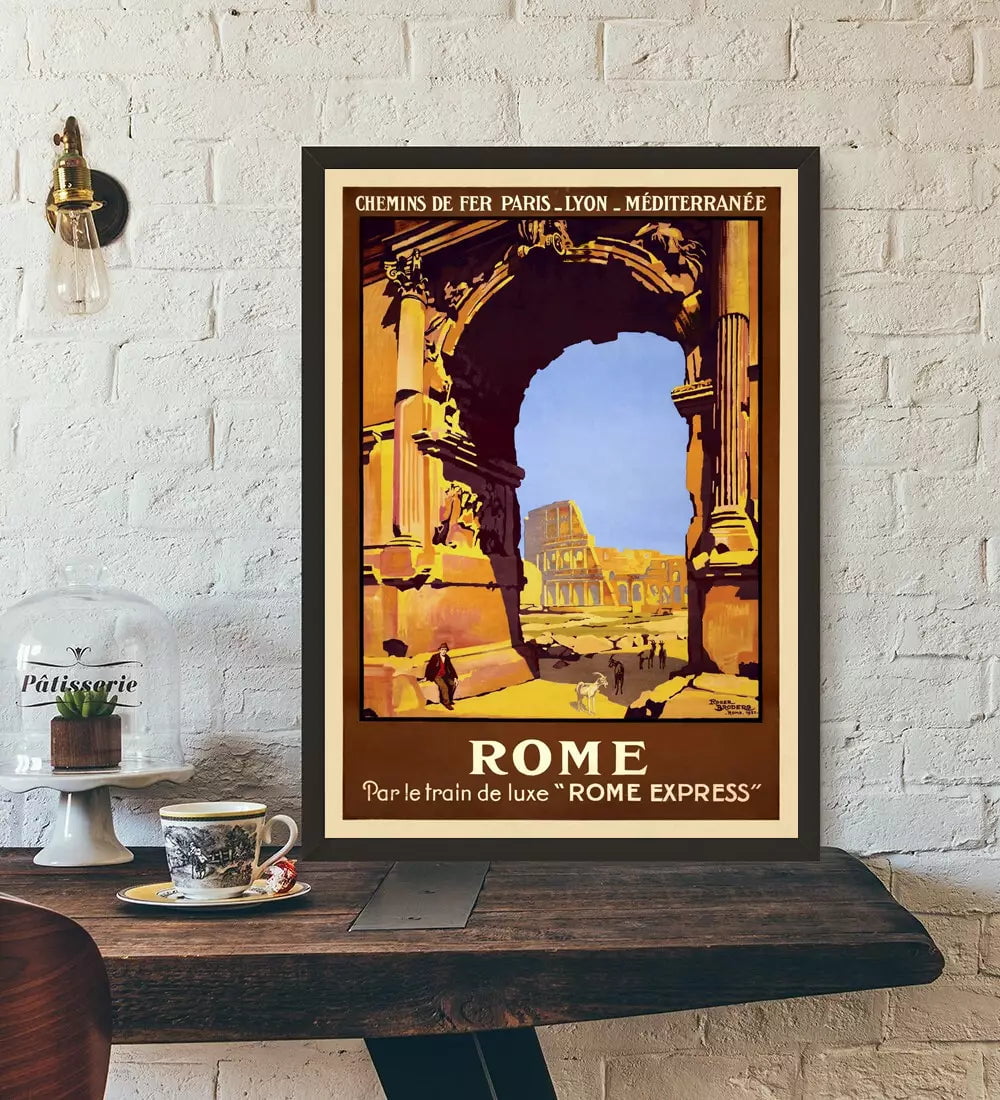


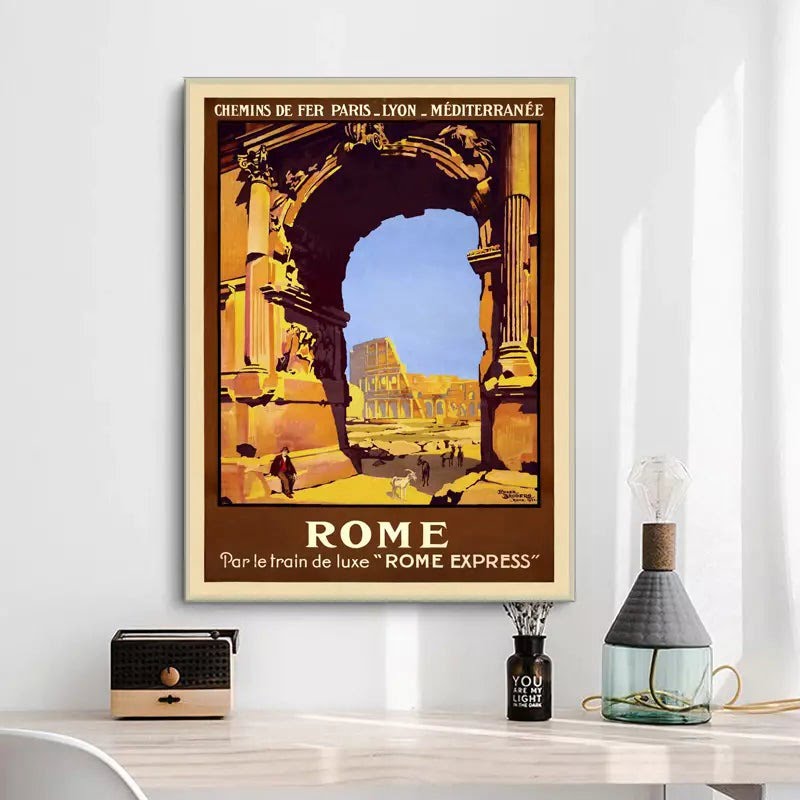

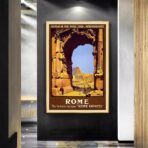





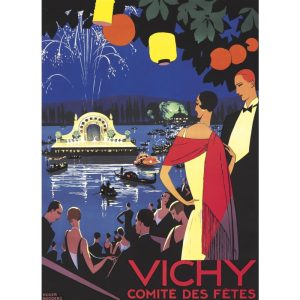






Discover this Vintage Rome Poster, a true window onto the timeless charm of the Eternal City. Created by renowned illustrator Roger Broders for the Paris-Lyon-Méditerranée Railway (PLM), this tourist poster is an artistic tribute to the magnificence of Rome. In the background, the famous Colosseum stands majestically, a symbol of ancient Roman engineering and the city’s glorious history. This poster transports you back in time, immersing you in the captivating atmosphere of the retro era of rail travel. The warm tones and meticulous details recall a time when exploring Europe was an adventure full of
Discovery and charm. The image evokes the promise of Rome, a city where history, culture, and art meet at every corner. Whether you are a travel enthusiast, an art lover, or simply enamored with the elegance of vintage, this Vintage Rome Poster is a treasure. It embodies the magic of the Eternal City, capturing its essence and heritage in a way that transcends time. Hang it in your home to add a touch of Rome to your decor, to remind you of wonderful past trips, or to inspire future adventures in this legendary city.
- Paper Feature:
- 🎨 Canvas: Global standard in printing and imitating a “painting canvas” look.
- By default, the poster contains a 4cm white border for framing (frame not included). If you don’t want it, please choose “without white border”.
- ✅ Size: several choices available. ✅
- High UV resistance.
- Maximum color brilliance without reflections.
- Recycled paper guaranteed environmental friendliness.
- Poster wrapped carefully and delivered in a protective tube for total protection.
- FREE STANDARD DELIVERY.
- 🎨 Canvas: Global standard in printing and imitating a “painting canvas” look.
- By default, the poster contains a 4cm white border for framing (frame not included). If you don’t want it, please choose “without white border”.
- ✅ Size: several choices available. ✅
⚠️ Frame not included. ⚠️
Description of this Vintage Rome Poster
The Colosseum, or Colosseo in Italian, is one of Rome’s iconic monuments and a symbol of the grandeur of the Roman Empire. Here is a detailed description of this historic site:
- 1. Ancient History: The Colosseum was built in the 1st century AD, during the reign of Emperor Vespasian. It was completed in 80 AD and opened to the public with gladiatorial games and other entertainment. The full name was the “Amphitheatrum Flavium,” after the Flavian family.
- 2. Grand Architecture: The Colosseum is an impressive example of Roman architecture. It could hold approximately 50,000 spectators, making it the largest amphitheater of its time. Its elliptical shape allowed excellent visibility from any seat.
- 3. Diverse Uses: Over the centuries, the Colosseum has been used for a wide variety of events, including the famous gladiatorial contests, mock naval battles (naumachia), historical battle reenactments, plays, and many other entertainments.
- 4. Exquisite Decorations: Originally, the interior of the Colosseum was richly decorated with marble, statues, and frescoes. Much of this decoration has been looted over the centuries, but some traces still remain.
- 5. Decline and Restoration: After the collapse of the Roman Empire, the Colosseum was neglected and damaged by earthquakes, but it remained in partial use until the 6th century. During the Middle Ages, it was converted into a fortress and, over the years, was extensively looted for its building materials. However, in the 18th century, restoration efforts began, and the Colosseum is now a major tourist site.
- 6. World Heritage: In 1980, the Colosseum was inscribed on the UNESCO World Heritage List as an outstanding monument of Roman architecture and engineering.
- 7. Tourism: Today, the Colosseum is one of Rome’s top tourist attractions, drawing millions of visitors from around the world. Tourists can explore its galleries, admire its imposing structure, and learn about its rich history.
The Colosseum is an impressive testament to Roman engineering and a reminder of the importance of the Roman Empire’s legacy in the modern world. Its majestic silhouette stands in the heart of Rome, reminding everyone of the power and grandeur of this ancient civilization.