



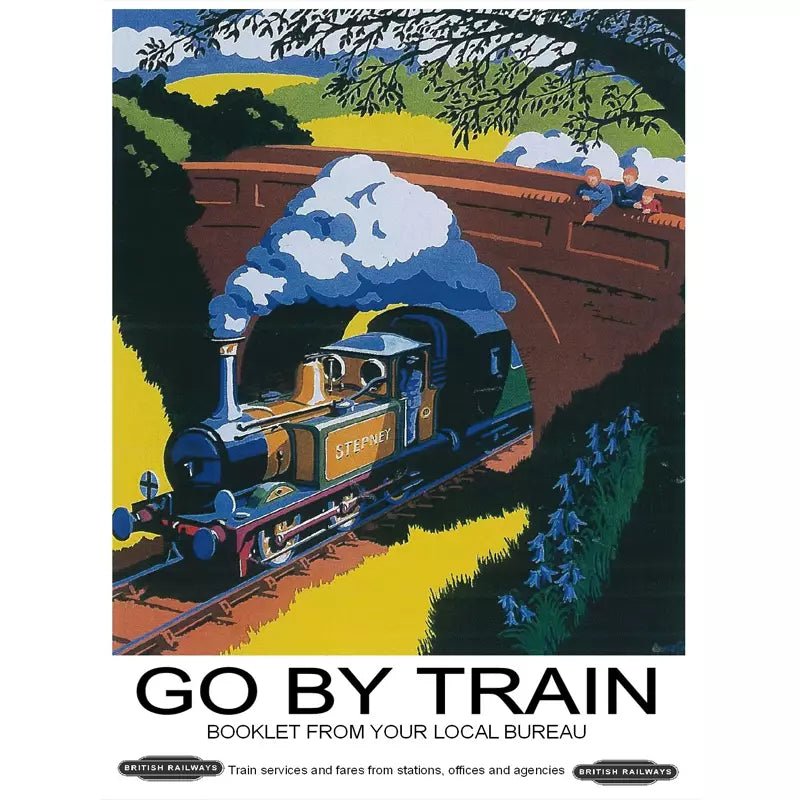
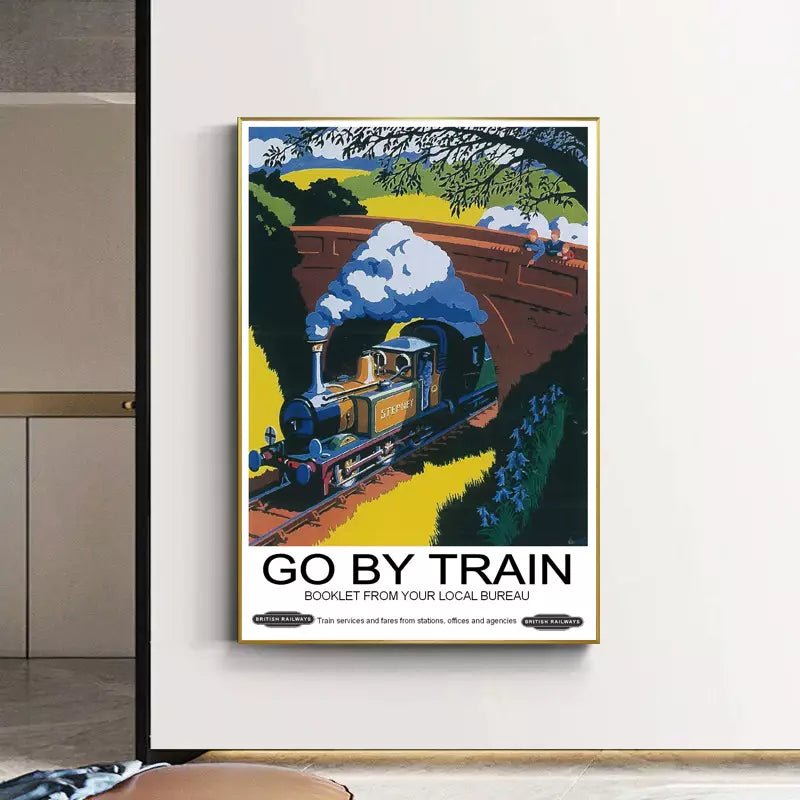
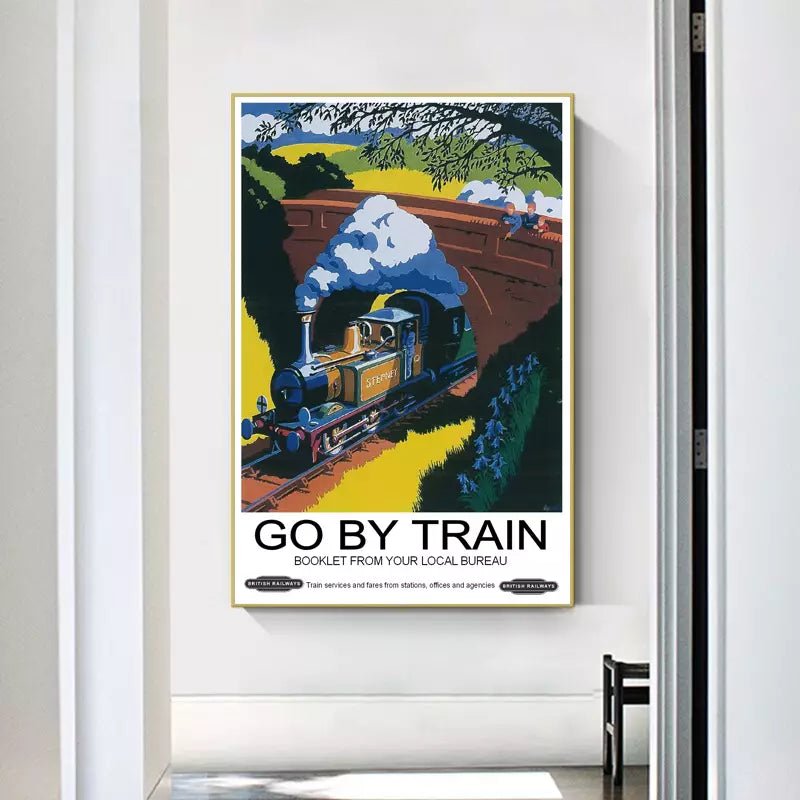
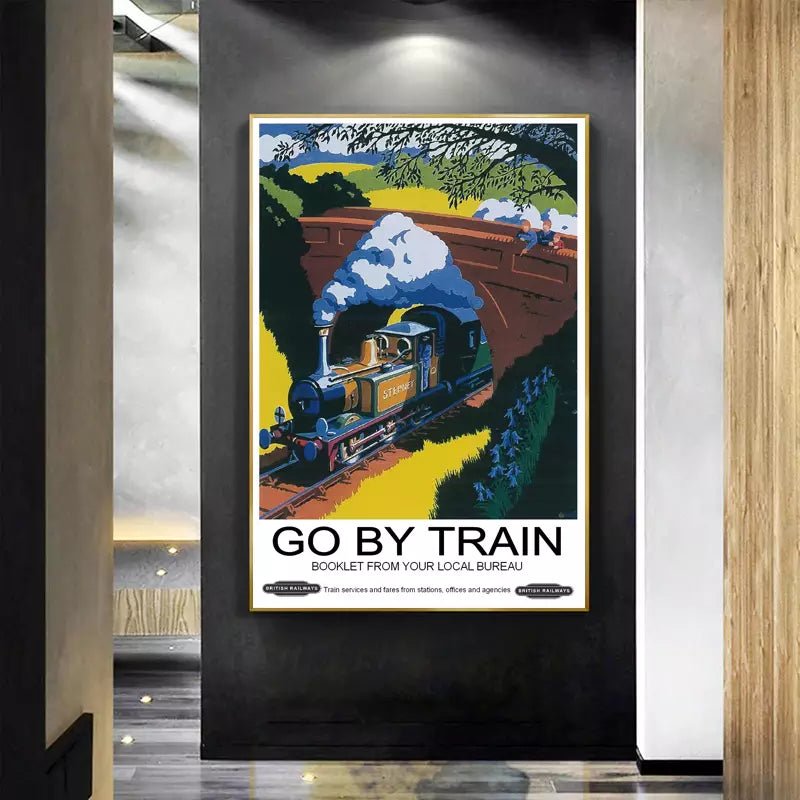
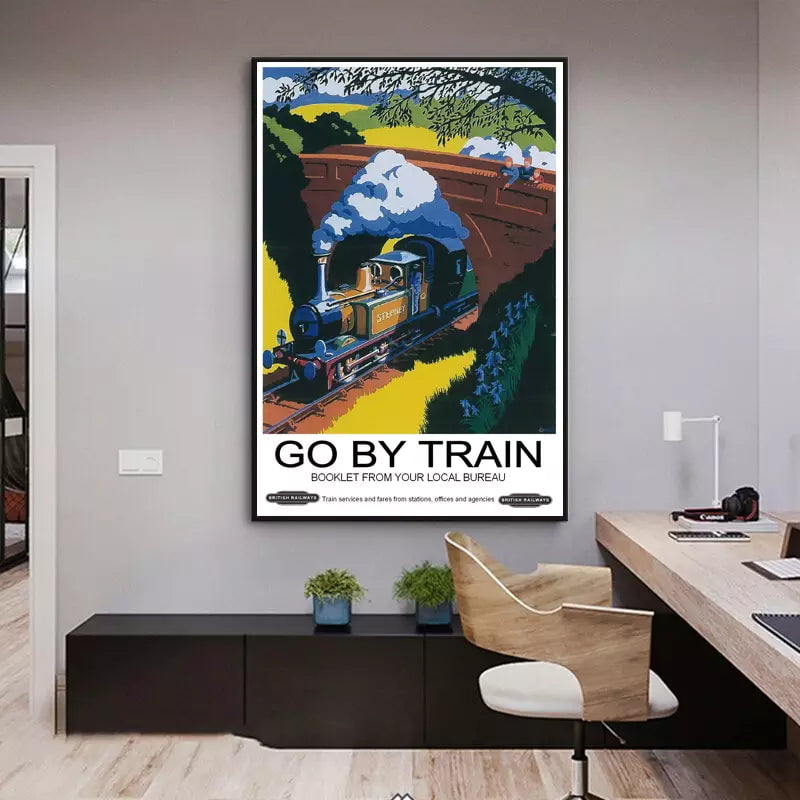
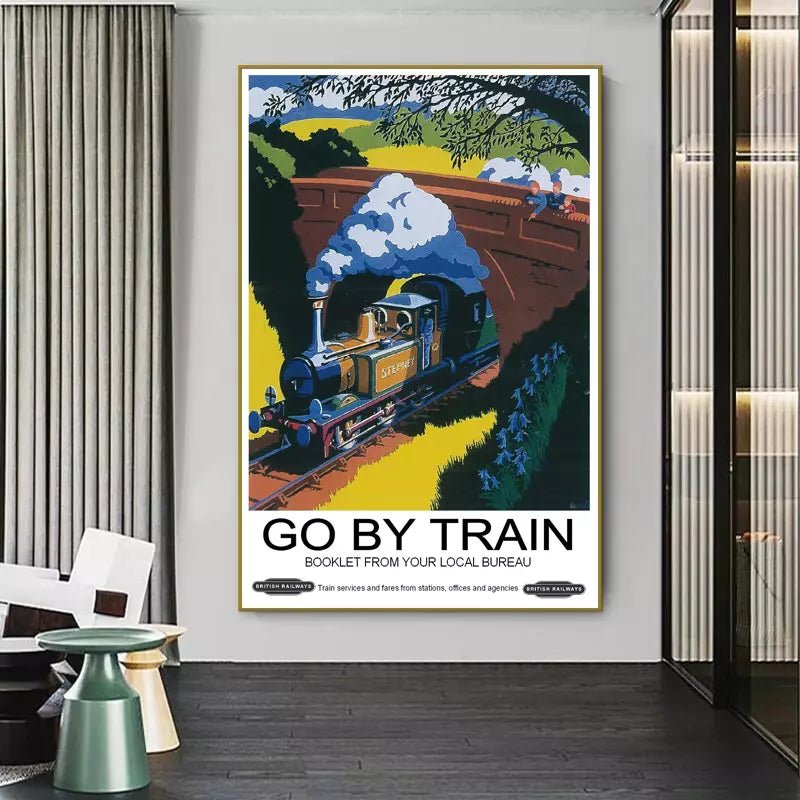

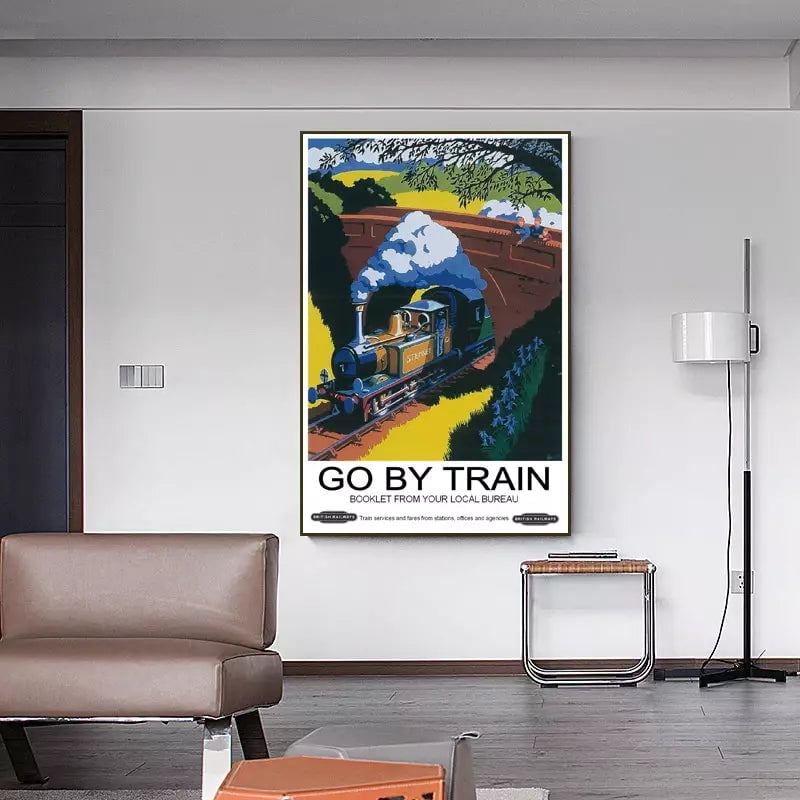
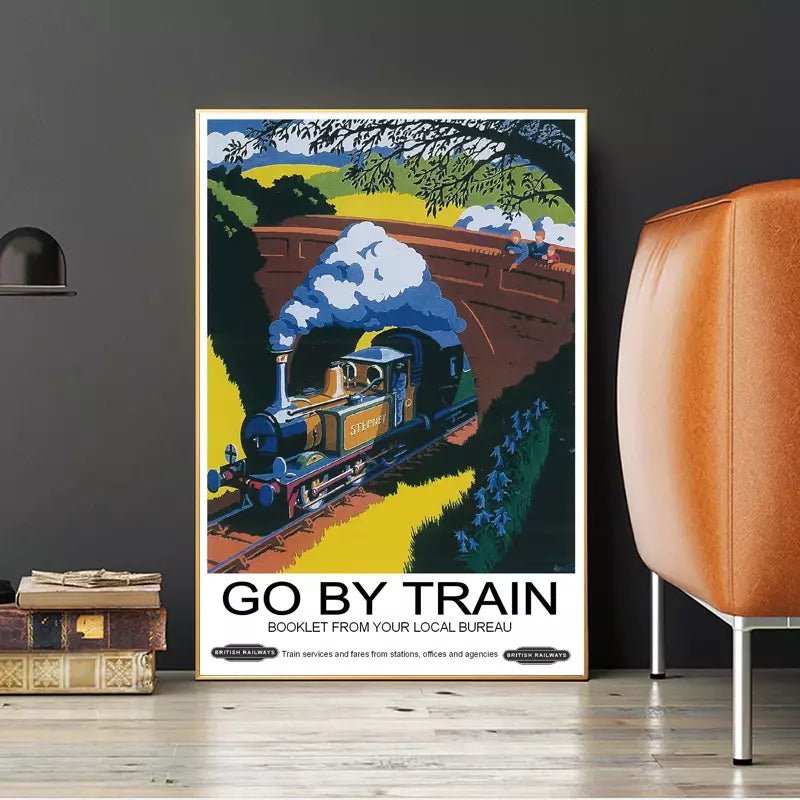
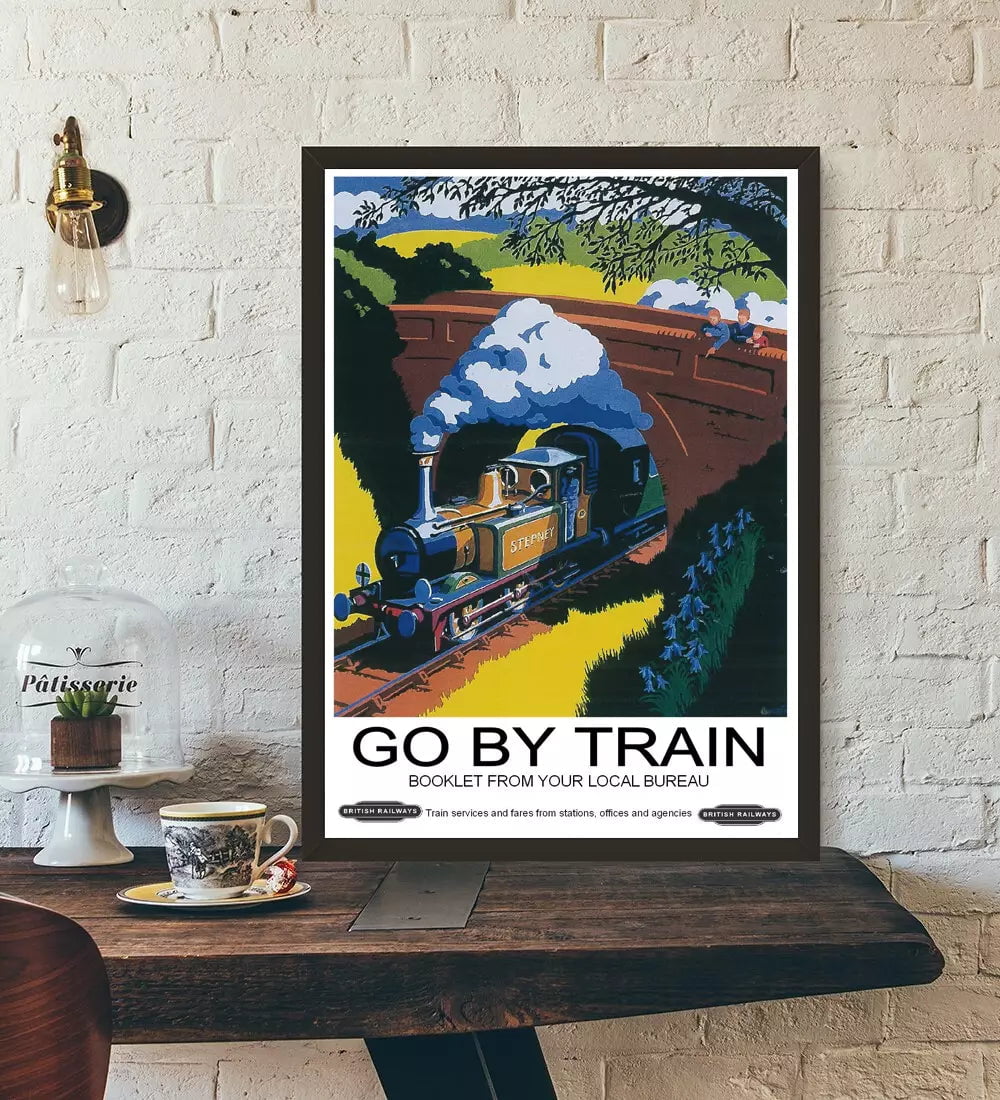
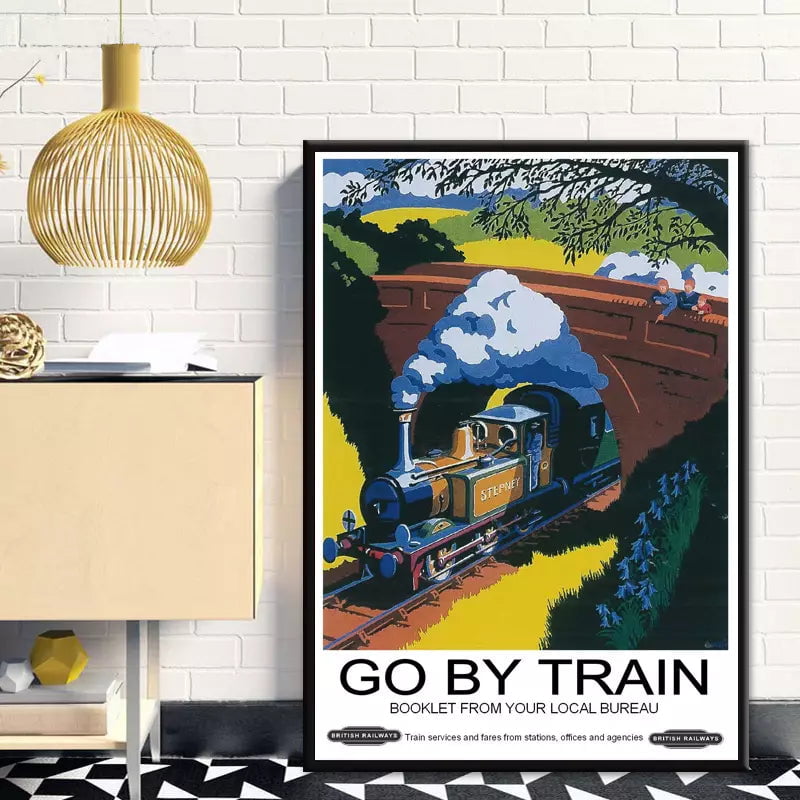
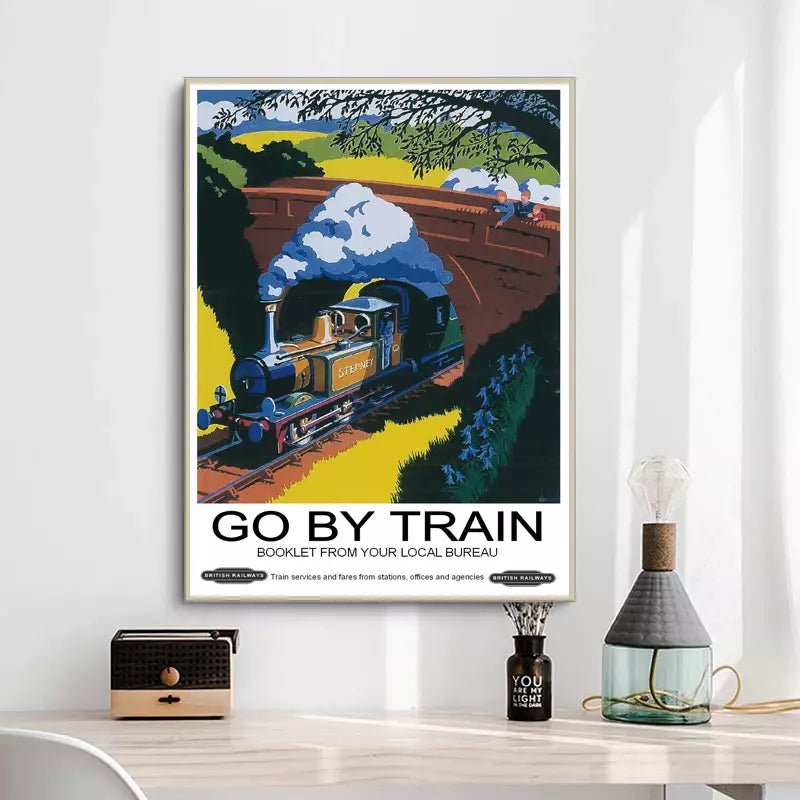
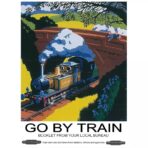
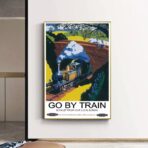

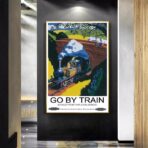

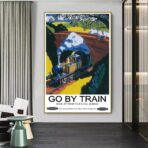



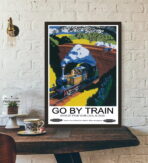
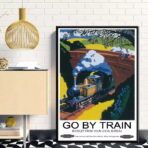







Discover this Vintage Train Poster, a collectible piece that evokes the golden age of rail travel. This advertising poster, produced for British Railways, captures the essence of the era when majestic steam trains crisscrossed the British countryside. The retro design and vibrant colors instantly transport us to a world of nostalgia, where train travel was an adventure in itself. Whether you’re a railway enthusiast, a vintage design lover, or simply a curious traveler, this Vintage Train Poster is a window into the railway past and an invitation to embark on a nostalgic journey through history.
- Paper Feature:
- 🎨 Canvas: The global standard in printing and imitating a “canvas” look.
- By default, the poster contains a 4cm white border for framing (frame not included). If you don’t want it, please choose “without white border”.
- ✅ Size: several choices available. ✅
- High UV resistance.
- Maximum color brilliance , without reflections.
- Recycled paper guaranteed a environmentally friendly.
- Poster packaged carefully and delivered in a protective tube for total protection.
- FREE STANDARD DELIVERY.
⚠️ Frame not included. ⚠️
Description of this Vintage Train Poster
British Railways (BR) was a British railway company that existed from 1948 to 1997. It was formed as part of a nationalization of the British railway industry after World War II, when many private railway companies in the United Kingdom were nationalized to form a single, vast railway entity under the name British Railways.
Here are some key facts about British Railways:
- 1. Nationalization: The nationalization of Britain’s railways in 1948 led to the creation of British Railways, which was placed under state control. This move aimed to streamline and modernize the rail network.
- 2. Reorganization: BR reorganized the rail network into several geographical regions, each with its own management and staff. This reorganization was designed to improve the management and efficiency of the network.
- 3. Modernization: Much of BR’s effort was devoted to modernizing Britain’s rail network. This included introducing more powerful locomotives, replacing aging track, and upgrading stations.
- 4. Visual Identity: British Railways introduced a distinctive visual identity, characterized by the “Double Arrow” logo (an upward-pointing double arrow), which has become iconic.
- 5. Technical Developments: BR introduced new technologies, such as electric trains, to improve the speed and efficiency of rail travel. They also encouraged the use of diesel as a power source.
- 6. Privatization: In 1994, British Railways was broken up and privatized. Britain’s rail network was divided into several separate train companies, each responsible for a specific geographical region or service.
- 7. Legacy: British Railways leaves a lasting legacy on the British railway landscape. Some lines and stations date back to the BR era, and the modern UK rail network owes much to the investments and renovations made by BR.
British Railways was both a milestone in British railway history and a topic of debate, as it embodied both the efficiency and challenges of the nationalized railway sector. Since privatisation, the UK rail network has been run by a series of private rail companies, but the legacy of BR continues to mark the UK’s railway landscape.