


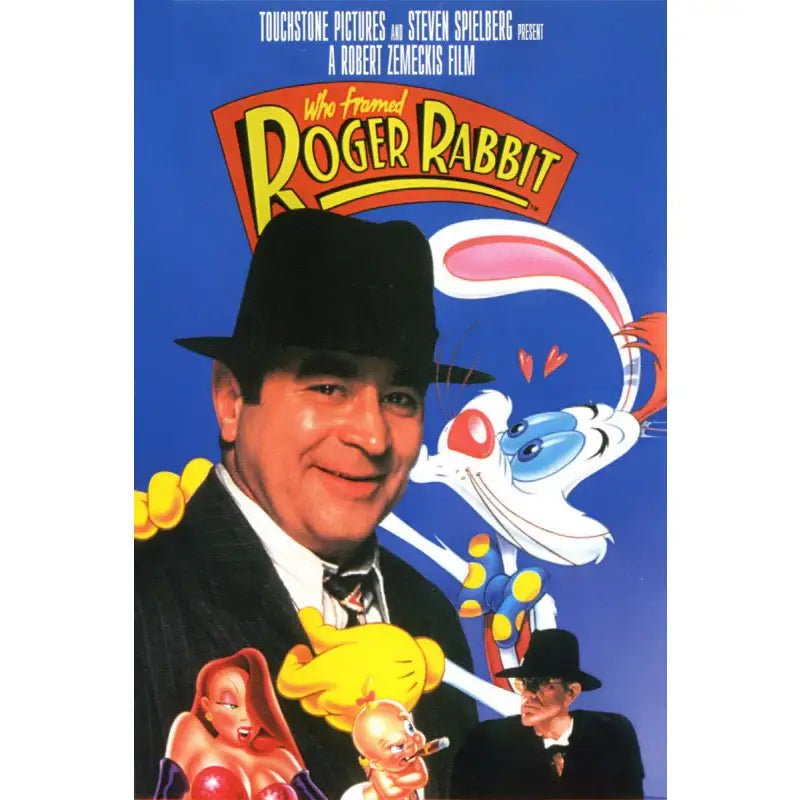
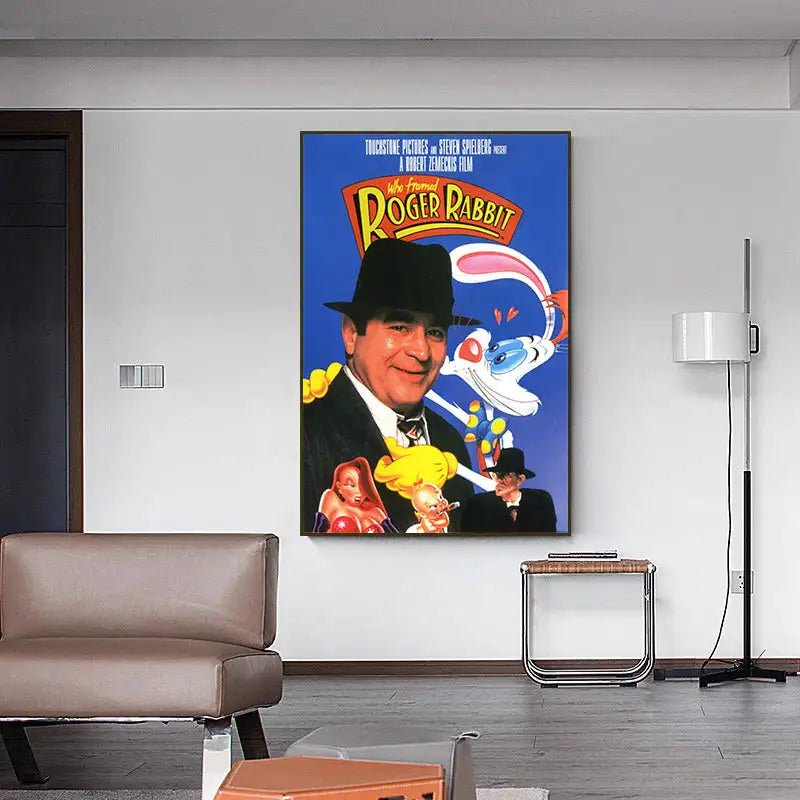
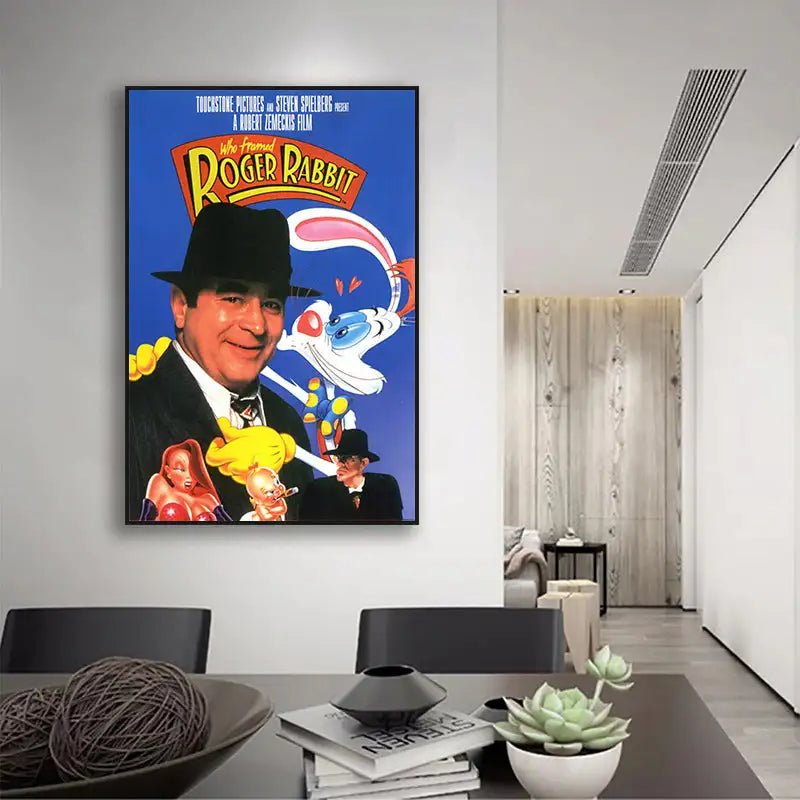
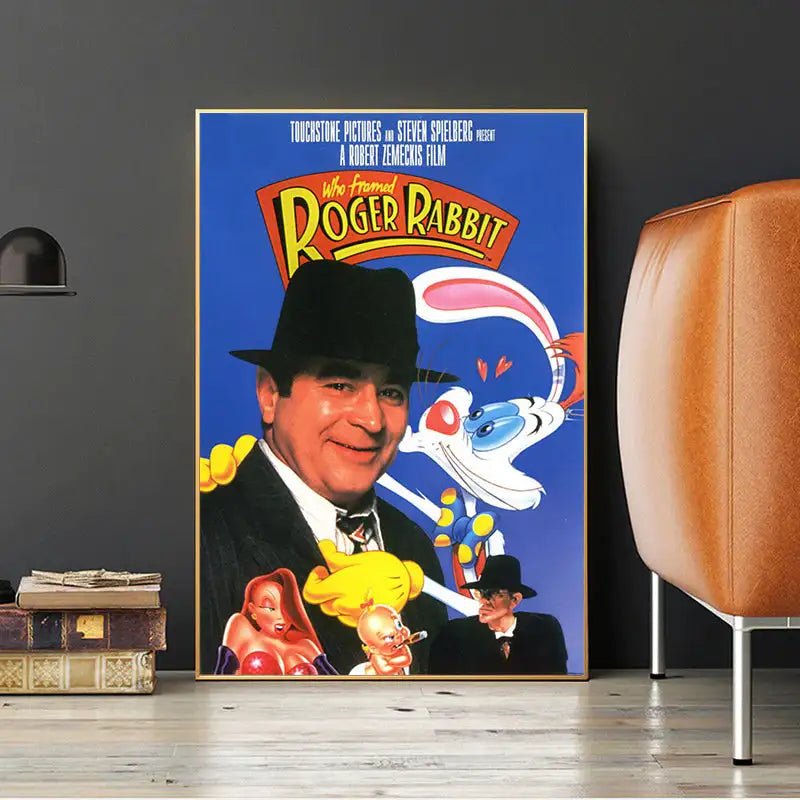


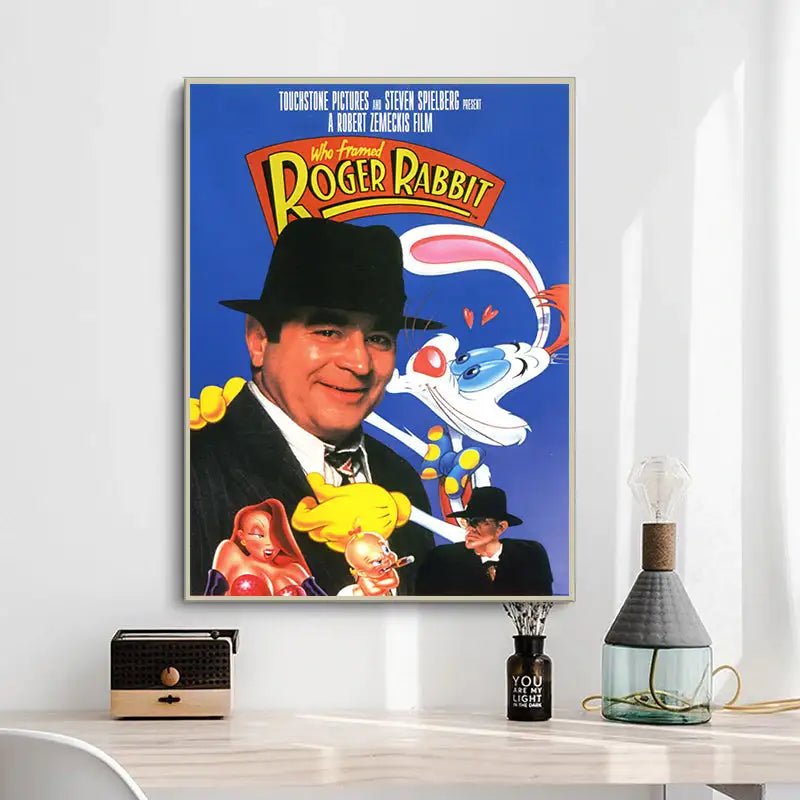
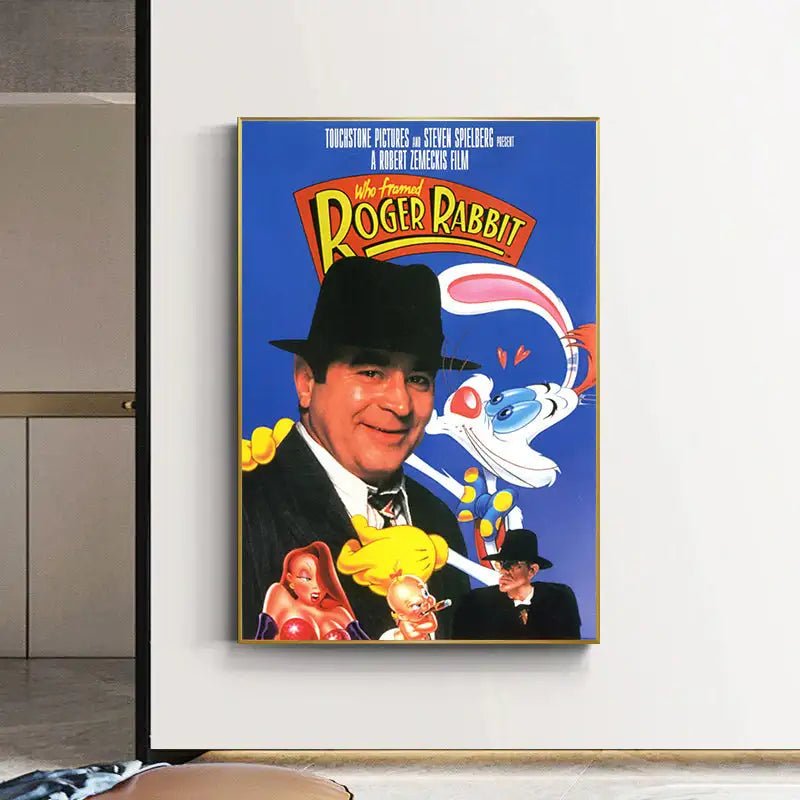
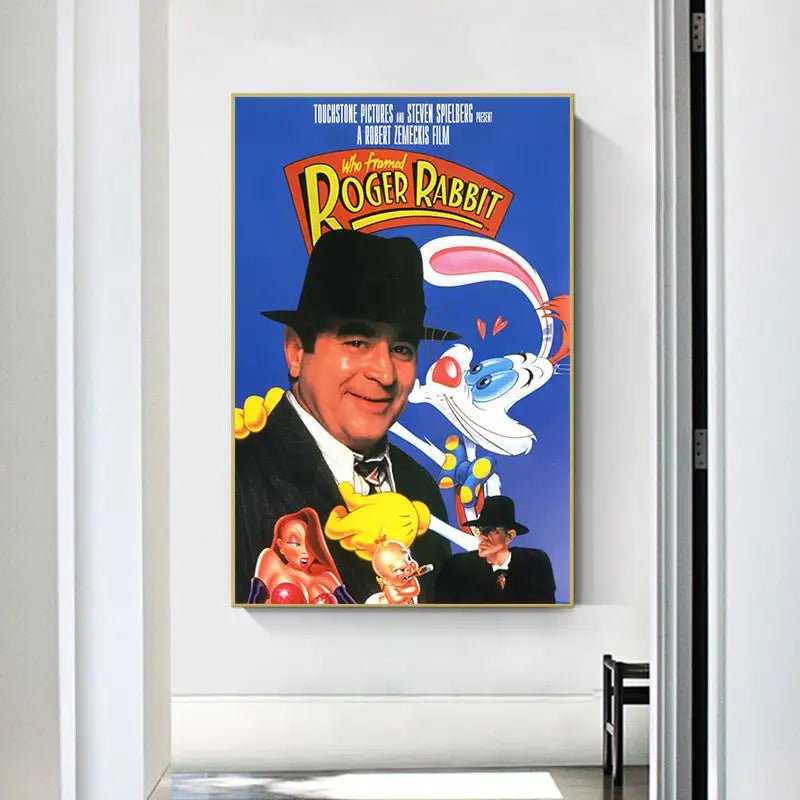
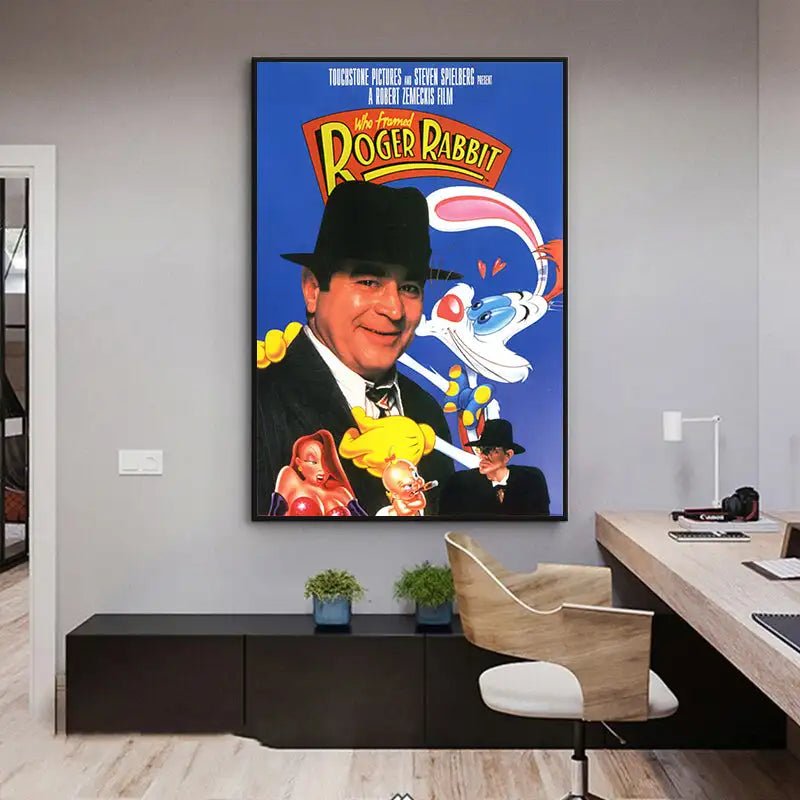
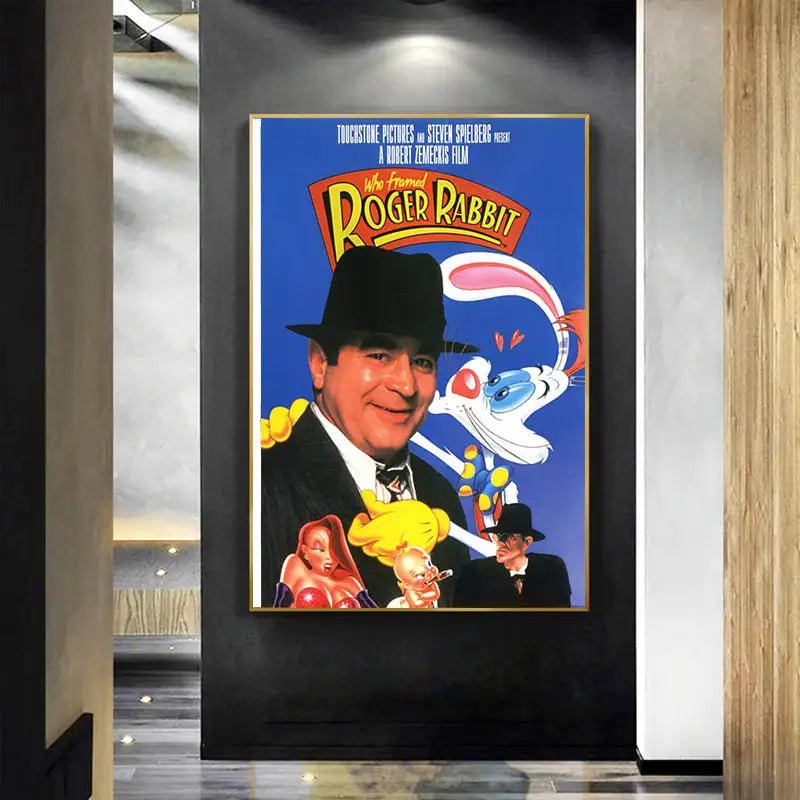
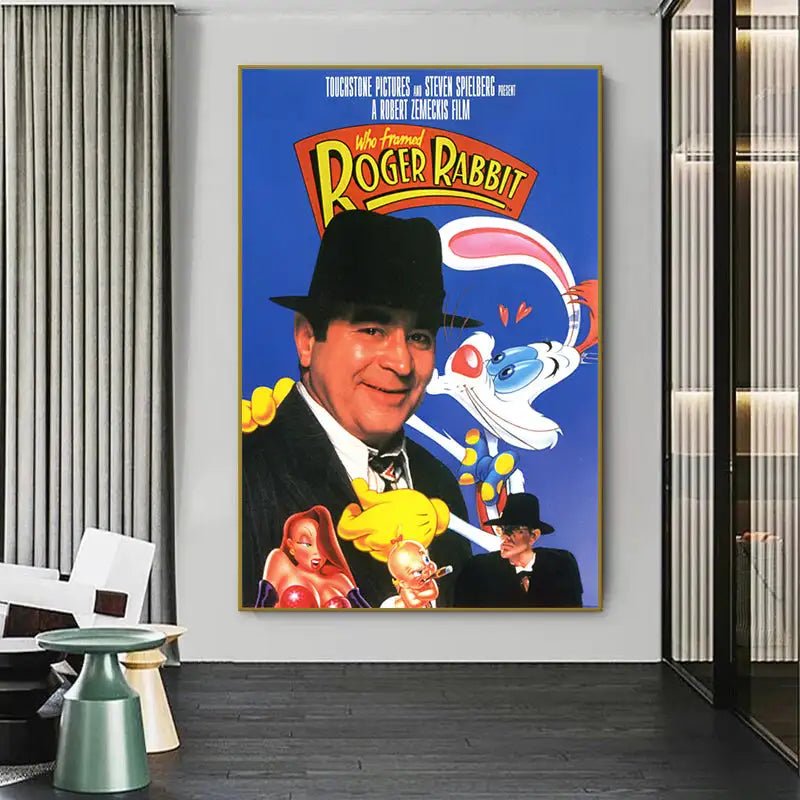


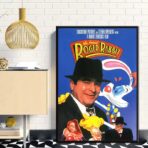


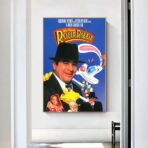
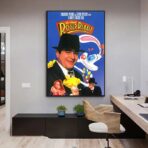








Find the famous crossover of all your favorite cartoon characters with this Who Framed Roger Rabbit Poster!
- Paper Feature:
- 🎨 Canvas: global standard in terms of printing and imitating a “painting canvas” look.
- By default, the poster contains a 4cm white border for framing (frame not included). If you don’t want it, please choose “without white border”.
- ✅ Size: Multiple choices available. ✅
- High UV resistance.
- Color vibrancy maximum, glare-free.
- Paper recycled, guaranteeing environmental friendliness.
- Poster packaged carefully and delivered in a protective tube for Total protection.
- Free standard delivery.
⚠️ Frame not included. ⚠️
Description of this Who Framed Roger Rabbit Poster
Who Framed Roger Rabbit is a 1988 mixed-media film directed by Robert Zemeckis.
In a fictional 1947 Los Angeles, people live with cartoon characters, the toons. The cartoons are not drawn, but recorded in studios with the actors. Roger Rabbit is also an actor, but he is not in his right mind and therefore makes mistakes. The studio boss, R. K. Maroon, therefore assigns Eddie Valiant, a fading private investigator, to follow Roger’s wife, Jessica Rabbit, who is probably cheating on him. Initially, Valiant is not interested, because years ago, his brother and partner Teddy was killed by a piano that crashed on his head while he was chasing a predatory toon; since then, Valiant has become addicted to alcohol and developed a strong aversion to toons. But since he owes his girlfriend Dolores, he ends up taking over the case. Valiant photographs Jessica with industrialist Marvin Acme during a baking game. When the photos are shown to Roger, he goes crazy and runs away in excitement. One day later, Valiant learns that Acme was allegedly killed by Roger Rabbit: Roger allegedly threw a safe on Acme’s head and all the evidence points to him. Since the manner of the murder reminded Valiant of his brother’s murder and it was Jessica Rabbit herself who claimed her husband’s innocence, the case ended up arousing his interest. In addition, he develops a dislike for the Toonstadt lawman, Judge Doom, and his henchmen, the Weasels. Their method of rendering Justice consists of executing the toons with a soup, a mixture of acetone, turpentine, and benzene invented by Doom—the only product capable of killing a toon. During his investigation, Valiant learns that Acme wrote a will leaving Toonville to the Toons; however, the will could not be found. If the document is not found soon, a private company called Cloverleaf, which has already bought the city’s tramway, will also take over Toonstadt. To top it all off, Roger is hiding at Valiant’s house, complicating Valiant’s life and his investigation. However, he manages to convince Eddie that he did not kill Acme; he expressed his jealousy by writing a love letter to Jessica, but not by killing her. Hunted by Doom and his weasels, Valiant stumbles upon a clue that the studio’s boss, Maroon is involved in this matter. Maroon tells him that Cloverleaf intends to destroy Toonville. But before Maroon can say more, he is shot in the back. It turns out that Judge Doom is behind the whole thing. As the sole owner of Cloverleaf, Doom wants to buy Toonstadt, wipe it out with the soup, and build a highway in its place—though (from his perspective) it’s more for aesthetic reasons than for profit. When Valiant gets in his way, it’s revealed that Doom is a Toon himself—and the murderer of Acme, Maroon, and Teddy Valiant. After Valiant manages to make four weasels die laughing and kicks a weasel in the soup, a fight ensues with Doom, which ends with Doom accidentally destroying himself with his own invention.
Finally, the will is found. Marvin Acme, the joker he was when he was alive, had written it with ink that became invisible and reappeared after a while—and Roger had then used the seemingly empty sheet to write his love letter. Eddie, at peace with himself and the Toons, settles down in Toonville with Dolores, Roger, Jessica, and the Toons gathered for a joyous celebration.