


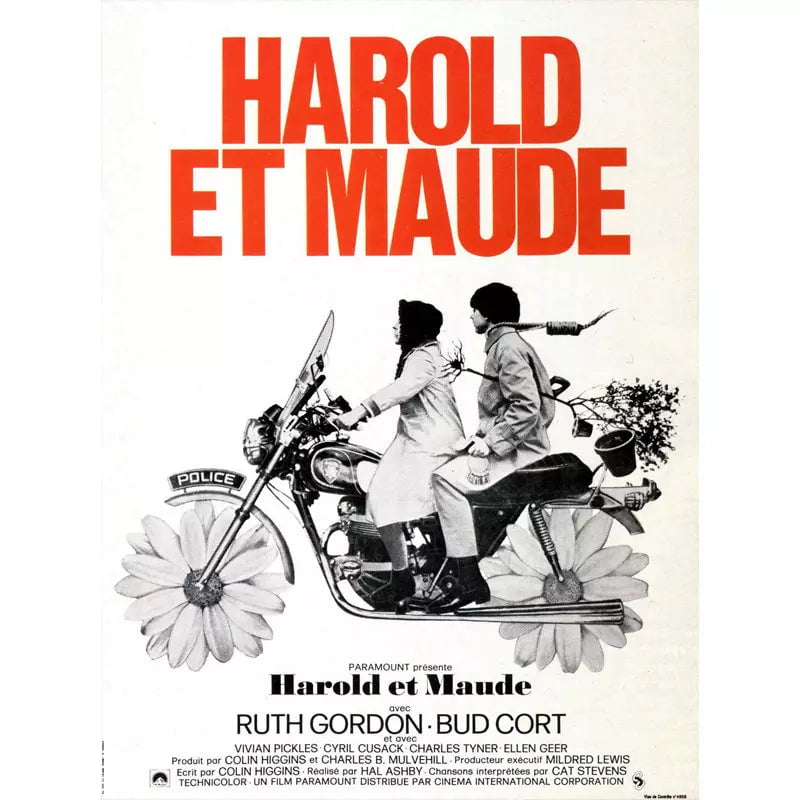
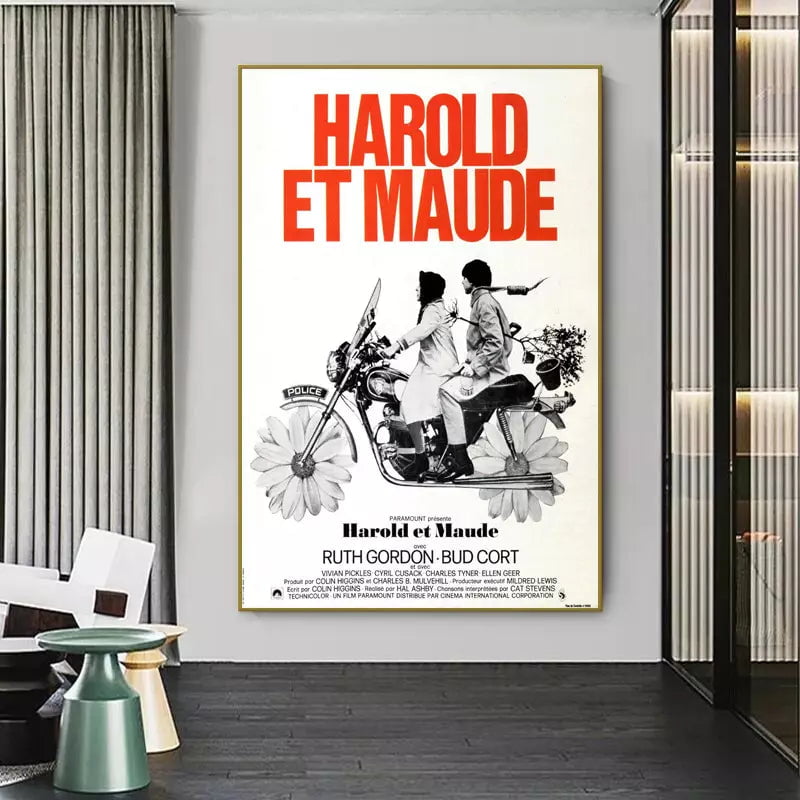
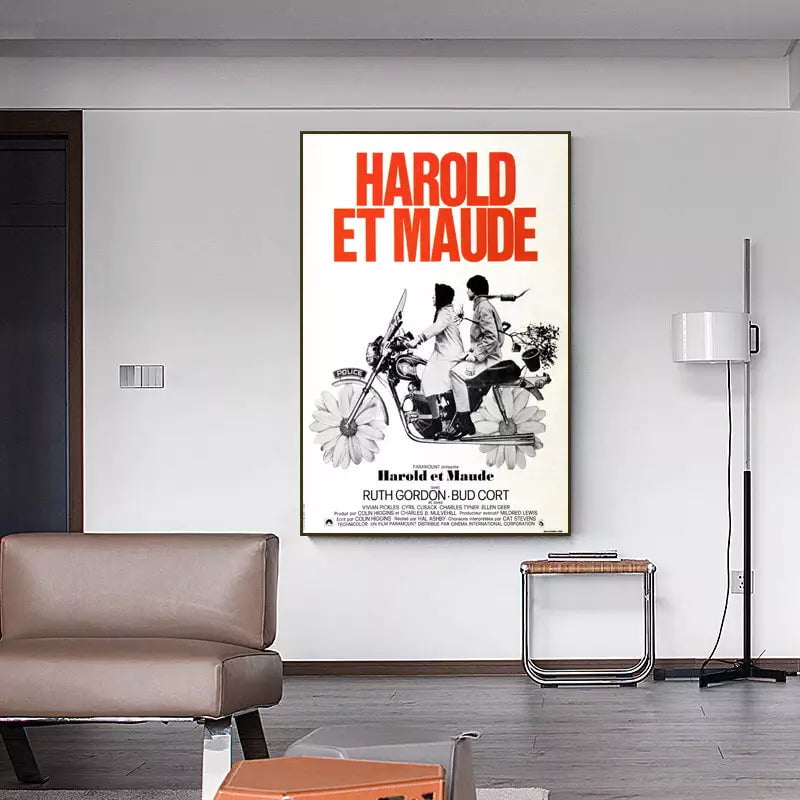
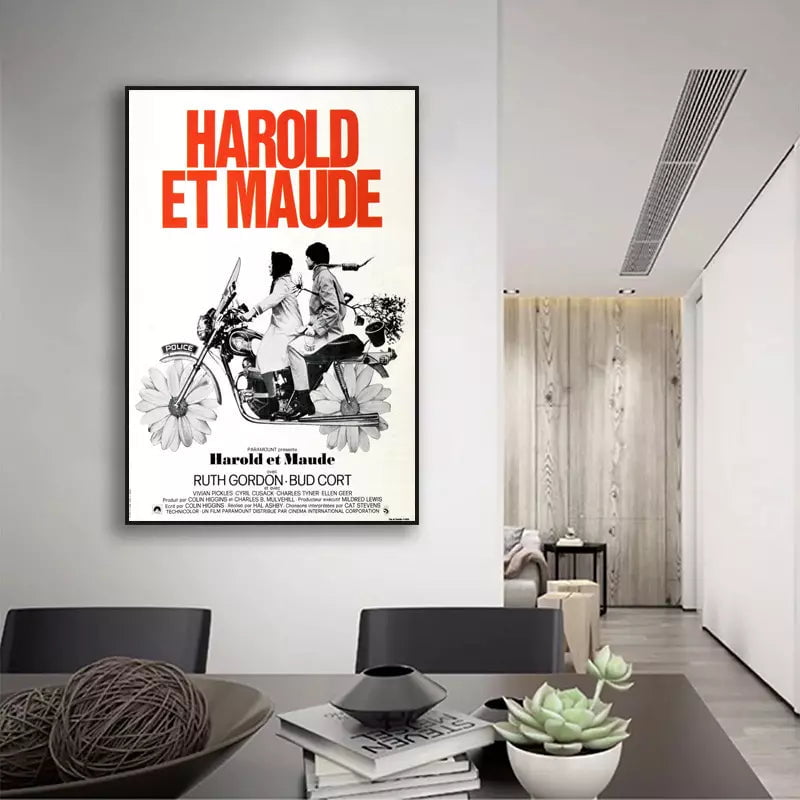
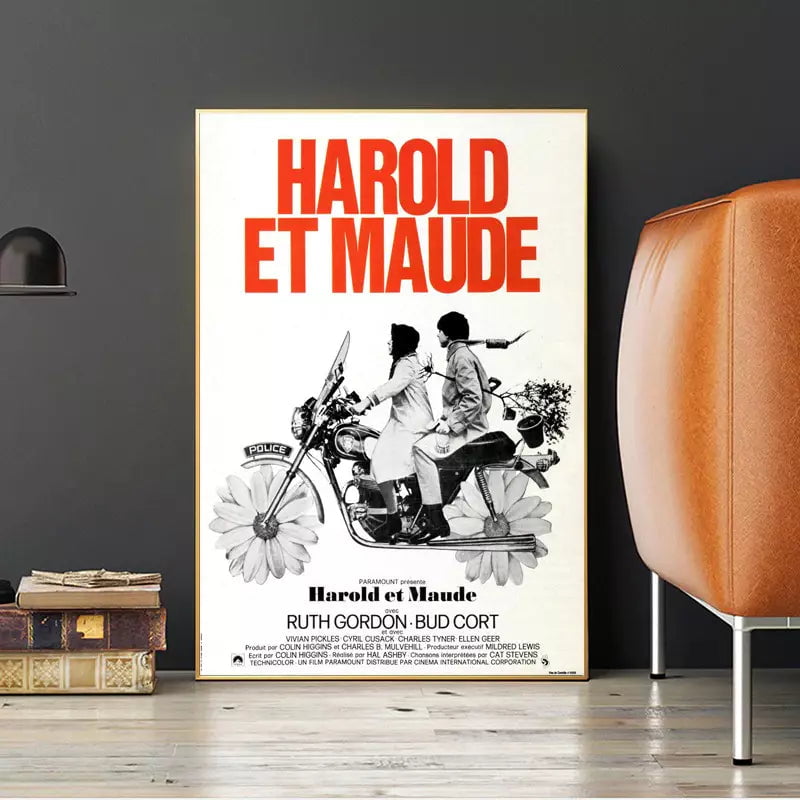
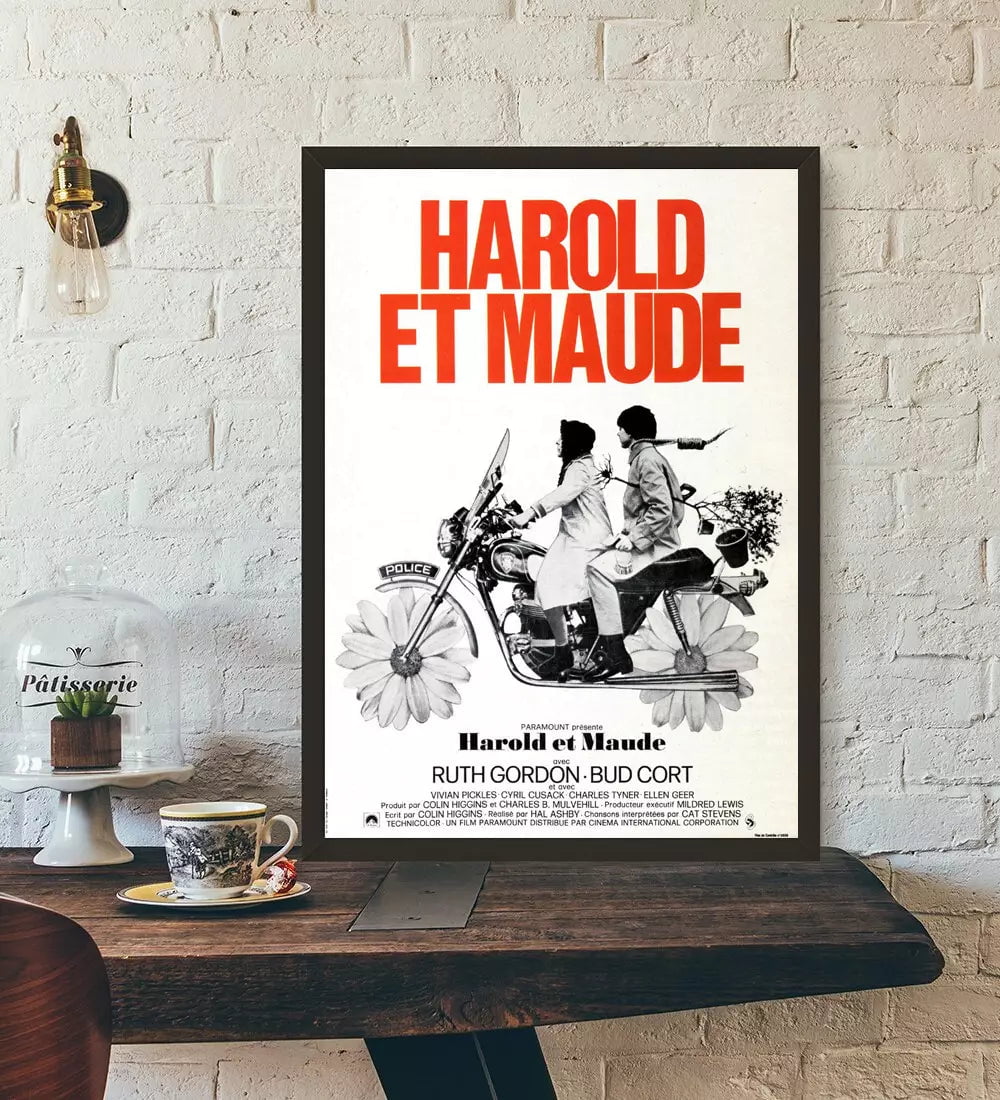
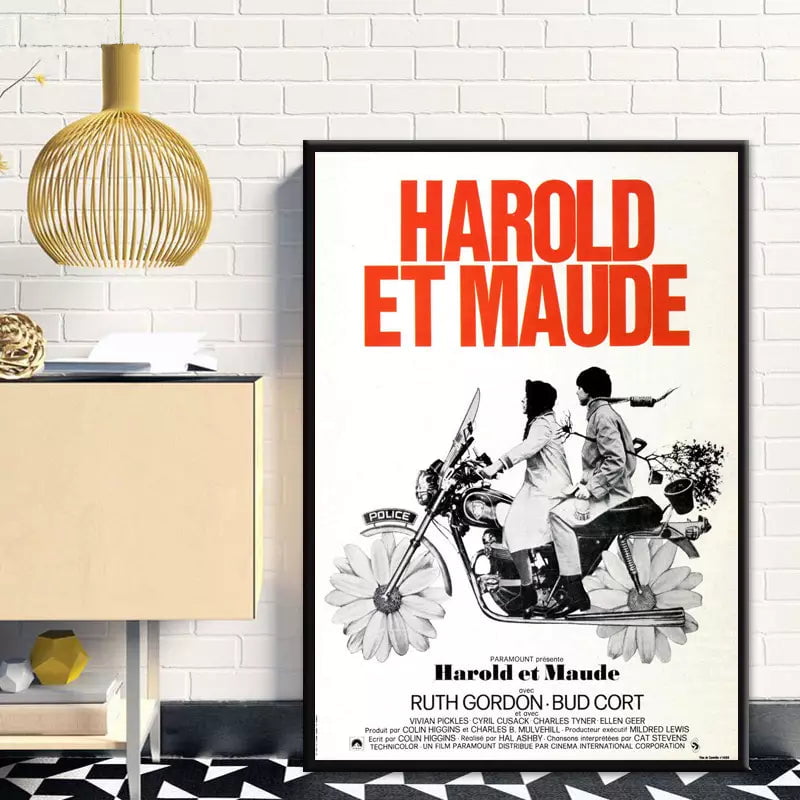
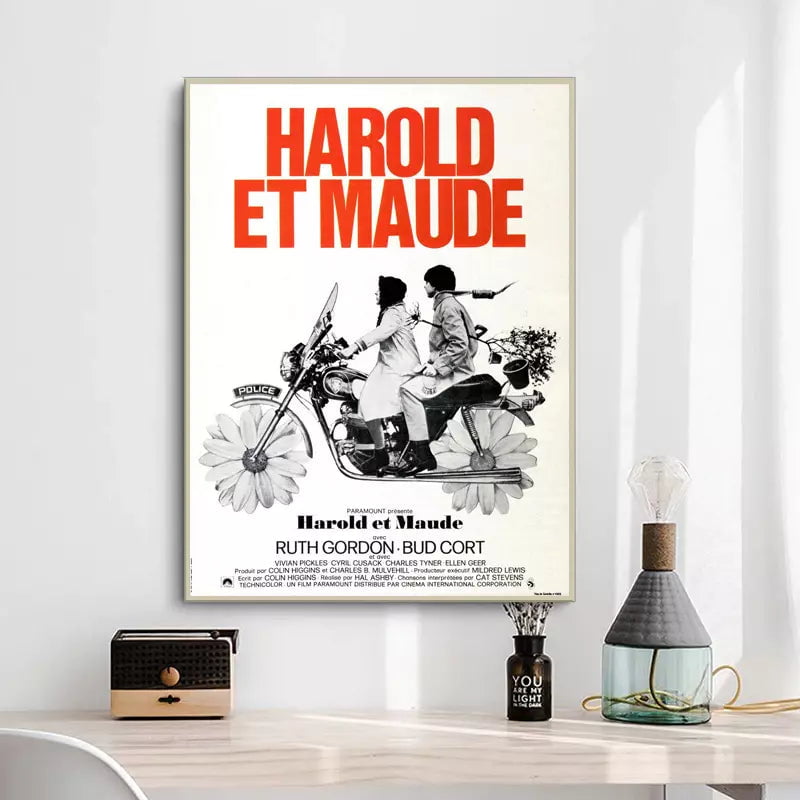
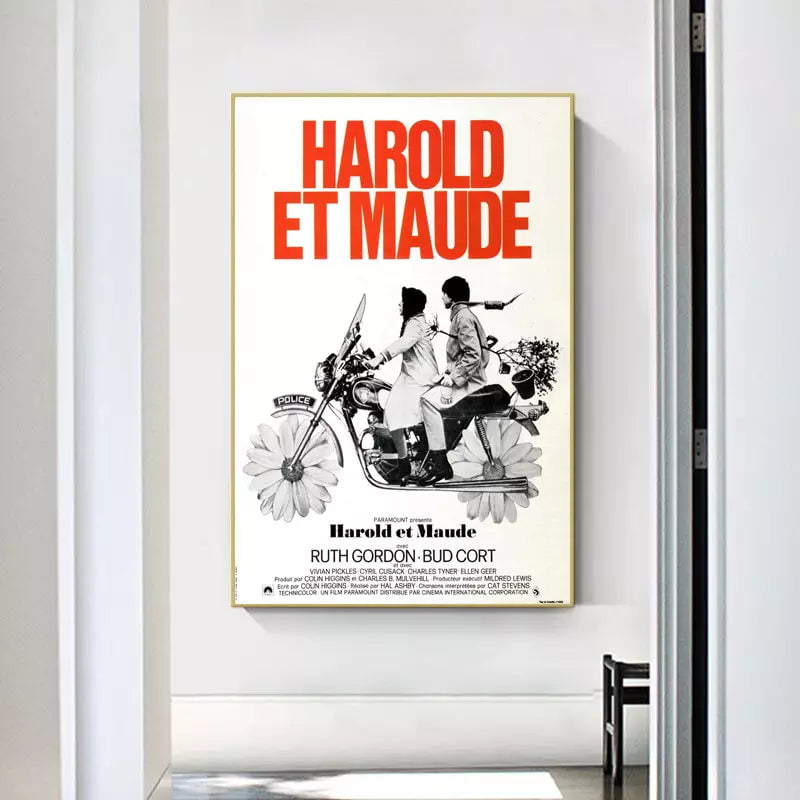
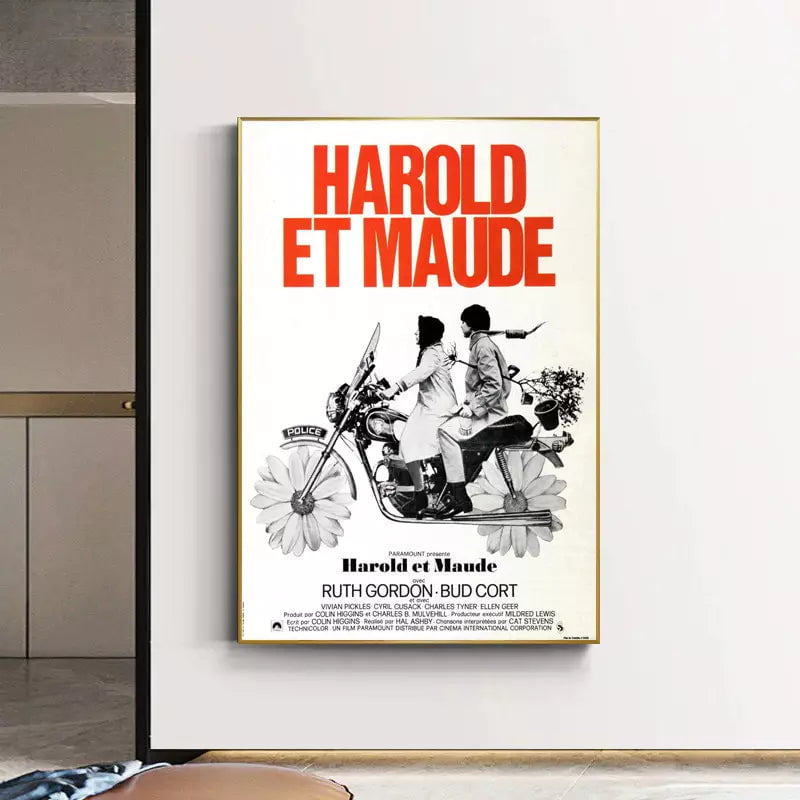
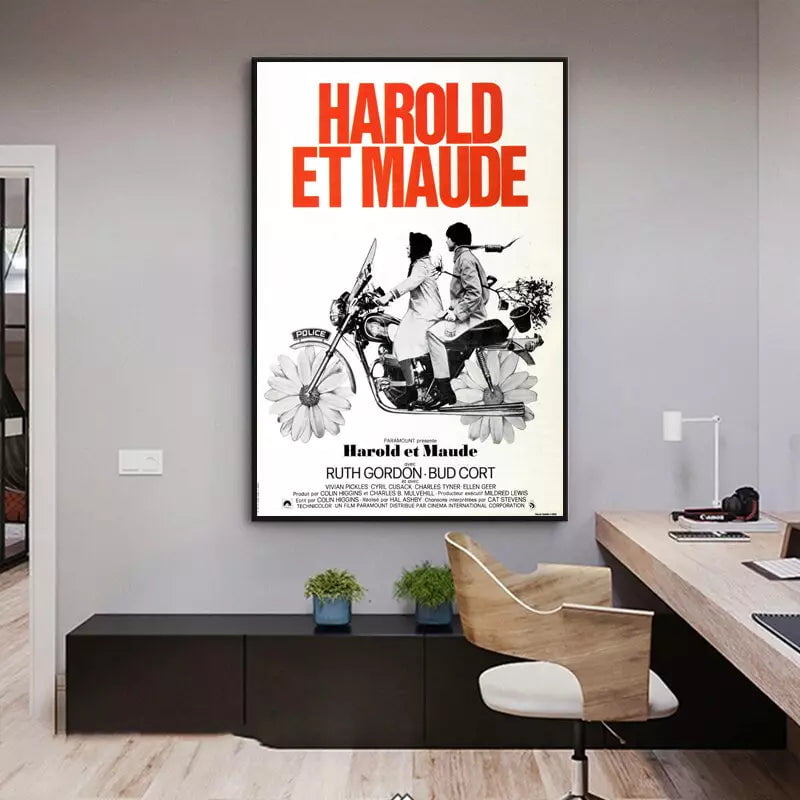
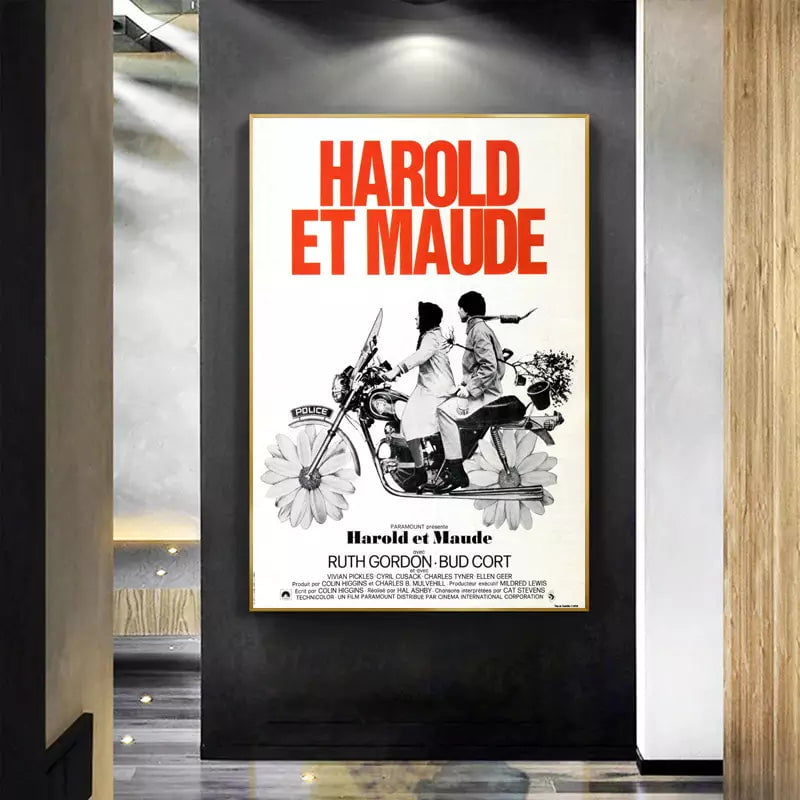
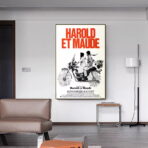
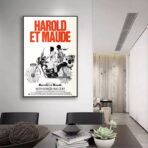
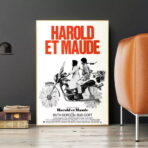
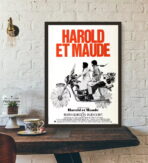
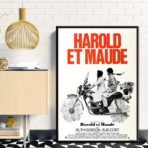
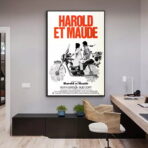
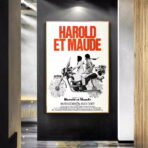







Hal Ashby’s Harold and Maude Poster is an opportunity to (re)discover this 1971 cinematic masterpiece. This cult film tells the touching and unique story of a lonely and morbid young man, Harold, who falls in love with a free and eccentric old lady, Maude. Through their encounter, the film addresses universal themes such as love, old age, death, and the search for meaning. The poster, both poetic and melancholic, transports us into the unique world of this film that leaves no one indifferent. Discover or rediscover this unusual love story that will not fail to move you.
- Paper characteristics:
- 🎨 Canvas: The global standard in printing and imitating a “canvas” look.
- By default, the poster contains a 4cm white border for framing (frame not included). If you don’t want it, please choose “without white border”.
- ✅ Size: several choices available. ✅
- High UV resistance.
- Maximum color brilliance , without reflections.
- Recycled paper guaranteed a environmentally friendly.
- Poster packaged carefully and delivered in a protective tube for total protection.
- FREE STANDARD DELIVERY.
⚠️ Frame not included. ⚠️
Description of this Harold and Maude Poster
Harold and Maude is a 1971 American romantic drama film directed by Hal Ashby and released by Paramount Pictures. It incorporates elements of dark humor and existentialist drama. The plot follows the exploits of Harold Chasen (Bud Cort), a young man intrigued by death, who rejects the life his detached mother (Vivian Pickles) prescribes for him. Harold develops a friendship and eventual romance with 79-year-old Maude (Ruth Gordon), who teaches Harold the importance of living life to the fullest.
Colin Higgins’ screenplay began as his master’s thesis for film school. Filming locations in the San Francisco Bay Area included both Holy Cross Cemetery and Golden Gate National Cemetery, the ruins of Sutro Baths, and the Rose Court mansion in Hillsborough, California.
While not critically and commercially successful upon its initial release, the film eventually developed a cult following and turned a profit in 1983.[1] [2] The film was selected for preservation in the National Film Registry in 1997 and was ranked number 45 on the American Film Institute’s list of the 100 Funniest Movies of All Time in 2000. The Criterion Collection released a special edition Blu-ray and DVD in 2012.
Harold Chasen is a young man obsessed with death. He stages elaborate fake suicides, attends funerals (usually for people he doesn’t know), and drives a hearse, all to the chagrin of his wealthy, socialite-obsessed mother.[4] His mother sends Harold to a psychoanalyst, sets him up with blind dates, and buys him a luxury car—all plans he subverts in his own way.
Harold meets 79-year-old Maude one day at a random stranger’s funeral service and discovers they share a hobby. Harold is fascinated by Maude’s original outlook on life, which is bright and delightfully carefree in contrast to his moribund demeanor. Maude lives in a decommissioned train car and thinks nothing of breaking the law; she is adept at stealing cars and will quickly uproot a diseased tree on public property to replant it in the forest. She and Harold form a bond, and Maude shows Harold the pleasures of art and music (including how to play the banjo), and teaches him to make “the most of his time on earth.”[4] Meanwhile, Harold’s mother is determined, against Harold’s wishes, to find him a wife. One by one, Harold frightens and horrifies each of his designated computer dates by appearing to commit horrific acts: self-immolation, self-mutilation, and seppuku. His mother tries to draft him into the military by sending Harold to stay with his uncle, who lost an arm serving under General MacArthur in World War II, but Harold deters the draft by staging a scene where Maude poses as a peace protester and Harold apparently kills her out of militaristic fanaticism.
As Harold and Maude grow closer, their friendship blossoms into romance. Holding her hand, Harold discovers a number tattooed on her forearm, indicating that Maude survived the Nazi death camps. Harold announces that he will marry Maude, prompting disgusted outbursts from her family, her analyst, and her priest. Unbeknownst to Harold, Maude plans to commit suicide on her eightieth birthday. Maude’s birthday arrives, and Harold throws a surprise party for her. As the couple dances, Maude tells Harold that she “couldn’t imagine a more beautiful goodbye.” When Maude reveals that she has overdosed on sleeping pills and will be dead by midnight, Harold rushes Maude to the hospital. After learning of Maude’s death, Harold is shown driving down a country road and sending the car off a seaside cliff. After the crash, the final shot reveals Harold standing calmly atop the cliff, holding his banjo and wearing colorful clothing for the first time in the film. After looking at the wreck, he dances to “If you want to sing, sing.”