


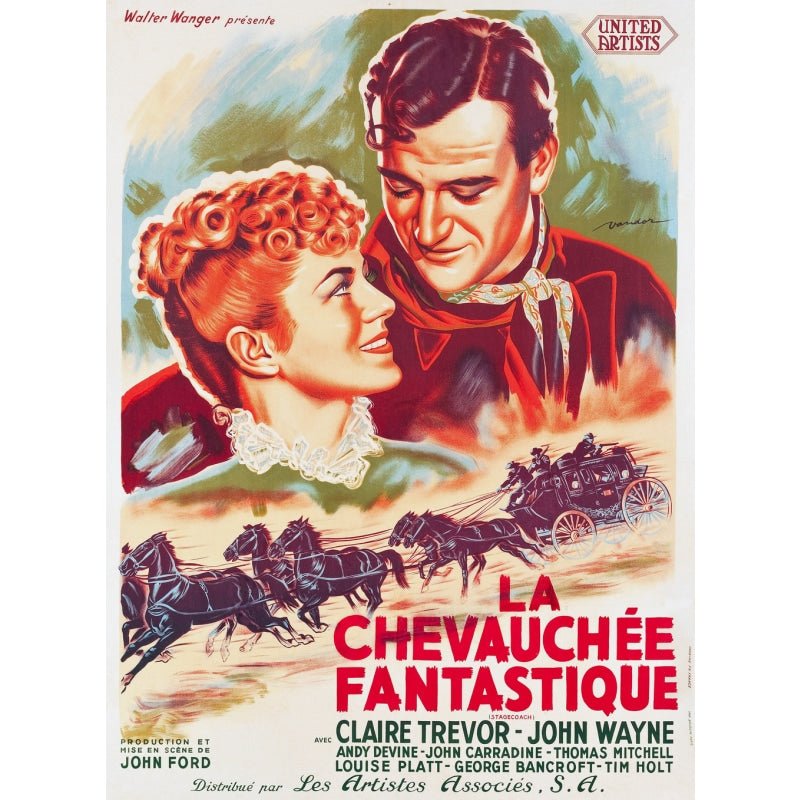
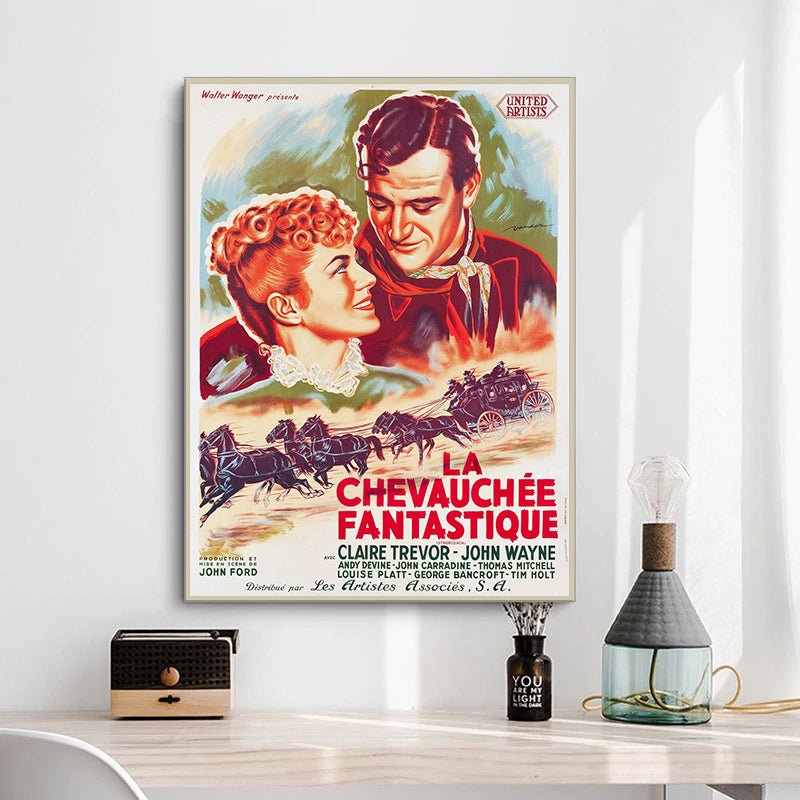
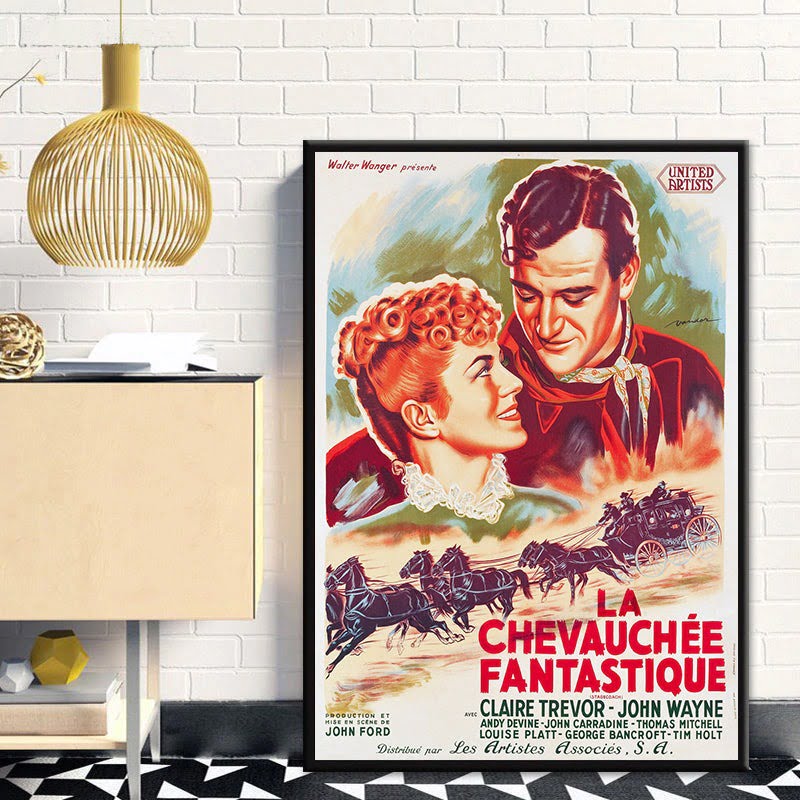
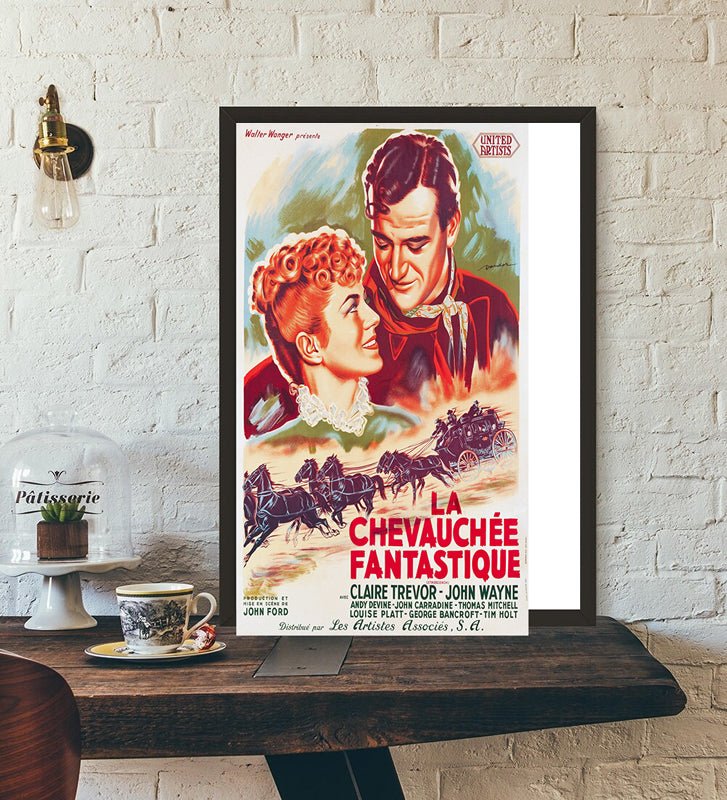
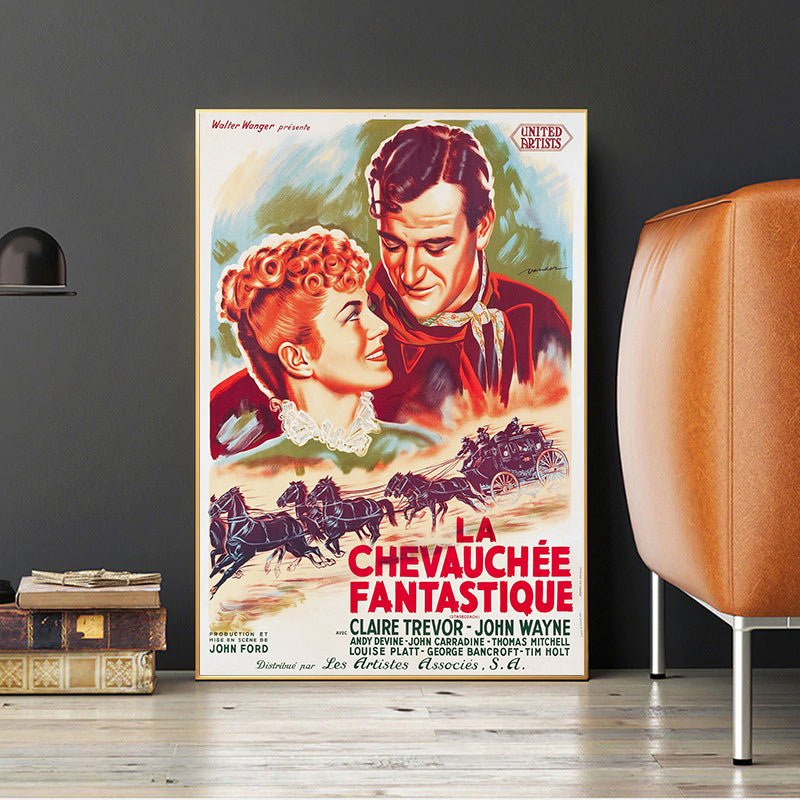
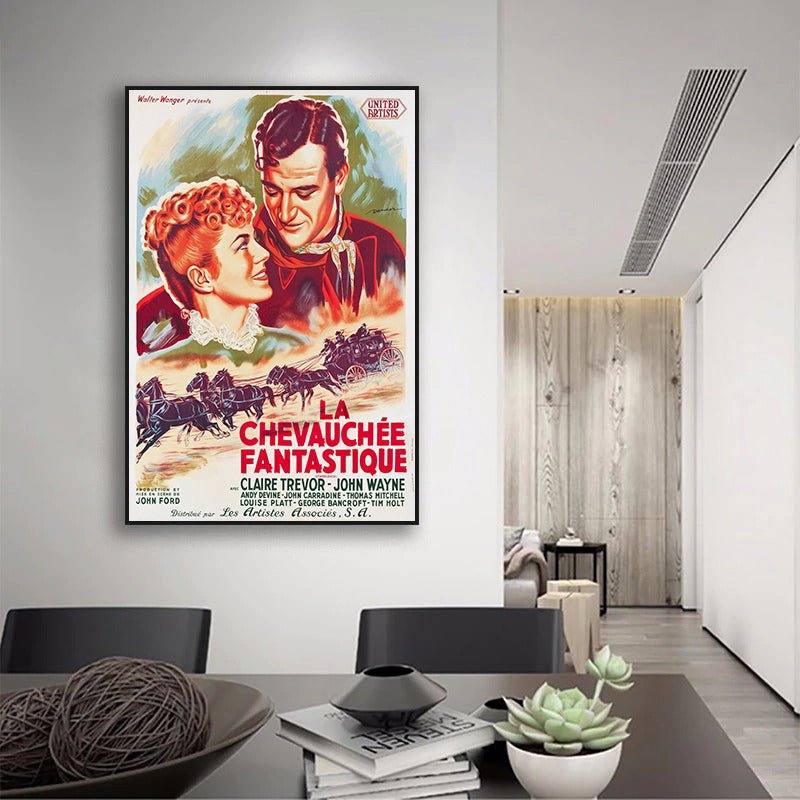
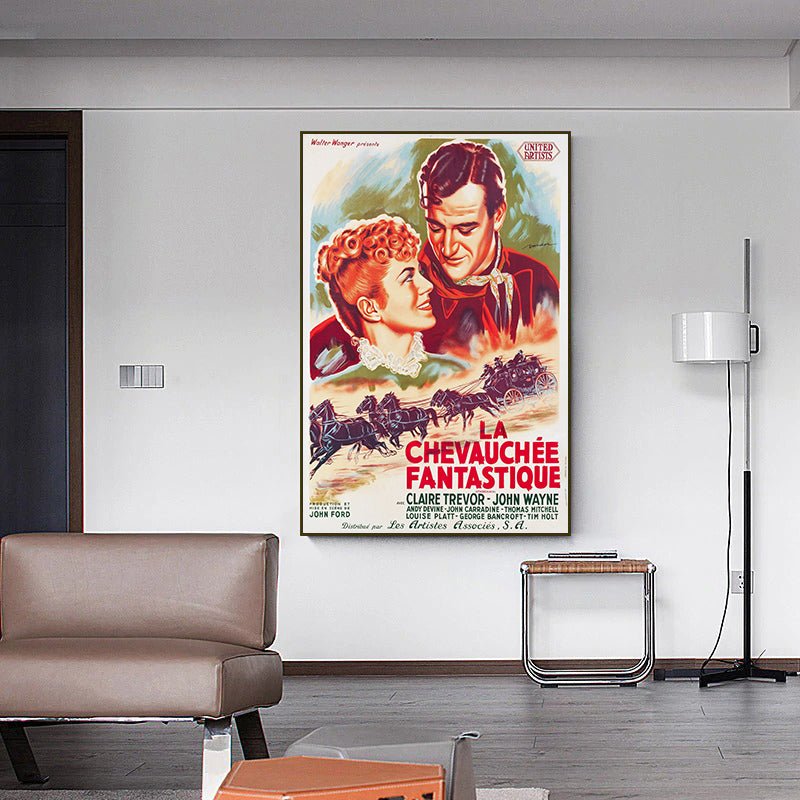
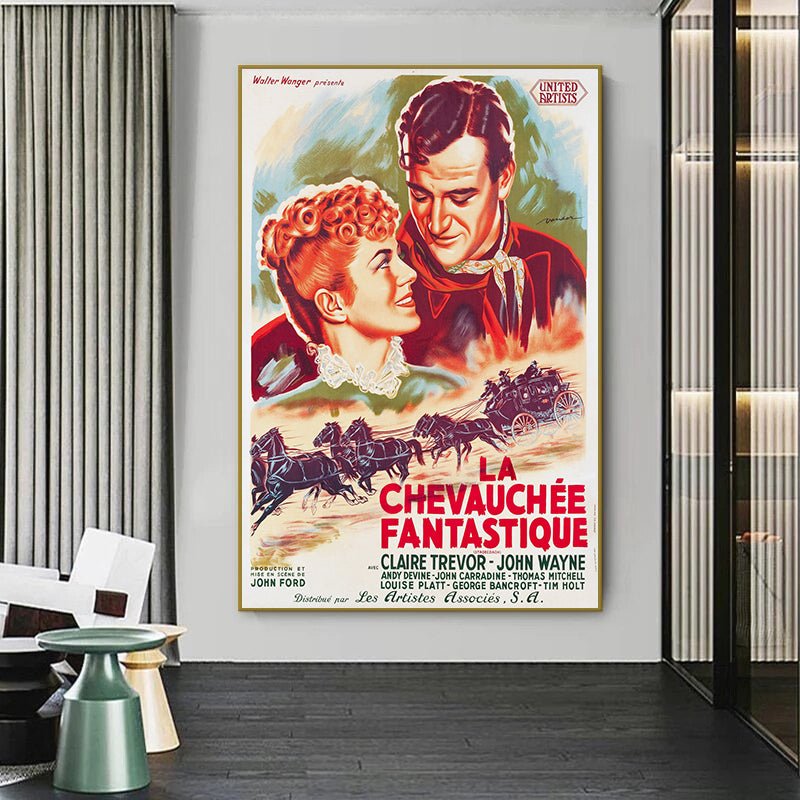
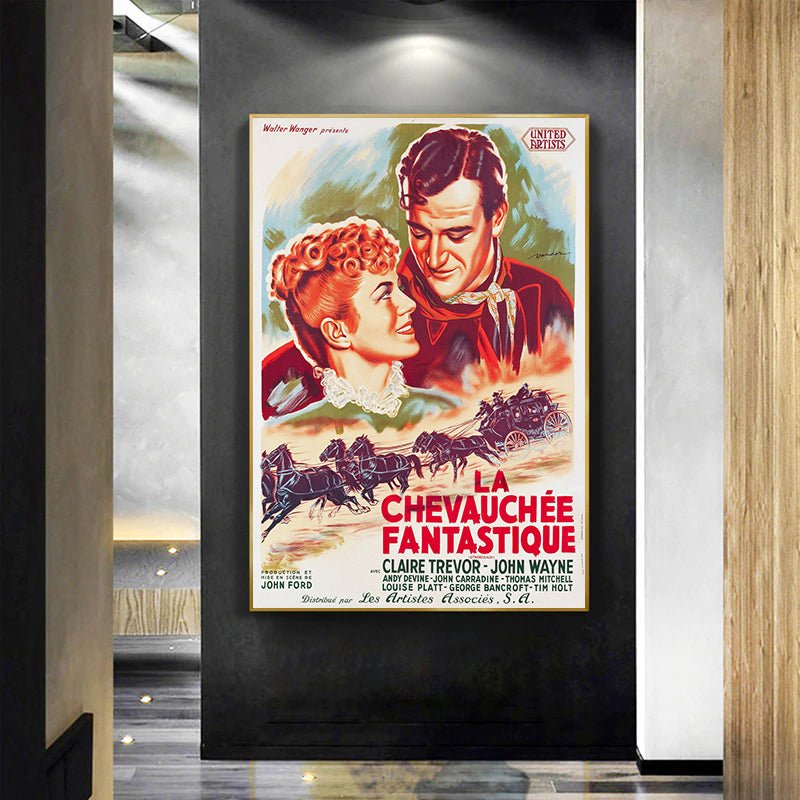
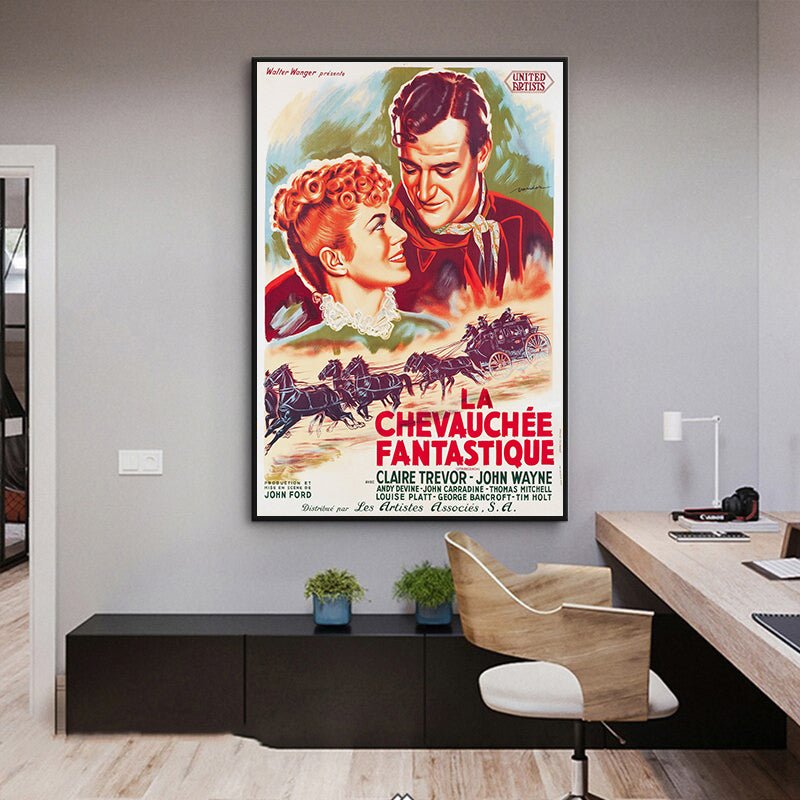
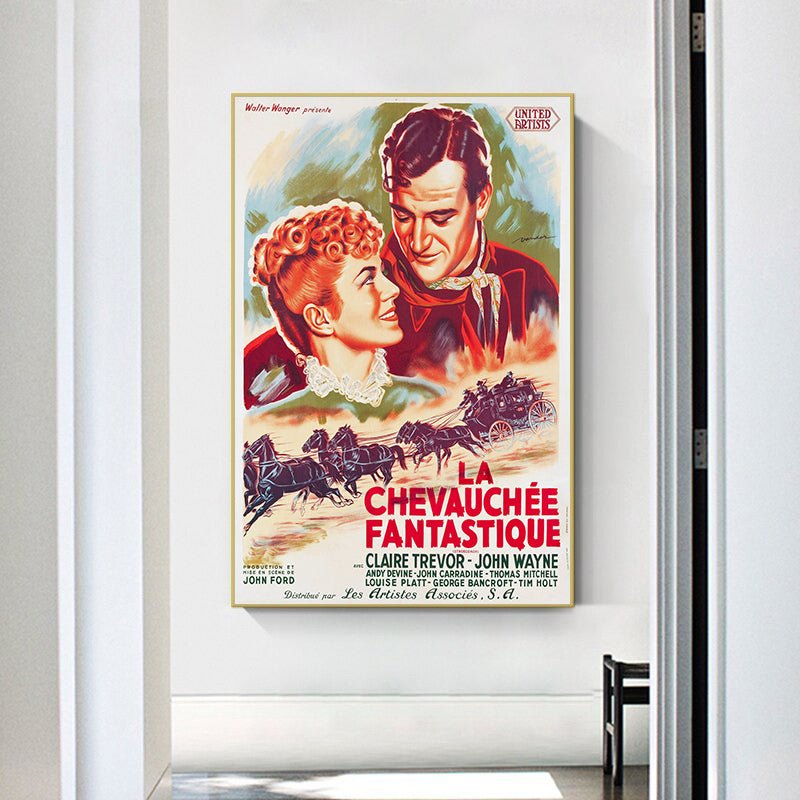
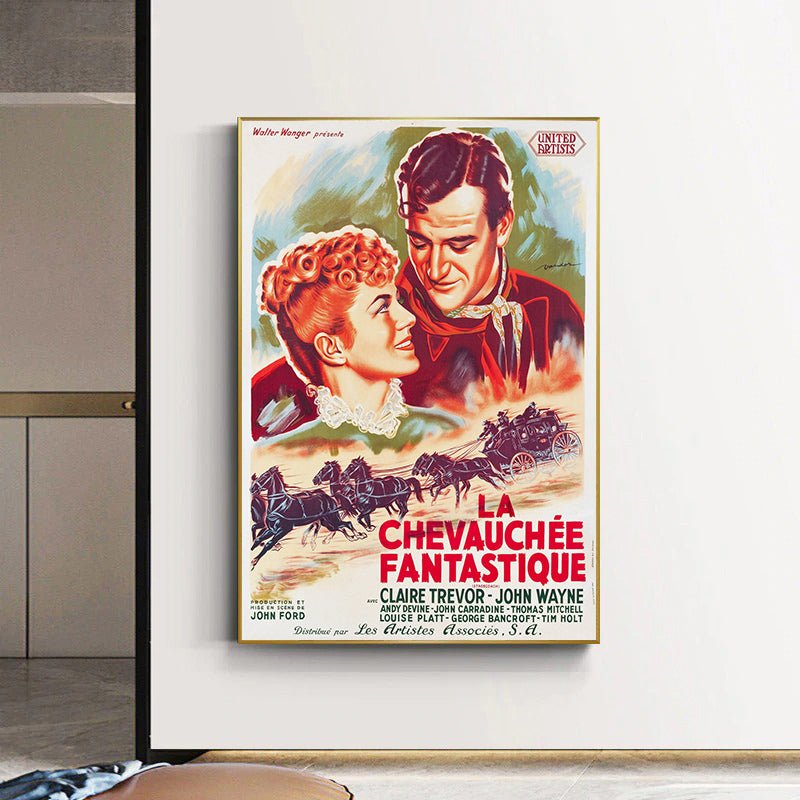
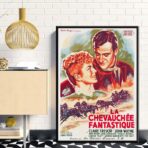
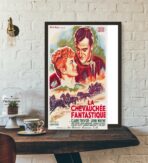
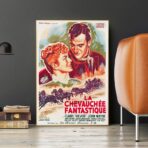

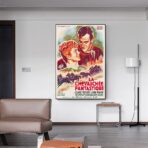
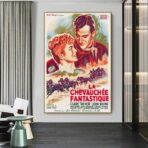
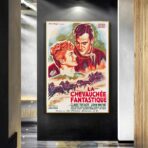
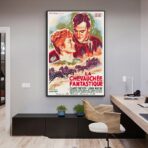
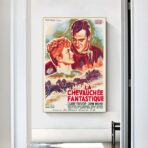
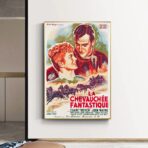






The first film that launched the career of the legendary actor John Wayne, this Ride the Horse Movie Poster will be ideal for your decoration!
- Paper Feature:
- 🎨 Canvas: global standard in terms of printing and imitating a “painting canvas” look.
- By default, the poster contains a 4cm white border for framing (frame not included). If you don’t want it, please choose “without white border”.
- ✅ Size: Multiple choices available. ✅
- High UV resistance.
- Color vibrancy maximum, glare-free.
- recycled paper, guaranteeing environmental friendliness.
- Poster packaged carefully and delivered in a protective tube for Total protection.
- FREE STANDARD DELIVERY.
⚠️ Frame not included. ⚠️
Description of this Stagecoach Movie Poster
Stagecoach is a 1939 American western film directed by John Ford, starring Claire Trevor and John Wayne in his first role. The screenplay by Dudley Nichols is an adaptation of “The Stage to Lordsburg”, a 1937 short story by Ernest Haycox. The film follows a group of strangers aboard a stagecoach through dangerous Apache territory.
Stagecoach was the first of many Westerns that Ford filmed in Monument Valley, in the American Southwest, on the Arizona-Utah border, and in which John Wayne starred. Scenes from Stagecoach, including a sequence introducing John Wayne’s character, the Ringo Kid, interweave shots of Monument Valley with shots filmed at the Iverson Movie Ranch in Chatsworth, California, the RKO Encino Movie Ranch, and other locations. Similar geographical incongruities are evident throughout the film, right up to the final scene where Ringo (Wayne) and Dallas (Trevor) leave Lordsburg, in southwestern New Mexico, by way of Monument Valley.
The film has long been recognized as an important work that transcends the Western genre. Philosopher Robert B. Pippin observed that the characters and their journeys “are archetypal rather than merely individual” and that the film is a “mythic representation of the American yearning for a politically significant form of equality.” In 1995, the film was deemed “culturally, historically, or aesthetically significant” by the United States Library of Congress and selected for preservation in its National Film Registry. Like most Westerns of the era, its portrayal of Native Americans has been criticized.